Artwork
Boughton House, near Kettering
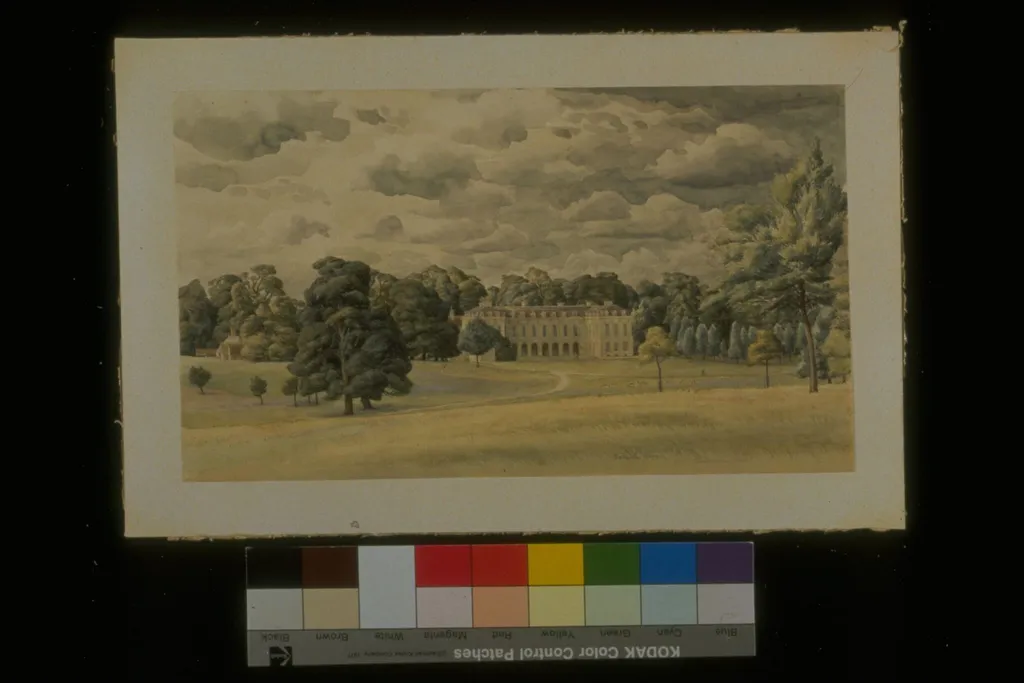
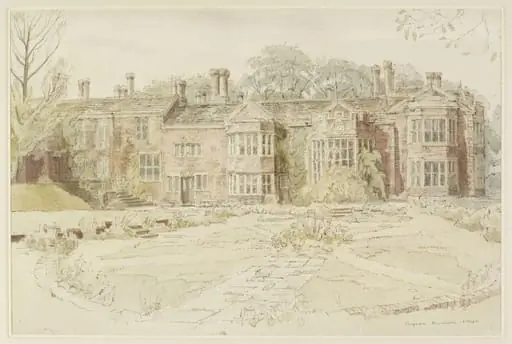
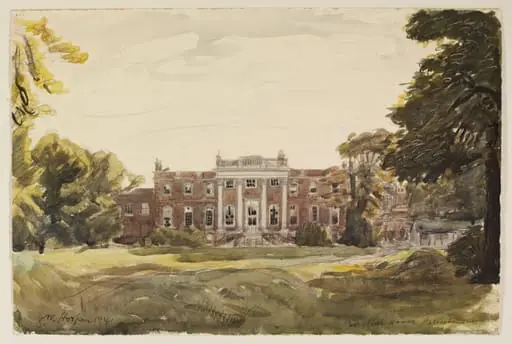
Boughton House, near Kettering is a watercolor work on paper by the Social Realist artist Stanley Roy Badmin. It dates from 1940 and is held in the collection of the Victoria and Albert Museum.
About this work
Overview
Its quiet composition reflects the project’s mission to preserve the visual character of England’s rural heritage during a time of national uncertainty.
Stanley Roy Badmin created this watercolour in 1940 as part of the Recording Britain project, a wartime initiative to visually document landscapes and architecture at risk from conflict or change. The work captures Boughton House, a historic estate in Northamptonshire, rendered in delicate washes that emphasize light and atmosphere over detail. Its quiet composition reflects the project’s mission to preserve the visual character of England’s rural heritage during a time of national uncertainty.
Subject & Meaning
Boughton House, with its French-inspired seventeenth-century façade, stands as a symbol of enduring aristocratic architecture amid the English countryside. Badmin positions the building slightly behind a screen of mature trees, suggesting both seclusion and continuity. The inclusion of a secondary structure and a winding path implies the estate’s lived-in scale, reinforcing the project’s focus on places imbued with historical presence rather than grandeur alone.
Technique & Style
Badmin employed loose, transparent watercolour washes to evoke a soft, atmospheric quality. The pale walls of the house contrast gently with the deeper greens of the surrounding foliage, while the sky is rendered with subtle gradations of gray and white. Brushwork is restrained yet expressive, avoiding sharp definition in favor of tonal harmony. This approach creates a sense of stillness, aligning with the contemplative tone of the Recording Britain initiative.
History & Provenance
Commissioned by the Pilgrim Trust under the direction of Sir Kenneth Clark, this watercolour was produced between 1940 and 1943 as part of a national effort to archive vulnerable sites. The Recording Britain project gathered over 1,500 works by artists across the British Isles. Badmin’s depiction of Boughton House entered the Victoria and Albert Museum’s collection, where it remains as part of a broader archive of wartime cultural preservation.
Context
During the early years of World War II, fears of aerial bombardment and postwar development prompted a cultural urgency to record Britain’s architectural heritage. The Recording Britain project responded to this anxiety by mobilizing artists to capture scenes deemed at risk. Badmin’s work, like others in the series, reflects a quiet patriotism, not through heroism, but through attentive observation of ordinary yet historically significant places.
Legacy
The watercolour endures as a quiet testament to a moment when art served as a form of cultural safeguarding. Badmin’s depiction of Boughton House contributes to a larger visual record that continues to inform historical and architectural studies. Its presence in the Victoria and Albert Museum ensures ongoing access to a perspective on England’s landscape shaped by wartime awareness and artistic sensitivity.
Artist & collection
Artist
Stanley Roy Badmin painted detailed English landscapes and townscapes in watercolour during the early 1940s.

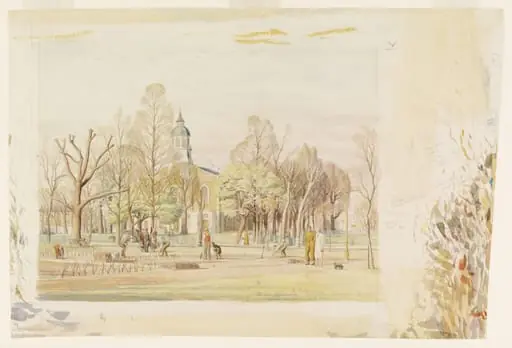 Holy Trinity Church and the new Allotments, Clapham Common, London
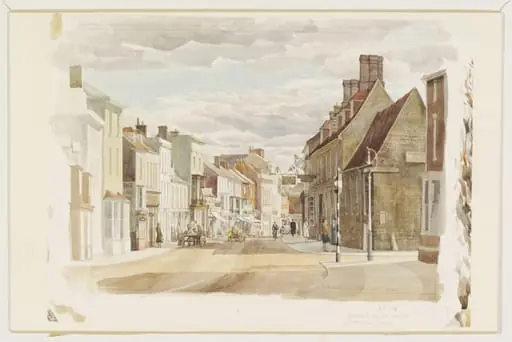 Towcester High Street from the Pomfret Arms Corner, Northamptonshire
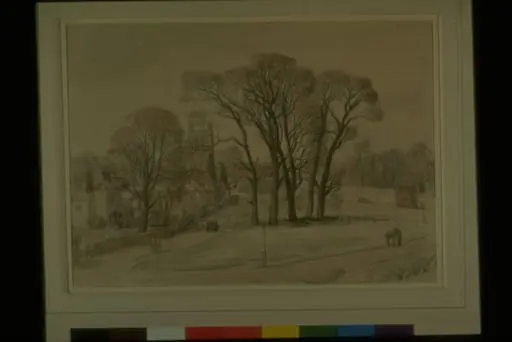 Long Melford Green on a Frosty Morning, Suffolk
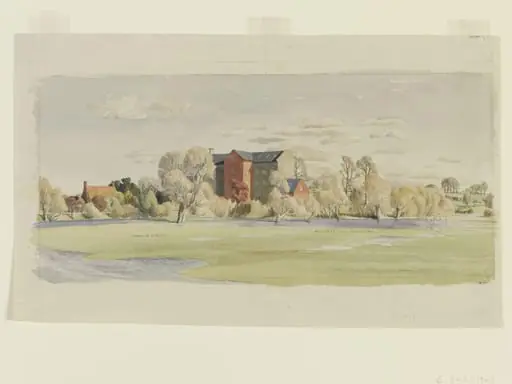 Flooded Meadows at Olney, Buckinghamshire
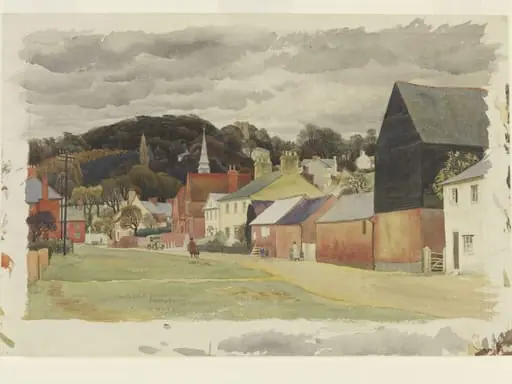 Bow Brickhill, Bletchley, Buckinghamshire
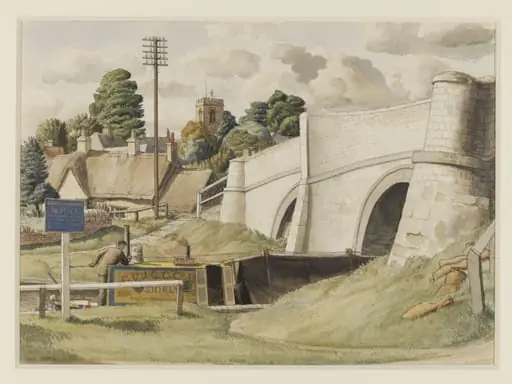 Stoke Bruerne, Northamptonshire
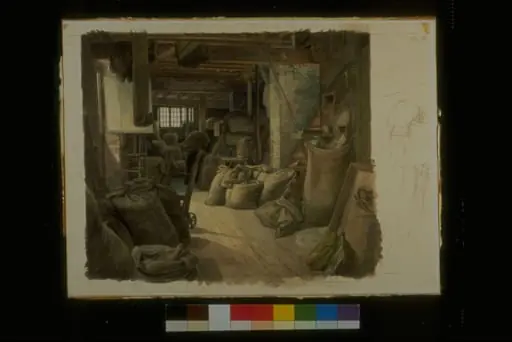 Chegworth Mill (Ground Floor), Harrietsham, near Maidstone, Kent