Artwork
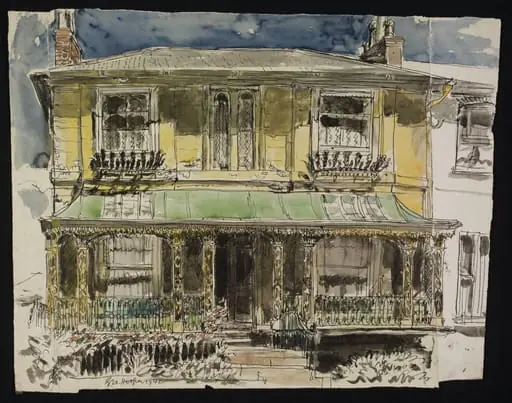
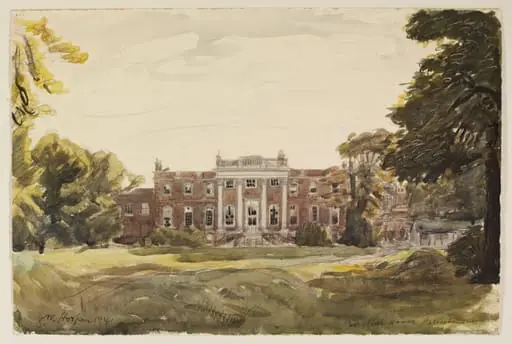
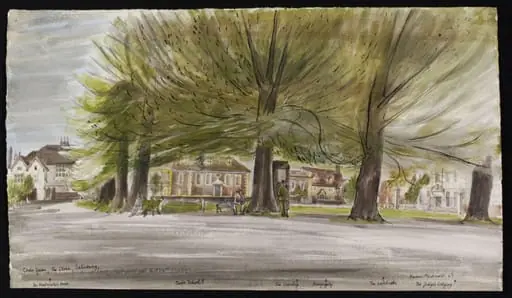
Georgian Houses, Hampton Green
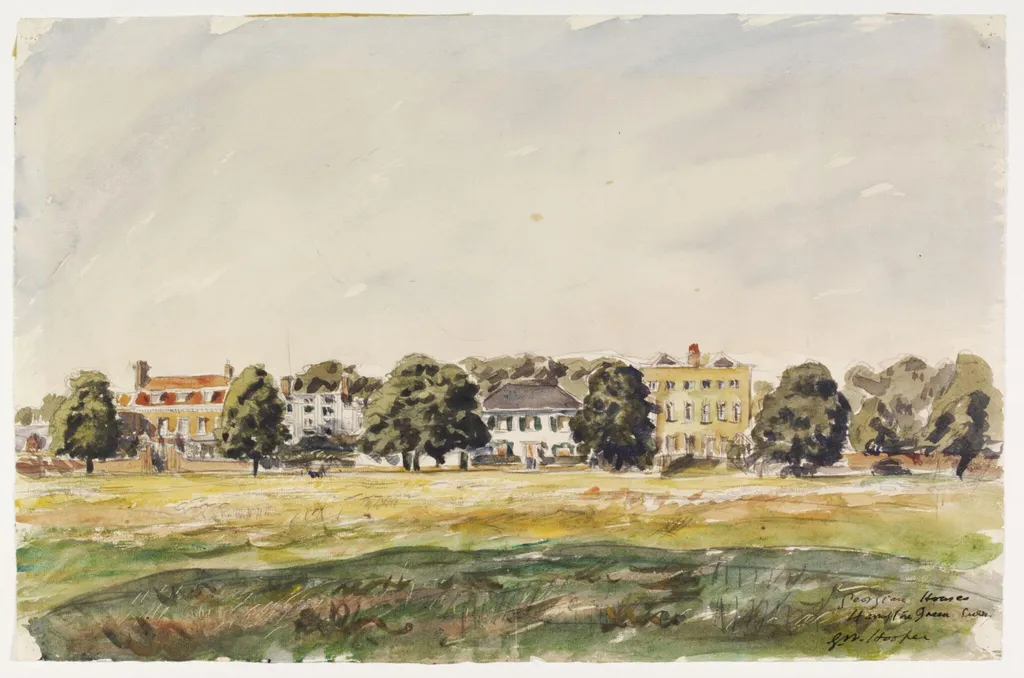
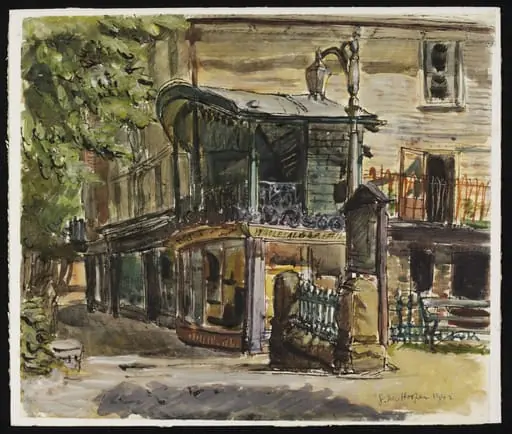
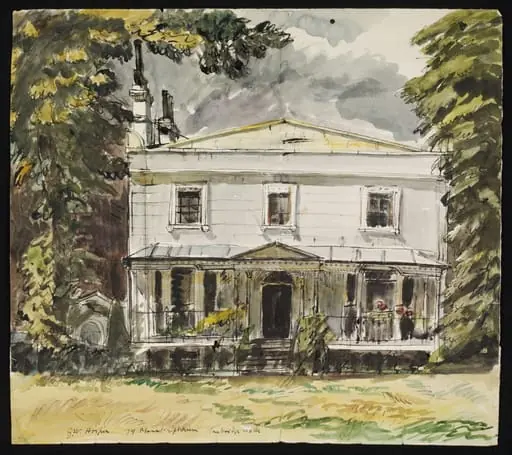
Georgian Houses, Hampton Green is a watercolor work on paper by the Regionalist artist Hooper. It dates from 1941 and is held in the collection of the Victoria and Albert Museum. Created in 1941, this watercolour by G.
About this work
Overview
Hooper belongs to the Recording Britain project, a wartime effort to visually document the country’s architectural and rural landscapes.
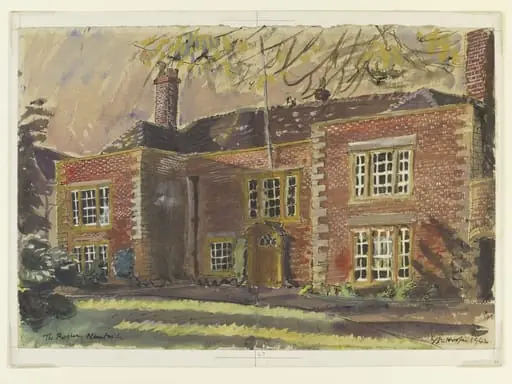
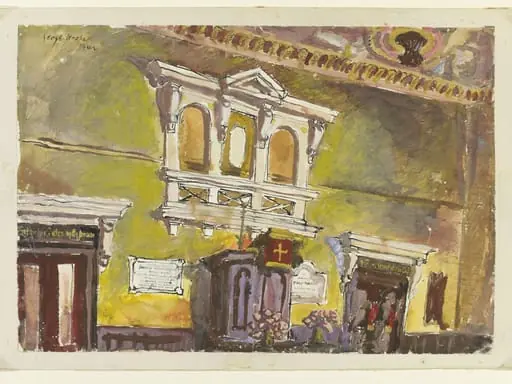
Created in 1941, this watercolour by G.M. Hooper belongs to the Recording Britain project, a wartime effort to visually document the country’s architectural and rural landscapes. Commissioned by the Ministry of Labour and National Service and supported by the Pilgrim Trust, the initiative aimed to preserve imagery of places at risk from conflict or modernization. Hooper’s contribution captures a quiet corner of Hampton Green, reflecting the project’s broader mission to record everyday English scenes during a time of national uncertainty.
Subject & Meaning
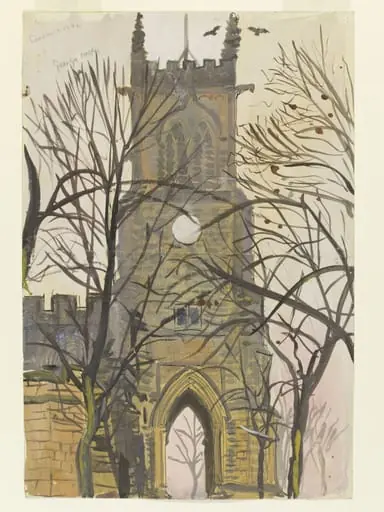
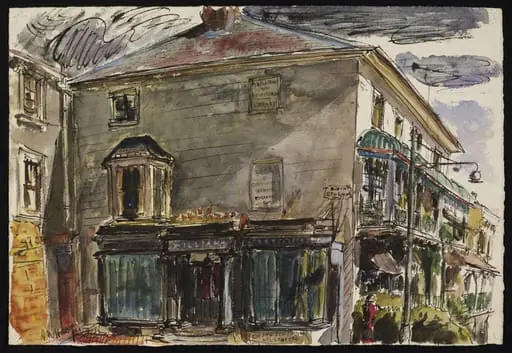
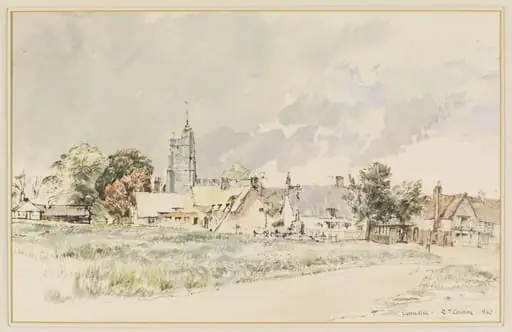
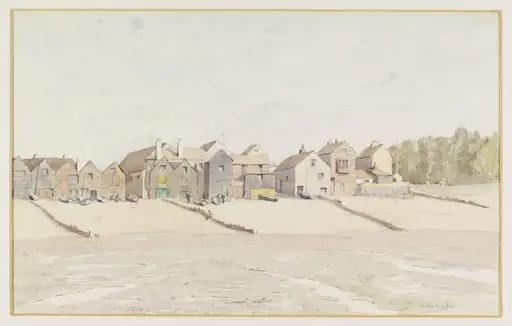
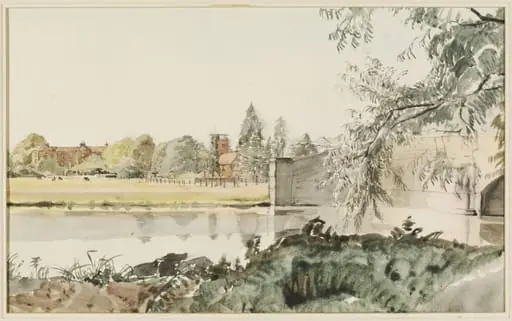
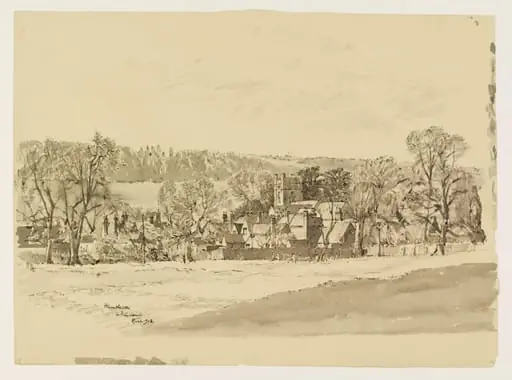
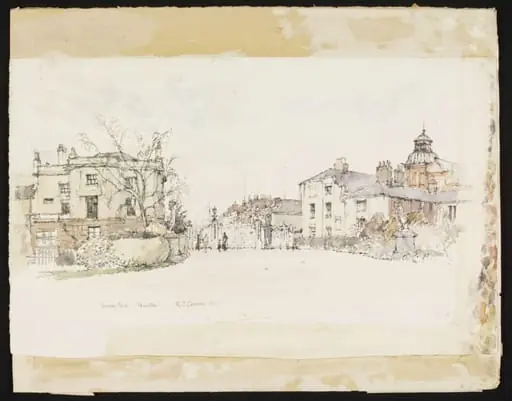
The painting presents a row of pale yellow Georgian houses set behind a line of tall trees, with a grassy field and a narrow stream in the foreground. The composition emphasizes domestic architecture nestled within a tranquil natural setting. By focusing on unassuming residential buildings rather than monuments, Hooper highlights the quiet dignity of ordinary places.
The work implicitly conveys a sense of loss, not through destruction, but through the quiet erosion of tradition under wartime pressures and changing times.
Technique & Style
Hooper employed loose, fluid watercolour brushwork, suggesting an outdoor sketch executed rapidly under natural light. The pale washes of yellow and grey create a hazy, atmospheric effect, while the dark roofs and tree trunks provide subtle contrast. The transparency of the medium allows underlying paper texture to show through, enhancing the sense of immediacy.
The signature and title, neatly inscribed in the corner, confirm the work’s documentary purpose, aligning with the project’s emphasis on clarity and record over artistic flourish.
History & Provenance
The painting was produced under the Recording Britain initiative, which employed nearly 100 artists between 1939 and 1943. Funded by the Pilgrim Trust and directed by Sir Kenneth Clark, the project collected over 1,500 works to safeguard visual records of threatened landscapes. Hooper’s piece entered the Victoria and Albert Museum’s collection as part of this archive, where it remains accessible as both an artistic record and a historical document of Britain’s wartime cultural preservation efforts.
Context
During the Second World War, fears of aerial bombing and postwar redevelopment prompted efforts to preserve Britain’s visual heritage. The Recording Britain project emerged as a cultural response, prioritizing rural and vernacular architecture over grand monuments. Artists like Hooper were sent across England, but not Northern Ireland, to capture scenes deemed vulnerable.
The initiative reflected a broader societal anxiety about identity and continuity, using art as a form of quiet resistance to erasure.
Legacy
The Recording Britain collection endures as a vital archive of mid-20th-century English life, offering insight into how communities perceived their surroundings during crisis. Hooper’s watercolour, though modest in scale, contributes to a collective portrait of a nation at risk of losing its familiar horizons. Today, the work is studied not only for its aesthetic qualities but as evidence of how art was mobilized to sustain cultural memory during wartime.
Artist & collection
Artist
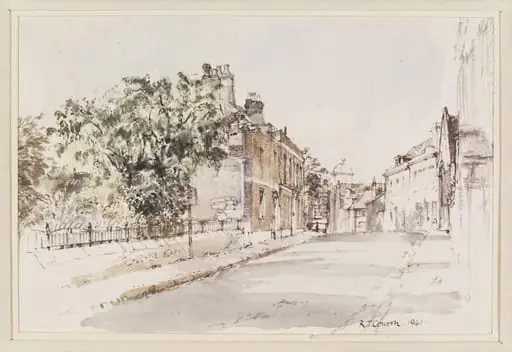
This artist painted quiet streets and brick buildings in watercolor during the early 1940s.