Artwork
Portrait of a Lady and Her Daughter
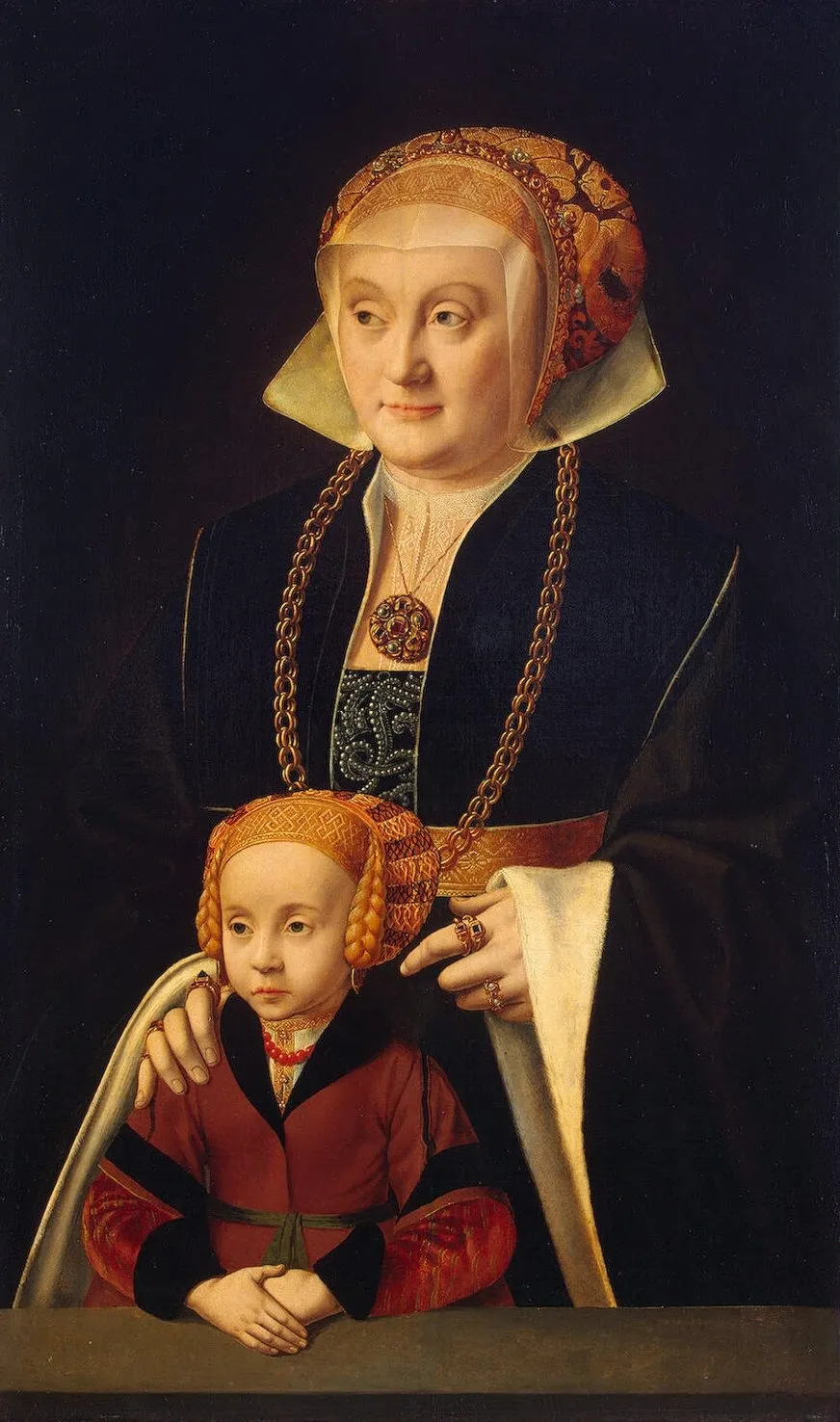
Portrait of a Lady and Her Daughter is an oil painting by the Mannerist artist Bartholomaeus Bruyn the Elder. It dates from 1540 and is held in the collection of the Hermitage Museum.
About this work
Technique & Style
Subtle glazes modulate the flesh tones and the dark costume of the mother, while the child’s lighter attire provides a restrained focal accent.
The painting is executed in oil on canvas, a common support for Northern European portraiture of the mid-sixteenth century. The handling emphasizes smooth, even brushwork with careful attention to facial modeling, particularly in the delicate rendering of the sitters’ features and the subtle transitions between light and shadow. The composition is tightly framed, with the mother and child positioned close to the picture plane and aligned along a vertical axis that underscores their relationship.
The color palette is restrained, relying on muted earth tones and subdued contrasts, typical of Bruyn’s mature style. Subtle glazes modulate the flesh tones and the dark costume of the mother, while the child’s lighter attire provides a restrained focal accent. The background remains neutral, allowing the figures to dominate the composition without distraction.
History & Provenance
The oil-on-canvas portrait titled Portrait of a Lady and Her Daughter was created in 1540 by Bartholomaeus Bruyn the Elder in Germany. The work depicts a woman and child and measures 76.5 cm in height by 46 cm in width. Historical records indicate that the painting was once owned by Johann Karl Philipp von Cobenzl. It is currently held in the collection of the Hermitage Museum in St. Petersburg.
The painting Portrait of a Lady and Her Daughter by Bartholomaeus Bruyn the Elder is held in the collection of the Hermitage Museum in St. Petersburg. Created in 1540, the work is an oil on canvas portrait depicting a woman and child. Historical records indicate the piece was previously owned by Johann Karl Philipp von Cobenzl before entering the museum's holdings.
The provided sources do not list a specific inventory or accession number for the work, nor do they document any exhibition history.
Legacy
The work influenced portrait conventions in German Renaissance art through its dignified representation of maternal intimacy. Contemporary records show Johann Karl Philipp von Cobenzl acquired the piece shortly after its creation, later transferring it to the Hermitage Museum where it remains on permanent display. Modern scholarship cites its compositional balance and psychological depth as formative for 16th-century portraiture.
Overview
Bartholomaeus Bruyn the Elder, a prominent Cologne portraitist of the German Renaissance, executed this oil painting in 1540. The work presents a mother and her young daughter, rendered in a restrained, intimate composition that reflects the artist’s reputation as the city’s leading portrait painter during the early Mannerist era.
Subject & Meaning
The central figures are a woman in a dark gown with a decorative hat, clasping her child’s shoulder, and a girl with light hair dressed in a red garment trimmed in black. Their direct gaze and the protective gesture suggest a portrayal of familial affection and social status, typical of private genre portraits of the period.
Artist & collection

Artist
Bartholomäus Bruyn (1493–1555), usually called Barthel Bruyn or Barthel Bruyn the Elder, was a German Renaissance painter active in Cologne. He painted altarpieces and portraits, and was Cologne's foremost portrait painter of his day.

 Portrait of a Man
 Portrait of a Man
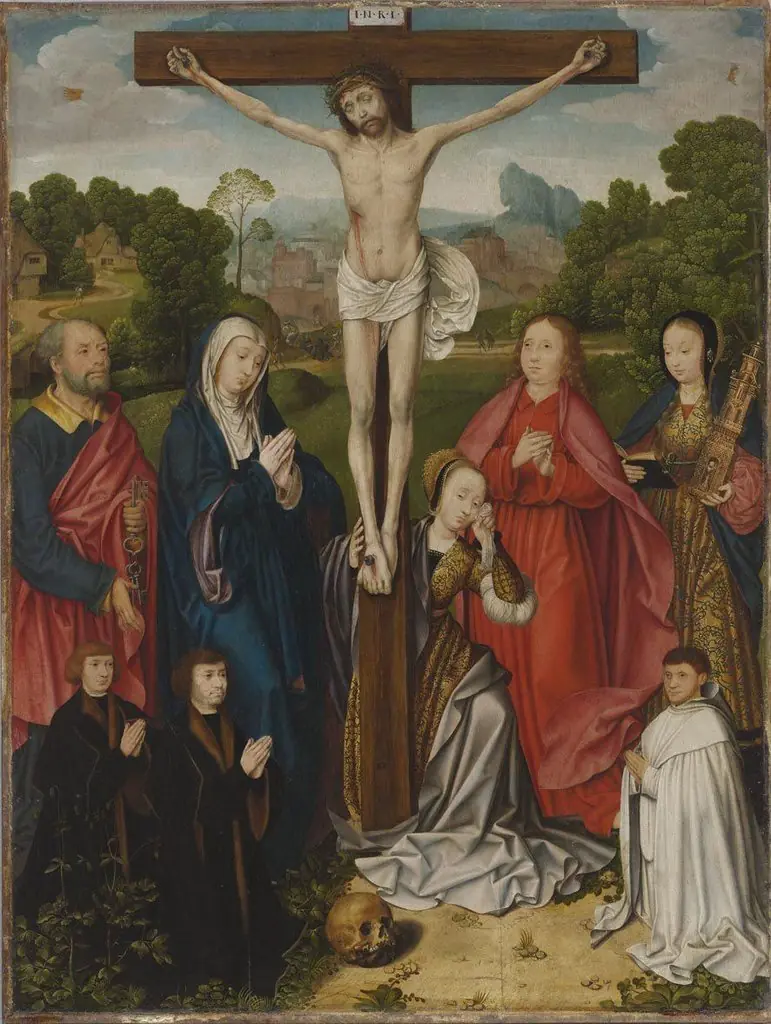 Christ on the cross with the saints Peter, Mary, Mary Magdalene, John the Evangelist and Barbara, with three donors
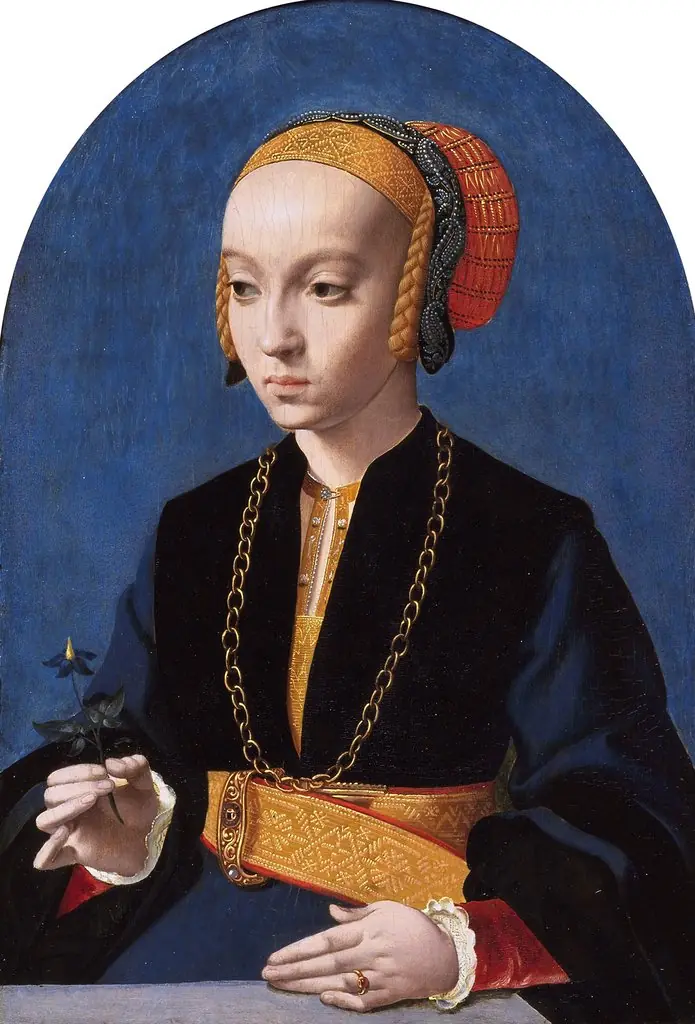 Portrait of Elisabeth Bellinghausen
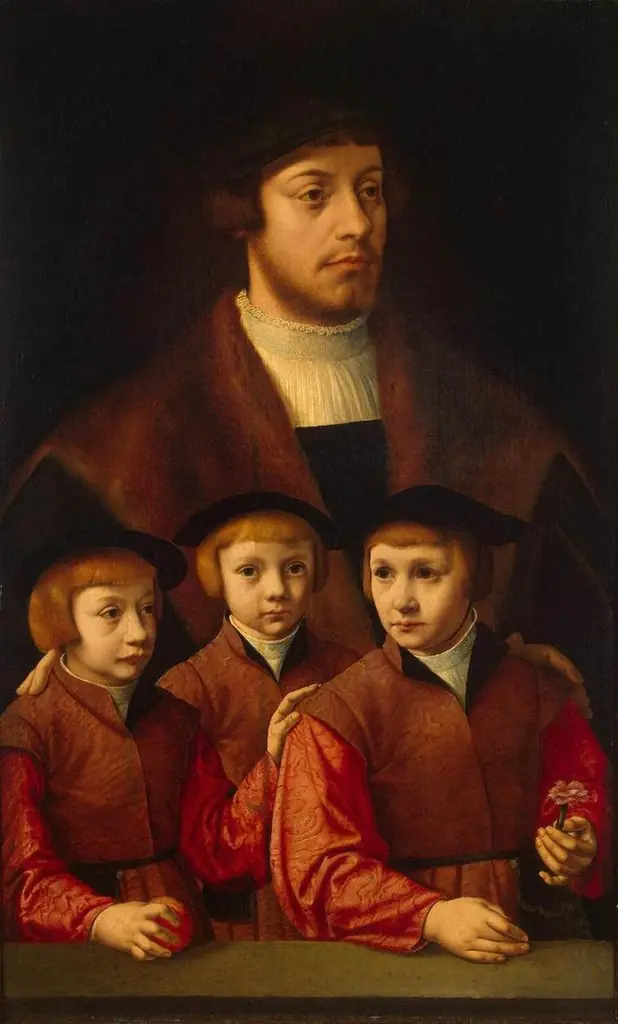 Portrait of a Man and His Three Sons
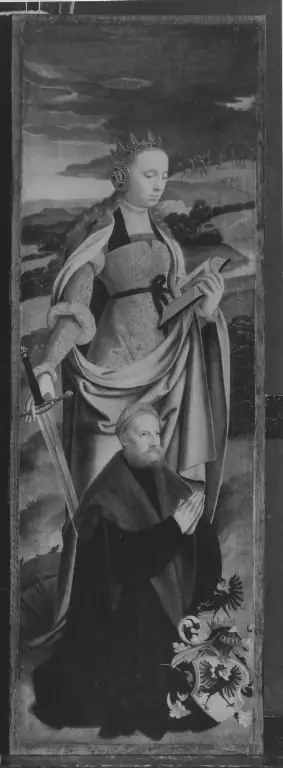 Rinck-Altar II:Saint Catherine with donor Hermann Rinck
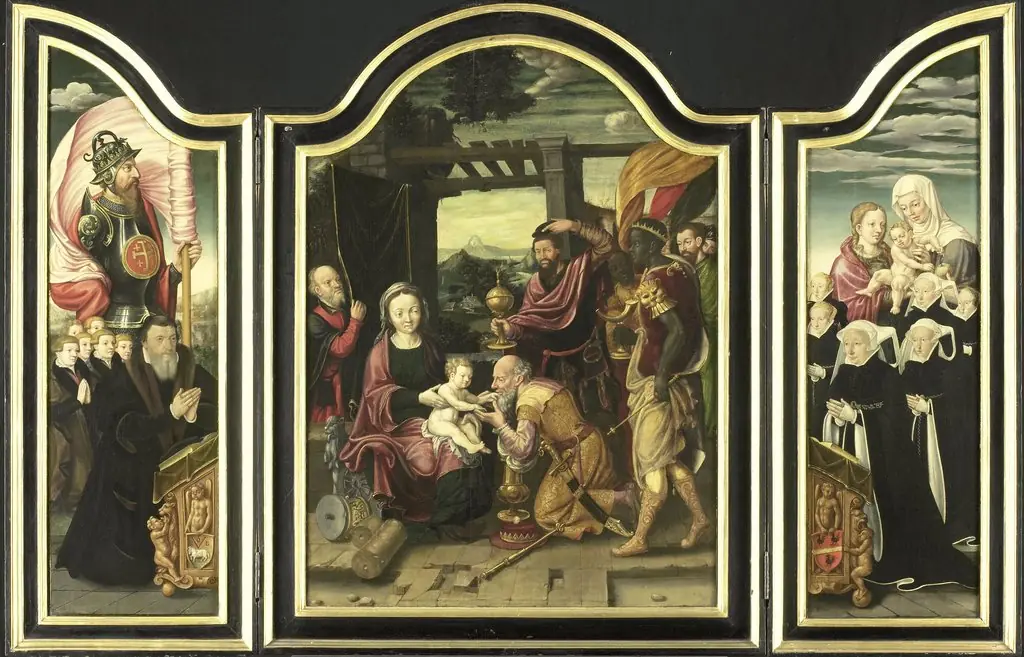 Triptych with the Adoration of the Magi
- Portrait of a Woman of the Slosgin Family of Cologne
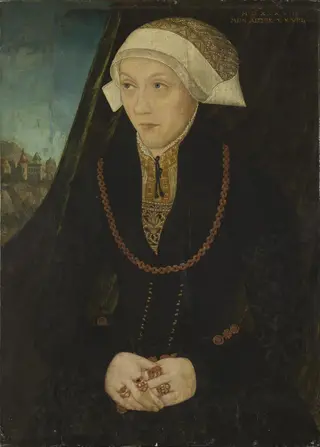 Portrait of a woman
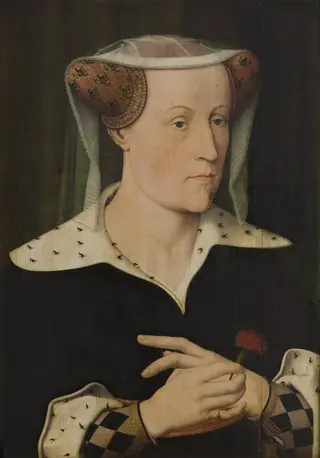 Jacoba of Bavaria, Countess of Holland and Zeeland
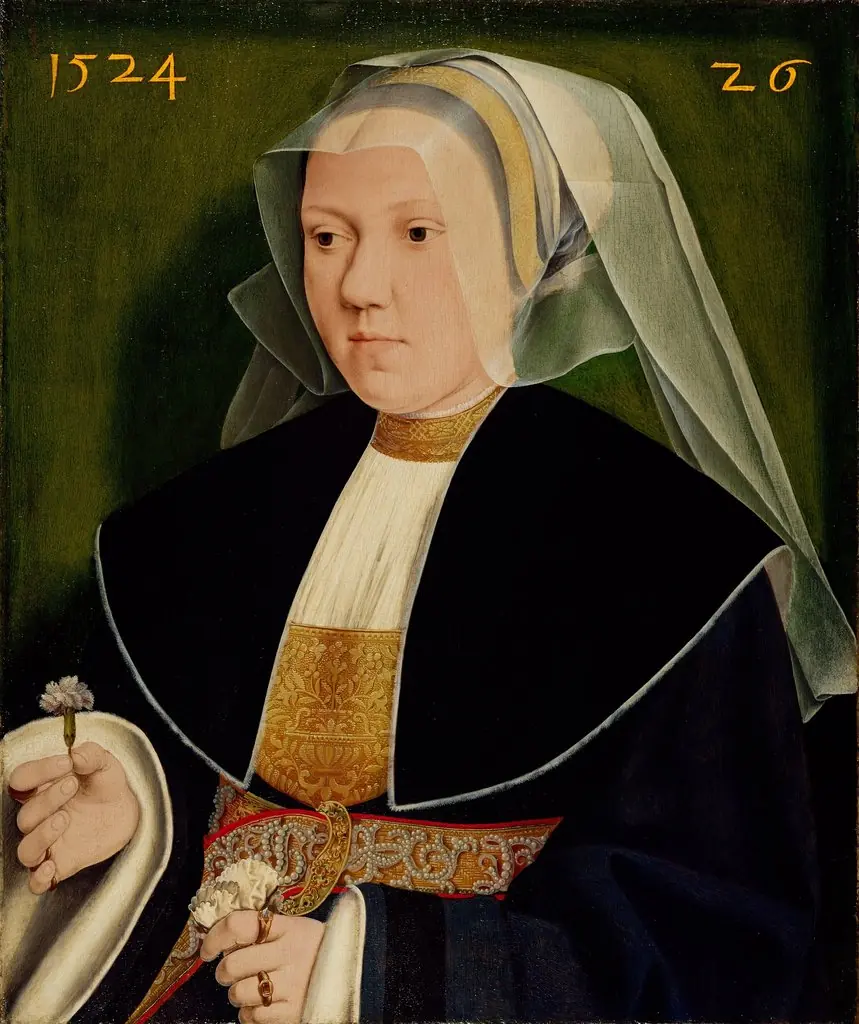 Portrait of Margaretha von Mochau, wife of Gerhard von Westerburg
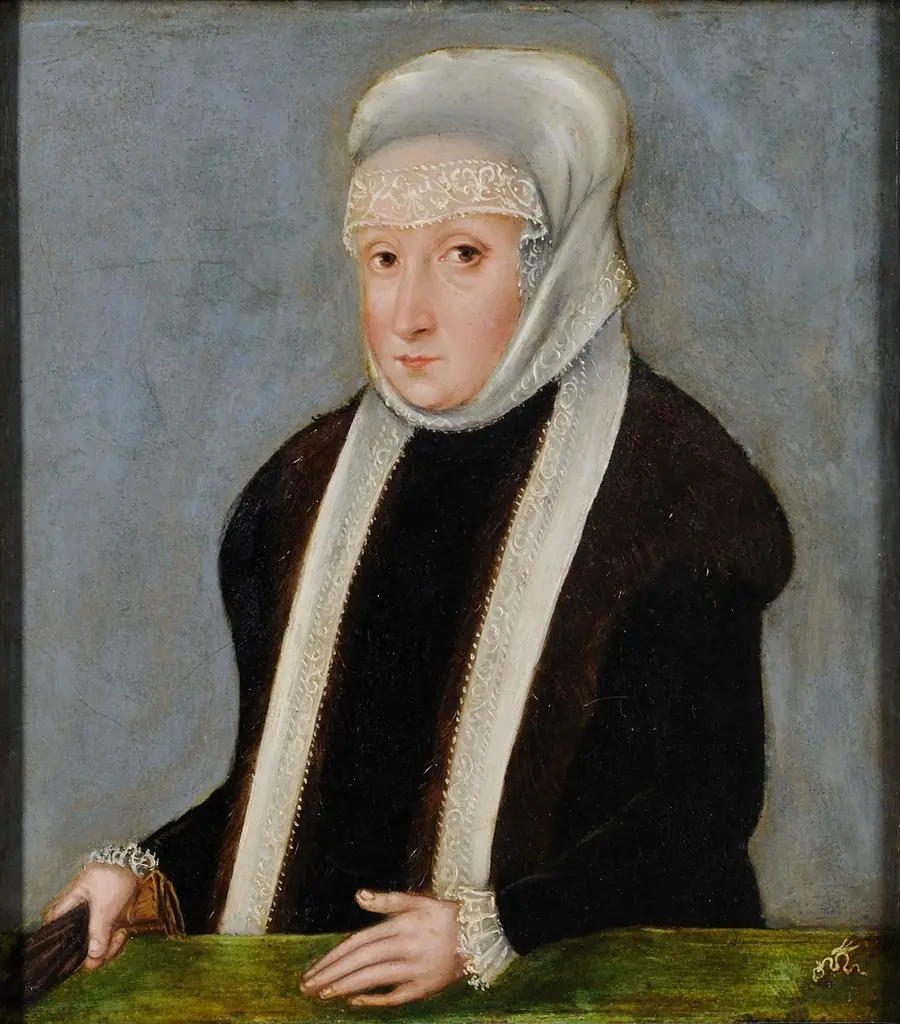 Isabella Jagiellon
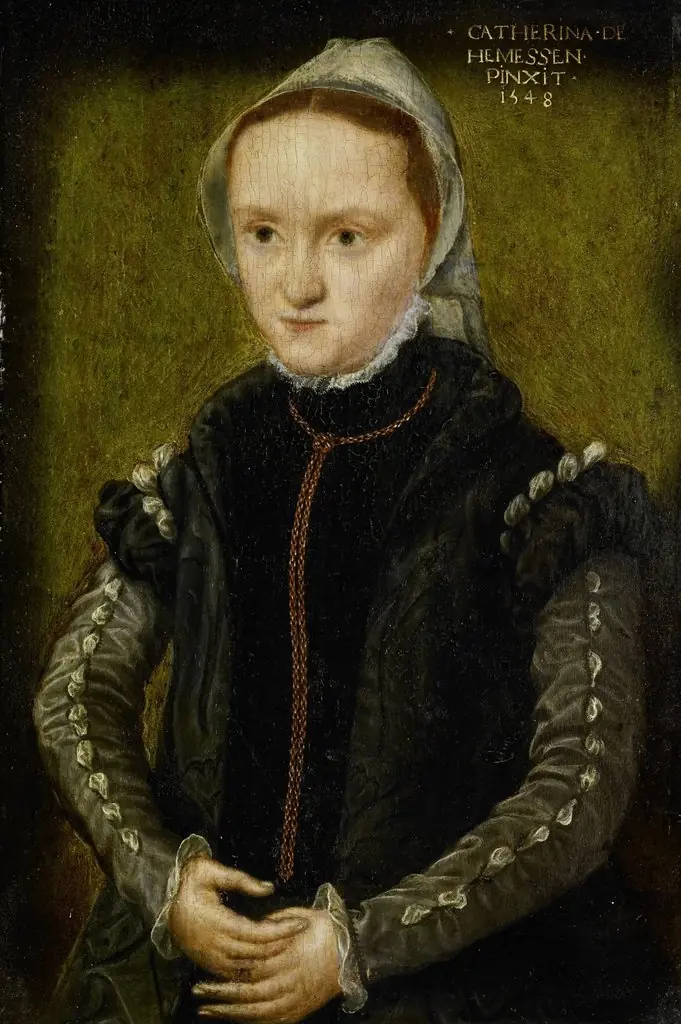 Portrait of a woman (1548)
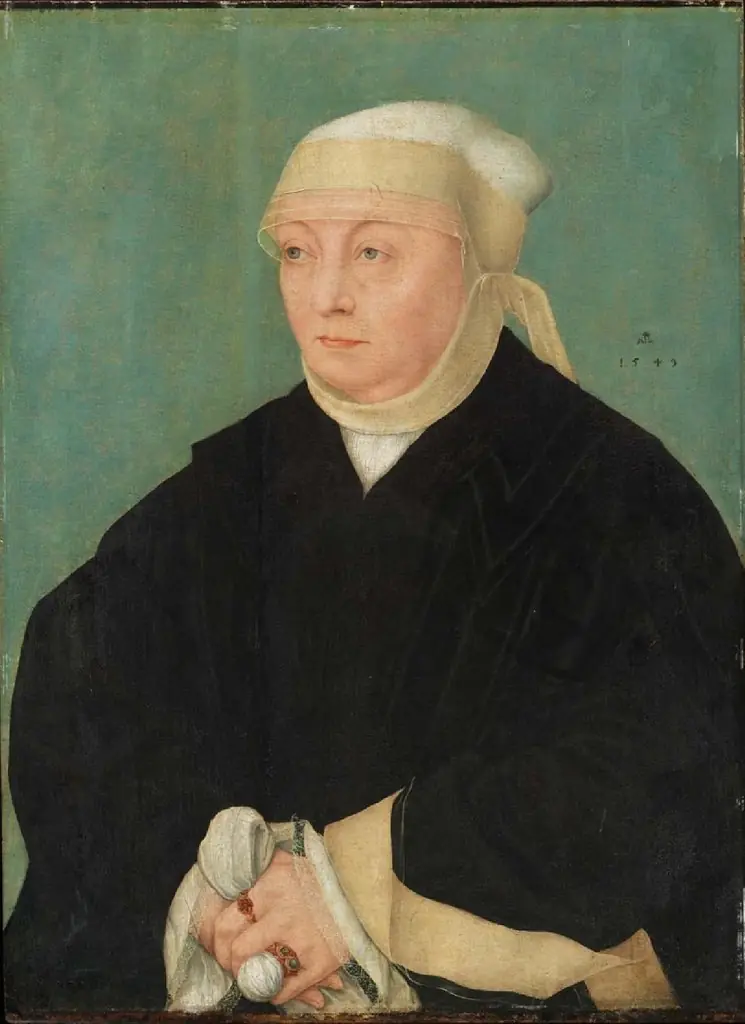 Portrait of a Woman
 Margarete von Navarra (?)
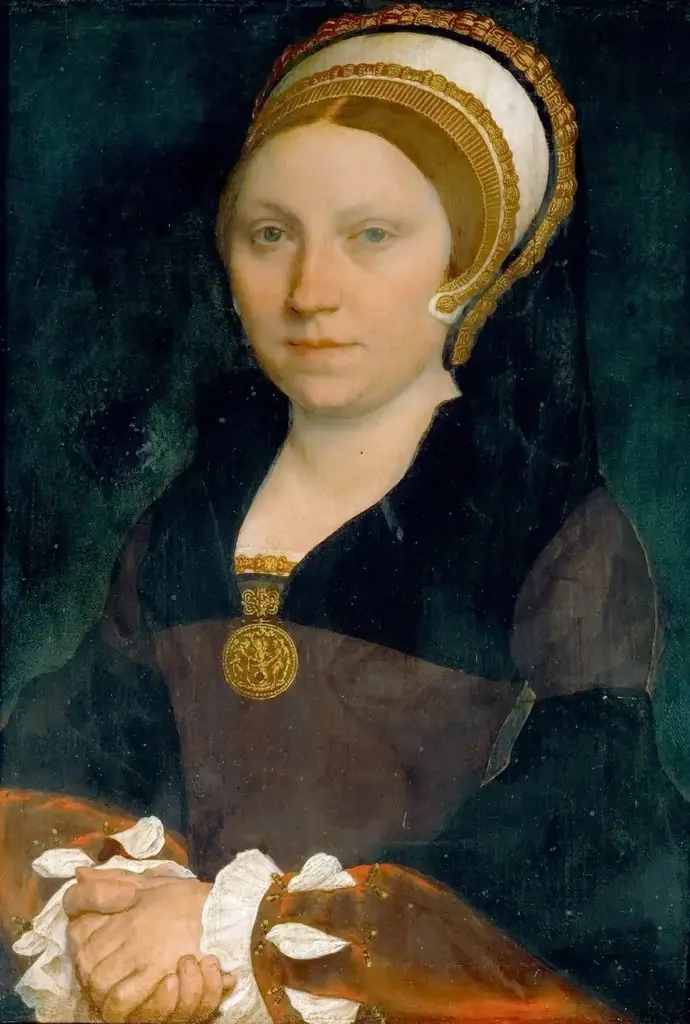 Portrait of an English lady
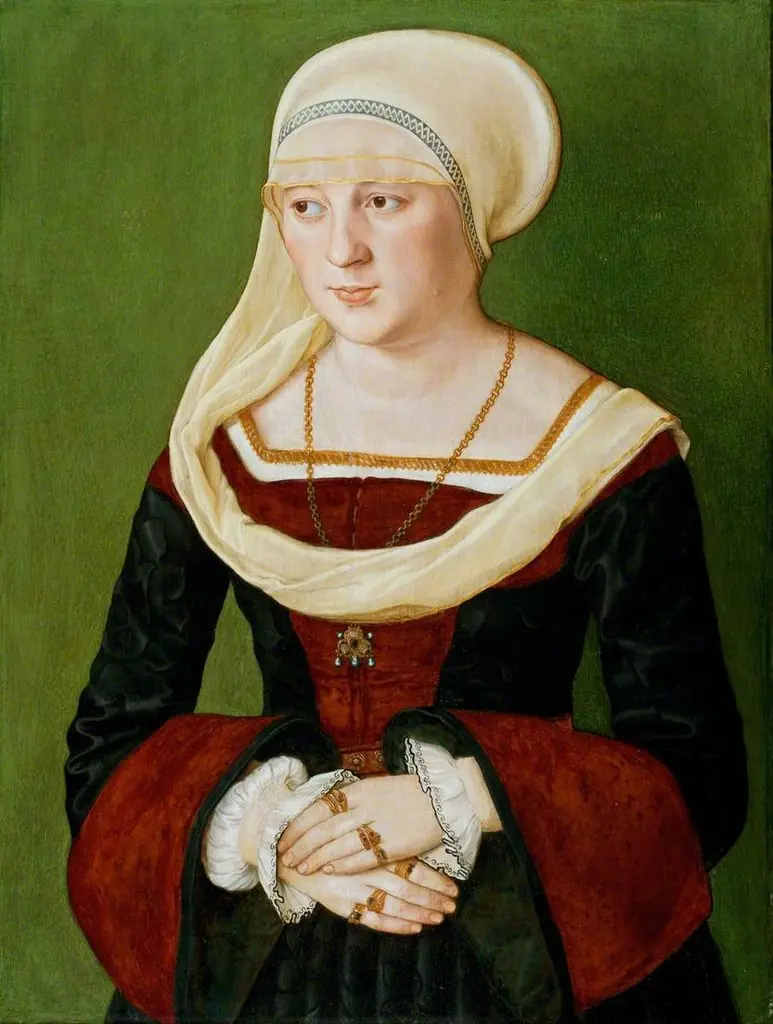 Portrait of Anna Scheit, née Mem(m)inger
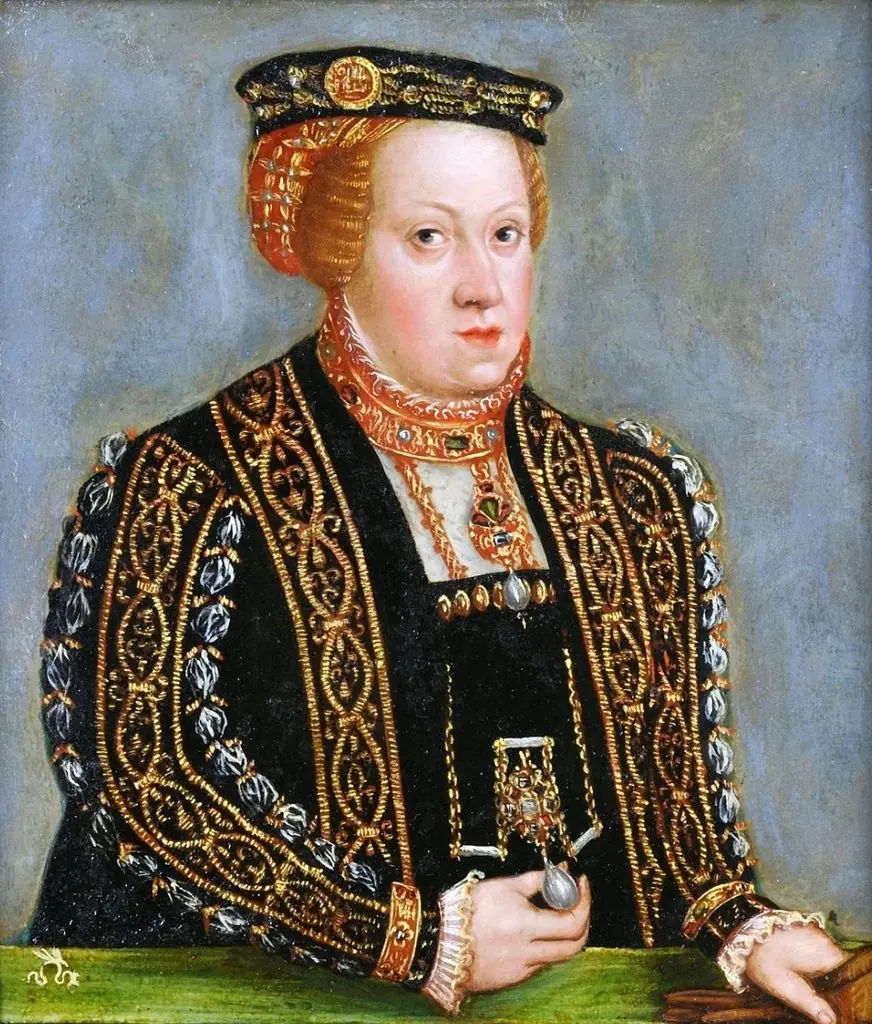 Catherine of Austria
 Bildnis der Susanna von Bayern