Artwork
The Preaching of John the Baptist
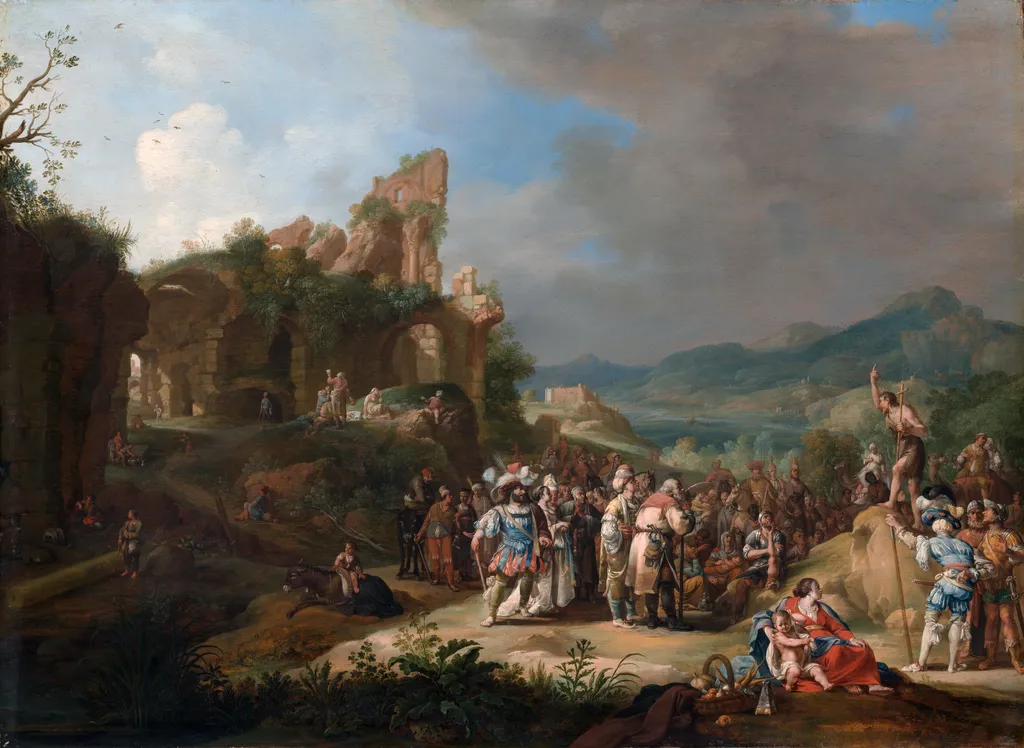
The Preaching of John the Baptist is an oil painting by the Dutch Golden Age artist Bartholomeus Breenbergh. It dates from 1634 and is held in the collection of the Metropolitan Museum of Art.
About this work
Subject & Meaning
The painting thus represents a specific moment of religious instruction set against a backdrop that merges scriptural history with the artistic memory of Rome.
The work depicts the biblical narrative of John the Baptist preaching to a gathered crowd, a scene drawn from the Gospels. Visually, the artist combines this religious subject with a landscape that diverges from typical Dutch flatness, instead constructing a setting through the superposition of Italianate elements. A notable feature of this composition is the inclusion of architectural ruins that evoke the Colosseum in Rome.
This stylistic choice situates the evangelist within a classical, Mediterranean context rather than a local one, blending the spiritual message of the preacher with the atmospheric grandeur of Italian antiquity. The painting thus represents a specific moment of religious instruction set against a backdrop that merges scriptural history with the artistic memory of Rome.
Technique & Style
Executed in 1634, this work is an oil painting on panel measuring 54.6 by 75.2 centimeters. The composition depicts a biblical scene of John the Baptist addressing a crowd within a landscape that diverges from typical Dutch topography. Instead, the artist constructed the setting by layering various elements of Italian origin, including architectural ruins reminiscent of the Roman Colosseum.
This synthesis of figures and imagined Italianate scenery characterizes the painting's formal approach, blending religious narrative with a specific, constructed environment rather than a direct observation of the local Netherlands.
History & Provenance
The Preaching of John the Baptist was painted in 1634 by the Dutch artist Bartholomeus Breenbergh in oil on panel. According to the sources, the work entered the collection of Walter Percy Chrysler Jr. before being acquired by the Metropolitan Museum of Art in New York, where it is currently housed. No information about a specific commission is provided in the available references.
The painting is housed in the Metropolitan Museum of Art in New York, where it has been part of the museum’s collection since it was acquired from Walter Percy Chrysler Jr.; the precise accession or inventory number is not indicated in the referenced documentation. The work is displayed in the European paintings galleries and has been included in presentations of Dutch and Flemish art within the museum’s exhibition program, as noted in the museum’s exhibition records.
Context
Bartholomeus Breenbergh’s 1634 oil on panel, The Preaching of John the Baptist, depicts the Baptist addressing a varied crowd within an idealized Italianate landscape marked by ruinous architecture reminiscent of the Colosseum; the composition blends northern figure types with Mediterranean topography. The painting entered the Metropolitan Museum of Art via the collection of Walter Percy Chrysler Jr. and has been discussed in scholarly literature, notably Patrick de Rynck’s analysis of Breenbergh’s biblical subjects. Its synthesis of Dutch figure painting with Italianate scenery illustrates Breenbergh’s role in the transitional phase of 17th‑century religious art.
Overview
This oil painting, titled The Preaching of John the Baptist, depicts a significant biblical event within a naturalistic setting. A sizable assembly of figures gathers in a rugged, verdant landscape, their attention drawn to a central orator. The composition invites viewers to witness the moment John the Baptist delivers his message, preparing the way for Christ.
Own this work as a print
Artist & collection
Artist
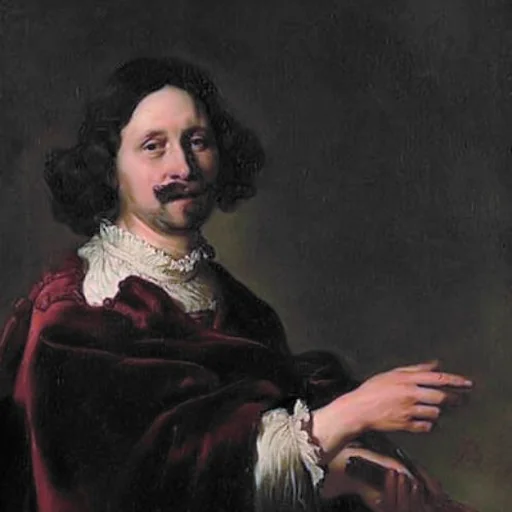
Bartholomeus Breenbergh (before 13 November 1598 – after 3 October 1657) was a Dutch Golden Age painter of Italian and Italianate landscapes, in Rome (1619-1630) and Amsterdam (1630-1657).

 Christ's Entry into Jerusalem
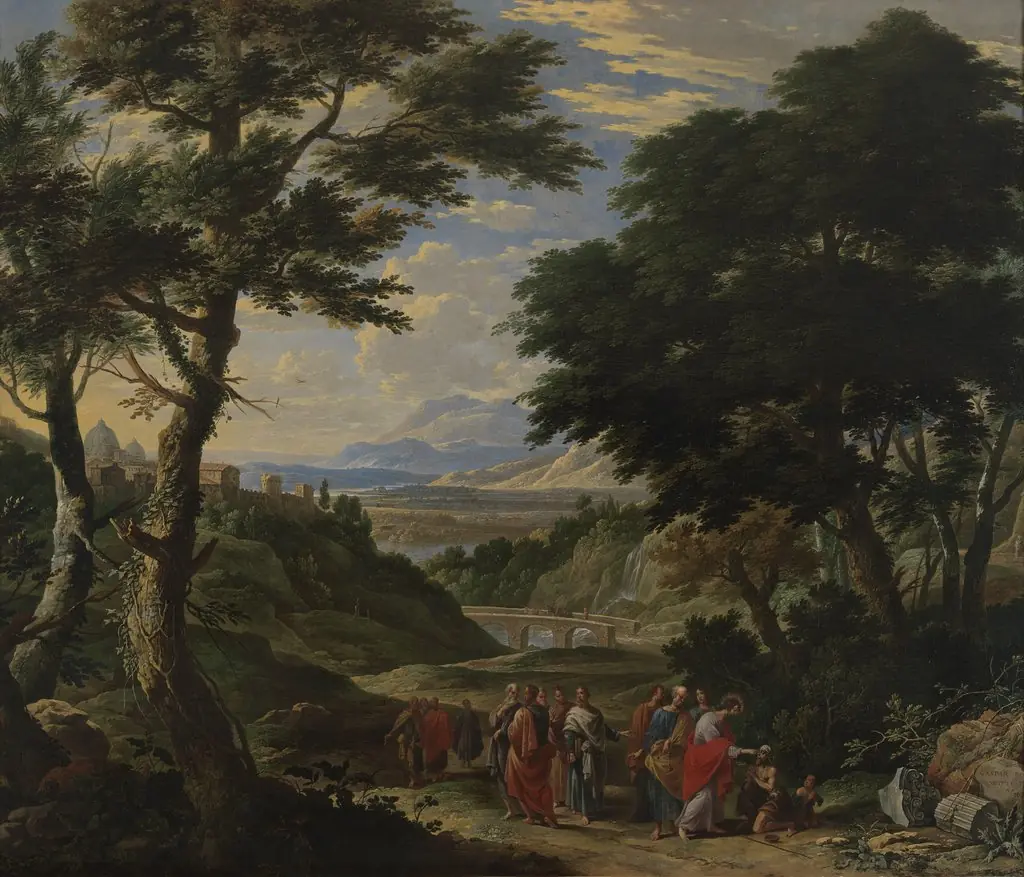 Christ Healing the Blind Man at Jericho
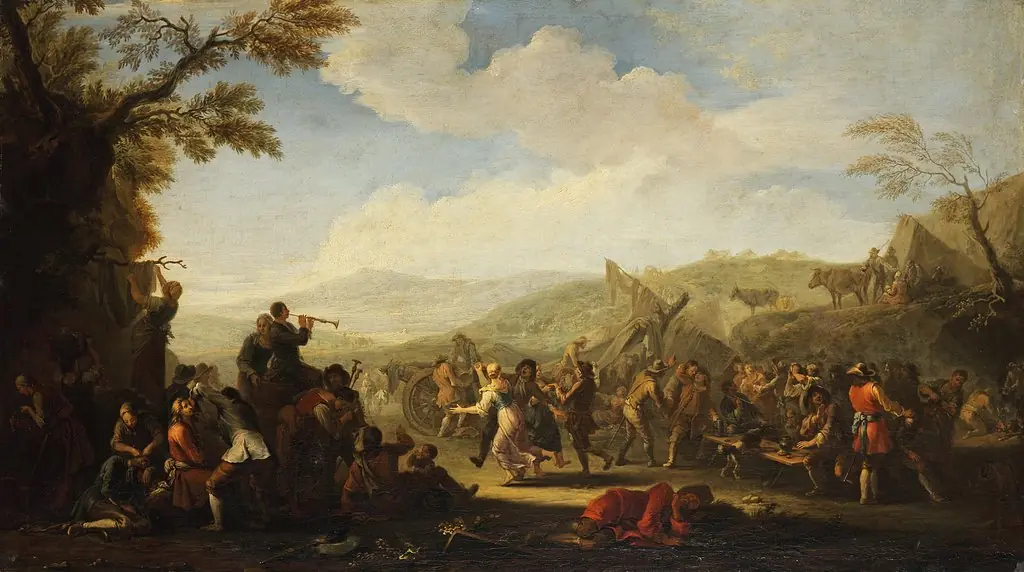 Amusement in the Field Camp
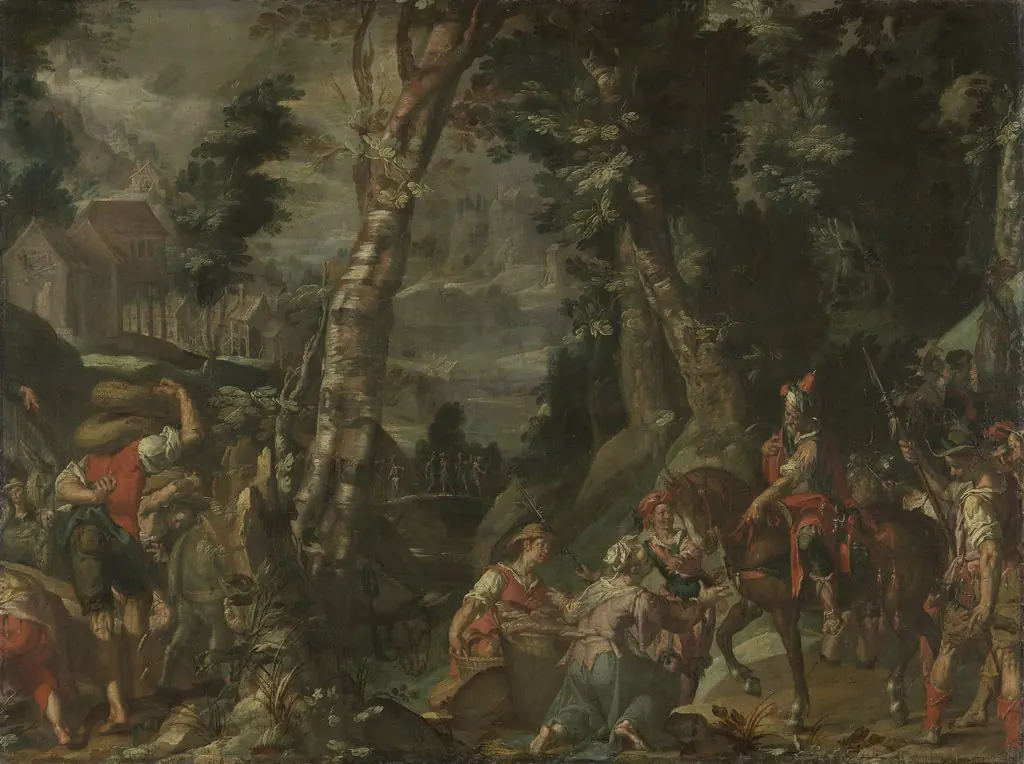 Meeting between David and Abigail
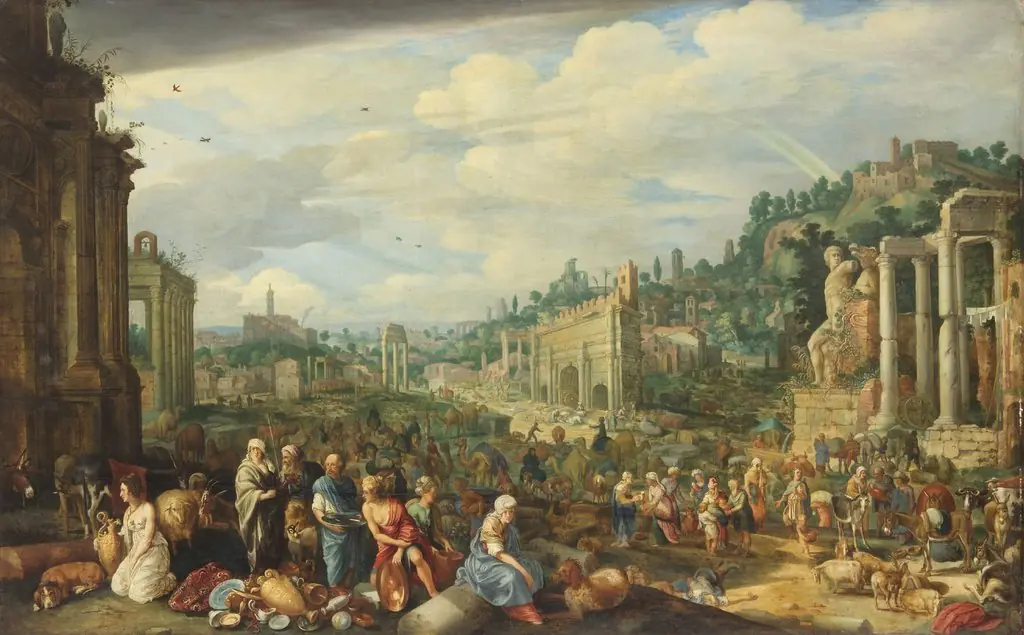 Ansicht des Campo Vaccino in Rom (Aufbruch der Israeliten aus Ägypten)
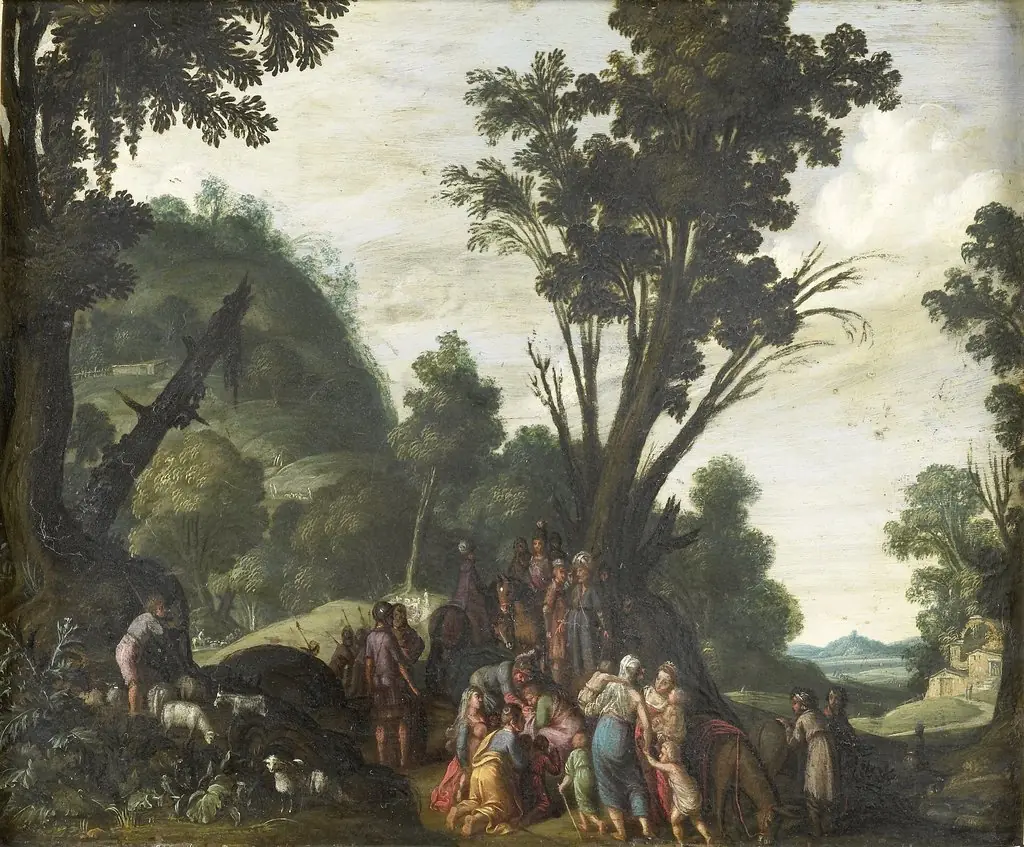 The meeting of Jacob and Esau
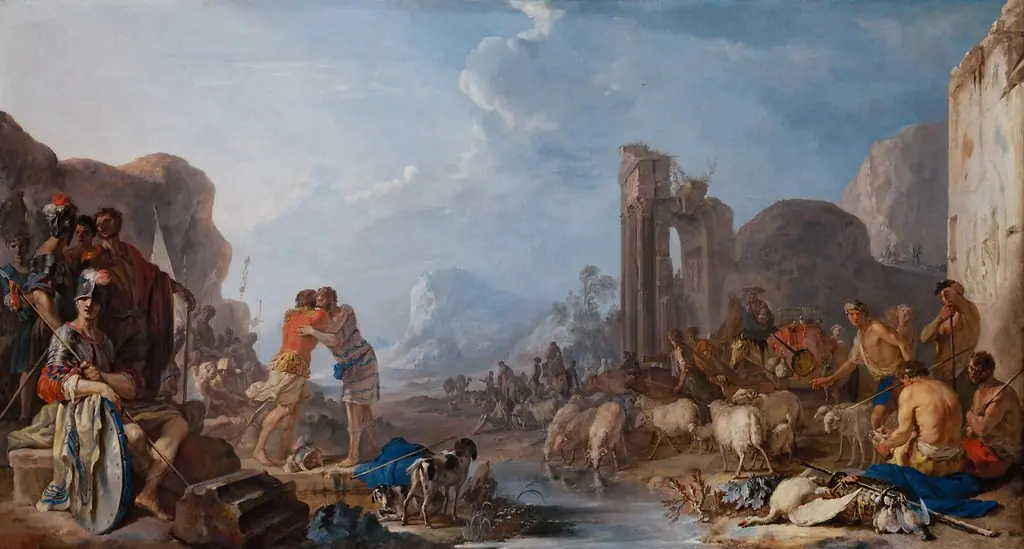 Reconciliation of Jacob with Esau
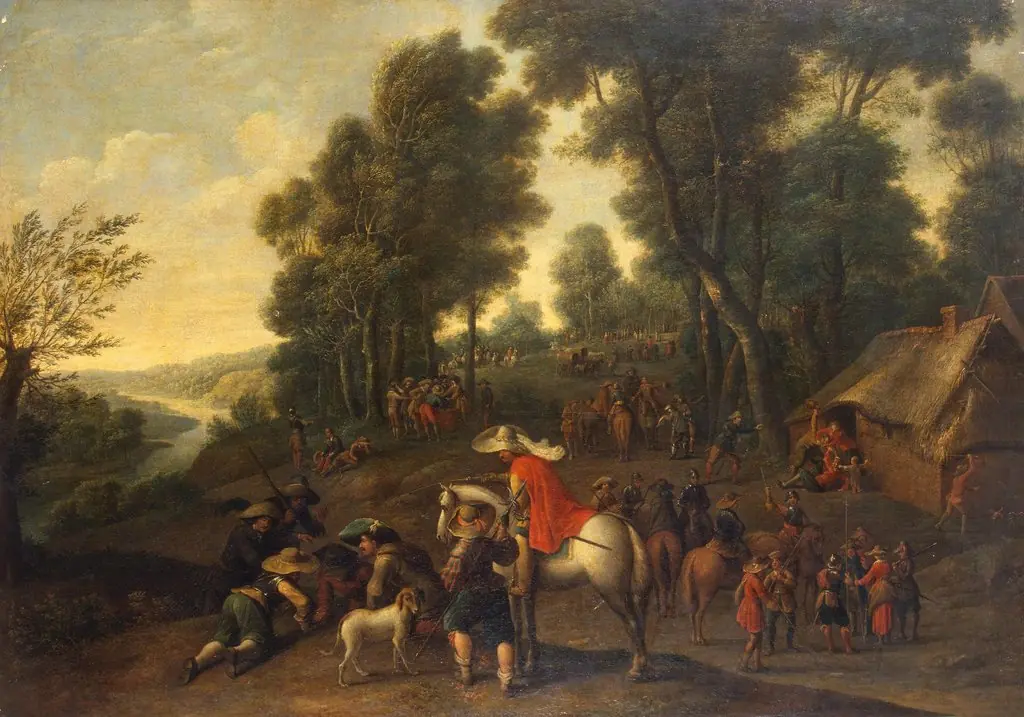 Halt of Horsemen in a Forest
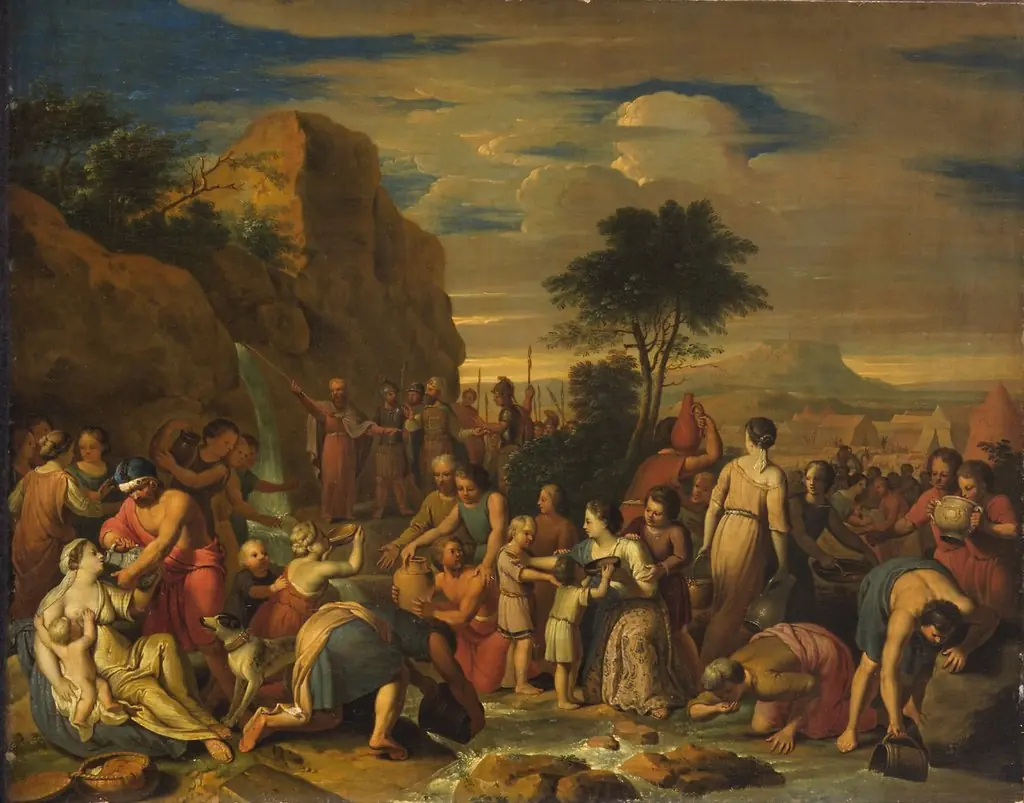 Moses schlägt Wasser aus dem Felsen