Artwork
The Adoration of the Shepherds
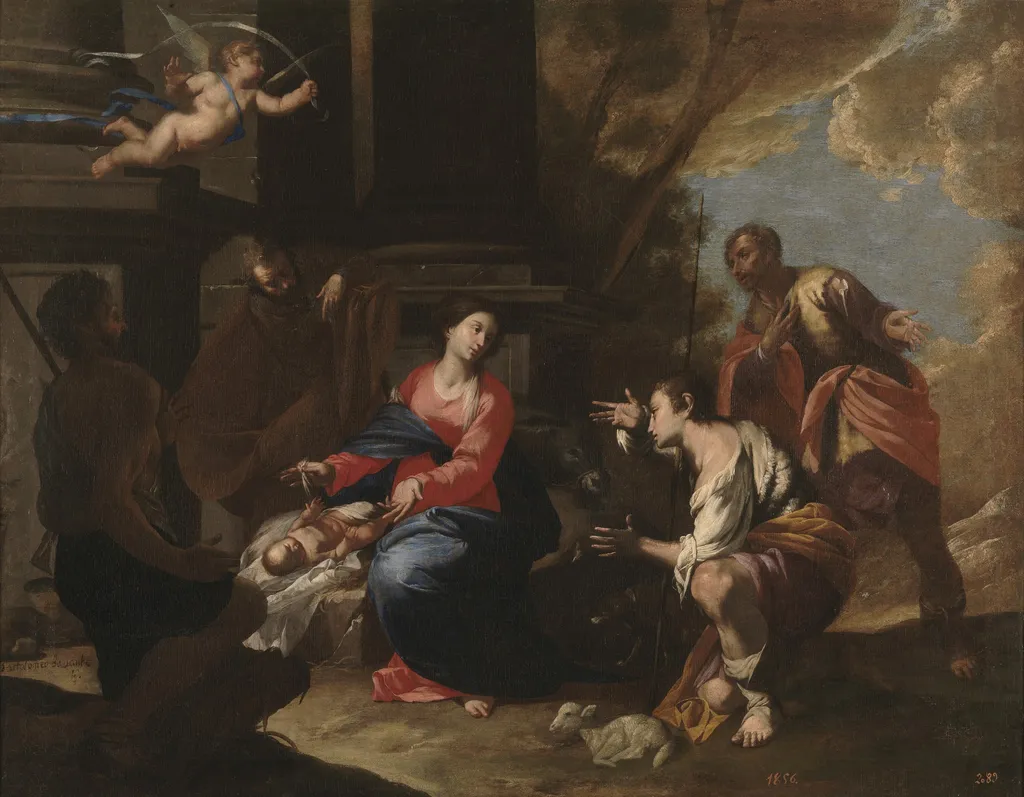
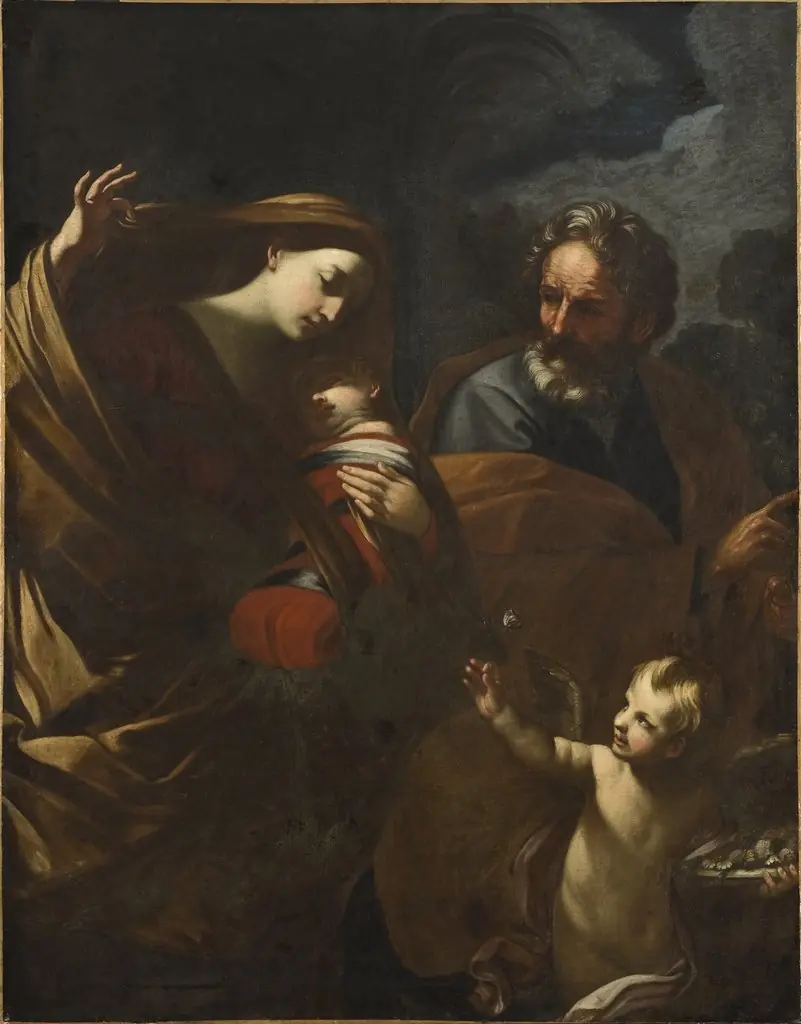
The Adoration of the Shepherds is an oil painting by the Early Baroque Italian artist Bartolomeo Bassante. It dates from 1601 and is held in the collection of the Museo del Prado.
About this work
Subject & Meaning
The painting centers on the infant Jesus, surrounded by the Virgin Mary, Joseph, and a group of shepherds, who represent humility and devotion.
Bartolomeo Bassante’s The Adoration of the Shepherds depicts the biblical scene from the Gospel of Luke (2:8–20) in which shepherds visit the newborn Christ Child. The painting centers on the infant Jesus, surrounded by the Virgin Mary, Joseph, and a group of shepherds, who represent humility and devotion. Their presence underscores the theme of divine revelation to ordinary people, a common motif in Counter-Reformation art.
Iconographic elements include the Christ Child as the focal point, often illuminated to symbolize divine light. The shepherds’ rustic attire contrasts with the holy figures, emphasizing the accessibility of salvation. The work aligns with the religious genre’s didactic purpose, reinforcing the Nativity’s spiritual significance and the shepherds’ role as witnesses to Christ’s birth.
Technique & Style
Created in 1601, The Adoration of the Shepherds by Bartolomeo Bassante is executed in oil paint on a canvas support. The work measures 99 cm in height and 131 cm in width. As a religious painting, the formal execution relies on the traditional oil medium to depict the adoration of the shepherds and the Christ Child. The piece is currently held in the collection of the Museo del Prado.
History & Provenance
Bartolomeo Bassante executed The Adoration of the Shepherds in 1601. Created as an oil painting on canvas, the work depicts the Christ Child and falls within the religious genre. Historical records indicate that the piece was once owned by Elisabeth Farnese. The painting is currently held in the collection of the Museo del Prado.
The painting is part of the collection of the Museo del Prado, where it is listed under the inventory number P00968. It has been on display in the museum’s galleries as part of the permanent collection, including a presentation in the 2015 exhibition of Spanish Baroque works.
The work entered the royal collection through the patronage of Queen Elisabeth Farnese, who acquired it in the early 18th century. Its first recorded exhibition was in the Prado’s 1900 retrospective of Spanish masters, and it was subsequently featured in the 1992 "Baroque in Spain" exhibition.
Technical details recorded in the museum’s catalogue indicate a height of 99 cm and a width of 131 cm, confirming its large‑scale format.
Overview
Bartolomeo Bassante’s oil on canvas, dated 1601, presents a nocturnal interior where a woman in a red‑blue gown cradles a swaddled infant while a kneeling figure gestures upward. A second male figure stands in the rear, clutching a spear, and a cherubic angel hovers above, sounding a trumpet. Beyond the window, a storm‑laden sky broods, its flashes of light punctuating the scene.
Context
Created during the Counter‑Reformation, the painting aligns with contemporary ecclesiastical directives that emphasized emotive, accessible imagery to inspire piety. The inclusion of shepherds, a common motif symbolizing the faithful, and the celestial angel reinforces the narrative of divine revelation to ordinary people.
Own this work as a print
Artist & collection

- The Adoration of the Shepherds
 The Adoration of the Shepherds
 Adoration of the Shepherds
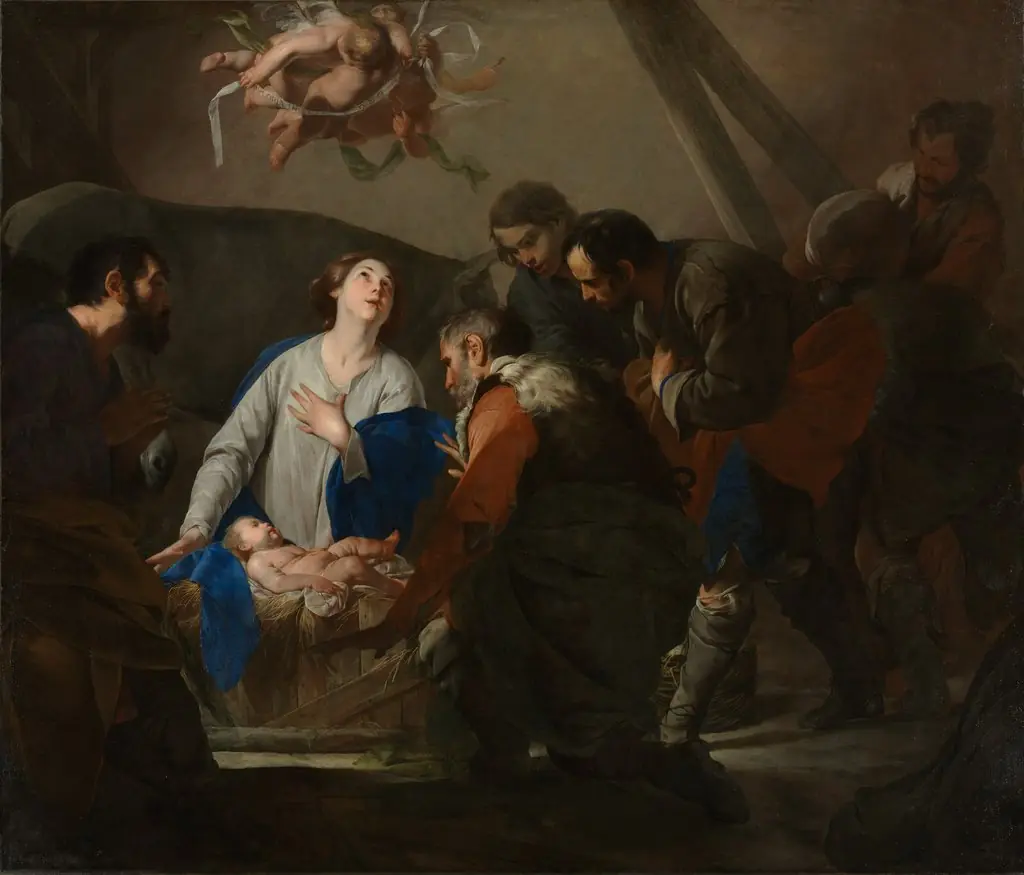 Adoration of the Shepherds
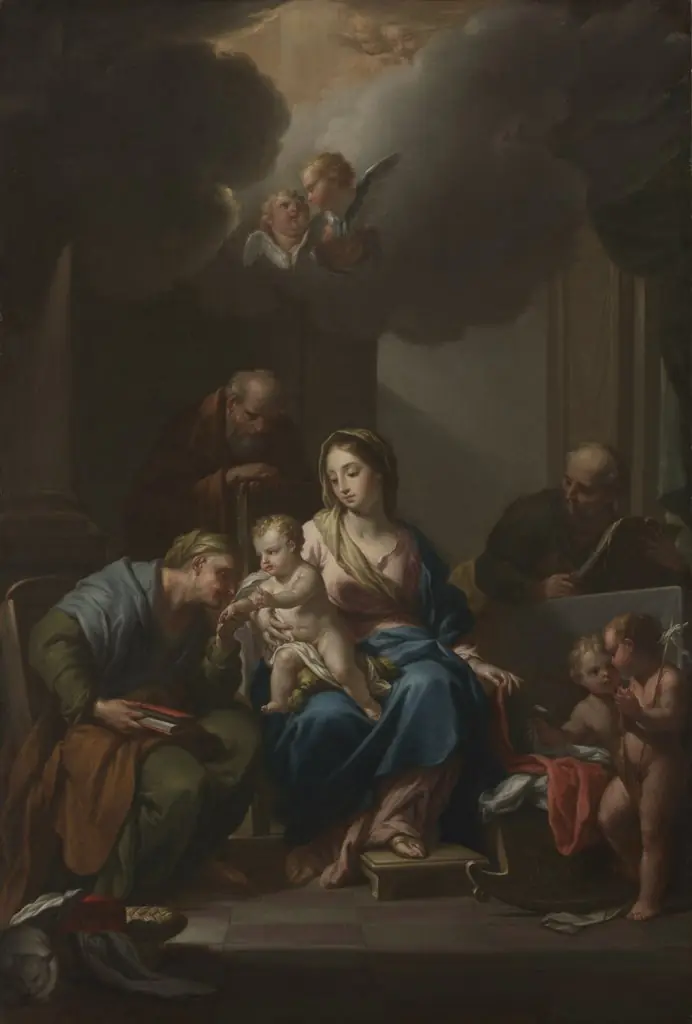 Presentation Sketch for "The Holy Family with Saints Anne, Joachim, and John the Baptist" (for Santa Maria in Via Lata, Roma)
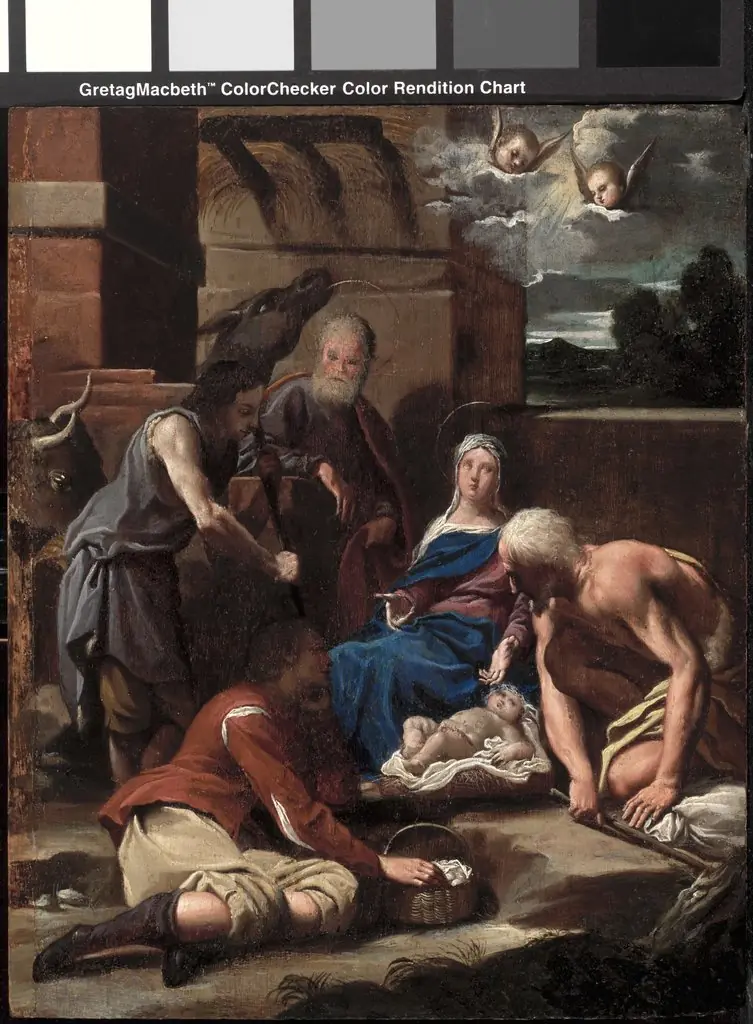 Adoration of the Shepherds
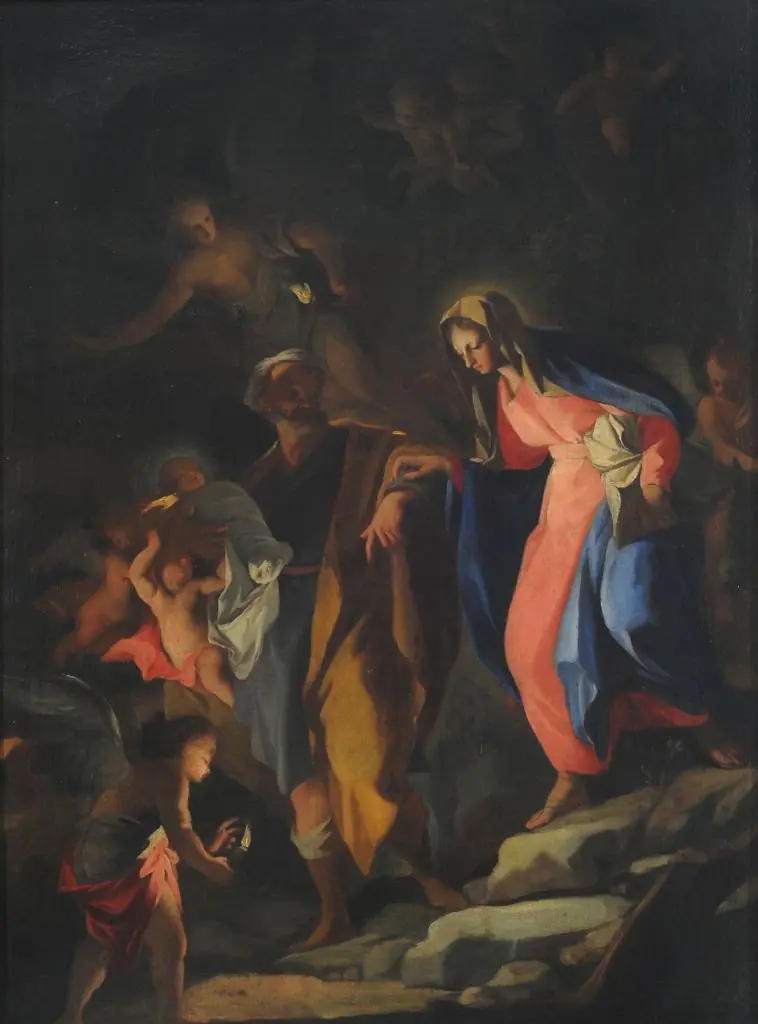 Flight into Egypt
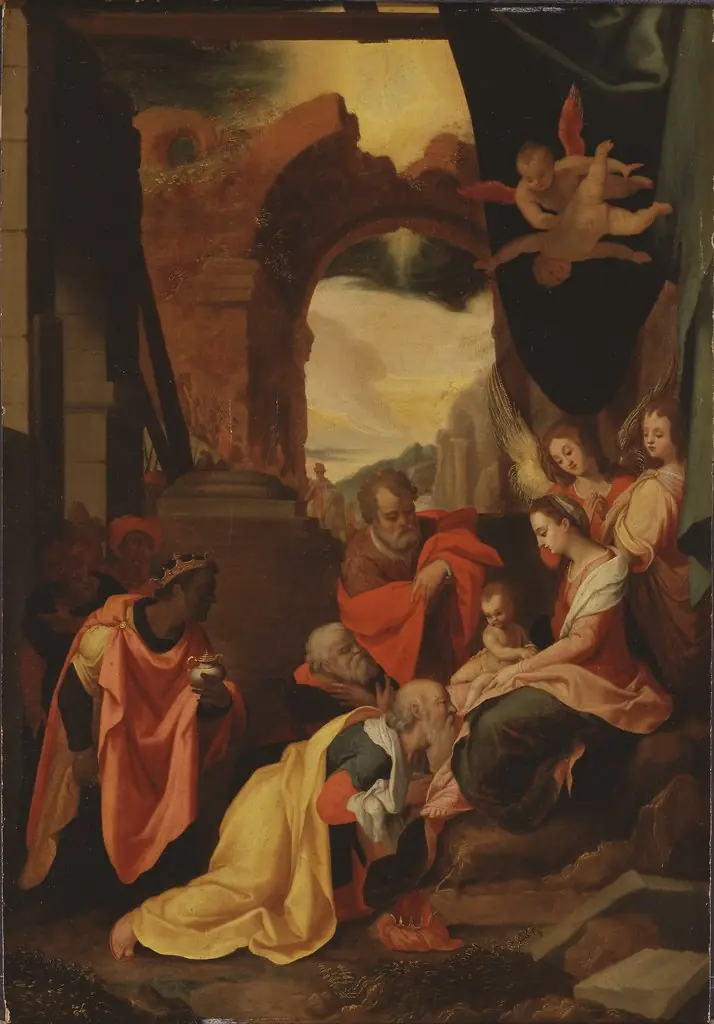 The Adoration of the Magi
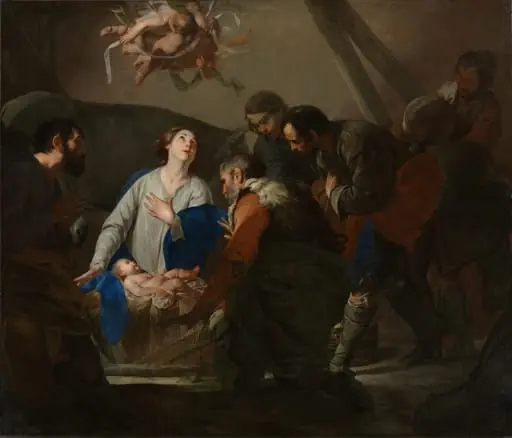 Adoration of the Shepherds
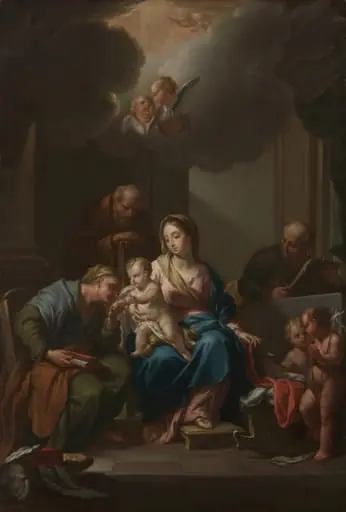 Presentation Sketch for "The Holy Family with Saints Anne, Joachim, and John the Baptist" (for Santa Maria in Via Lata, Roma)
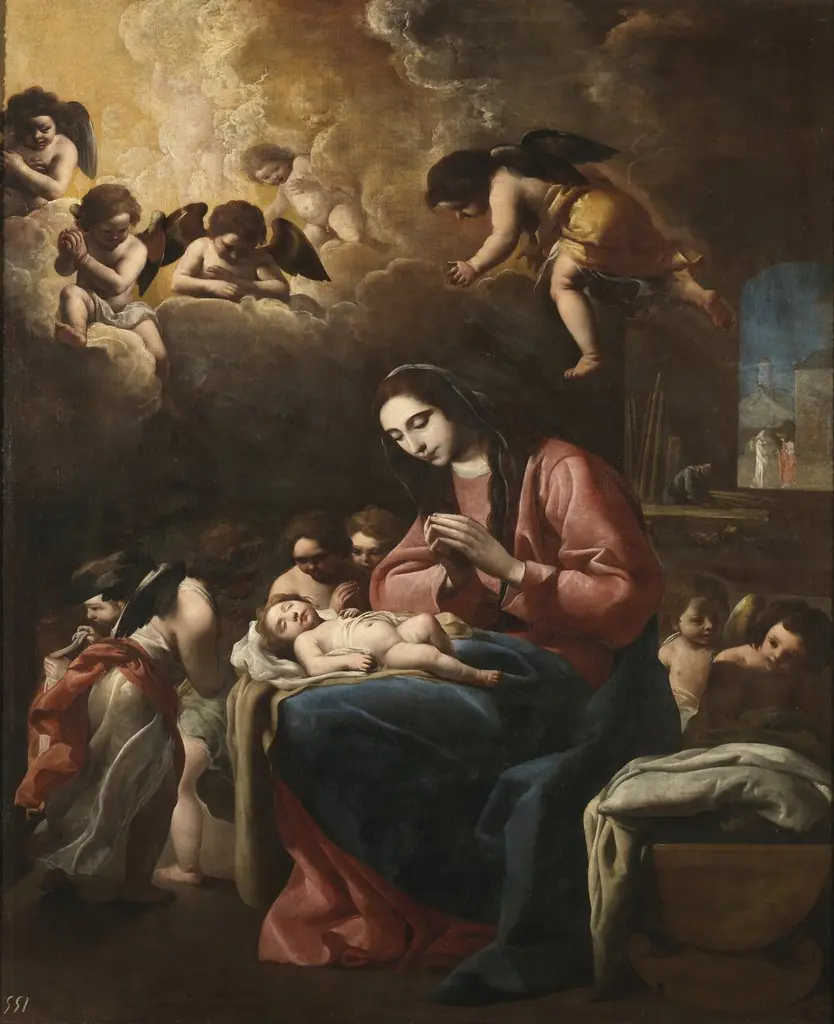 The Virgin and Child with Angels
 The Flight into Egypt