Artwork
The Virgin and Child with Angels
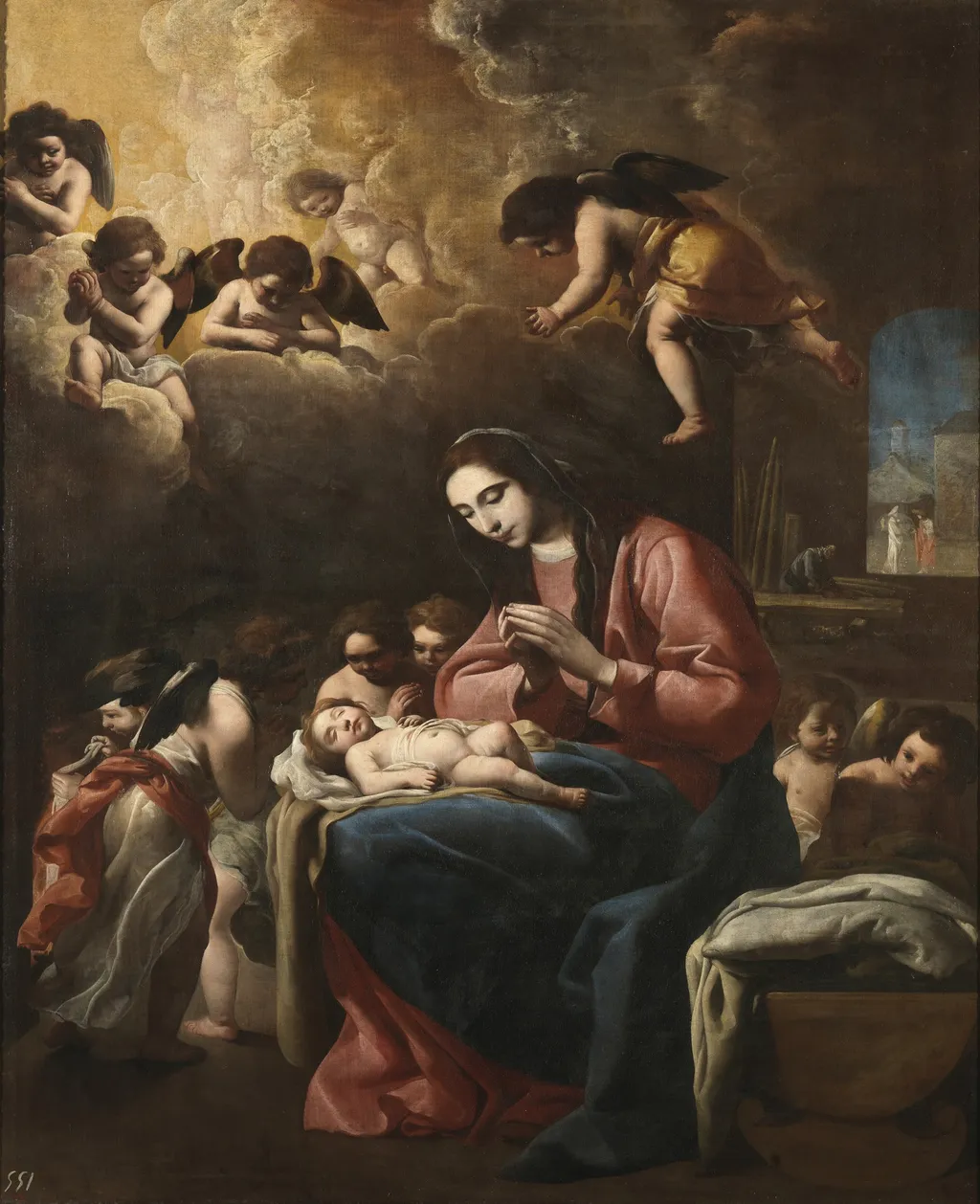
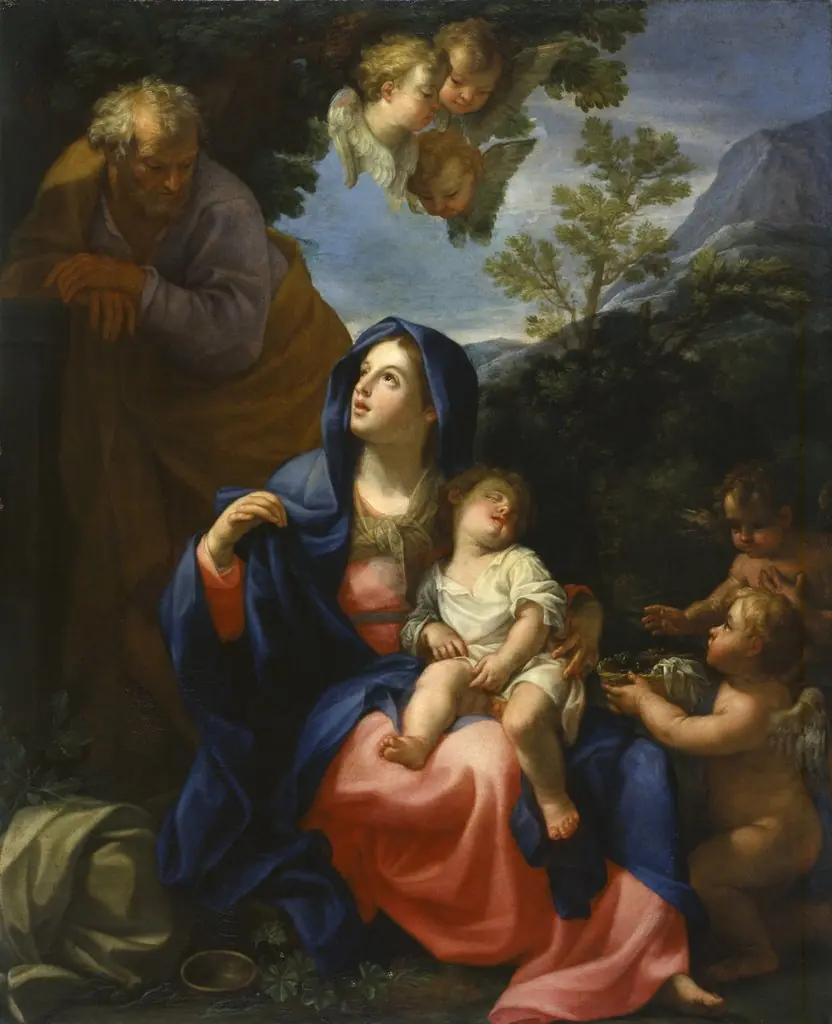
The Virgin and Child with Angels is an oil painting by the Early Baroque Italian artist Eugenio Caxés. It dates from 1618 and is held in the collection of the Museo del Prado.
About this work
Subject & Meaning
The combination of the Virgin, Child, and angels invites viewers to meditate on the sanctity of the figures depicted.
The painting depicts the Virgin Mary with the Christ Child, a devotional subject central to Christian religious art. According to the documented iconography, the work portrays Mary alongside the infant Christ, framed within the tradition of Madonna and Child imagery that emphasizes maternal tenderness and divine incarnation.
The title indicates the presence of angels accompanying the Virgin and Child, a common iconographic device that reinforces the heavenly nature of the figures and the sacred moment being represented. Such angelic attendants traditionally serve as witnesses and worshippers, elevating the scene beyond an ordinary domestic encounter and signaling its theological significance.
As a religious work held by the Museo del Prado, the painting functions as a vehicle for devotion and contemplation, embodying themes of divine motherhood, the mystery of the Incarnation, and the celestial hierarchy surrounding Christ. The combination of the Virgin, Child, and angels invites viewers to meditate on the sanctity of the figures depicted.
Technique & Style
The Virgin and Child with Angels is an oil painting executed on canvas, a support suited to the work's substantial scale of 160 cm in height by 135 cm in width. The medium of oil paint allowed Caxés to model the religious figures with tonal depth, consistent with the devotional handling characteristic of early seventeenth-century Spanish painting. The work is classified as a painting within the religious genre and is held in the collection of the Museo del Prado.
No further details regarding specific technique, surface condition, or stylistic analysis are documented in the available sources.
History & Provenance
Eugenio Caxés created the oil-on-canvas painting The Virgin and Child with Angels in 1618. The work depicts the Virgin Mary and the Christ Child accompanied by angels, executed in a religious genre typical of the period. Current records indicate the painting is held in the collection of the Museo del Prado. The dimensions of the canvas are recorded as 160 cm in height and 135 cm in width.
The work is held in the collection of the Museo del Prado, Madrid, where it is inventoried as oil on canvas, measuring 160 cm by 135 cm.
It has been exhibited at the Museo del Prado in the context of its permanent holdings of religious painting from the Spanish Golden Age, including displays dedicated to works by Eugenio Caxés.
Context
The painting was created by Eugenio Caxés in 1618 as an oil on canvas work classified as religious art. It measures 160 cm by 135 cm and depicts Mary with the infant Christ Child accompanied by angels. The work belongs to the Spanish Baroque period and reflects the devotional practices of Counter-Reformation Spain.
It is part of the permanent collection at the Museo del Prado in Madrid, where it has been displayed since its acquisition.
Overview
Eugenio Caxés’ oil painting titled The Virgin and Child with Angels was completed in 1618. The composition centers on the Virgin Mary holding the infant Jesus, encircled by a group of angels. Executed on canvas, the work now belongs to the collection of the Museo del Prado in Madrid.
Own this work as a print
Artist & collection

- Nativity
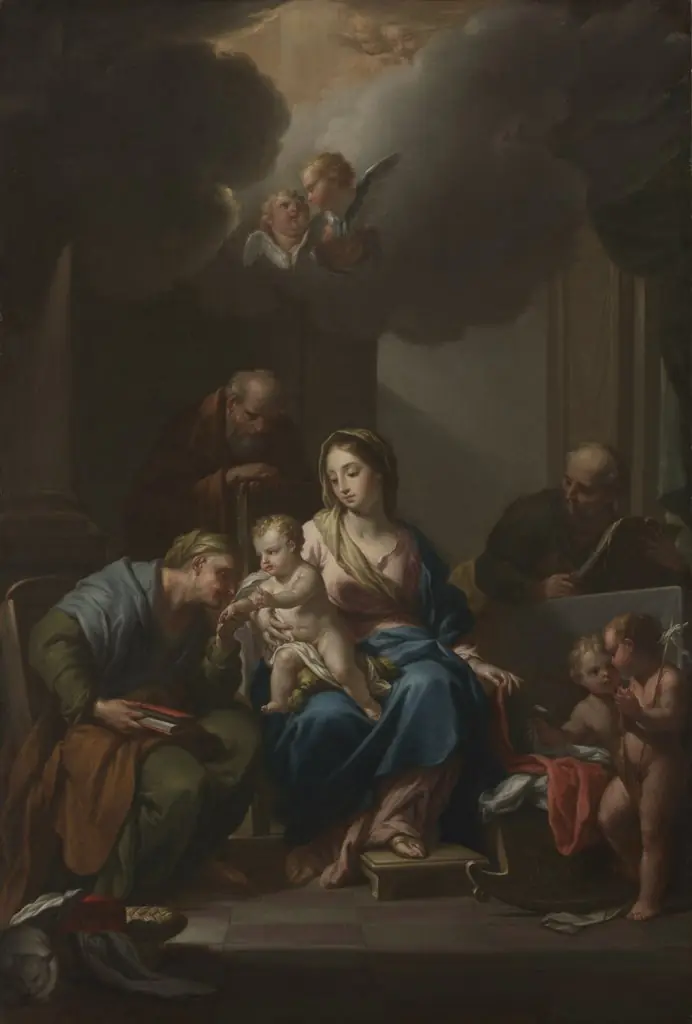 Presentation Sketch for "The Holy Family with Saints Anne, Joachim, and John the Baptist" (for Santa Maria in Via Lata, Roma)
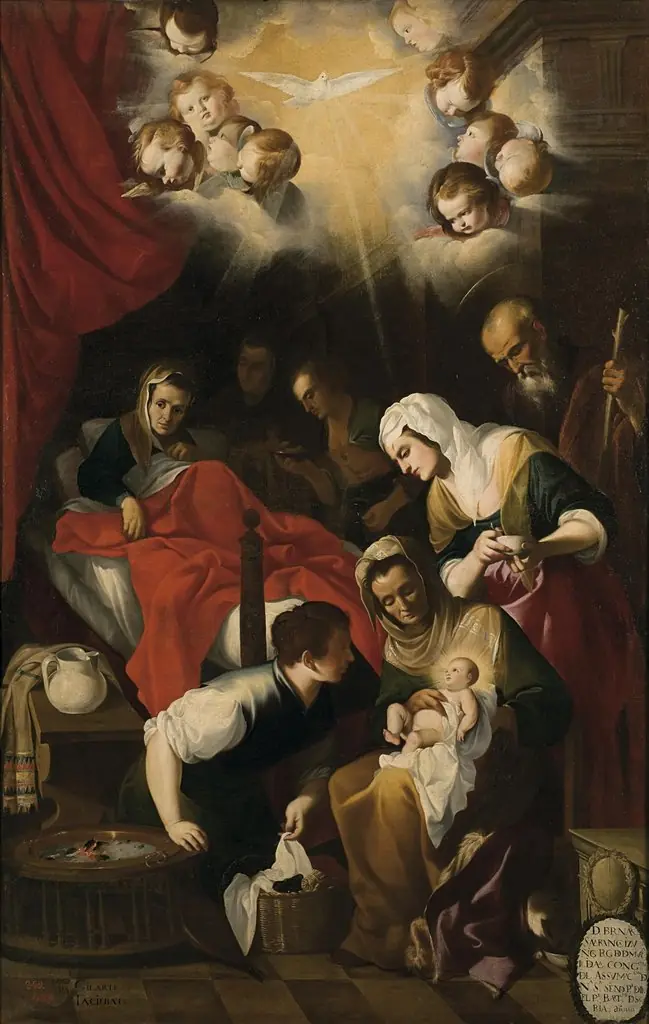 The Birth of the Virgin
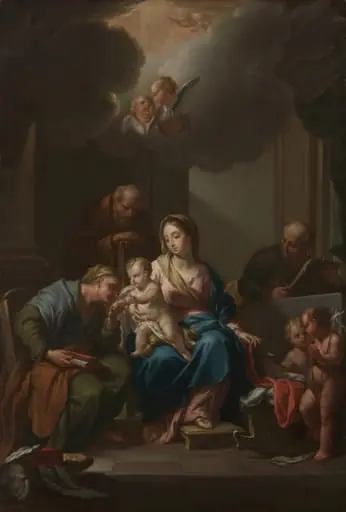 Presentation Sketch for "The Holy Family with Saints Anne, Joachim, and John the Baptist" (for Santa Maria in Via Lata, Roma)
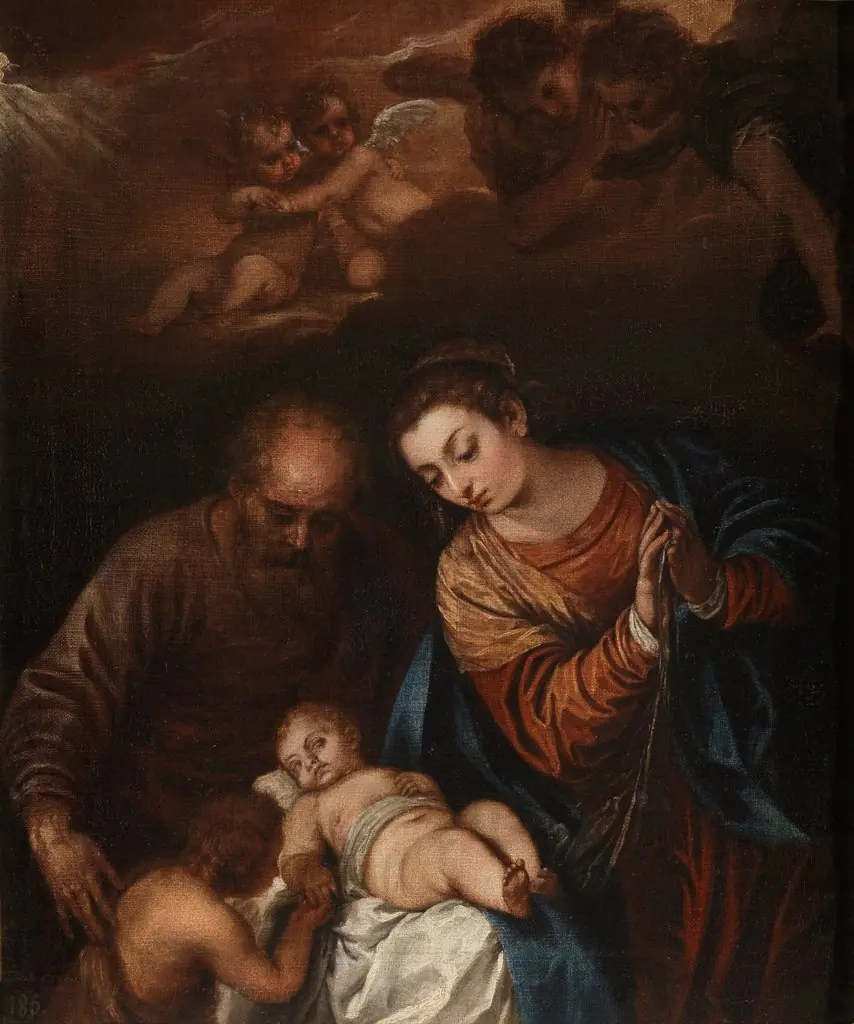 La Sagrada Familia
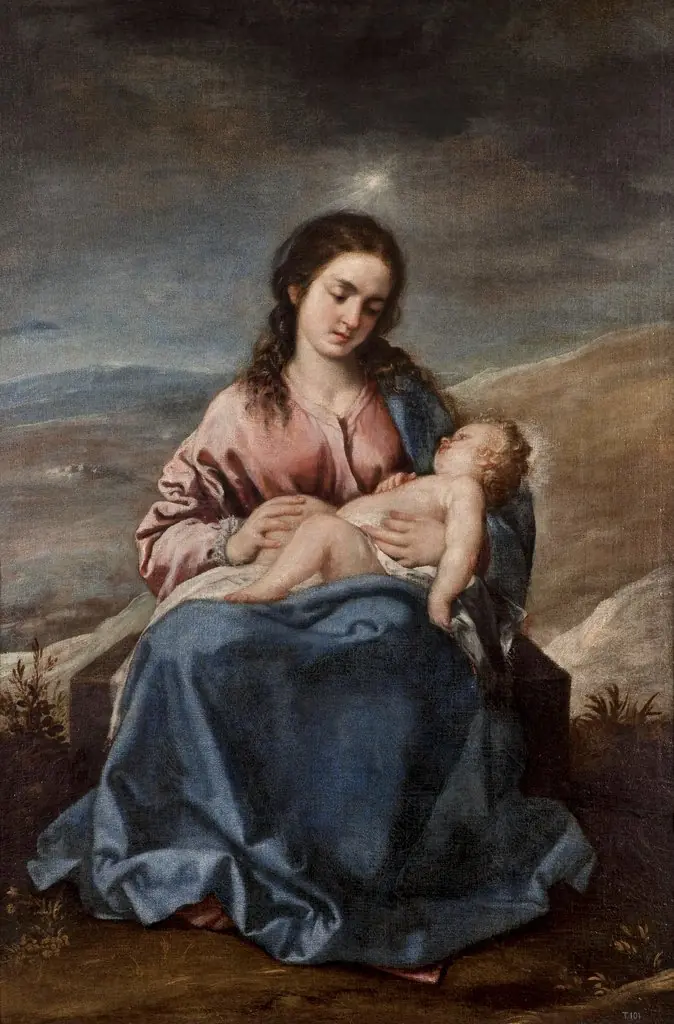 The Virgin of the Star
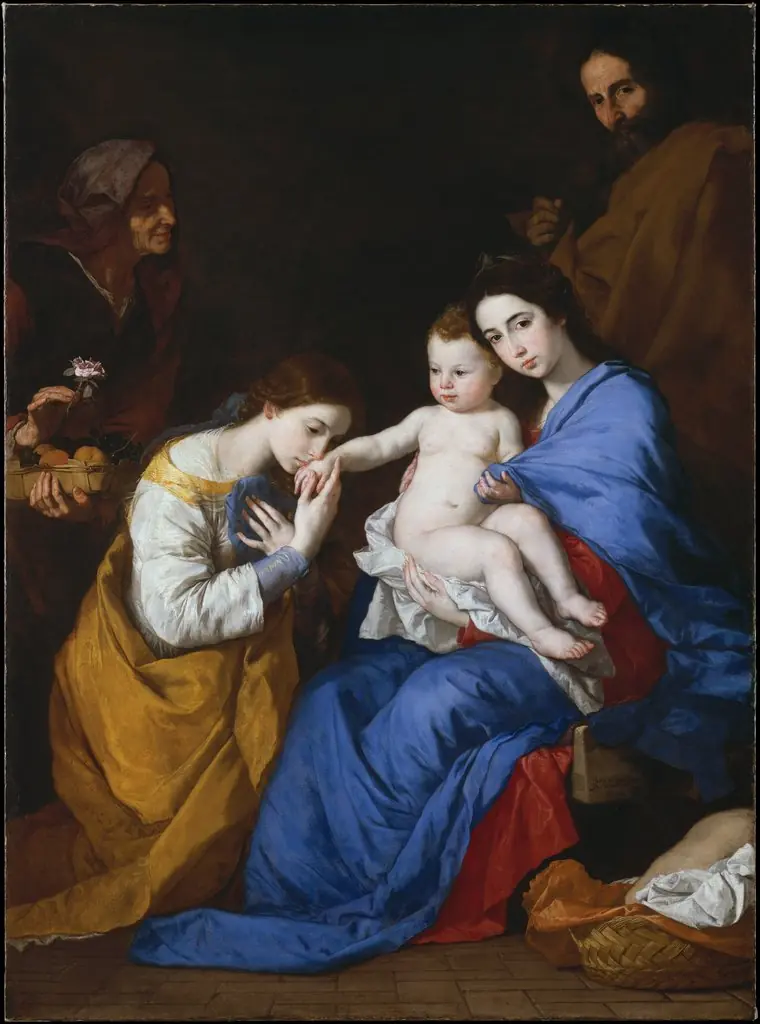 The Holy Family with Saints Anne and Catherine of Alexandria
 The Virgin and Child
 The Virgin and Child in Glory
 Adoration of the Shepherds
 Madonna with the Child and angels
 The Rest on The Flight into Egypt