Artwork
The Lament of Aminta
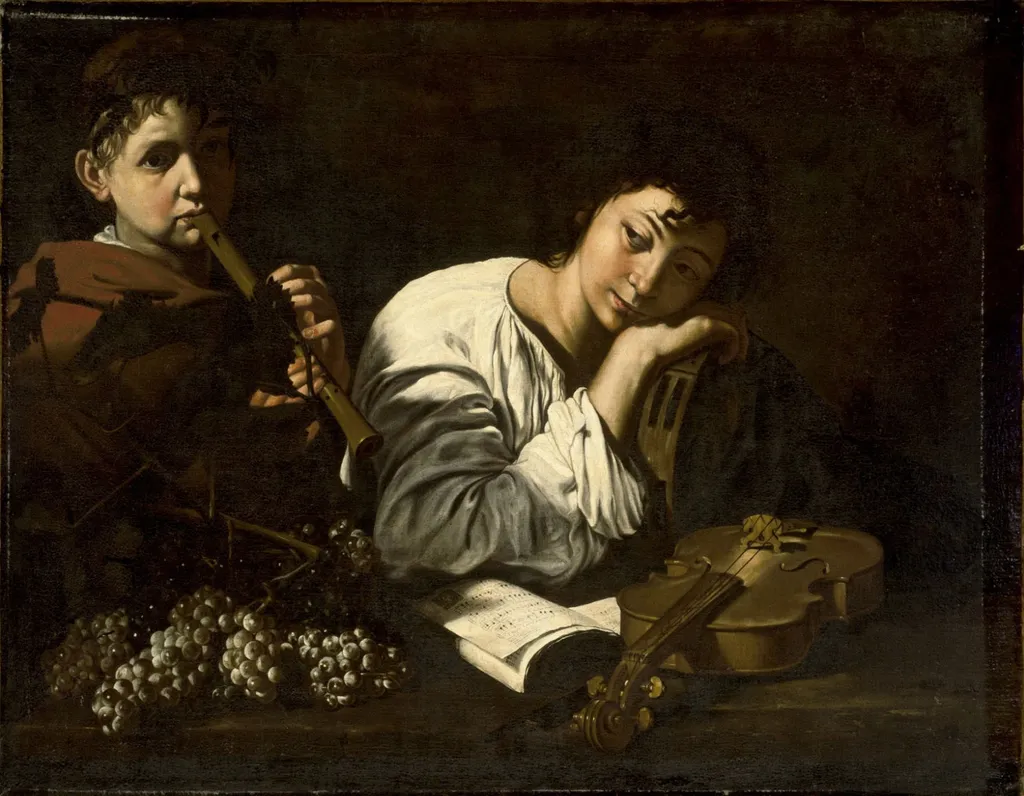
The Lament of Aminta is an oil painting by the Early Baroque Italian artist Bartolomeo Cavarozzi. It dates from 1616 and is held in the collection of the Philadelphia Museum of Art.
About this work
Subject & Meaning
Together, these details construct a visual elegy for Aminta’s lost love, translating literary pathos into painted allegory.
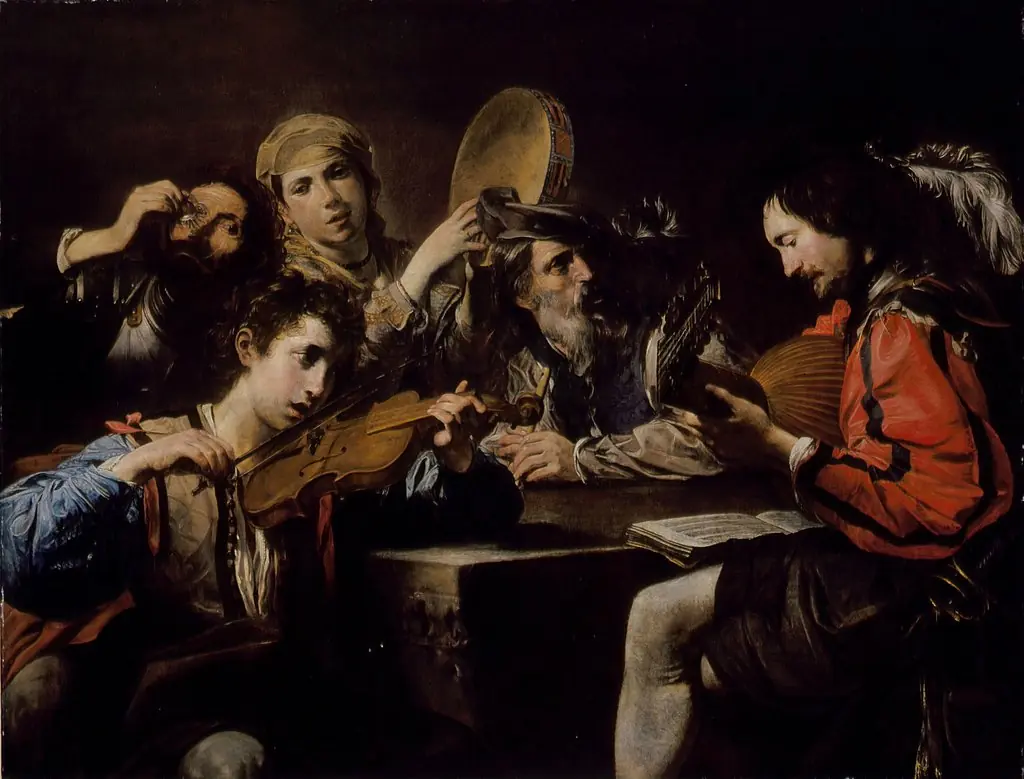
The work depicts the mythological shepherd Aminta in a moment of sorrow, identified by the presence of musical instruments and notated sheet music alongside a cluster of grapes. Aminta, a figure from Torquato Tasso’s pastoral poem Aminta, is traditionally associated with themes of unrequited love and lamentation, which the assembled objects reinforce: the recorder, violin, and tambourine suggest music turned to mourning, while the grapes may allude to the vineyards of his native Arcadia and the bittersweetness of pastoral life. The scene’s quiet intensity frames personal grief within a classical landscape, aligning with the broader tradition of representing mythological sorrow through symbolic still-life elements and musical iconography.
Together, these details construct a visual elegy for Aminta’s lost love, translating literary pathos into painted allegory.
Technique & Style
The Lament of Aminta is an oil painting executed on canvas by Bartolomeo Cavarozzi. The work belongs to the mythological genre and depicts the figure of Aminta surrounded by various objects, including a grape, a recorder, printed sheet music, a tambourine, and a violin. Measuring 39 cm in height and 29.75 cm in width, the composition focuses on this main subject within a relatively small format typical of intimate mythological scenes.
History & Provenance
The Lament of Aminta is held in the collection of the Philadelphia Museum of Art, where it is located. The work is executed in oil paint on canvas and measures 39 cm in height by 29.75 cm in width. While the painting depicts mythological figures and musical instruments, the available records do not specify a unique inventory or accession number for the piece.
Furthermore, no specific exhibition history or loan records are provided in the current documentation regarding this artwork's public display.
Overview
Bartolomeo Cavarozzi executed The Lament of Aminta circa 1616, a work situated within the early Baroque period in Italy. A practitioner influenced by Caravaggio, Cavarozzi trained in Rome before extending his artistic reach to Spain, where he disseminated Caravaggesque techniques. The painting resides in the Philadelphia Museum of Art and exemplifies the dramatic interplay of light and shadow characteristic of its era.
Context
The painting emerges from a cultural milieu in which mythological themes intersected with naturalistic representation. Cavarozzi’s travels between Italy and Spain facilitated cross-regional artistic exchange, particularly the transmission of Caravaggio’s innovations. The Lament of Aminta participates in this broader dialogue, blending narrative ambiguity with technical precision to evoke emotional resonance.
Artist & collection
Artist
Bartolomeo Cavarozzi (1587–1625), occasionally referred to as Bartolomeo Crescenzi, was an Italian caravaggisti painter of the Baroque period.