Artwork
Fruit Vendor
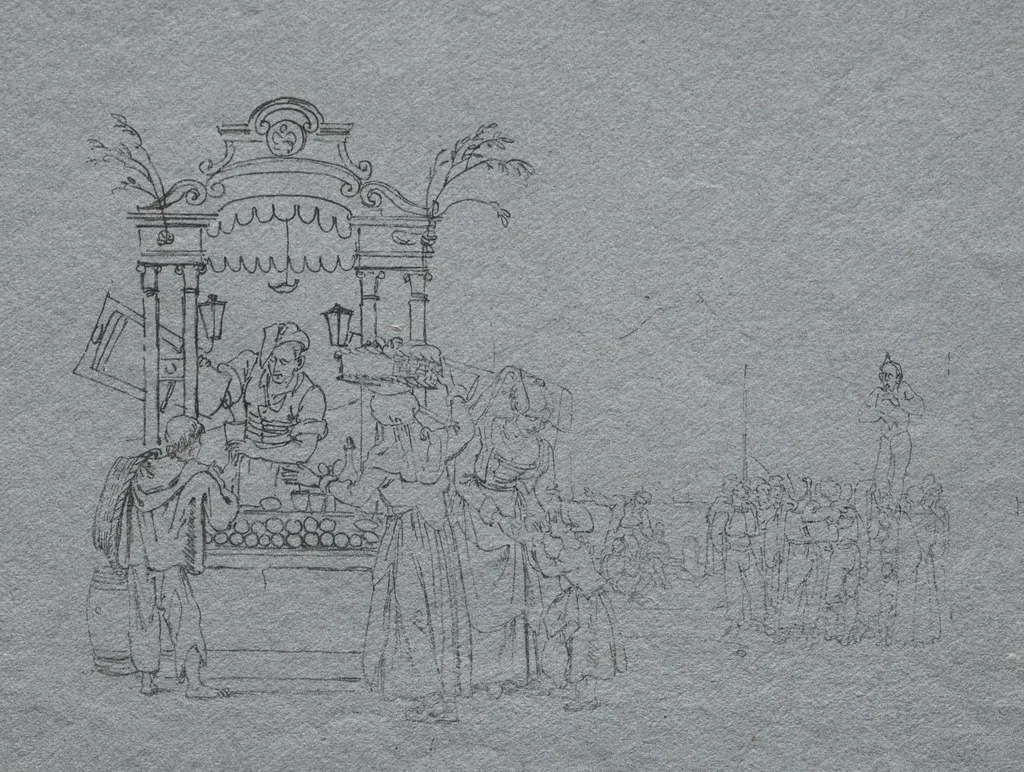
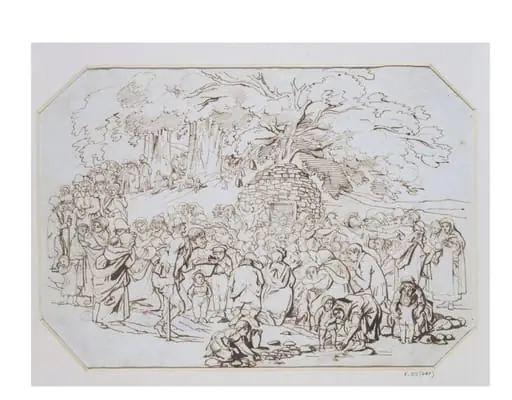
Fruit Vendor is a print by the Romanticist artist Bartolomeo Pinelli. It dates from 1804 and is held in the collection of the Cleveland Museum of Art.
- Accession no.
- 1940.1161
- Credit line
- Mr. and Mrs. Lewis B. Williams Collection
About this work
Overview
Executed with swift, expressive lines, it reflects the artist’s interest in ordinary people rather than mythological or historical subjects.
Created around 1804 by Bartolomeo Pinelli, this ink drawing captures a moment of urban commerce in Rome. The work is part of a broader series documenting daily life in the city’s streets. Executed with swift, expressive lines, it reflects the artist’s interest in ordinary people rather than mythological or historical subjects. The piece is now held in the collection of The Cleveland Museum of Art.
Subject & Meaning
The scene centers on a fruit vendor seated on a low platform, surrounded by an array of seasonal produce. Shoppers lean in, baskets in hand, while passersby move through a narrow street lined with hanging lanterns and a draped canopy. The composition emphasizes transaction and movement, portraying commerce as a natural rhythm of urban existence. No idealization is present, only the unvarnished activity of the marketplace.
Technique & Style
Pinelli used ink with loose, energetic strokes to convey motion and texture. The drawing’s sketch-like quality suggests immediacy, as if observed in passing. Details like the folds of fabric, the arrangement of fruit, and the clustering of figures are rendered with minimal refinement, prioritizing vitality over polish. The lack of shading and flat perspective reinforce its documentary character.
History & Provenance
The work originates from Pinelli’s extensive studies of Roman street life during the early 19th century, a period of social change following the Napoleonic occupation. It was likely produced as part of a larger collection of genre scenes intended for private or scholarly circulation. The Cleveland Museum of Art acquired the piece in the 20th century as part of its growing holdings of European graphic art.
Context
Pinelli worked during a time when interest in vernacular culture was growing among artists and collectors. His drawings responded to a shift away from grand historical narratives toward depictions of common people. Similar scenes by contemporaries in Italy and France reflect this trend, positioning Pinelli within a broader European movement to record everyday reality with authenticity.
Legacy
Pinelli’s street scenes, including this one, contributed to the preservation of visual records of Roman life before industrialization transformed the city. Though not widely known outside specialist circles, his work influenced later Italian illustrators and ethnographic artists who sought to document popular customs. These drawings remain valuable as historical documents of urban behavior and material culture.
Own this work as a print
Artist & collection


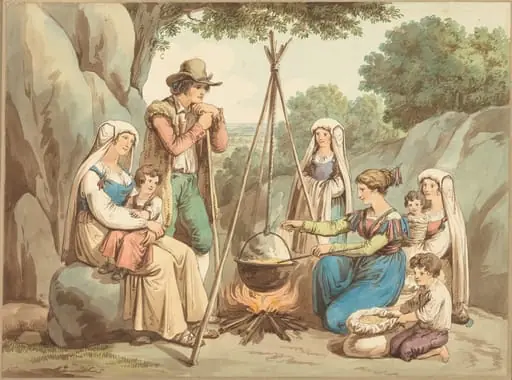 A Peasant Family Cooking over a Campfire
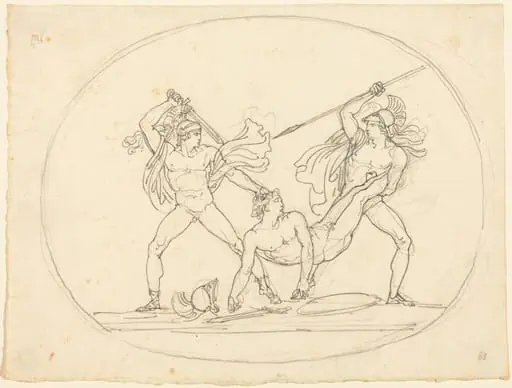 Two Ancient Warriors Fighting over a Dead Comrade
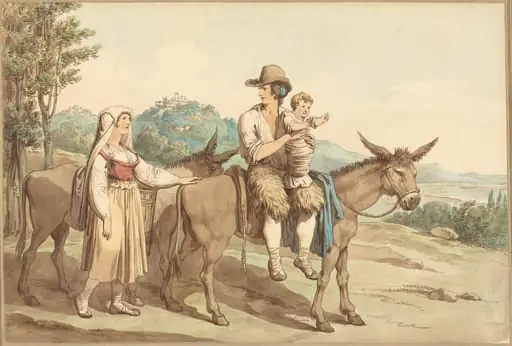 A Peasant Family and Two Donkeys
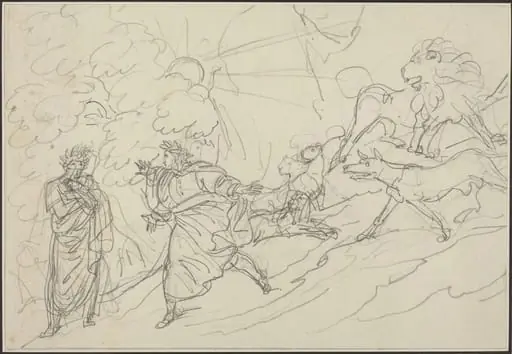 Dante Flees the Wild Beasts and Meets Virgil
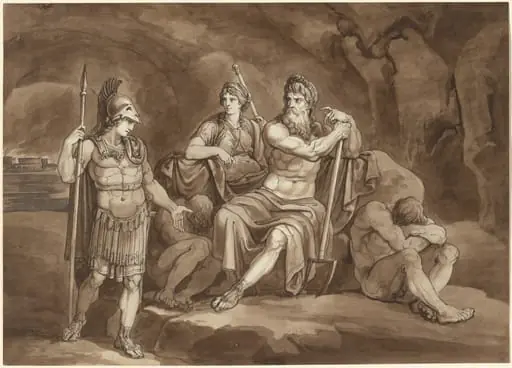 Telemachus Requests Permission from Pluto to Seek His Father in the Underworld
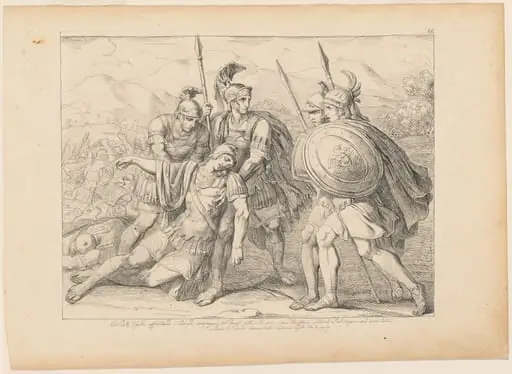 The Death of Lausus
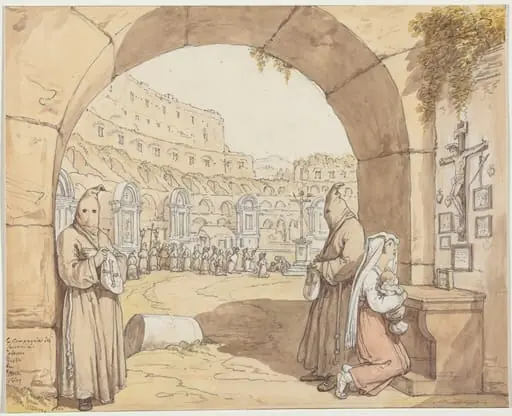 La Compagnia dei sacconi al Colosseo (Penitents Praying at Altars in the Colosseum)
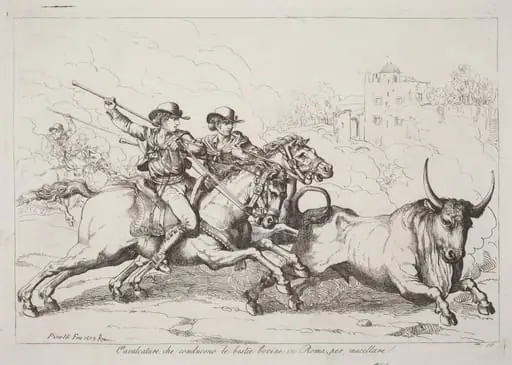 Cavalcature che conducono le bestie bovine in Roma, per macellare (Cattle Driven to the Slaughter in Rome) (Plate 16)
- The Slave Market
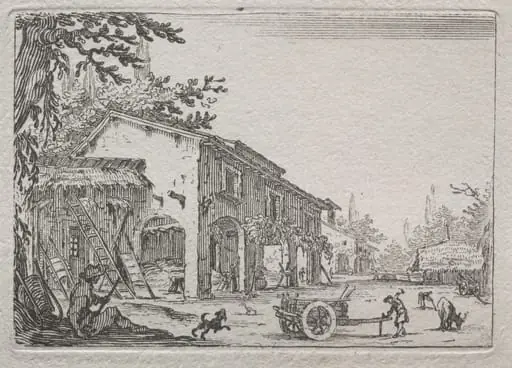 Caprices: The Italian Farm
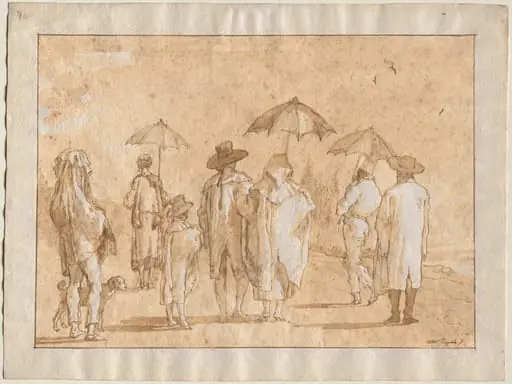 A Spring Shower
 Triomphe de Pompee dans Rome
 Promenaders in St. James' Park
 The Martyrdom of St. Sebastian
 Untitled
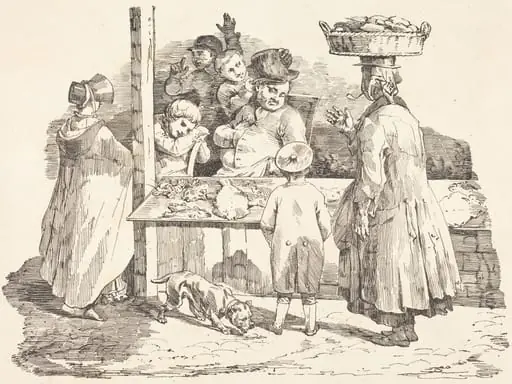 The Dozing Fishmonger (Le marchand de poissons endormie)
 Tanka boats and boatpeople on the beach by the sea wall, Macau
 Pregătirea de vânătoare
 The Long Balcony
 The Holy Well