Artwork
La Compagnia dei sacconi al Colosseo (Penitents Praying at Altars in the Colosseum)
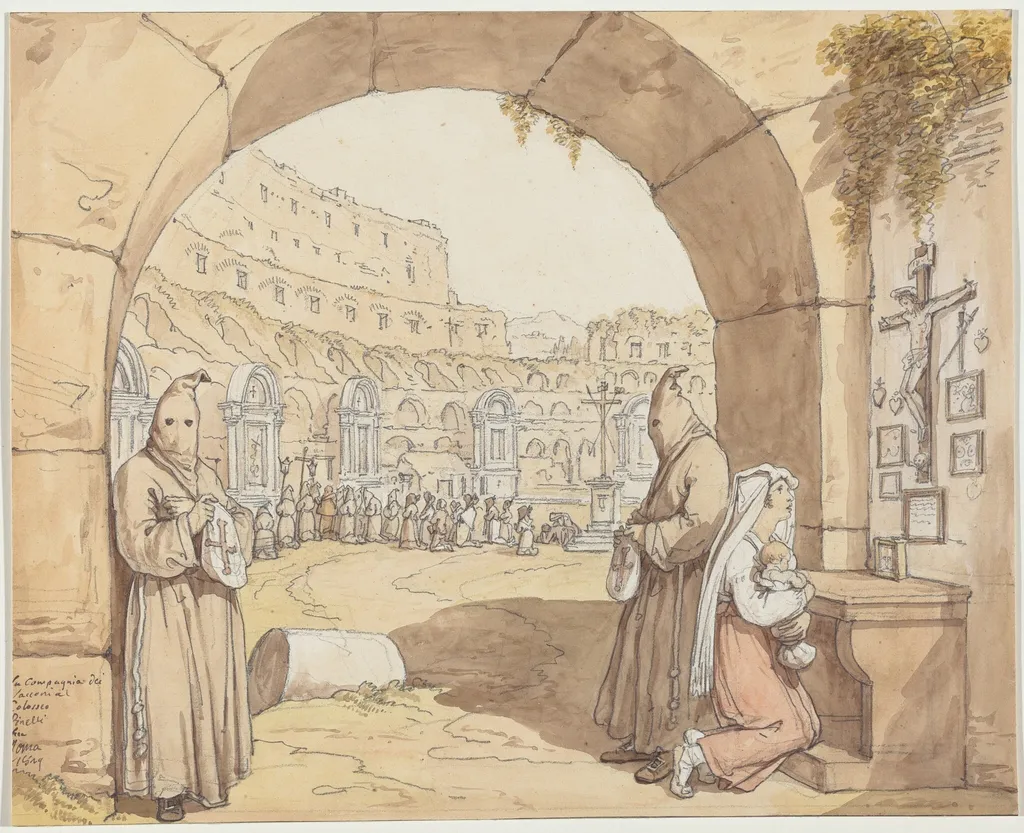
La Compagnia dei sacconi al Colosseo (Penitents Praying at Altars in the Colosseum) is a chalk drawing by the Romanticist artist Bartolomeo Pinelli. It dates from 1829 and is held in the collection of the National Gallery of Art.
- Inscription
- Inscribed:lower left in brown ink: La Compagnia dei / sacconi al / Colosseo / Pinelli / fec / Roma 1829
About this work
Overview
Bartolomeo Pinelli’s 1829 watercolor, titled La Compagnia dei sacconi al Colosseo (Penitents Praying at Altars in the Colosseum), depicts a small devotional gathering within the ruined interior of the ancient arena. Executed on wove paper with black chalk, graphite and delicate washes, the work measures a modest size typical of preparatory sketches, yet it captures a moment of quiet reverence amid monumental decay.
Subject & Meaning
They are positioned before makeshift altars framed by painted icons and crosses, suggesting a penitential brotherhood performing private prayers.
The composition centers on three cloaked figures: a man reading a book, a standing man, and a woman cradling an infant. They are positioned before makeshift altars framed by painted icons and crosses, suggesting a penitential brotherhood performing private prayers. The surrounding crowd, rendered as a mass of silhouettes, emphasizes the contrast between personal piety and the public spectacle of the Colosseum’s historic ruins.
Technique & Style
Pinelli combines fine black chalk and graphite under a translucent watercolor wash, allowing edges to dissolve into a hazy atmosphere. The soft blending creates a dreamlike quality, while the limited palette of muted earth tones highlights the architectural arches and broken columns. This approach reflects Romantic sensibilities, privileging mood and emotional resonance over precise architectural detail.
History & Provenance
Created in 1829, the drawing belongs to Pinelli’s series of studies documenting Roman monuments and popular religious practices. It entered a private collection in the late 19th century before being acquired by a European museum in the early 20th century, where it has remained on view as part of the institution’s holdings on 19th‑century Italian drawing.
Own this work as a print
Artist & collection


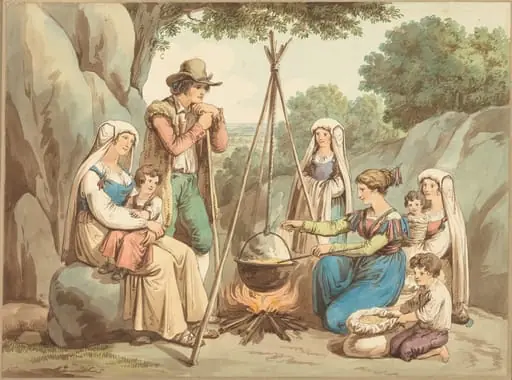 A Peasant Family Cooking over a Campfire
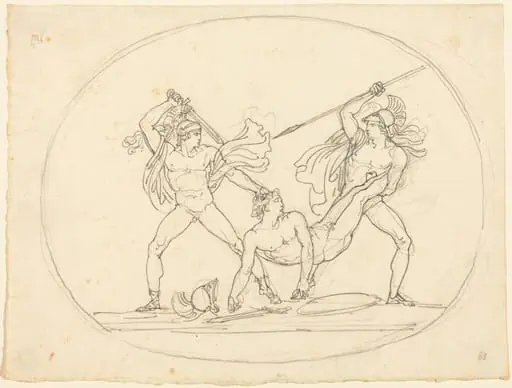 Two Ancient Warriors Fighting over a Dead Comrade
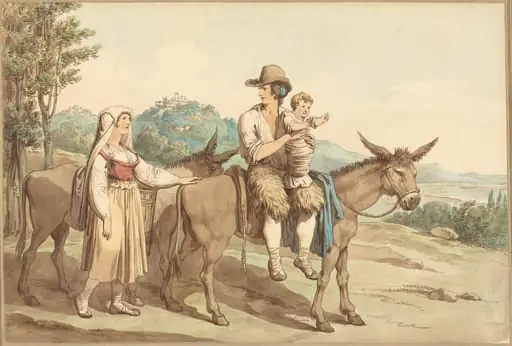 A Peasant Family and Two Donkeys
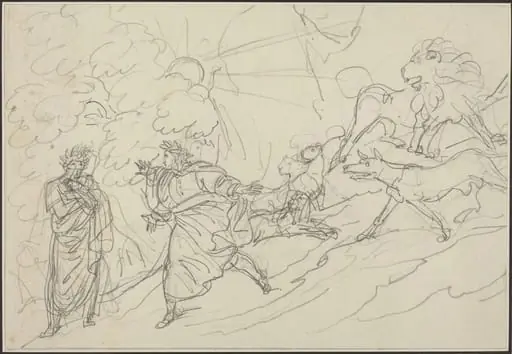 Dante Flees the Wild Beasts and Meets Virgil
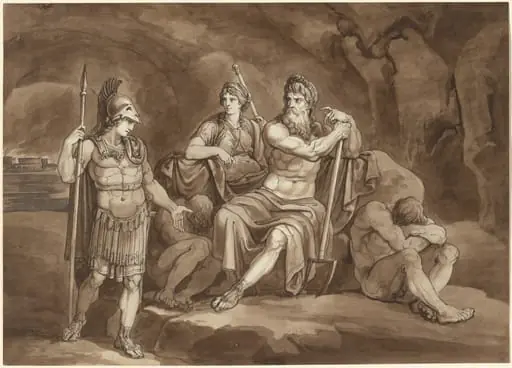 Telemachus Requests Permission from Pluto to Seek His Father in the Underworld
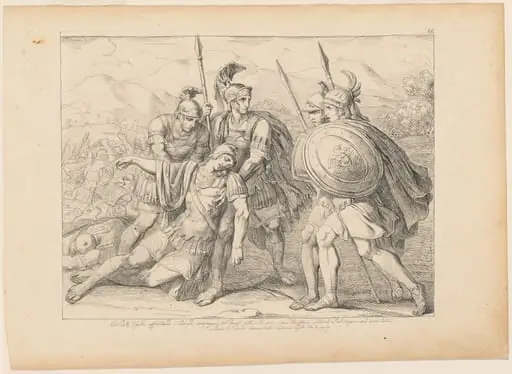 The Death of Lausus
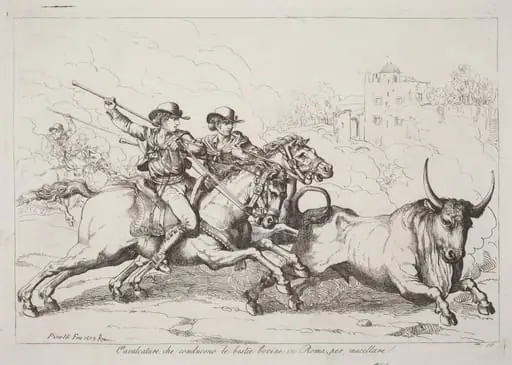 Cavalcature che conducono le bestie bovine in Roma, per macellare (Cattle Driven to the Slaughter in Rome) (Plate 16)
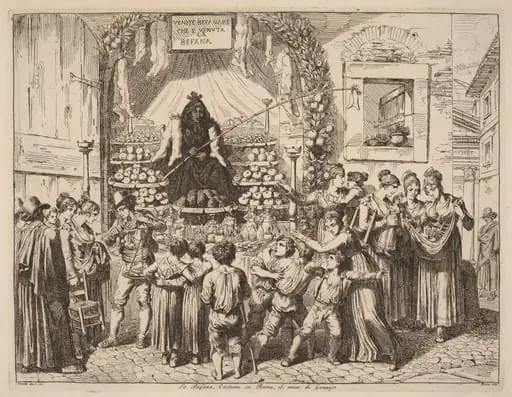 La Befana
- A Priest Processing through a Medieval Street in Viterbo
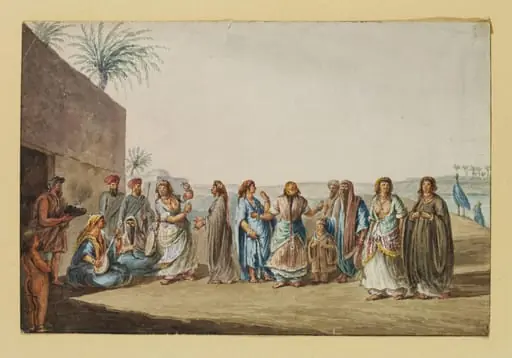 An Egyptian Ball, At Ned Sili
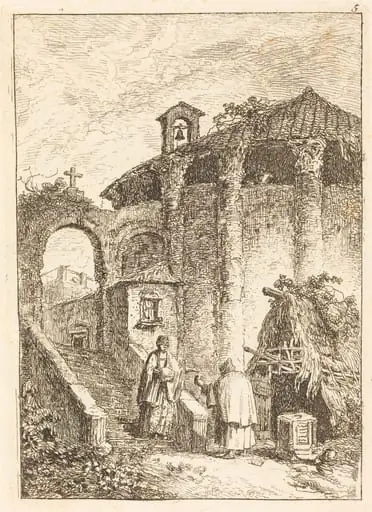 The Ancient Temple
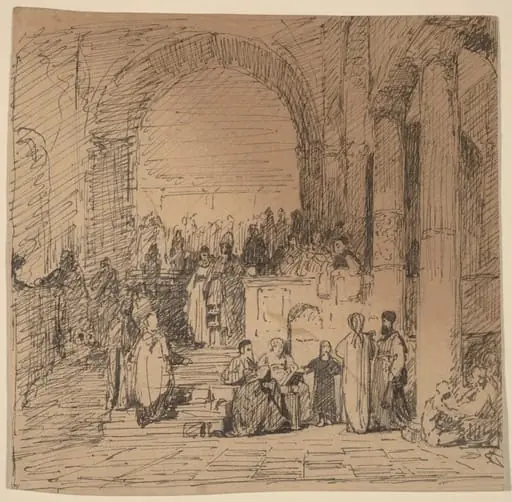 Study after Old Master
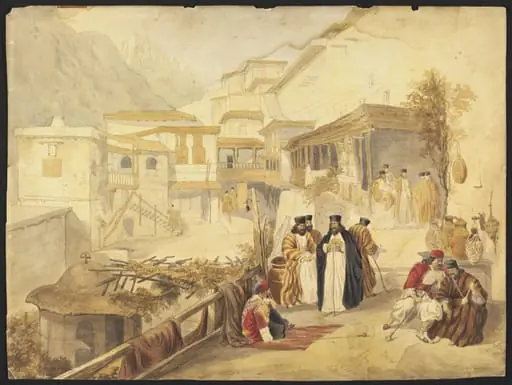 Convent of St. Catherine, Mount Sinai, Principal Court
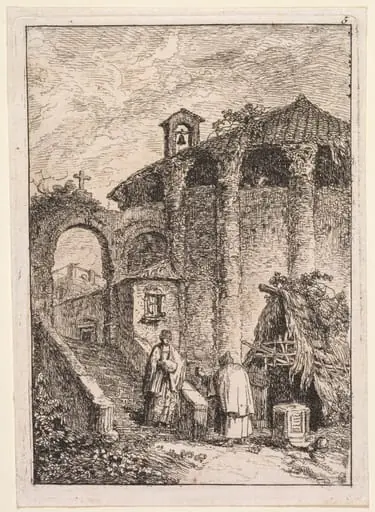 Le Temple Antique
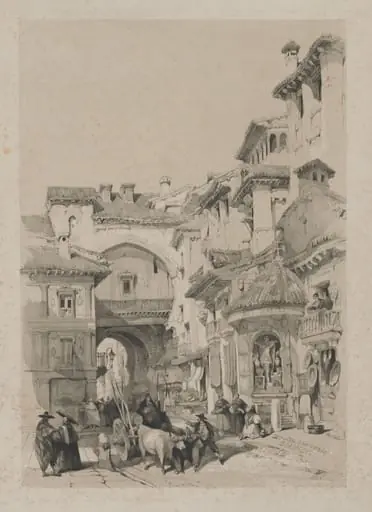 Picturesque Sketches in Spain: Gate of the Vivarrambla, Granada
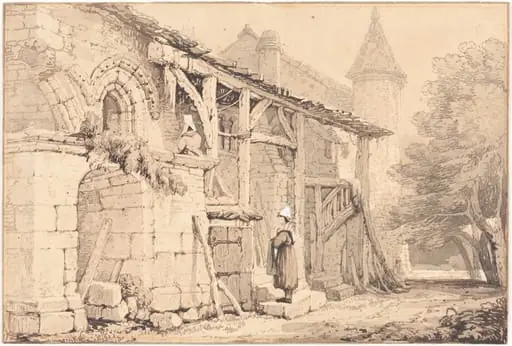 Scene at Jumièges
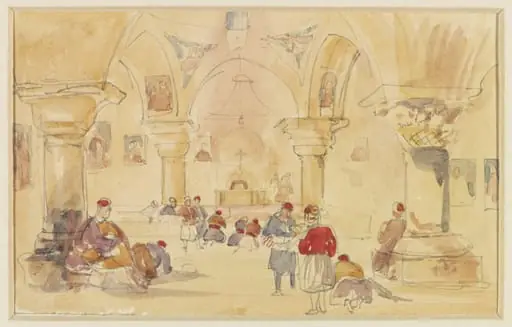 Chapel of St. Helena, Crypt of the Holy Sepulchre, Jerusalem
![Advanced guard & Baggage of the Royal artillery landi[ng] a[t] Alexandria en route for India, by T. B. S.](https://artifactworldgallery.com/img/t-b-s--advanced-guard-baggage-of-the-royal-artillery-landi-ng-a-t-a--605f6f4d9d8dfe93-w320.webp) Advanced guard & Baggage of the Royal artillery landi[ng] a[t] Alexandria en route for India
Advanced guard & Baggage of the Royal artillery landi[ng] a[t] Alexandria en route for India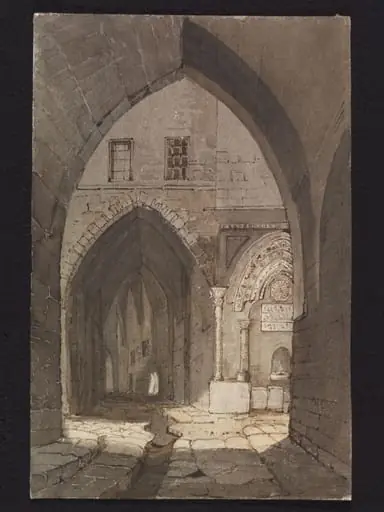 Fountain at Jerusalem near the House of Dives
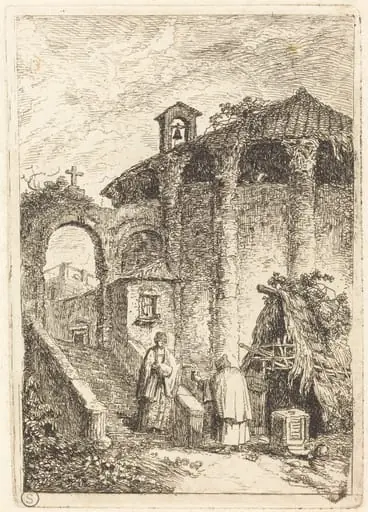 The Ancient Temple