Artwork
Corisca and Linco
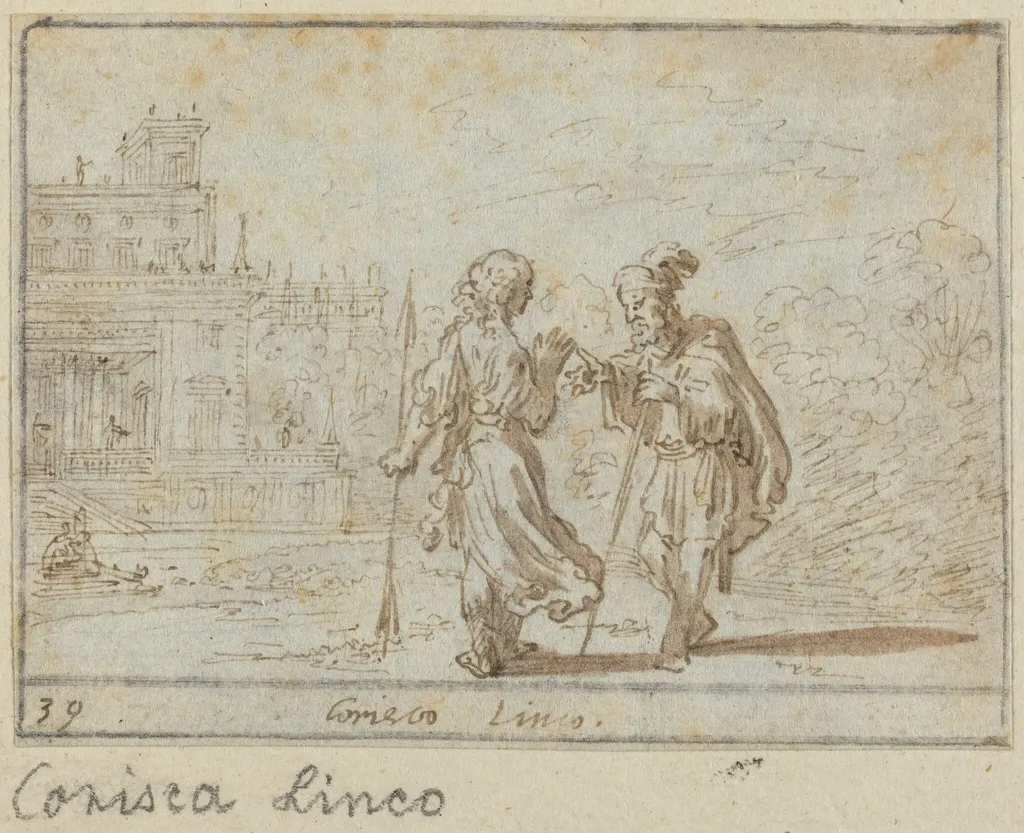
Corisca and Linco is an ink drawing by the Baroque artist Johann Wilhelm Baur. It dates from 1640 and is held in the collection of the National Gallery of Art. Created in 1640, Corisca and Linc is a pen‑and‑ink drawing on laid paper, executed in brown ink with a subtle brown wash.
- Inscription
- Inscribed:across bottom in brown ink: 39 Corisca Linco
About this work
Subject & Meaning
As part of a multi-work series on "Il pastor fido," the drawing participates in a sustained visual exploration of the play's characters and their relationships.
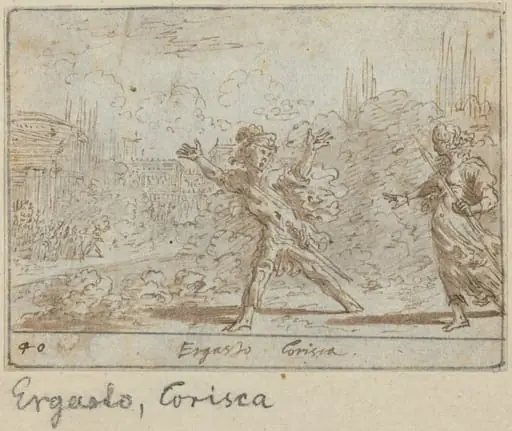
Corisca and Linco is a drawing by Johann Wilhelm Baur that takes its subject from Giovanni Battista Guarini's pastoral tragicomedy "Il pastor fido" (The Faithful Shepherd). The work belongs to a series Baur devoted to illustrating scenes from Guarini's play, situating the image within the broader seventeenth-century European tradition of literary illustration. By depicting the characters Corisca and Linco, Baur translates a narrative moment from the text into visual form, allowing viewers familiar with the play to recognize the specific episode portrayed.
The drawing thus operates as both an autonomous artwork and an interpretive response to Guarini's drama, embodying the pastoral themes of love, deception, and intrigue that characterize the source text.
The choice of pen, brown ink, and brown wash on laid paper lends the scene a tonal, atmospheric quality suited to the pastoral genre, in which landscape and mood carry much of the emotional weight. As part of a multi-work series on "Il pastor fido," the drawing participates in a sustained visual exploration of the play's characters and their relationships.
Technique & Style
Executed in 1640, this work is a drawing created with pen and brown ink, enhanced by the application of brown wash. The artist worked on a support of laid paper. The composition measures 6.5 cm in height and 9 cm in width.
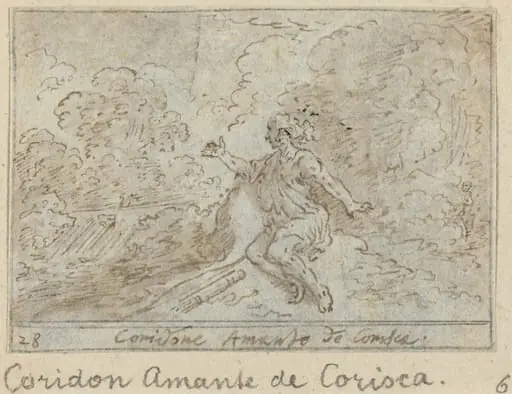
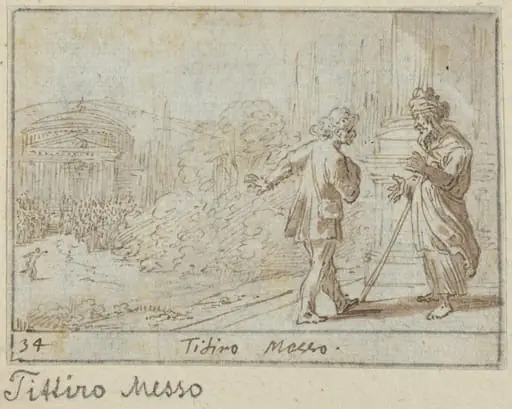
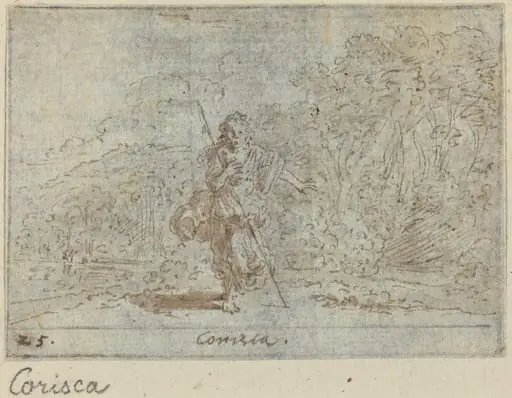
Visually, the piece illustrates characters from Giovanni Battista Guarini's literary work Il pastor fido, specifically depicting the figures of Corisca and Linco within the narrative context of the play.
History & Provenance
The drawing was created in 1640 by Johann Wilhelm Baur, depicting Corisca from Guarini's Il pastor fido. It is executed in pen, brown ink and wash on laid paper and measures 6.5 by 9 centimeters. The work entered the collection of the National Gallery of Art in Washington, D.C., where it remains today.
The drawing was part of a series of illustrations for Guarini's pastoral poem, linking it to the literary source. It was produced as an independent composition rather than a preparatory study for print or painting. The piece was acquired by the museum as part of its holdings of 17th‑century drawings.
Context
The drawing illustrates a scene from Guarini's Il pastor fido, depicting the shepherd Corisca and her lover Linco. Johann Wilhelm Baur created the work in 1640 using pen and brown ink with wash on laid paper. It belongs to a series of drawings associated with the play and is housed in the National Gallery of Art in Washington, D.C. Scholarship emphasizes its role within Baur's draftsmanship and its connection to the broader tradition of 17th-century Italian drawing practice.
Overview
Created in 1640, Corisca and Linc is a pen‑and‑ink drawing on laid paper, executed in brown ink with a subtle brown wash. The German artist Johann Wilhelm Baur, active in the early seventeenth century, rendered the two figures with a restrained palette, emphasizing line and tone over colour.
Own this work as a print
Artist & collection
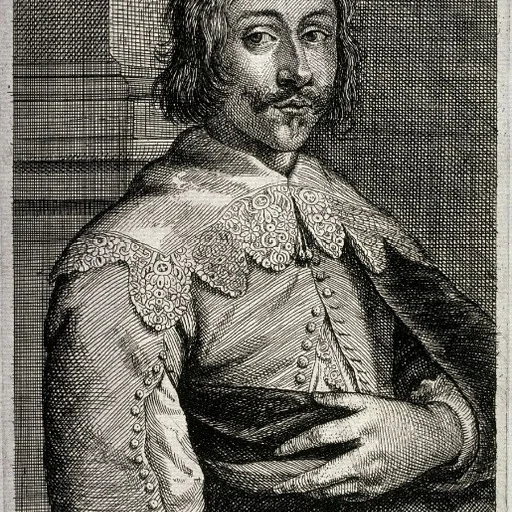
Artist
Johann Wilhelm Baur, Joan Guiliam Bouwer, or Bauer (Strasbourg, 31 May 1607 - Vienna, 1 January 1640) was a German engraver, etcher and miniature painter. He is famous for a series of illustrations of Ovid's Metamorphoses.