Artwork
Titiro and Messo
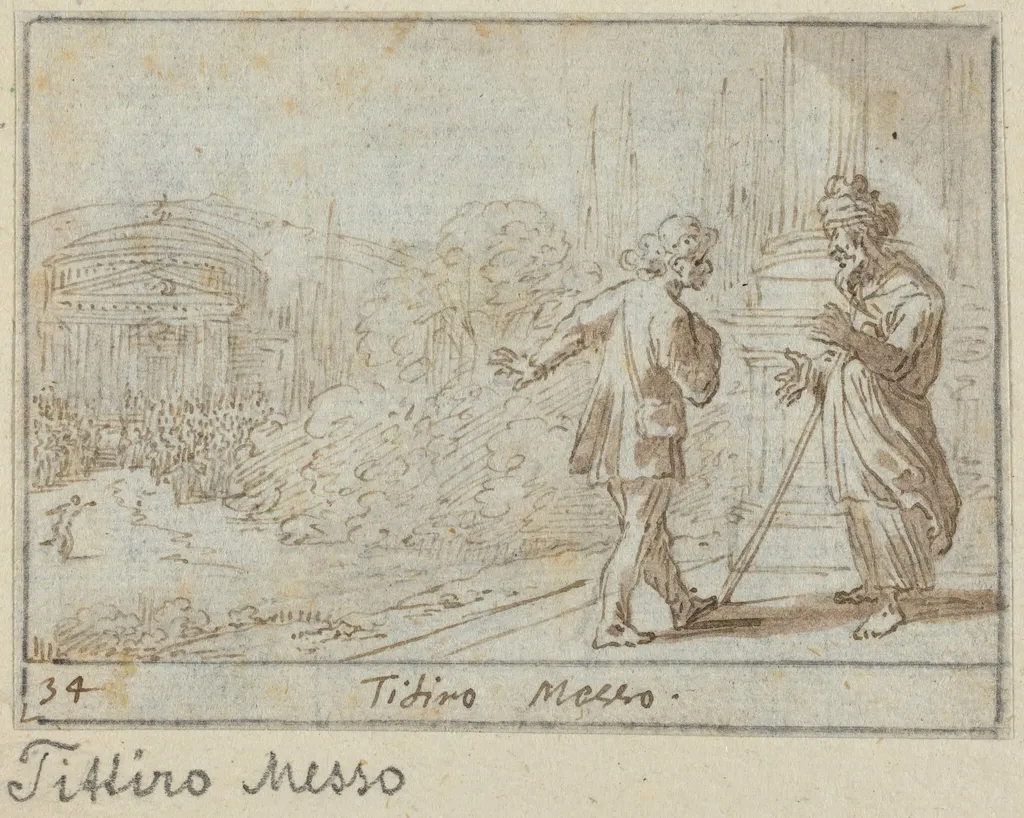
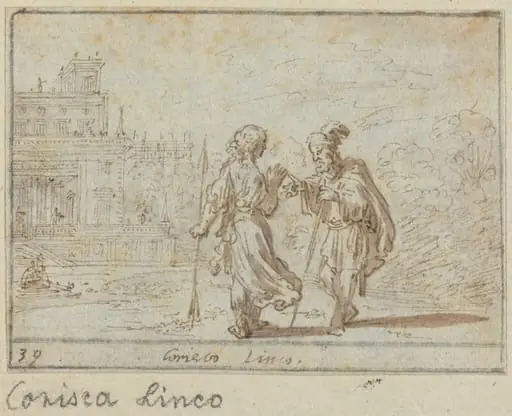
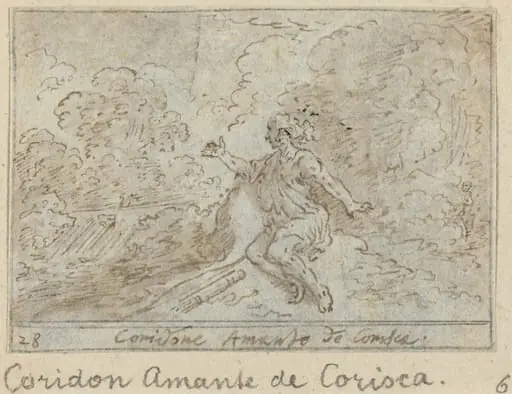
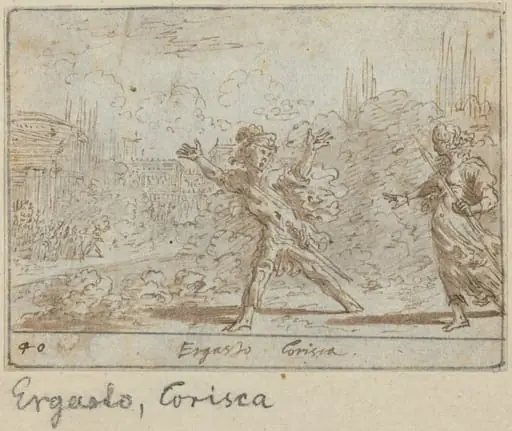
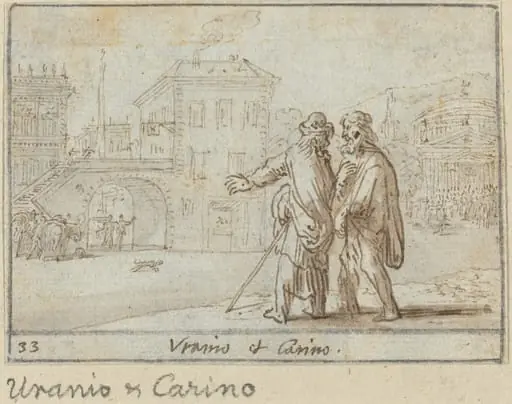
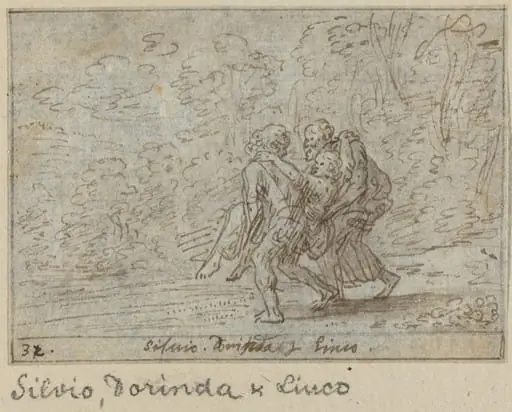
Titiro and Messo is an ink drawing by the Baroque artist Johann Wilhelm Baur. It dates from 1640 and is held in the collection of the National Gallery of Art.
- Inscription
- Inscribed:across bottom in brown ink: 34 Titiro Messo.
About this work
Subject & Meaning
Baur's composition captures the poised stillness and symbolic companionship that convey both personal affection and the timeless allure of the shepherd's world.
The drawing shows the shepherd Tityrus seated with his dog, embodying the pastoral ideal of harmonious communion with nature. This subject derives from Guarini's acclaimed 1602 pastoral play Il pastor fido, a cornerstone of the Arcadian literary tradition that celebrated idealized rural life and poetic melancholy. Baur's composition captures the poised stillness and symbolic companionship that convey both personal affection and the timeless allure of the shepherd's world.
The work functions as a visual metaphor for the harmony between humanity and the natural world, reflecting the broader cultural resonance of the pastoral genre in early Baroque art.
Technique & Style
Executed in pen with brown ink and brown wash on laid paper, this drawing measures 6.5 cm in height by 9 cm in width. It belongs to the series of Giovanni Battista Guarini's Il pastor fido and portrays Tityrus, reflecting the pastoral subject typical of 17th-century drawings.
The composition emphasizes delicate line work and subtle tonal modeling through wash, characteristic of Baur's draftsmanship in the Baroque period.
History & Provenance
Johann Wilhelm Baur executed the pen and brown ink drawing Titiro and Messo in 1640. Created on laid paper, the work illustrates a scene from Giovanni Battista Guarini's literary piece Il pastor fido, specifically depicting the character Tityrus. The sheet measures 6.5 by 9 centimeters and belongs to a series of illustrations dedicated to Guarini's text.
The artwork is currently held in the collection of the National Gallery of Art in Washington, D.C., where it is cataloged as part of the institution's drawings holdings.
Overview
Johann Wilhelm Baur’s drawing Titiro and Messo was executed in 1640 with pen, brown ink and a brown wash on laid paper. The composition presents two elderly figures seated beneath a tree; one holds a flute while the other listens with closed eyes, creating an intimate, contemplative atmosphere.
Context
The drawing reflects the 17th‑century German interest in adapting Italian pastoral literature for visual arts. Baur’s choice of a modest, ink‑only medium aligns with contemporary practices of preparatory sketches for larger works, such as the related composition held by the National Gallery of Art in Washington.
Own this work as a print
Artist & collection
Artist
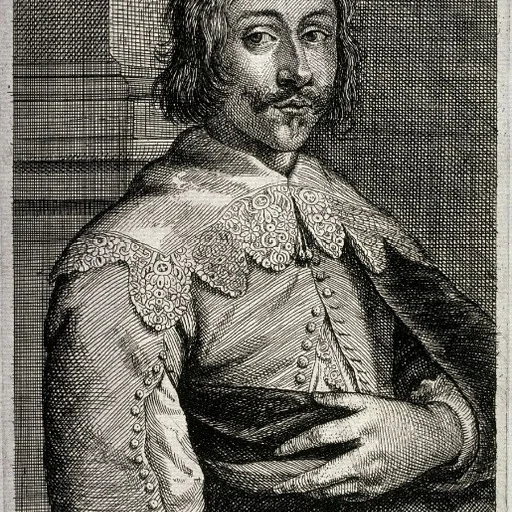
Johann Wilhelm Baur, Joan Guiliam Bouwer, or Bauer (Strasbourg, 31 May 1607 - Vienna, 1 January 1640) was a German engraver, etcher and miniature painter. He is famous for a series of illustrations of Ovid's Metamorphoses.