Artwork
Saint Dentalinus
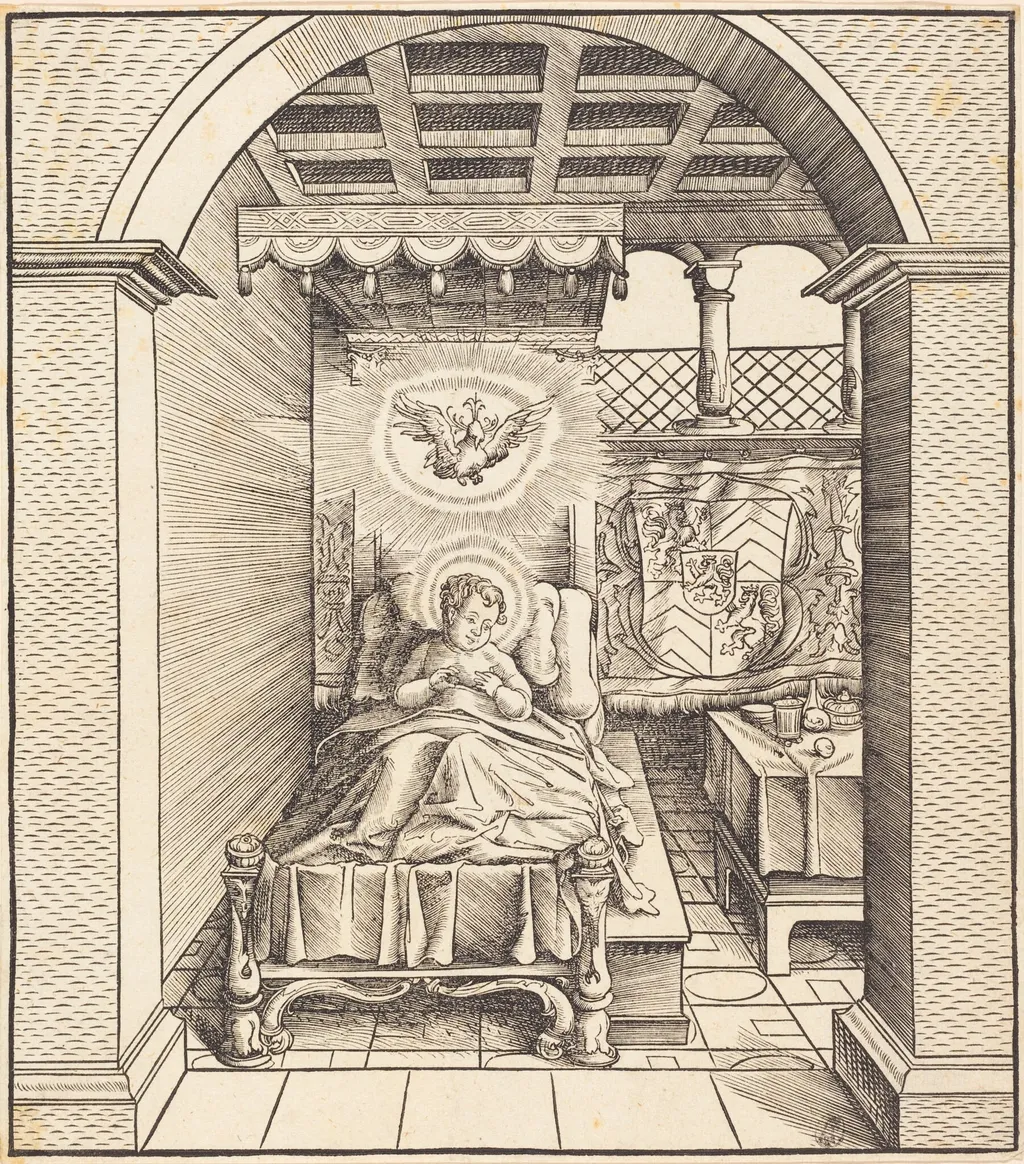
Saint Dentalinus is an ink print by the Renaissance artist Leonhard Beck. It dates from 1517 and is held in the collection of the National Gallery of Art.
About this work
Overview
The work belongs to a broader movement in northern Europe that used woodcuts to make sacred figures accessible to private devotion.
Created in 1517 by Leonhard Beck, a German artist from Augsburg, this woodcut depicts Saint Dentalinus as a devotional image. Beck, trained in the local artistic tradition and influenced by Hans Holbein the Elder, produced this print during a period when religious imagery was widely circulated through printmaking. The work belongs to a broader movement in northern Europe that used woodcuts to make sacred figures accessible to private devotion.
Subject & Meaning
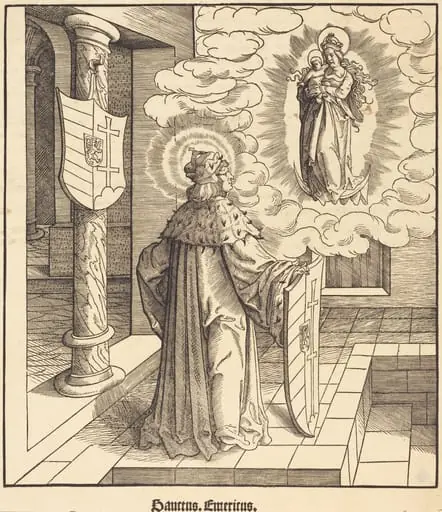
The image portrays Saint Dentalinus, a lesser-known early Christian martyr, seated on a throne with a child on his lap. Above him, a winged figure, likely an angel, hovers, suggesting divine presence or protection. The setting, resembling a chapel interior, reinforces his sanctity.
The inclusion of a coat of arms may indicate patronage or regional affiliation, linking the saint to local religious or noble identity.
Technique & Style
Executed as a woodcut, the image was carved into a wooden block, with lines incised to form the design. Ink was applied to the raised surfaces and pressed onto paper, producing a sharp, linear image. Beck employed precise, angular strokes to model architectural elements and drapery, creating a sense of volume and spatial depth. The clarity of form reflects the precision typical of German printmakers of the early 16th century.
History & Provenance
Leonhard Beck, son of the miniaturist Georg Beck, worked in Augsburg’s vibrant artistic community and contributed to imperial projects under Maximilian I. This woodcut likely circulated among private collectors or religious institutions in southern Germany. While its early ownership is undocumented, its survival reflects the demand for devotional prints during the Reformation era, when such images remained in use despite shifting theological priorities.
Context
In early 16th-century Germany, woodcuts served as affordable religious tools for personal piety. Artists like Beck adapted traditional iconography for mass reproduction, balancing devotional clarity with decorative detail. The presence of heraldic elements and architectural framing aligns with regional tastes in Augsburg, where civic pride and religious imagery often intertwined in printed works.
Legacy
Beck’s woodcut exemplifies the transition from manuscript illumination to printed imagery in northern Europe. Though not widely reproduced today, it represents the technical and devotional standards of its time. The work contributes to understanding how religious figures were visually sustained in communities undergoing religious change, preserving iconographic traditions through the medium of print.
Own this work as a print
Artist & collection
Artist
Leonhard Beck (c. 1480 – 1542) was a painter and woodcuts designer in Augsburg, Germany. He was the son of Georg Beck, a miniaturist who was active in Augsburg c. 1490–1512/15. Leonhard collaborated with his father on…

- The Annunciation
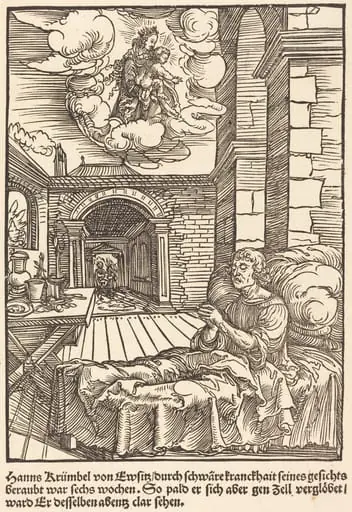 Hanns Krumbel von Ewsitz... d'organdie
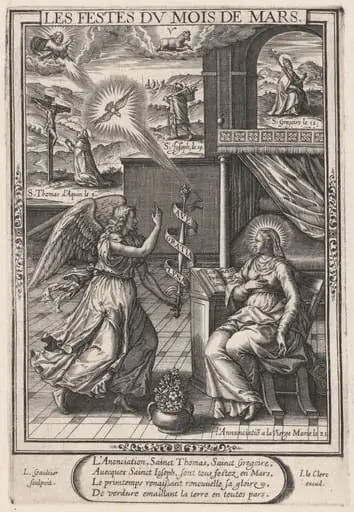 Les Festes du mois de Mars (March: The Annunciation)
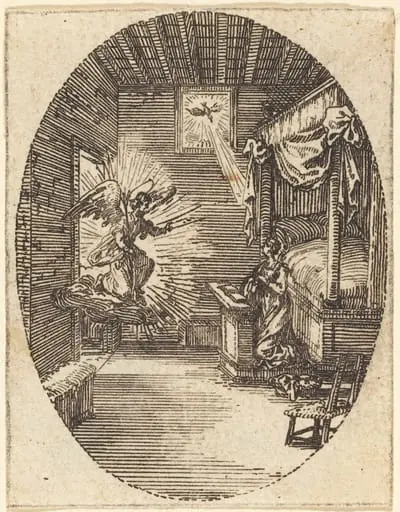 The Annunciation
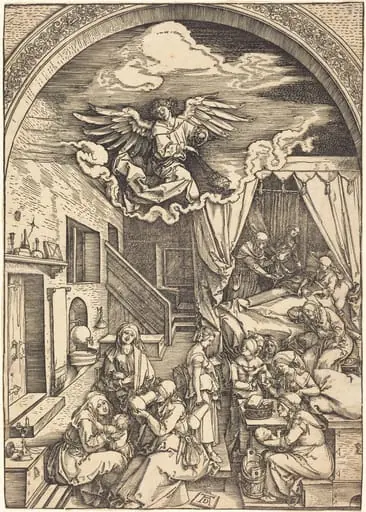 The Birth of the Virgin
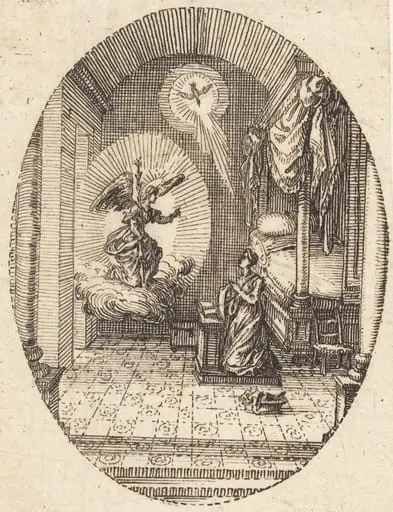 The Annunciation
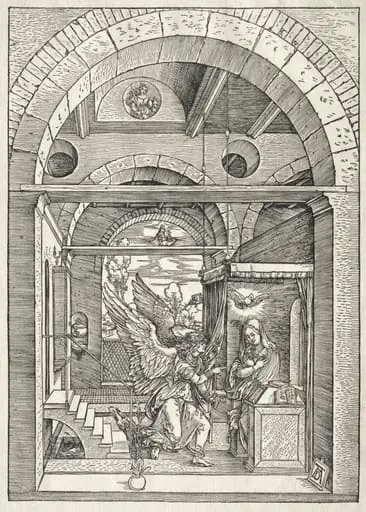 Life of the Virgin: The Annunciation
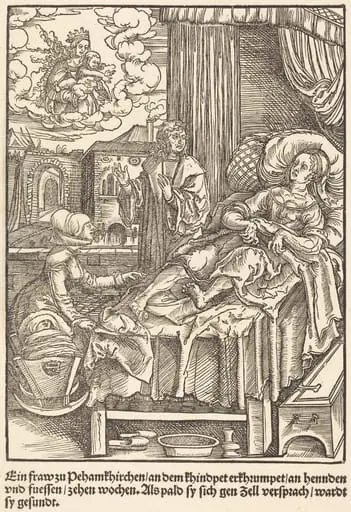 Ein fraw zu Peham Kirchen ...
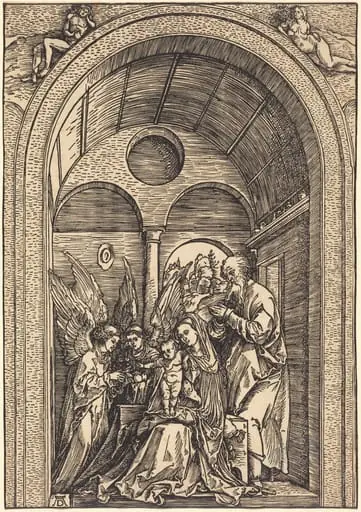 The Holy Family with Two Angels in a Vaulted Hall
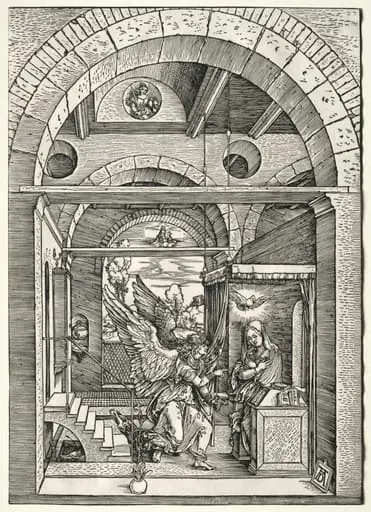 The Annunciation
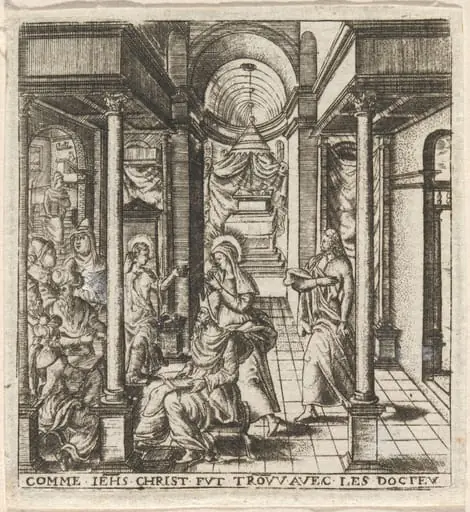 Mary and Joseph Find the Boy Jesus in the Temple with the Doctors
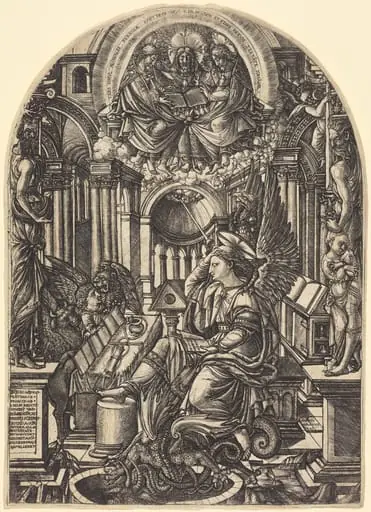 The Revelation of Saint John the Evangelist