Artwork
The Annunciation
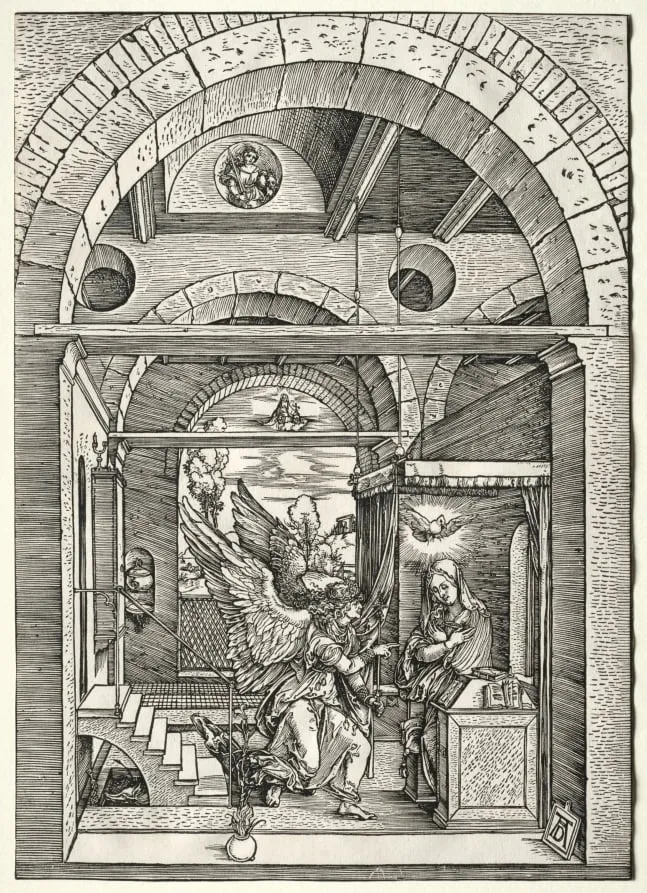
The Annunciation is a print by the Renaissance artist Albrecht Dürer. It dates from 1504 and is held in the collection of the Cleveland Museum of Art.
- Accession no.
- 1959.99.8
- Credit line
- Dudley P. Allen Fund
About this work
Overview
The Annunciation is a print by Albrecht Dürer depicting the moment of the angel Gabriel's announcement to the Virgin Mary that she will bear the son of God. The scene is characterized by a striking contrast between Gabriel's commanding presence and Mary's subdued figure.
Subject & Meaning
Gabriel dominates the composition with expansive wings and dynamic drapery, while Mary appears submissive, overwhelmed by her impending role and the grand architectural setting. Symbolic elements, such as the dove representing the Holy Spirit and Judith signifying triumph over evil, enrich the narrative's religious significance.
Technique & Style
Dürer showcases his mastery of mathematical perspective in the monumental architecture and demonstrates technical skill through the intricate rendering of light effects on surfaces and the expressive folds of Gabriel's robe.
Context
Created for a European Christian audience, the print's details held specific religious meanings. The dove symbolized the Holy Spirit's descent, and Judith represented Mary's virtuous triumph. The work reflects the artistic innovations of its time, contrasting with the softer, more blended approach of sfumato used by other artists.
Legacy
The Annunciation exemplifies Dürer's influence on the depiction of religious themes in Northern European art. Its stark contrasts and meticulous detail have made it a subject of study for techniques in perspective and symbolic storytelling in religious art.
Artist & collection
Artist
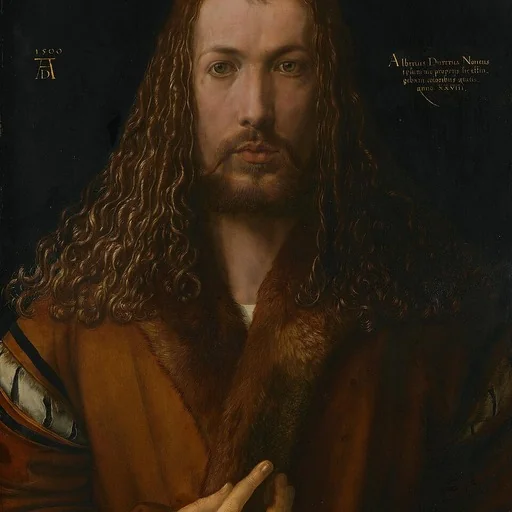
Albrecht Dürer spent his life in Nuremberg, a busy German city where artists traded prints like currency.

![Madonna and Child [obverse], by Albrecht Dürer](https://artifactworldgallery.com/img/albrecht-durer--madonna-and-child-obverse--d7b8ebf05d22ebe5-w320.webp)
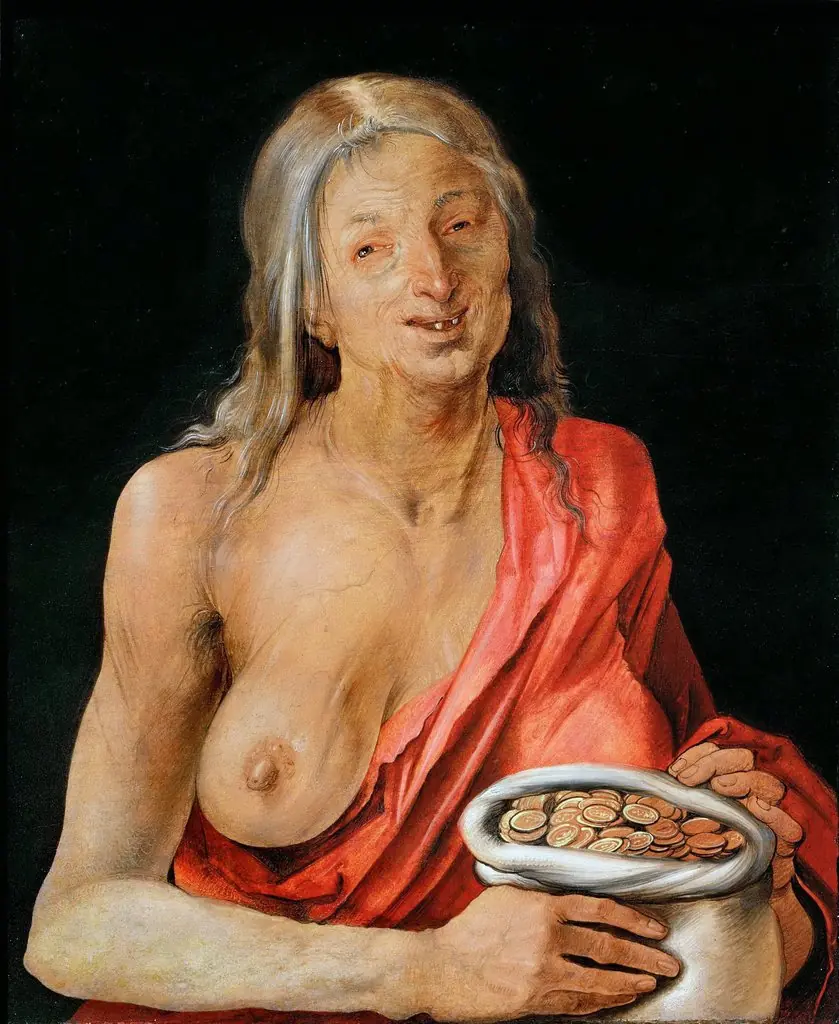
![Lot and His Daughters [reverse], by Albrecht Dürer](https://artifactworldgallery.com/img/albrecht-durer--lot-and-his-daughters-reverse--b4ebf9b282faa17a-w320.webp)
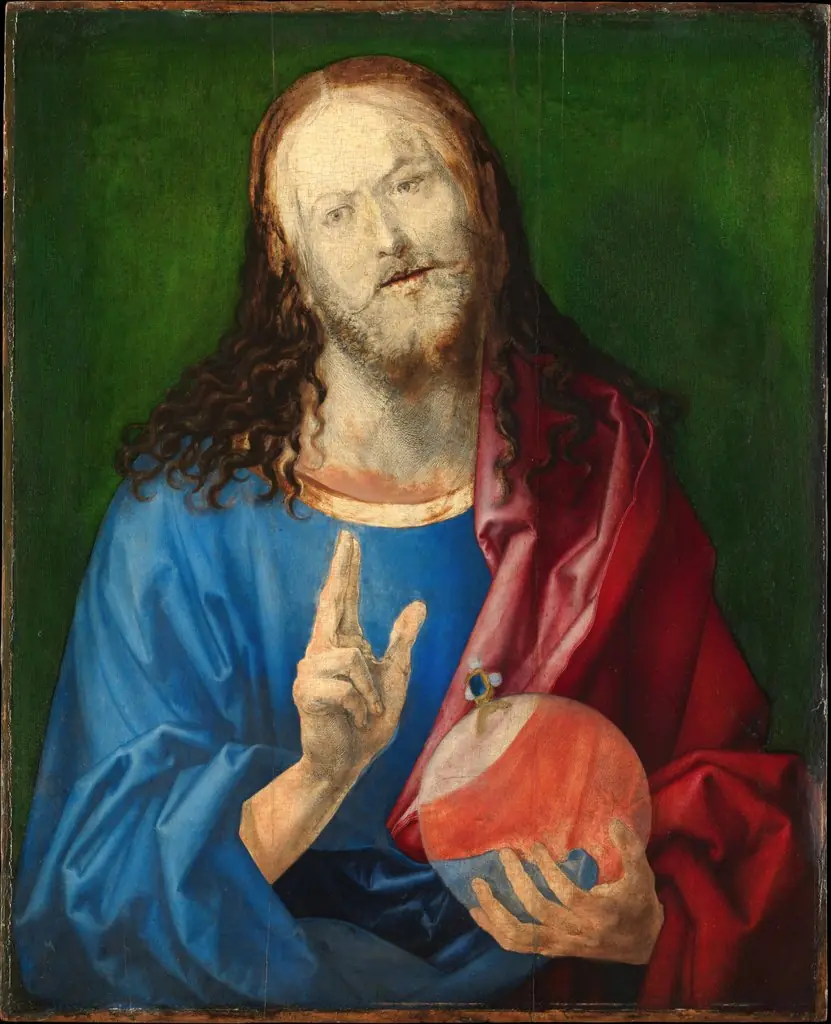
- Life of the Virgin: The Annunciation
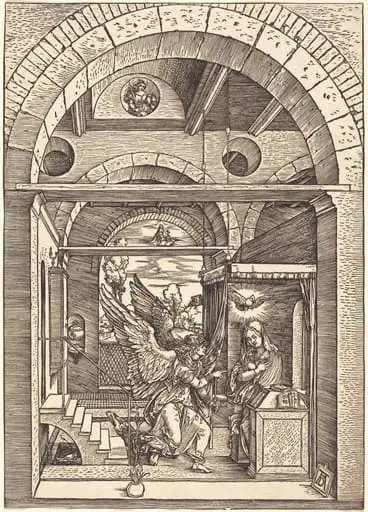 The Annunciation
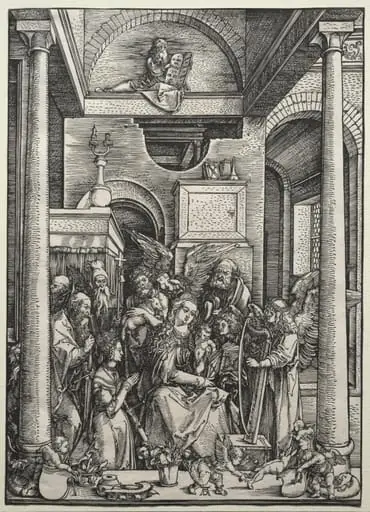 The Virgin and Child Surrounded by Saints and Angels
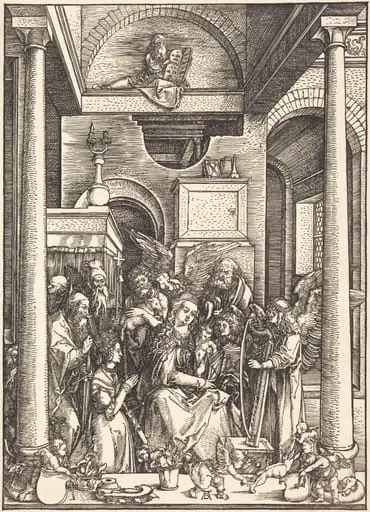 The Glorification of the Virgin
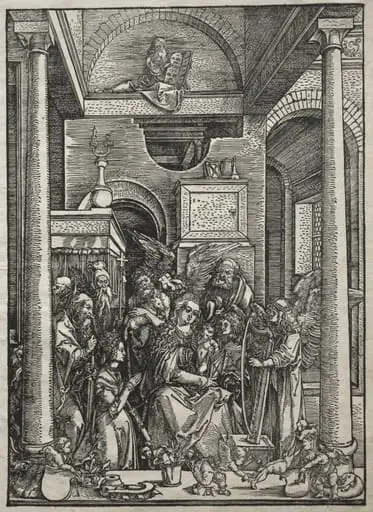 Life of the Virgin: Adoration of the Virgin and Child by Saints and Angels
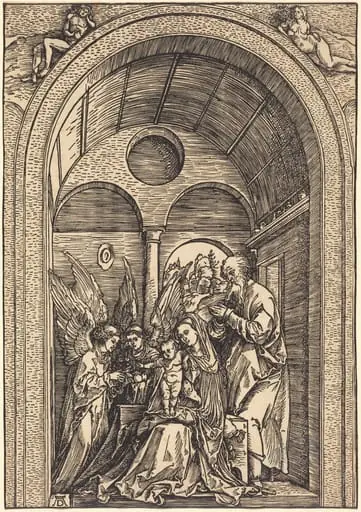 The Holy Family with Two Angels in a Vaulted Hall
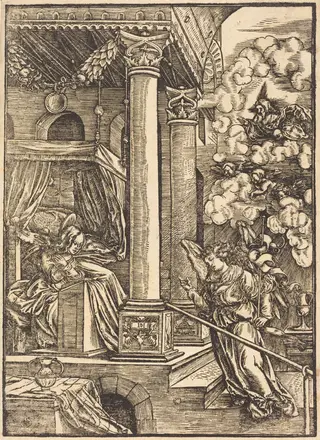 The Annunciation
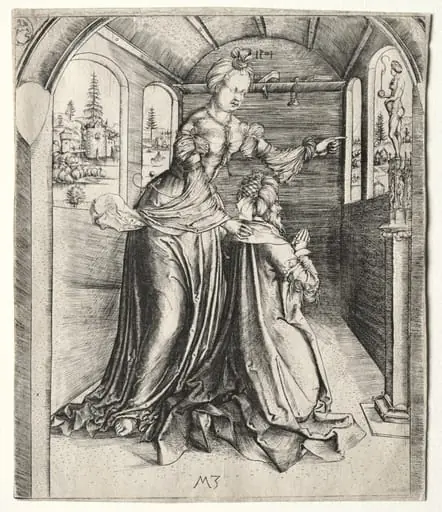 Solomon Worshipping Idols
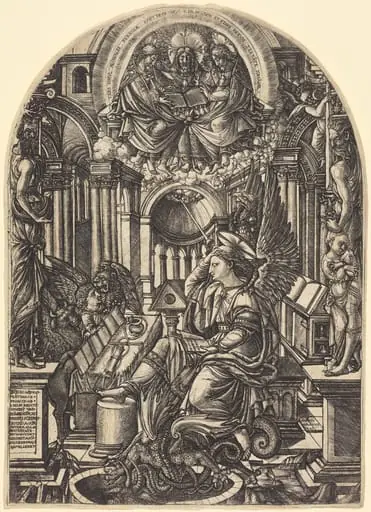 The Revelation of Saint John the Evangelist
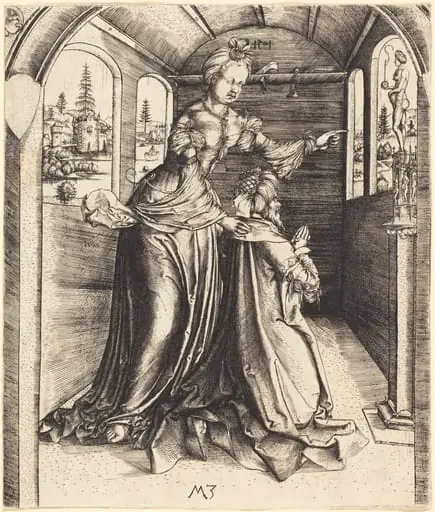 Solomon Worshipping False Gods
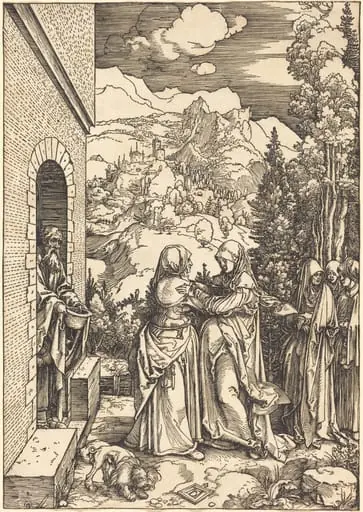 The Visitation
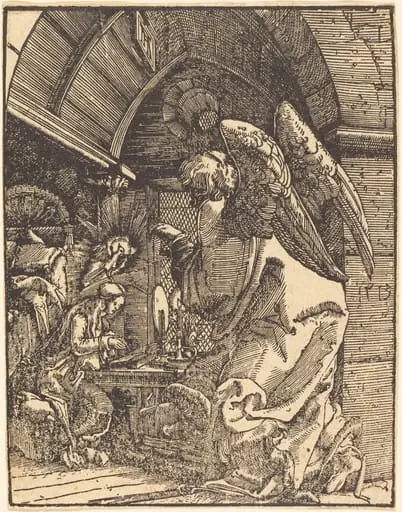 The Annunciation