Artwork
The Birth of the Virgin
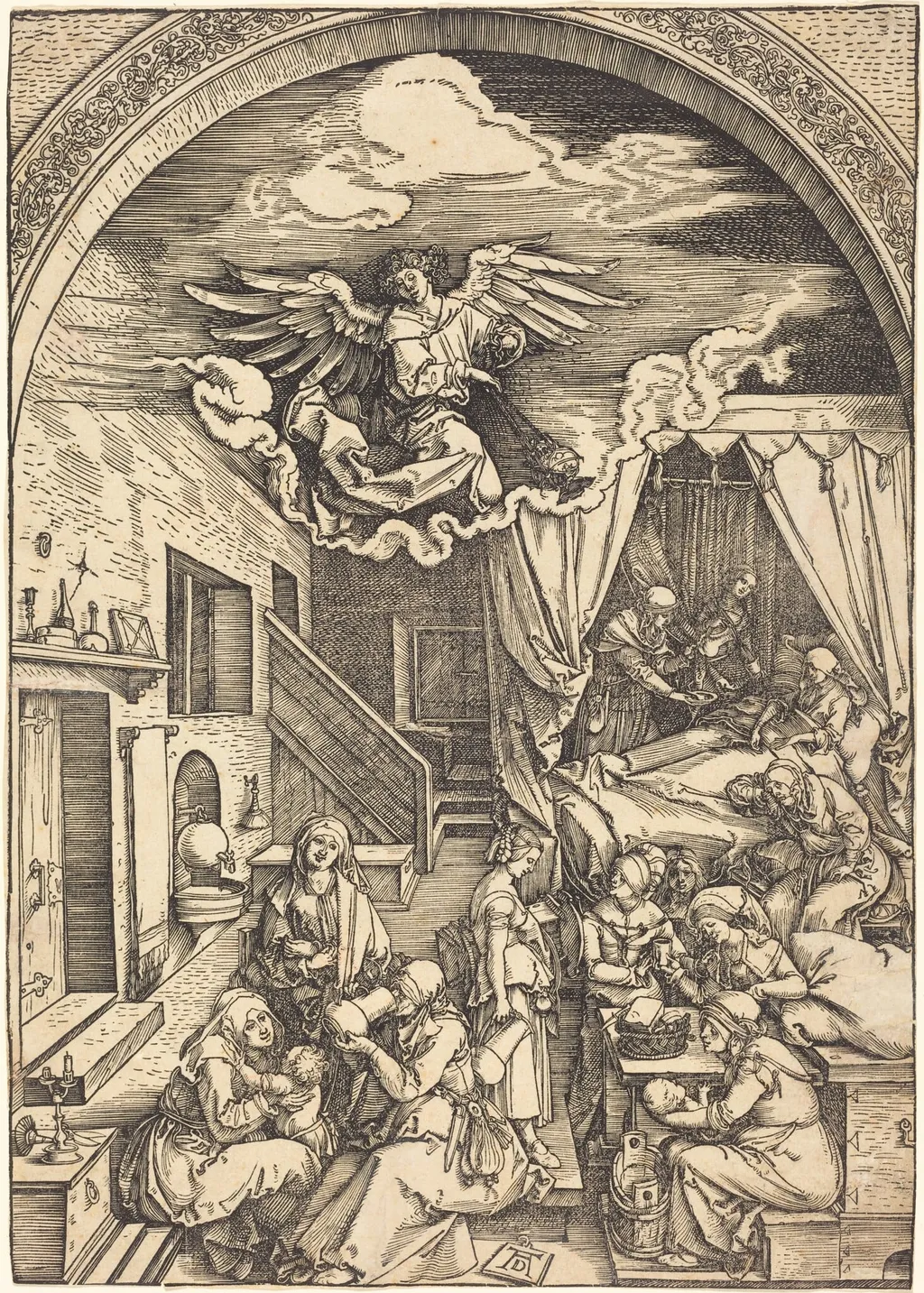
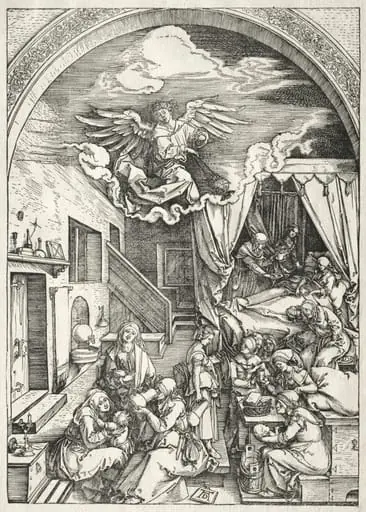
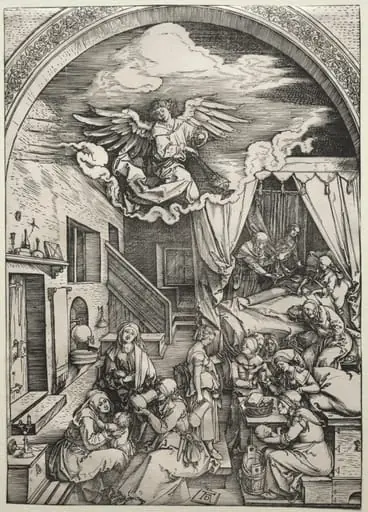
The Birth of the Virgin is an ink print by the Northern Renaissance artist Albrecht Dürer. It dates from 1504 and is held in the collection of the Staatliche Graphische Sammlung München.
About this work
Overview
Dürer arranges the composition with a high horizon line, allowing for a detailed view of the room's architecture and the numerous figures attending the newborn.
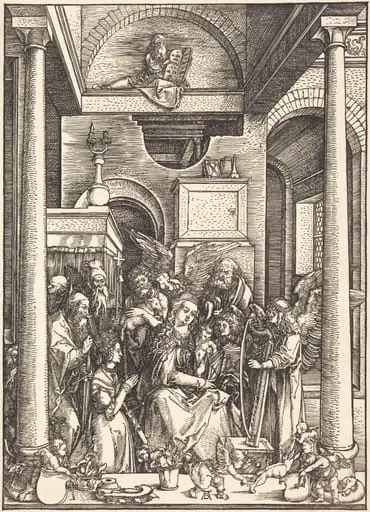
The Birth of the Virgin is a woodcut by Albrecht Dürer, created in 1504 as part of his series on the Life of the Virgin. The work depicts the moment of Mary's birth within a domestic interior, a setting chosen to emphasize the human reality of the sacred event. Dürer arranges the composition with a high horizon line, allowing for a detailed view of the room's architecture and the numerous figures attending the newborn.
The scene includes midwives, family members, and a servant washing the infant, rendered with the artist's characteristic precision in texture and linear detail. This print exemplifies Dürer's mastery of the woodcut medium during the German Renaissance, where he elevated the technique to rival painting in complexity and expressive power. By integrating Northern European domestic realism with Italianate spatial logic and classical proportions, Dürer transformed a traditional religious subject into a vivid, everyday occurrence.
The work stands as a significant example of his ability to synthesize diverse artistic influences while maintaining a distinct German identity, contributing to the broader dissemination of Renaissance ideals through the reproducible medium of print.
Subject & Meaning
The scene portrays the moment of the Virgin Mary’s birth, a subject drawn from apocryphal tradition that emphasizes her sanctity from infancy. By focusing on domestic elements, midwives, attendants, and household objects, the work underscores the humanity of the event while subtly affirming its theological significance.
Technique & Style
Dürer employed the woodcut medium, incising fine lines into a block of pear wood to achieve delicate textures and precise contours. The print demonstrates his mastery of line work, using cross‑hatching and varied line thickness to suggest depth, fabric folds, and the play of light across figures, hallmarks of his early Northern Renaissance style.
History & Provenance
Created in the early sixteenth century, the print was likely produced for devotional circulation among lay audiences. Surviving copies are held in several European collections, reflecting the work’s distribution through Dürer’s workshop and its inclusion in contemporary illustrated biblical series.
Own this work as a print
Artist & collection
Artist
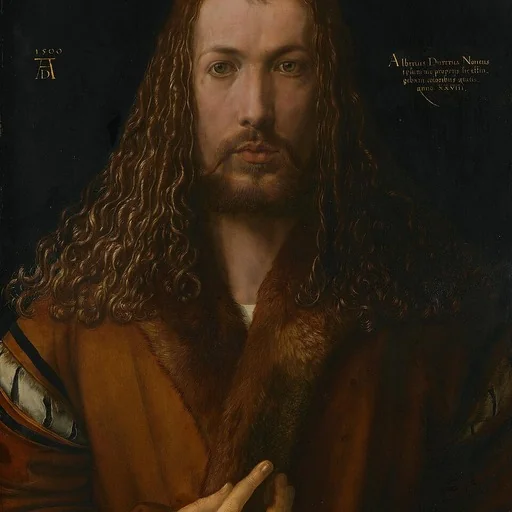
Albrecht Dürer spent his life in Nuremberg, a busy German city where artists traded prints like currency.

Museum
Staatliche Graphische Sammlung München
Continue through works from the same source collection.
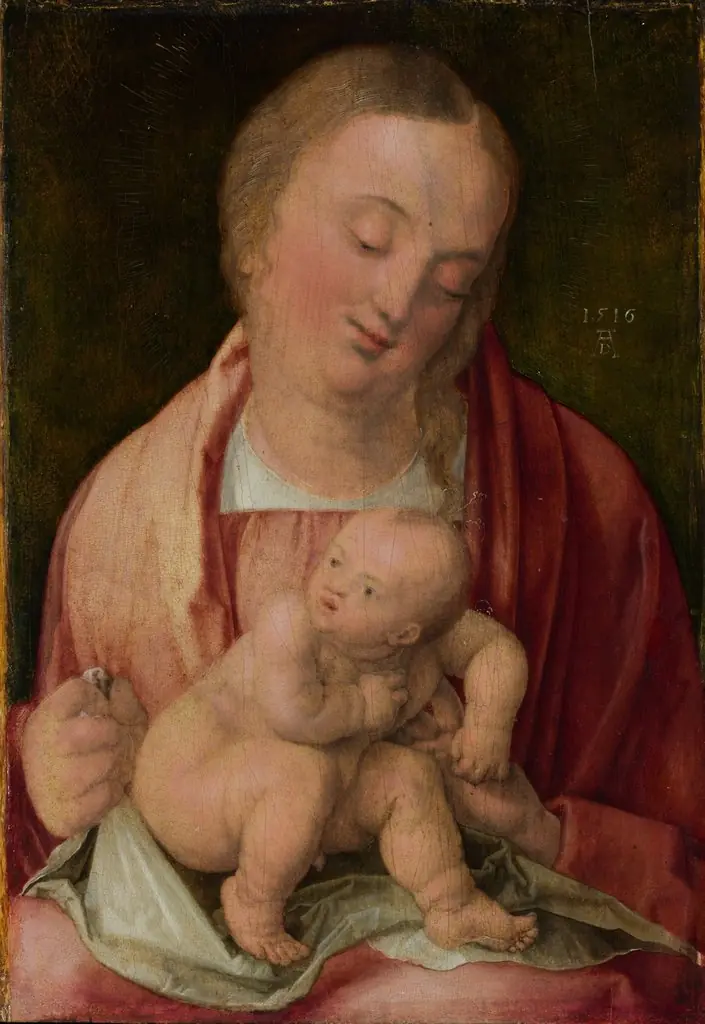
![Madonna and Child [obverse], by Albrecht Dürer](https://artifactworldgallery.com/img/albrecht-durer--madonna-and-child-obverse--d7b8ebf05d22ebe5-w320.webp)
![Lot and His Daughters [reverse], by Albrecht Dürer](https://artifactworldgallery.com/img/albrecht-durer--lot-and-his-daughters-reverse--b4ebf9b282faa17a-w320.webp)