Artwork
The Good Shepherd
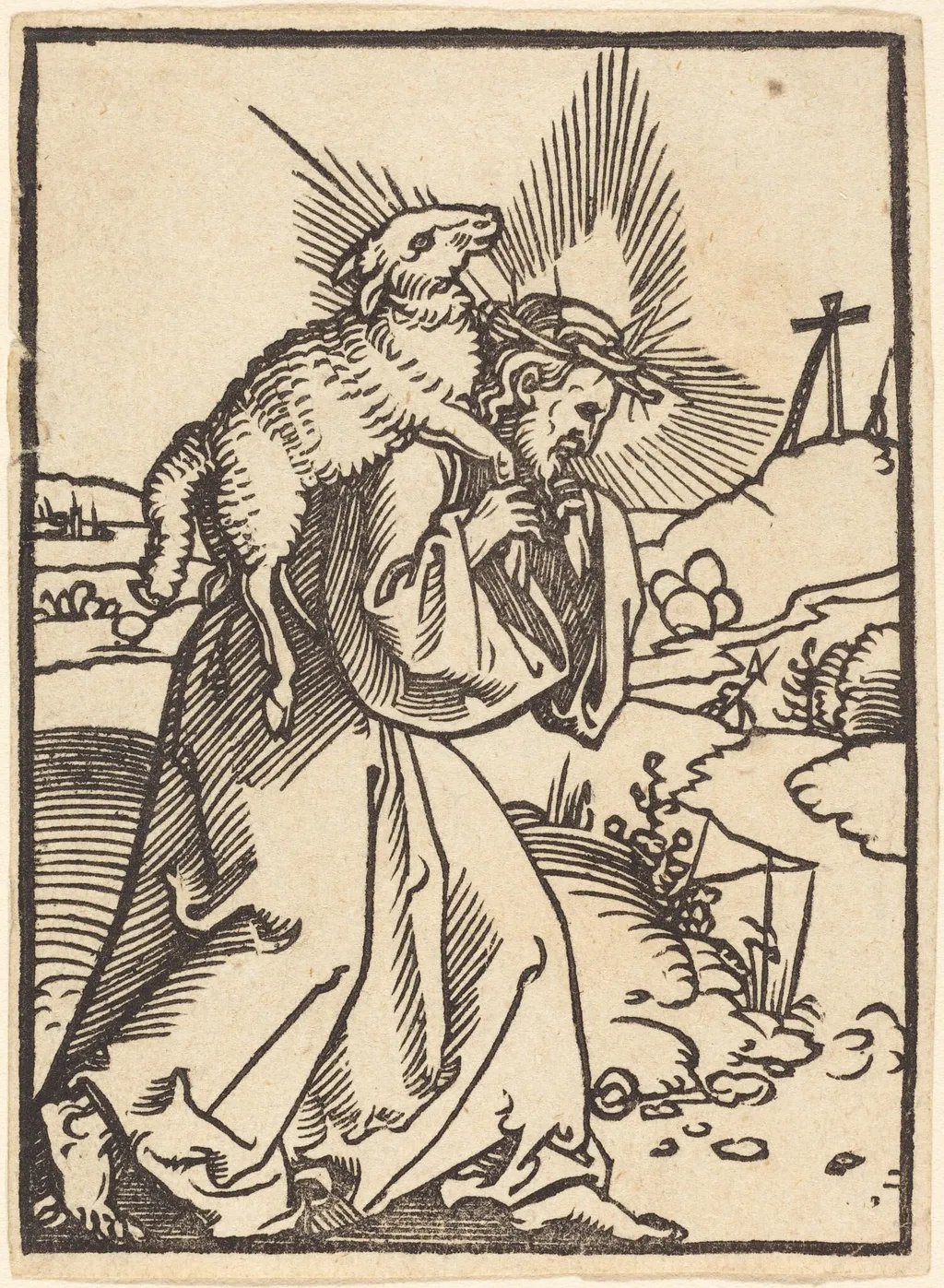
The Good Shepherd is an ink print by the Renaissance artist Sebald Beham. It dates from 1527 and is held in the collection of the National Gallery of Art.
About this work
Overview
Sebald Beham’s 1527 woodcut entitled The Good Shepherd presents a solitary, bearded figure bearing a sheep on his shoulders. The composition is rendered in stark black‑and‑white lines, with a luminous halo above the man’s head and a faint cross in the distance. The setting is minimal, limited to a few trees and rolling hills, emphasizing the intimate encounter between the shepherd and his charge.
Subject & Meaning
The image invokes the biblical motif of the Good Shepherd, a symbol of Christ’s protective role. The shepherd’s weary yet resolute stance suggests devotion and sacrifice, while the calm animal underscores themes of trust and guidance. The halo and cross subtly reinforce the work’s religious connotation without overt narrative detail.
Technique & Style
The overall aesthetic reflects the “Little Masters” penchant for compact, highly finished prints that could be reproduced in books and collections.
Executed as a woodcut, the piece relies on bold, rough incisions that generate strong contrasts between inked and uninked areas. Beham’s characteristic precision is evident in the fine detailing of the figure’s beard and garment, despite the medium’s limitations. The overall aesthetic reflects the “Little Masters” penchant for compact, highly finished prints that could be reproduced in books and collections.
History & Provenance
Created during Beham’s prolific period, the print belongs to a body of roughly fifteen hundred woodcuts the artist produced, many of which served as illustrations for contemporary publications. While specific ownership records for this particular impression are scarce, it likely circulated among collectors of devotional imagery in early‑modern Germany.
Context
Beham operated within the German Renaissance, following the example of Albrecht Dürer while carving his own niche among the “Little Masters,” a group noted for their small‑scale, meticulously crafted prints. The Good Shepherd exemplifies the era’s blend of religious subject matter with the expanding market for affordable, reproducible artworks.
Own this work as a print
Artist & collection
Artist
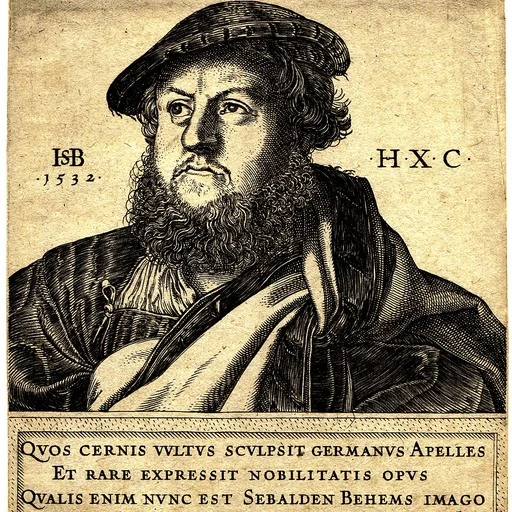
Sebald Beham (1500–1550) was a German painter and printmaker, mainly known for his very small engravings.


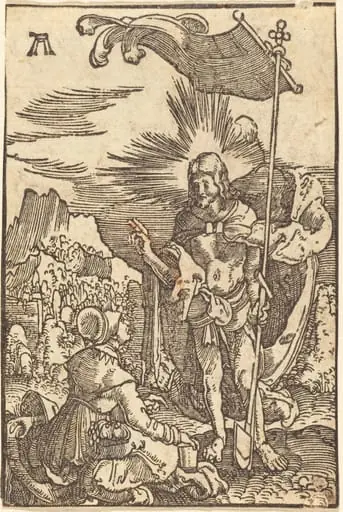 Noli me Tangere
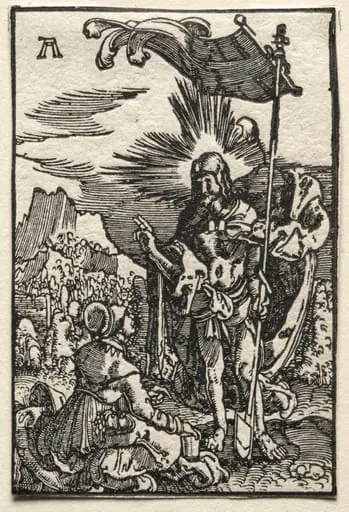 The Fall and Redemption of Man: Christ Appearing to St. Mary Magdalen
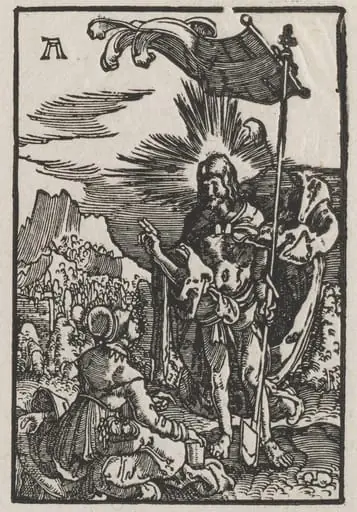 The Fall and Redemption of Man: Christ Appearing to St. Mary Magdalen
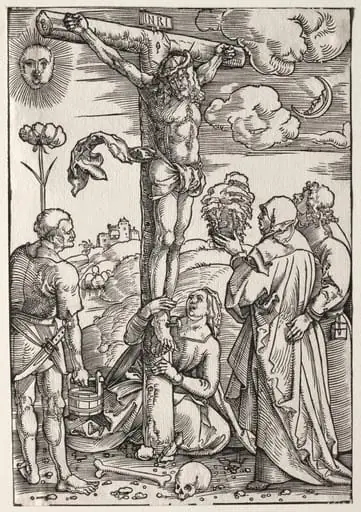 Christ on the Cross with Mary, St. John, Mary Magdalen and St. Stephen
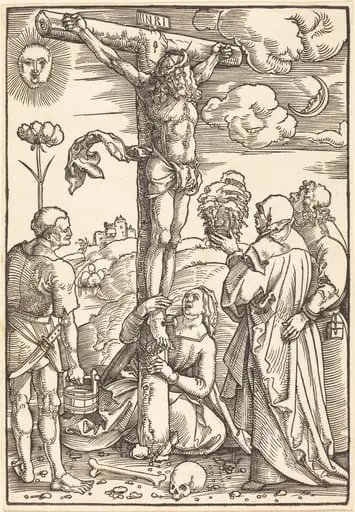 Christ on the Cross
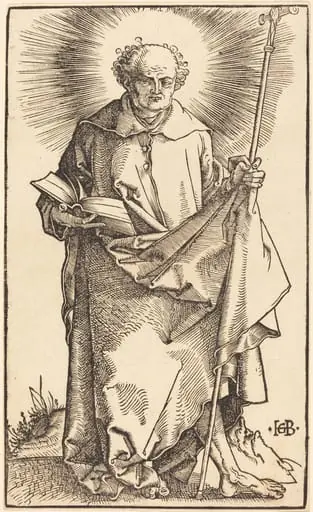 Saint Philip
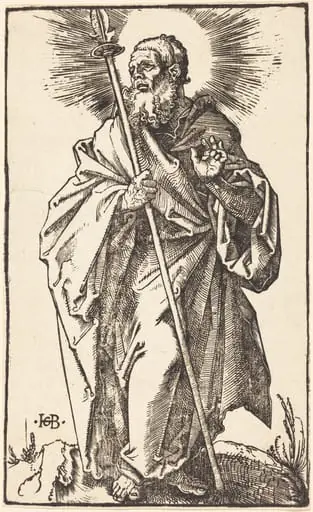 Saint Thomas
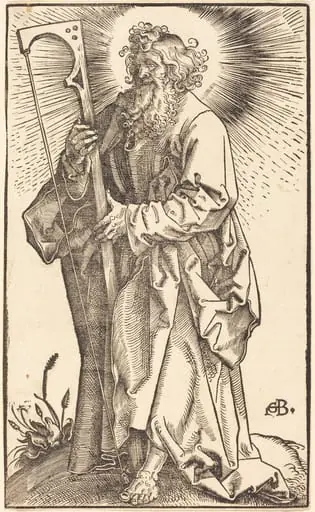 Saint James the Less
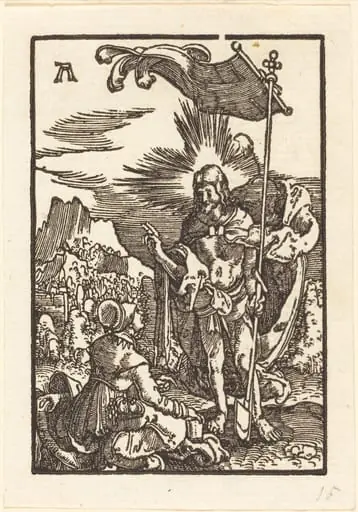 Noli me Tangere
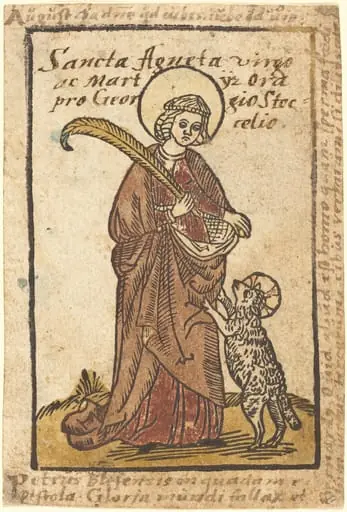 Saint Agnes
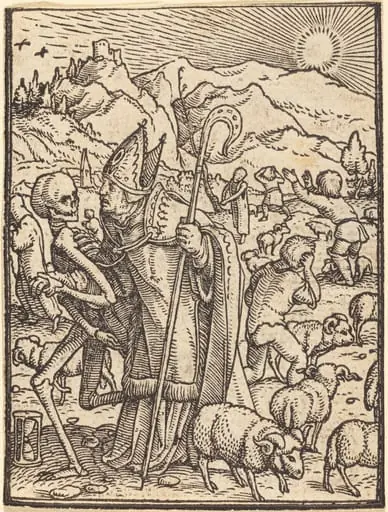 The Bishop
- Good Shepherd