Artwork
Woodland Scene with Nymphs and a Herm
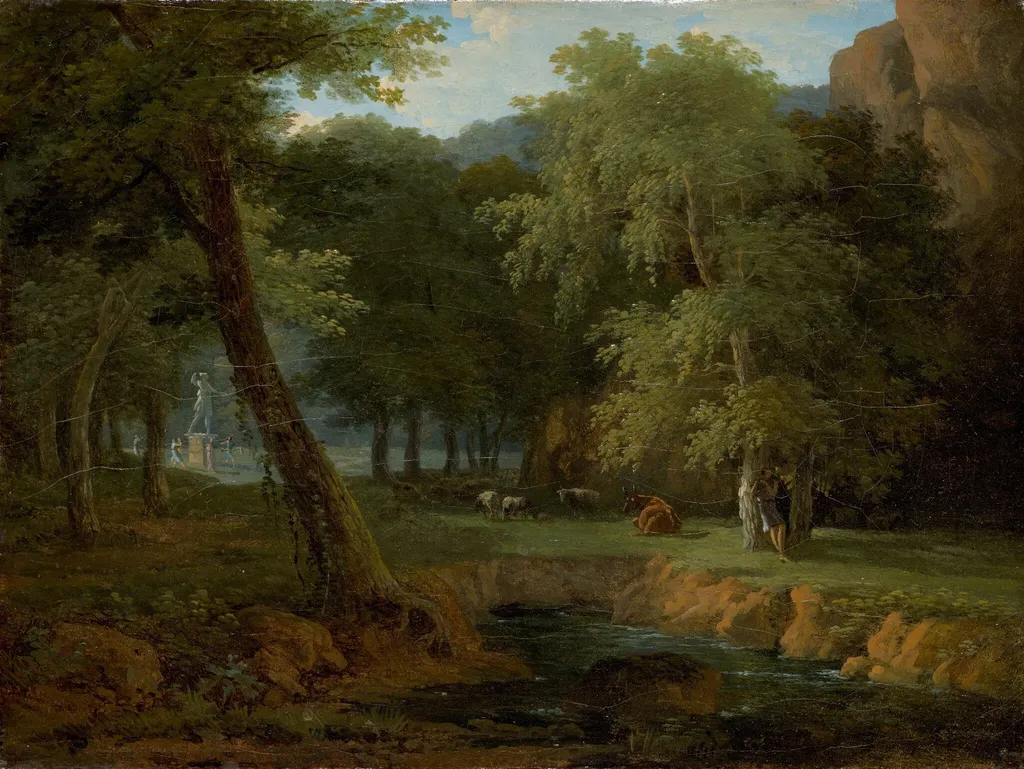
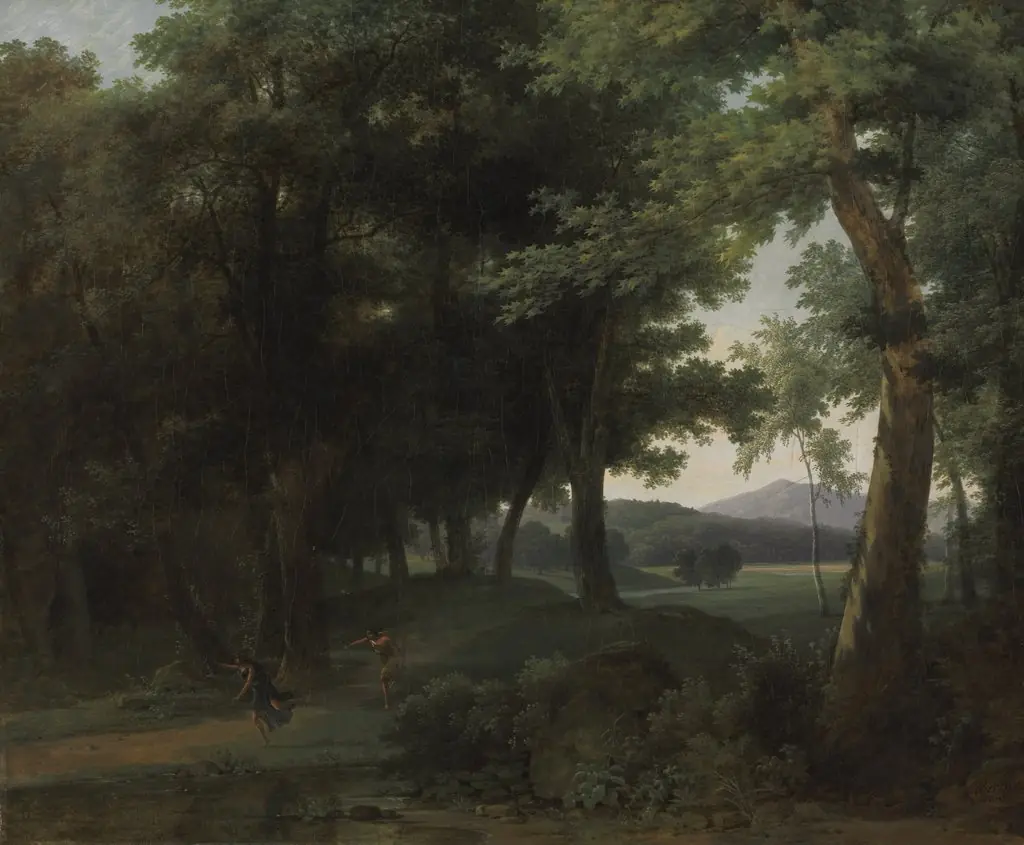
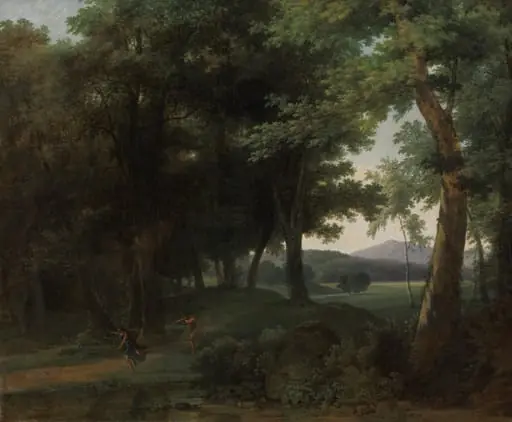
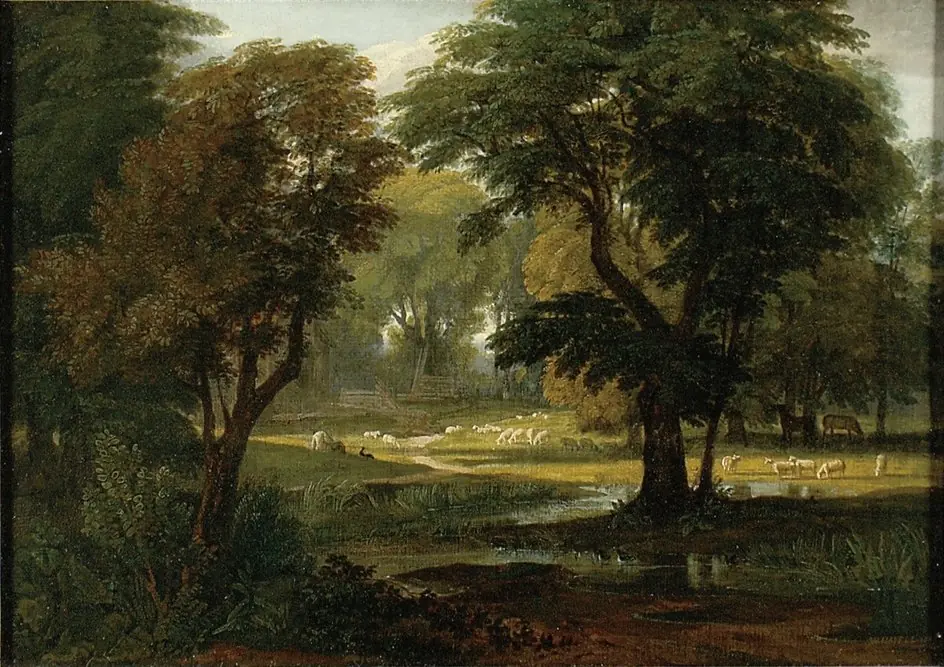
Woodland Scene with Nymphs and a Herm is an oil painting by the French Romanticist artist Jean Victor Bertin. It dates from 1810 and is held in the collection of the National Gallery of Art.
About this work
Subject & Meaning
Created in 1810, this oil-on-canvas work by Jean-Victor Bertin is classified as a mythological painting.
Created in 1810, this oil-on-canvas work by Jean-Victor Bertin is classified as a mythological painting. The composition depicts a woodland setting populated by nymphs and a herm, a stone pillar featuring a male head and torso that traditionally serves as a boundary marker or symbol of fertility in classical antiquity. While the specific narrative action of the figures is not detailed in the available records, the inclusion of these mythological elements within a natural landscape suggests an exploration of the relationship between the divine and the rustic environment.
The presence of trees as a primary visual element reinforces the pastoral theme, situating the supernatural figures within a serene, wooded context typical of the genre.
Technique & Style
Executed in oil on canvas in 1810, Woodland Scene with Nymphs and a Herm belongs to the Neoclassical tradition of refined landscape painting. The handling is smooth and evenly blended, with careful transitions in tone that model the foliage and figures without visible impasto. Subtle glazing over a light ground produces a luminous depth, particularly in the shaded woodland interior.
The composition is organized along a shallow, stage-like recession, directing the eye toward the central nymph group and the antique herm. Figures are rendered with linear precision, while the surrounding trees and underbrush are described through softly modulated strokes that dissolve into atmospheric haze. The small dimensions (15.9 × 21.3 cm) indicate an intimate cabinet picture intended for close viewing.
History & Provenance
Jean-Victor Bertin created the oil-on-canvas painting Woodland Scene with Nymphs and a Herm in 1810. The work entered the documented ownership chain in London under the possession of James Mackinnon. In March 1998, the painting was purchased by Frank Anderson Trapp (1922–2005) of Pittsburgh.
Following Trapp's acquisition, the artwork was gifted to the National Gallery of Art in Washington, D.C., in 2004, where it remains part of the collection. The piece is classified as a mythological painting depicting trees and figures within a woodland setting.
Context
Woodland Scene with Nymphs and a Herm (1810) is an oil on canvas mythological painting by Jean‑Victor Bertin. The work depicts a wooded landscape with nymphs and a herm and is part of the artist’s broader mythological oeuvre. It passed from James Mackinnon in London to Frank Anderson Trapp in Pittsburgh before being gifted to the National Gallery of Art, Washington, D.C., in 2004. Scholarship identifies the piece as representative of early‑19th‑century French mythological painting.
Overview
Jean-Victor Bertin, a French painter, created Woodland Scene with Nymphs and a Herm around 1810. This oil on canvas work exemplifies his approach to landscape painting, featuring a mythological narrative set within a meticulously rendered natural environment. The composition reflects the artist's classical training and his engagement with the detailed historical landscapes popular during his era.
Own this work as a print
Artist & collection
Artist
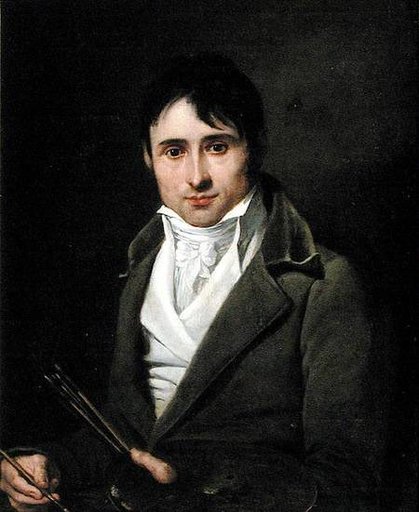
Jean-Victor Bertin was a French painter of historical landscapes, inspired by Italy and known for the minute detail of his classical style.