Artwork
Great Indian Fruit Bat
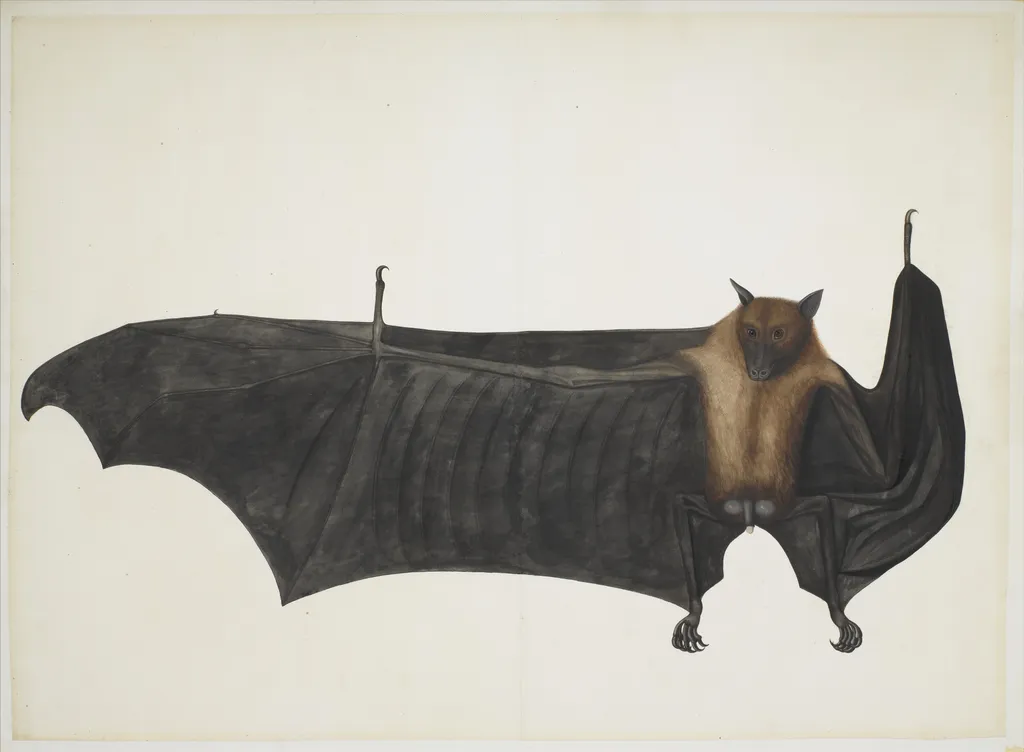
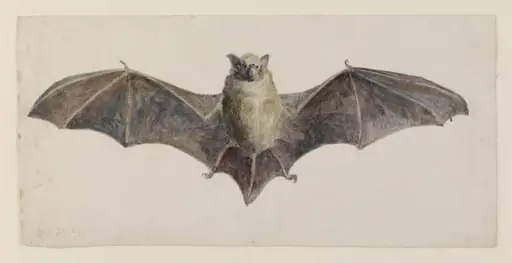
Great Indian Fruit Bat is an unspecified painting by the Patna School of Painting artist Bhawani Das. It dates from 1790 and is held in the collection of the Metropolitan Museum of Art.
About this work
Technique & Style
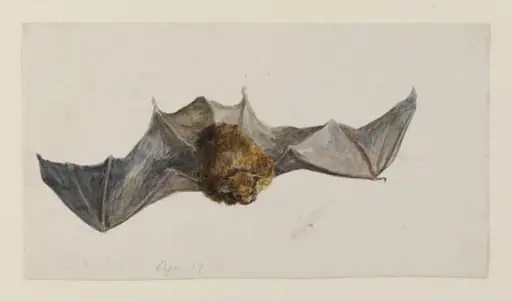
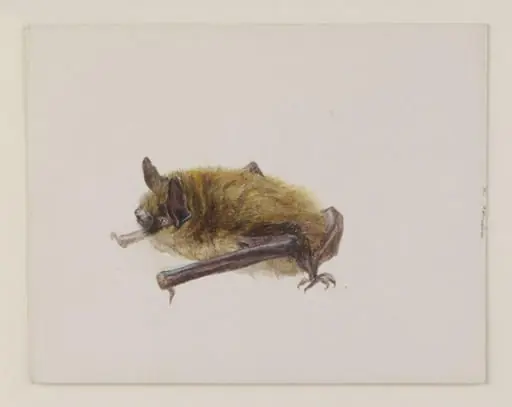
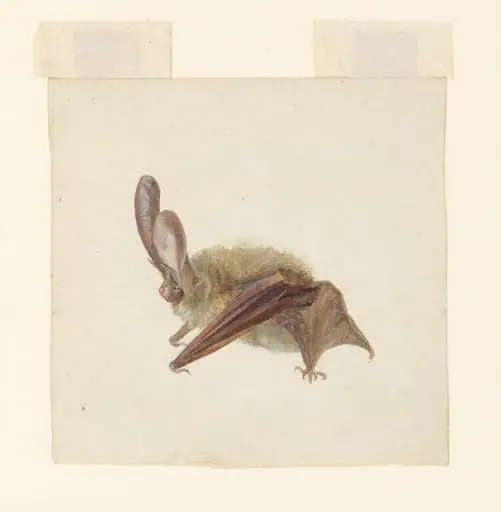
The painting is executed in watercolor on paper, depicting a bat species within the order Chiroptera. It was created in Kolkata in 1779 and is housed in the Metropolitan Museum of Art. The work demonstrates precise naturalistic rendering characteristic of Company School painting, with fine brushwork defining the bat's anatomy against a minimal background.
History & Provenance
The sources do not provide further details about a commission, prior ownership, or chain of custody prior to its acquisition by the museum.
Great Indian Fruit Bat is a painting by Bhawani Das dated 1779. According to the Wikidata record, the work was created in Kolkata and is held in the collection of the Metropolitan Museum of Art. The sources do not provide further details about a commission, prior ownership, or chain of custody prior to its acquisition by the museum.
Great Indian Fruit Bat is a painting by Bhawani Das created in 1779 in Kolkata and is housed in the Metropolitan Museum of Art. It was accessioned into the museum's collection and has been exhibited as part of the museum's display of works from the 18th century Indian miniature tradition.
The work is cataloged under the Metropolitan Museum of Art's collection and is listed with an accession number in the museum's records.
Exhibition history includes its display in the museum's galleries focusing on South Asian art and colonial era paintings.
Context
Bhawani Das created Great Indian Fruit Bat in 1779, a painting held by the Metropolitan Museum of Art that exemplifies Company School art produced in Kolkata. The work depicts a chiropteran subject characteristic of natural history illustration during the late colonial period in India. Art historians have examined it within the context of European-indigenous artistic exchanges facilitated by the East India Company, noting its precise naturalistic rendering and contribution to early Indo-European natural history collections.
Its provenance at the Met underscores its significance as a documented artifact of 18th-century cross-cultural visual exchange in South Asia.
Legacy
Great Indian Fruit Bat (1779) by Bhawani Das established an early precedent for European naturalists' interest in Indian fauna, though its influence remained limited to specialized scholarly circles rather than broader artistic movements. The painting's presence in the Metropolitan Museum of Art since its acquisition has ensured continued access for researchers studying colonial-era natural history illustration, preserving its status as a rare surviving example of 18th-century Indian artistic engagement with European scientific inquiry. Its depiction of Chiroptera contributed to foundational visual documentation of South Asian biodiversity, supporting later comparative studies of regional fauna in natural history collections.
Overview
Created in 1790 by the Indian illustrator Bhawani Das, the work titled Great Indian Fruit Bat is a painted representation of a chiropteran species. The piece is part of the collection of the Metropolitan Museum of Art, where it is displayed as an example of early natural‑history illustration.
Subject & Meaning
The painting portrays a single fruit bat suspended upside down, its wings fully extended. The animal’s fur combines shades of brown and gray, and its facial expression appears alert, emphasizing the creature’s keen senses. By isolating the bat against an unadorned background, the artist draws attention to its anatomical features rather than narrative context.
Own this work as a print
Artist & collection
Artist
Bhawani Das was an Indian painter active in the late 18th century and one of the leading figures of the Company School from Patna.