Artwork
A Newfoundland Village
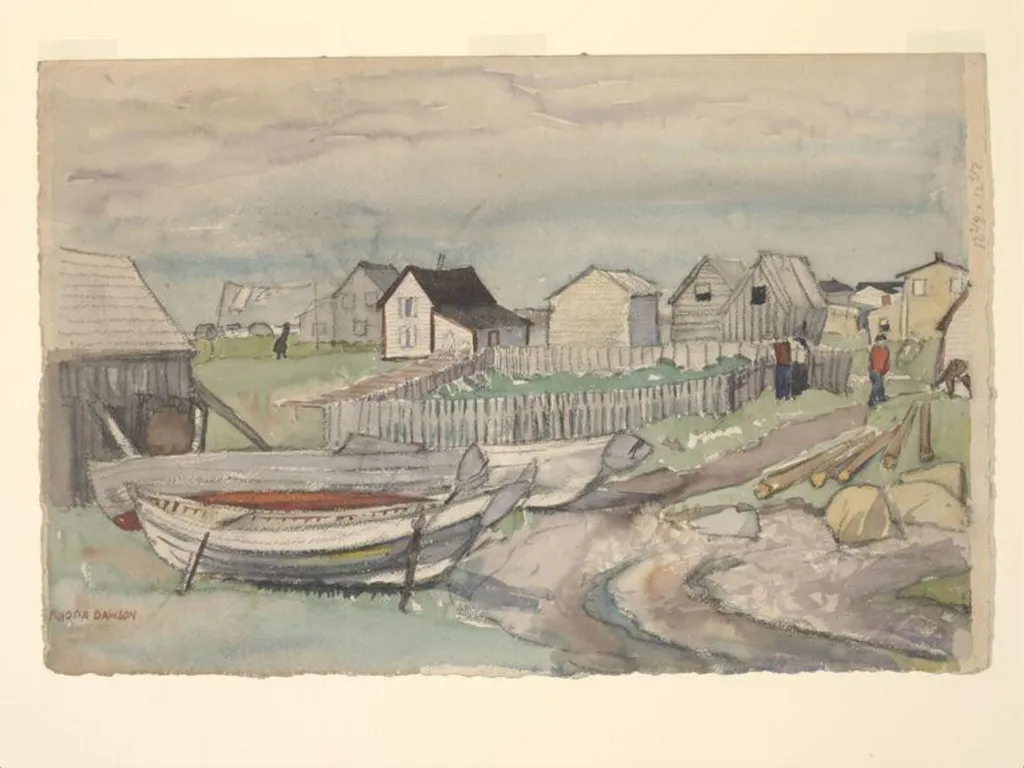
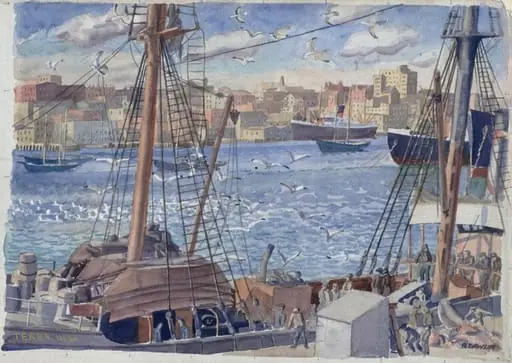
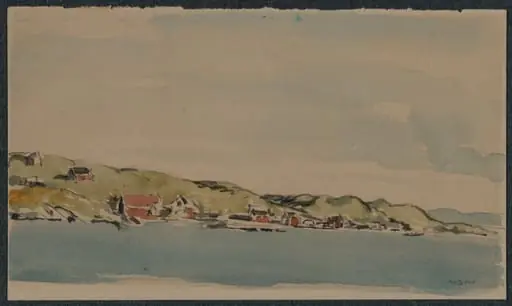
A Newfoundland Village is a watercolor work on paper by the Regionalist artist Rhoda Bickerdike. It dates from 1934 and is held in the collection of the Victoria and Albert Museum.
About this work
Overview
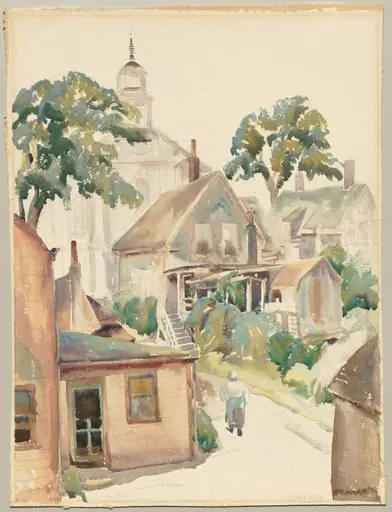
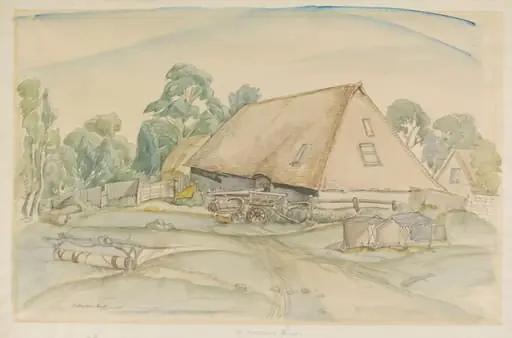
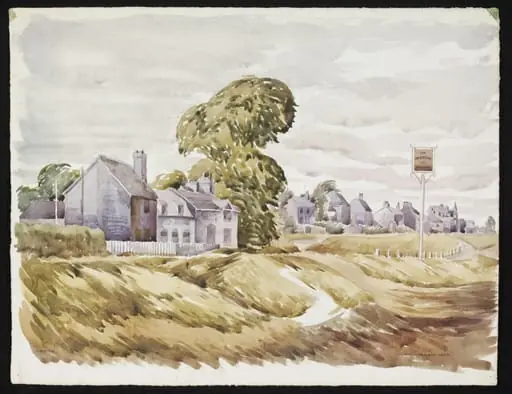
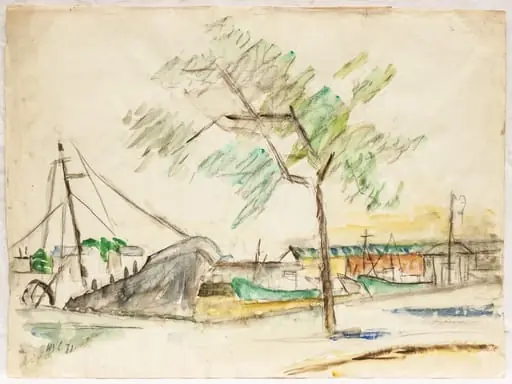
This watercolour painting depicts a village in Newfoundland, created by Rhoda Bickerdike in the 1930s. The work showcases the artist's skill in capturing a serene scene using soft washes of colour.
Subject & Meaning
The painting likely represents a place Bickerdike visited during her time as a missionary in Newfoundland. The composition conveys a sense of intimacy and everyday life, suggesting the artist's familiarity with the landscape.
Technique & Style
Bickerdike began by drawing the scene's outline in black chalk, then applied layered washes of watercolour in greens, blues, and purples. The use of soft tones and red accents guides the viewer's eye through the composition, creating a peaceful atmosphere.
History & Provenance
Rhoda Bickerdike, from a family of artists, travelled to Newfoundland in 1930 and 1934. She exhibited her work at the New English Art Club and the Royal Academy, and staged exhibitions of her Newfoundland paintings upon her return to Britain.

Artist & collection
Artist
Rhoda Bickerdike painted scenes of Newfoundland life in the 1930s and 40s, using watercolor to capture local harbors, fishing communities, and everyday routines.