Artwork
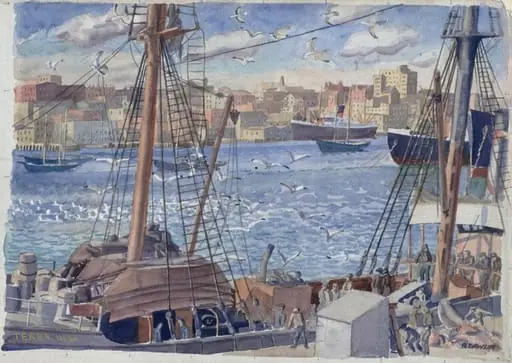
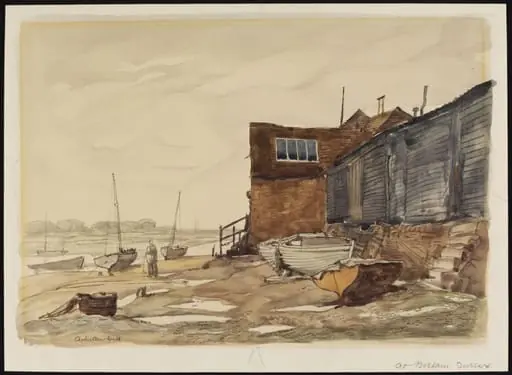
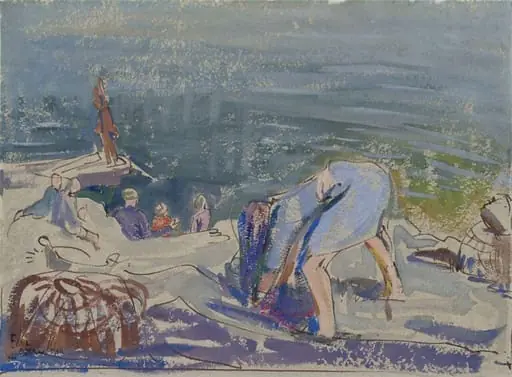
St Anthony's Harbour - A fish drying establishment with seal skins drying.
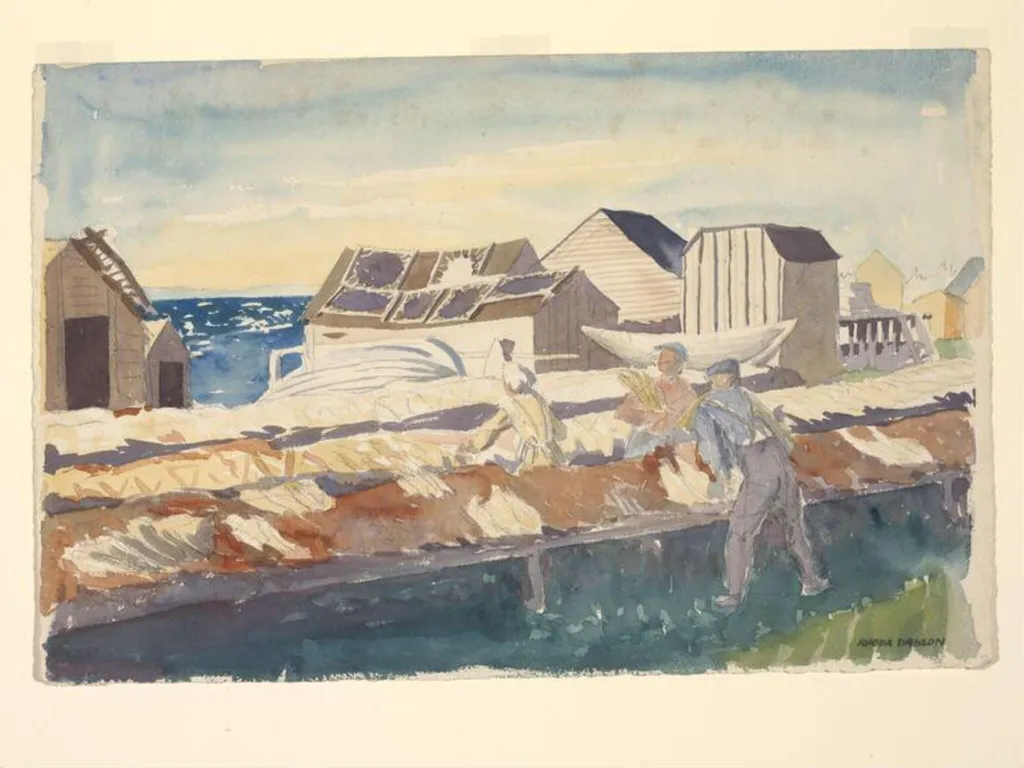
St Anthony's Harbour - A fish drying establishment with seal skins drying. is a watercolor work on paper by the Regionalist artist Rhoda Bickerdike. It dates from 1934 and is held in the collection of the Victoria and Albert Museum.
About this work
Overview
It was likely produced during her second visit to the region, following her return to Britain after an initial stay from 1930 to 1933.
Rhoda Bickerdike, born into an artistic family, created this watercolour during her time in Newfoundland in the mid-1930s. She traveled there as a missionary and used painting to document daily life in coastal communities. The work captures a fish-drying station at St. Anthony’s Harbour, reflecting her close observation of local practices.
It was likely produced during her second visit to the region, following her return to Britain after an initial stay from 1930 to 1933.
Subject & Meaning
The scene depicts the practical labor of drying cod and seal skins on wooden platforms called flakes. Figures, seen from behind, attend to their tasks with quiet routine, spreading skins, carrying fish, preparing for weather. The absence of facial detail emphasizes collective effort over individual identity.
The painting conveys a sense of endurance and adaptation to a harsh environment, grounded in the rhythms of subsistence fishing rather than romanticized scenery.
Technique & Style
Bickerdike sketched the composition in pencil before applying transparent watercolour washes in vivid blues, greens, and reds. The palette reflects the natural tones of the Newfoundland coast, while the loose, direct brushwork suggests immediacy. The perspective feels unposed, as if captured in passing, reinforcing the sense of intimate observation. No dramatic lighting or idealization distorts the scene’s functional reality.
History & Provenance
Created during Bickerdike’s second stay in Newfoundland (1934 onward), the watercolour emerged from her firsthand experience in St. John’s and surrounding areas. She exhibited her Newfoundland works upon returning to Britain, drawing attention to a region rarely depicted in British art. The piece remained within her personal collection until its later acquisition by a public institution, preserving its connection to her documented travels.
Context
In the 1930s, Newfoundland’s economy relied heavily on cod fishing and seal hunting, with drying flakes a common feature of coastal settlements. Bickerdike’s work aligns with a broader interest in documenting rural and industrial life, though her focus was personal rather than ethnographic. As a woman artist and missionary, her access to private domestic and labor spaces offered a rare perspective on community routines often overlooked by male contemporaries.
Legacy
Bickerdike’s Newfoundland watercolours remain among the few visual records made by a British woman artist during this period. Her work contributes to understanding how outsiders engaged with remote Canadian communities, not as exotic subjects, but as participants in daily life. Though not widely known today, her paintings offer quiet testimony to the resilience of coastal livelihoods in a time of economic and environmental change.
Artist & collection
Artist
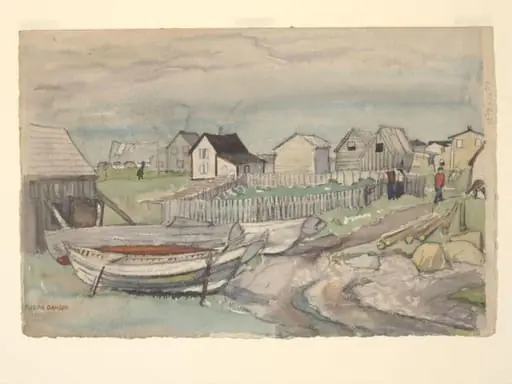
Rhoda Bickerdike painted scenes of Newfoundland life in the 1930s and 40s, using watercolor to capture local harbors, fishing communities, and everyday routines.