Artwork
The Genius of Franklin (Au Génie de Franklin)
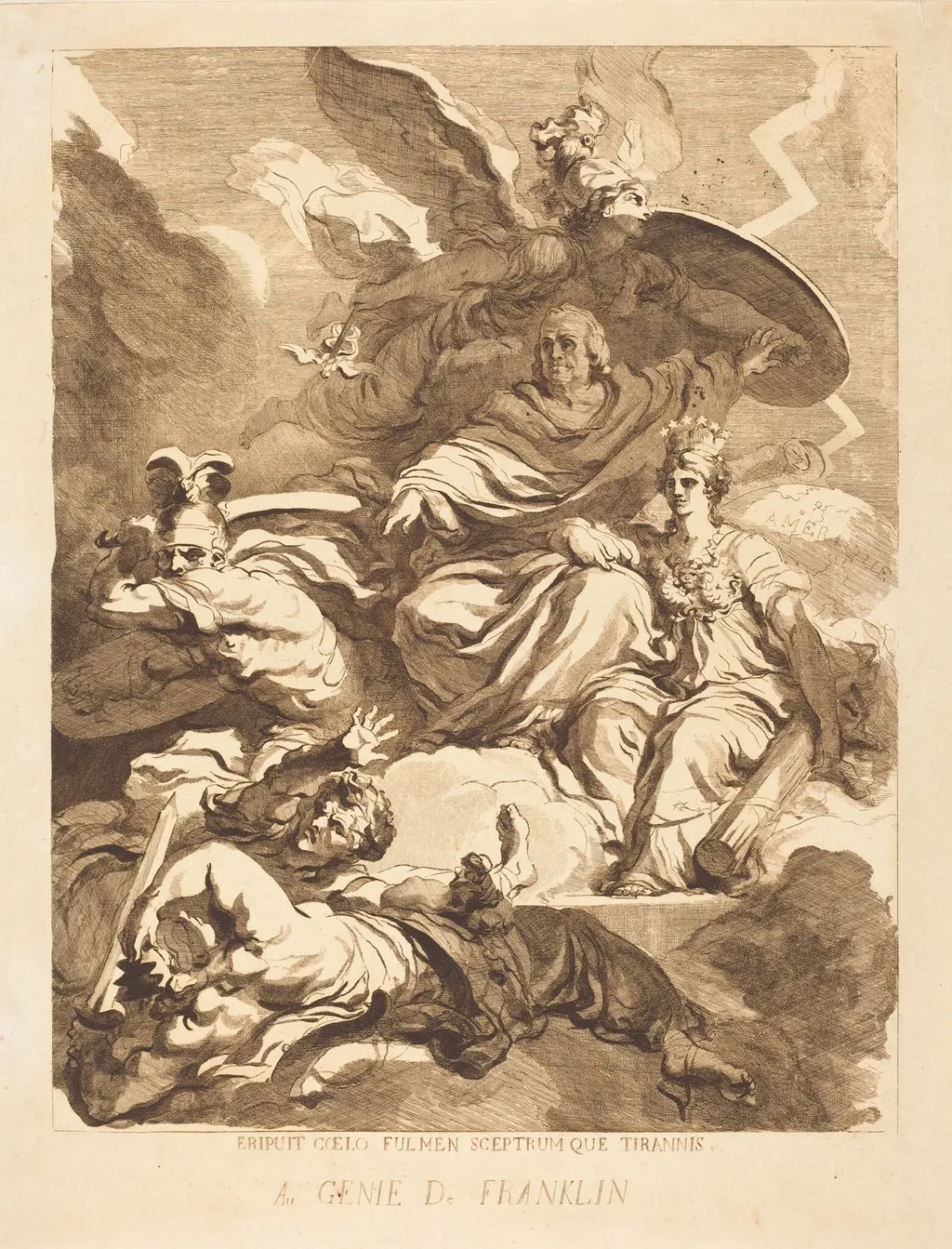
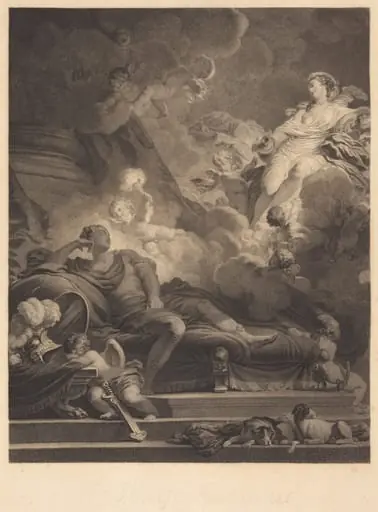
The Genius of Franklin (Au Génie de Franklin) is an ink print by the Romanticist artist Marguerite Gérard. It dates from 1778 and is held in the collection of the National Gallery of Art. Created in 1778, this brown‑toned etching on laid paper presents an allegorical composition titled “Au Génie de Franklin.
- Inscription
- Inscribed:In plate, at lower center: ERIPUIT COELE FULMEN SCEPTRUM QUE TIRANNIS / Au GENIE de FRANKLIN; text printed on fragment from single-sheet advertisement cut and pasted below platemark at center: Eripuit coelo fulmen, sceptrumque tyrannis. / Inspiré par ce vers, qui remplit l'idée & les connoissances profondes de Franklin & de la sagesse dans la révolution du Nouveau Monde, le Peintre l'a représenté tout-à-la-fois opposant d'une main l'Egide de Minerve a la foudre, qu'il a sçu fixer par des Conducteurs, & de l'autre ordonnant a Mars de combattre l'avarice & la tyrannie; tandis que l'Amérique, noblement appuyée sur lui & tenant un faisceau, symbole des Provinces-unies, contemple avec tranquilité ses ennemis terrassés. [Inspired by this verse, which captures the spirit and deep understanding of Franklin and his wisdom in the revolution of the New World, the painter has shown him at once holding Minerva's shield against the lightning, which he had controlled via his conductors, and with the other ordering Mars to battle avarice and tyranny; while America, leaning nobly on him and holding fasces, symbol of the United Provinces, calmy gazes upon her vanquished enemies.]
About this work
Overview
Created in 1778, this brown‑toned etching on laid paper presents an allegorical composition titled “Au Génie de Franklin.” Central to the scene is a calm‑faced man surrounded by a variety of figures, including a winged attendant bearing a shield, a crowned woman, and several other characters positioned on the ground and behind the central figure. The work is signed by Marguerite Gérard.
Subject & Meaning
The image assembles symbolic participants to celebrate the intellectual spirit associated with Benjamin Franklin, whose reputation for scientific and diplomatic achievements made him a figure of Enlightenment admiration. The central, tranquil male figure likely represents Franklin himself, while the winged figure and crowned woman embody abstract virtues such as genius and honor that surround and support his endeavors.
Technique & Style
Executed as an etching, the print employs fine line work and cross‑hatching to render delicate textures and atmospheric clouds. The brown ink on laid paper gives the image a warm, unified tone, while the composition reflects the Rococo sensibility inherited from Gérard’s mentor, Jean‑Honoré Fragonard, evident in the graceful poses and ornamental details.
History & Provenance
Marguerite Gérard, a French painter and printmaker, produced this piece while still a teenager after moving to Paris at fourteen to study under her brother‑in‑law, Fragonard. The etching was one of ten collaborative prints created with Fragonard in 1778, marking an early phase of Gérard’s independent artistic output.
Context
The work emerges during the late eighteenth‑century fascination with Enlightenment figures, particularly the transatlantic admiration for Franklin’s contributions to science and diplomacy. Its allegorical format aligns with contemporary French print traditions that combined portraiture with symbolic iconography to convey intellectual virtues.
Own this work as a print
Artist & collection
Artist
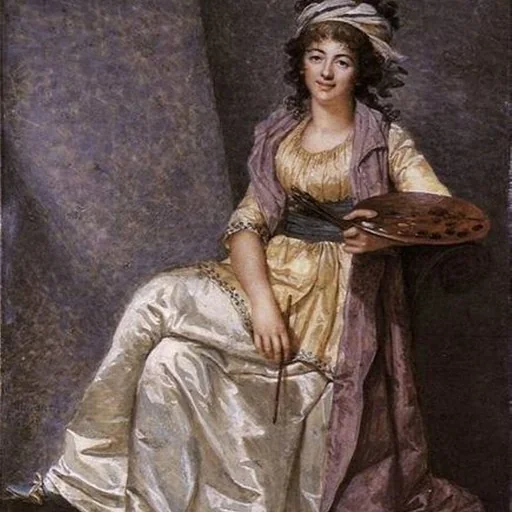
Marguerite Gérard (French pronunciation:; 28 January 1761 in Grasse – 18 May 1837 in Paris) was a French painter and printmaker working in the Rococo style.

- Jupiter and Juno
 Le Songe d'Amour (Love's Dream)
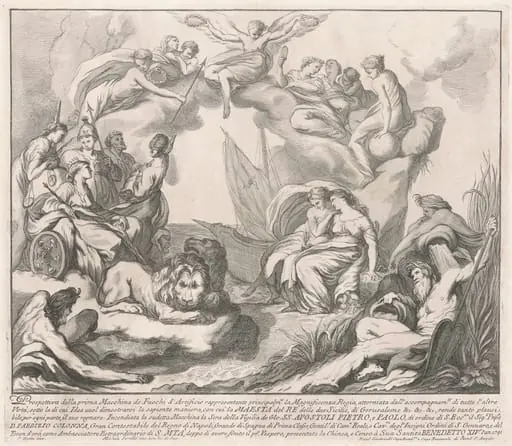 The Prima Macchina for the Chinea of 1741: Allegory of Regal Magnificence
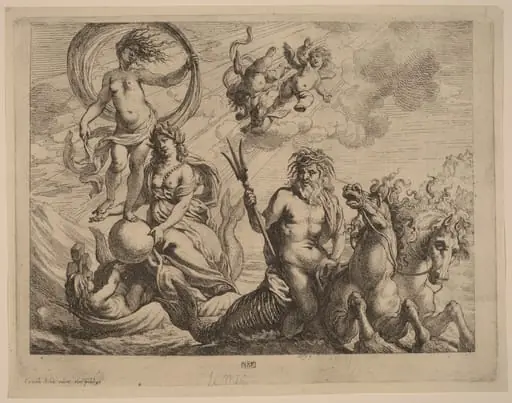 Neptune with Two Horses on the Sea
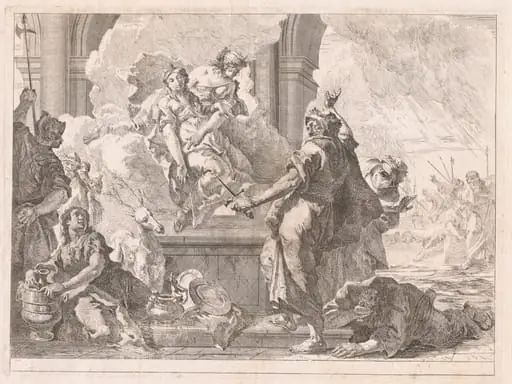 The Sacrifice of Iphigenia
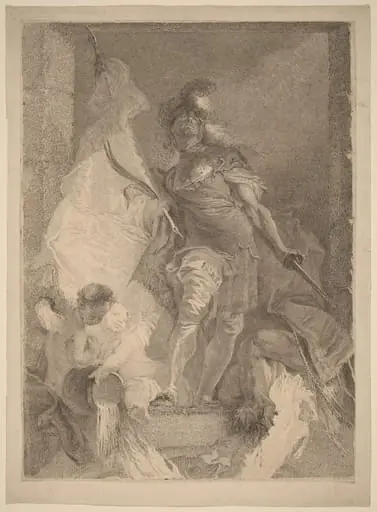 Saint Florian
 The Ecstasy of Saint Paul
 Juno
Juno The Madonna del Carmelo Appearing to Saint Simon Stock
 Diana and Endymion
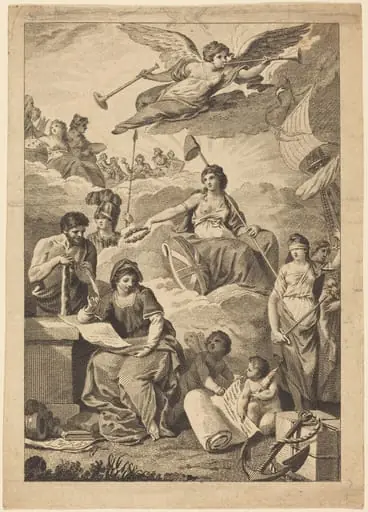 Britannia Crowning History
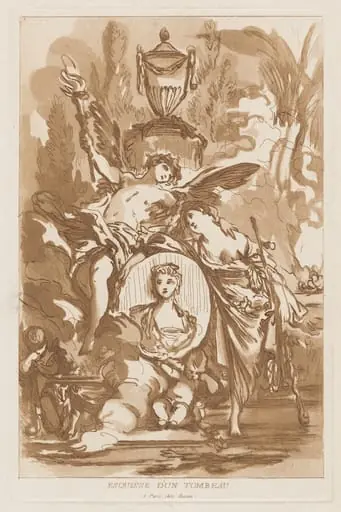 Esquisse d’un tombeau (Sketch for a Tomb)