Artwork
Juno
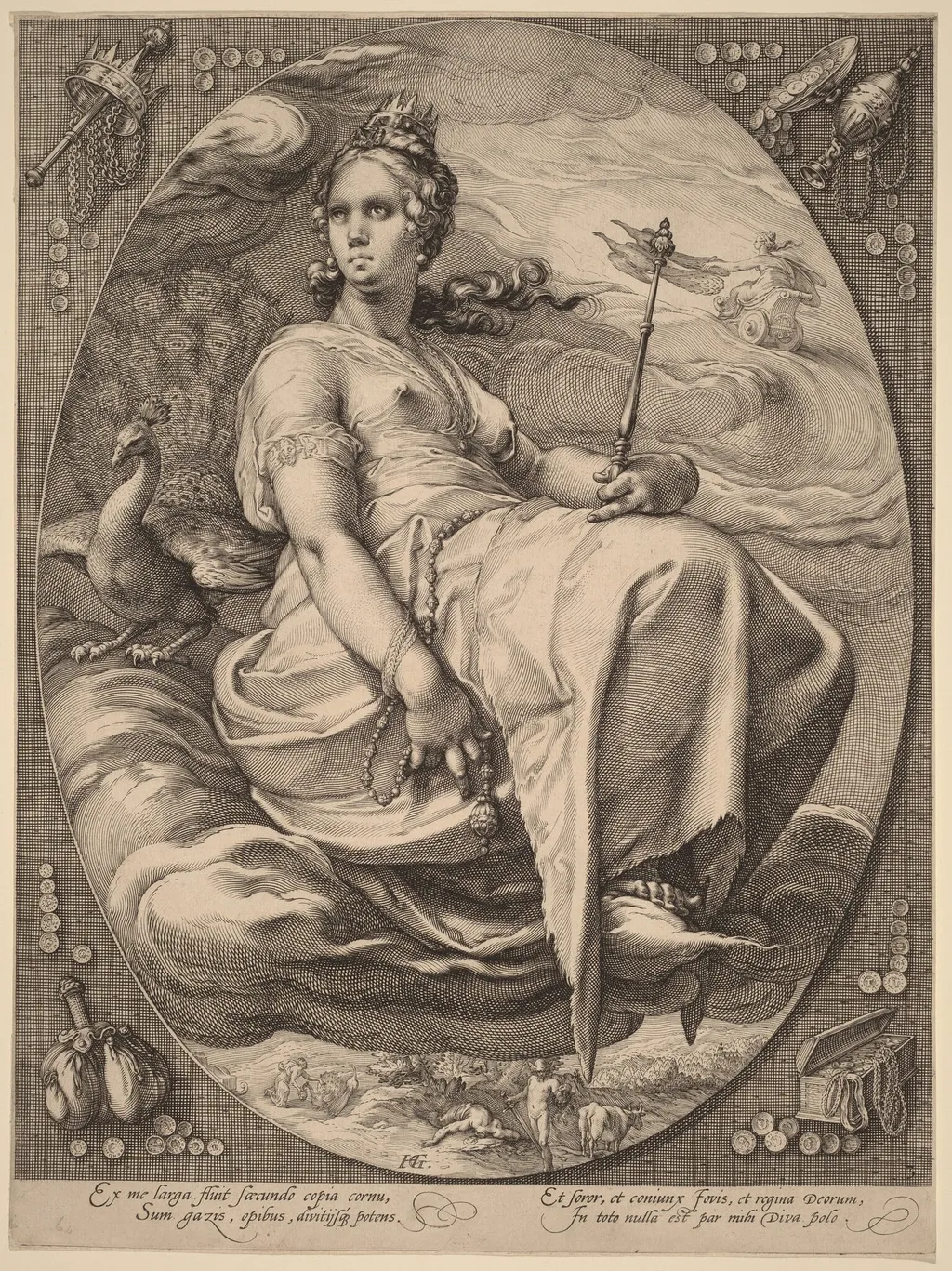
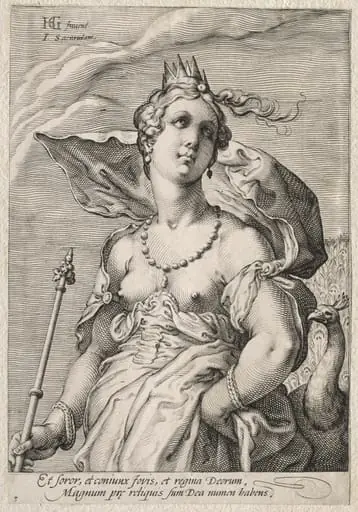
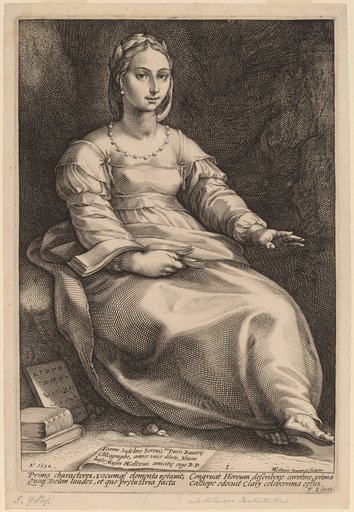
Juno is an ink print by the Renaissance artist Hendrick Goltzius. It dates from 1596 and is held in the collection of the National Gallery of Art.
- Inscription
- Inscribed:in image, at bottom centre: HG; in image, at bottom right: 3; below image: Ex me larga fluit saecundo copia cornu, / Sum gazis, opibus, divitiisqué potens. / Et soror, et coniunx Iovis, et regina Decorum, / In toto nulla est par mihi Diva polo
- Markings
- Marked:verso, stamped in black ink: Ruth Cole (Lugt 4739)
About this work
Overview
Hendrick Goltzius’s 1558 engraving titled Juno presents a seated female figure on a rugged throne, crowned and robed, holding a scepter and a staff. The composition is crowded with diminutive figures and symbolic objects such as a hammer and anvil, while clouds and draped fabric swirl in the background, creating a dense, narrative tableau.
Subject & Meaning
The central figure represents the Roman goddess Juno, queen of the gods, signified by her crown and regal regalia. The surrounding tools and miniature characters may allude to her role as protector of marriage and patron of artisans, integrating allegorical elements that reinforce her authority and the divine order she oversees.
Technique & Style
Executed on laid paper, the print showcases Goltzius’s precise line work, using fine, intersecting strokes to render deep shadows and the texture of hair, fabric, and stone. The engraving reflects Northern Mannerist tendencies: exaggerated poses, intricate detailing, and a crowded composition, while the tiny Latin inscription at the bottom adds a poetic or explanatory layer.
History & Provenance
Created in 1558, the print emerges from Goltzius’s early period when he was establishing himself as the pre‑eminent Dutch engraver of the nascent Baroque era. The work circulated among collectors and fellow artists, who often copied his designs, underscoring his influence on subsequent printmaking practices.
Context
Goltzius operated within the Northern Mannerist movement, which favored complex, artificial compositions and virtuoso draftsmanship. Juno exemplifies his reputation for inventing original images that were widely reproduced, reflecting the period’s fascination with classical mythology and the technical possibilities of copper engraving.
Own this work as a print
Artist & collection
Artist
Hendrick Goltzius (German: , Dutch: ; né Goltz; January or February 1558 – 1 January 1617) was a German-born Dutch printmaker, draftsman, and painter.