Artwork
Saint Martin Dividing His Cloak
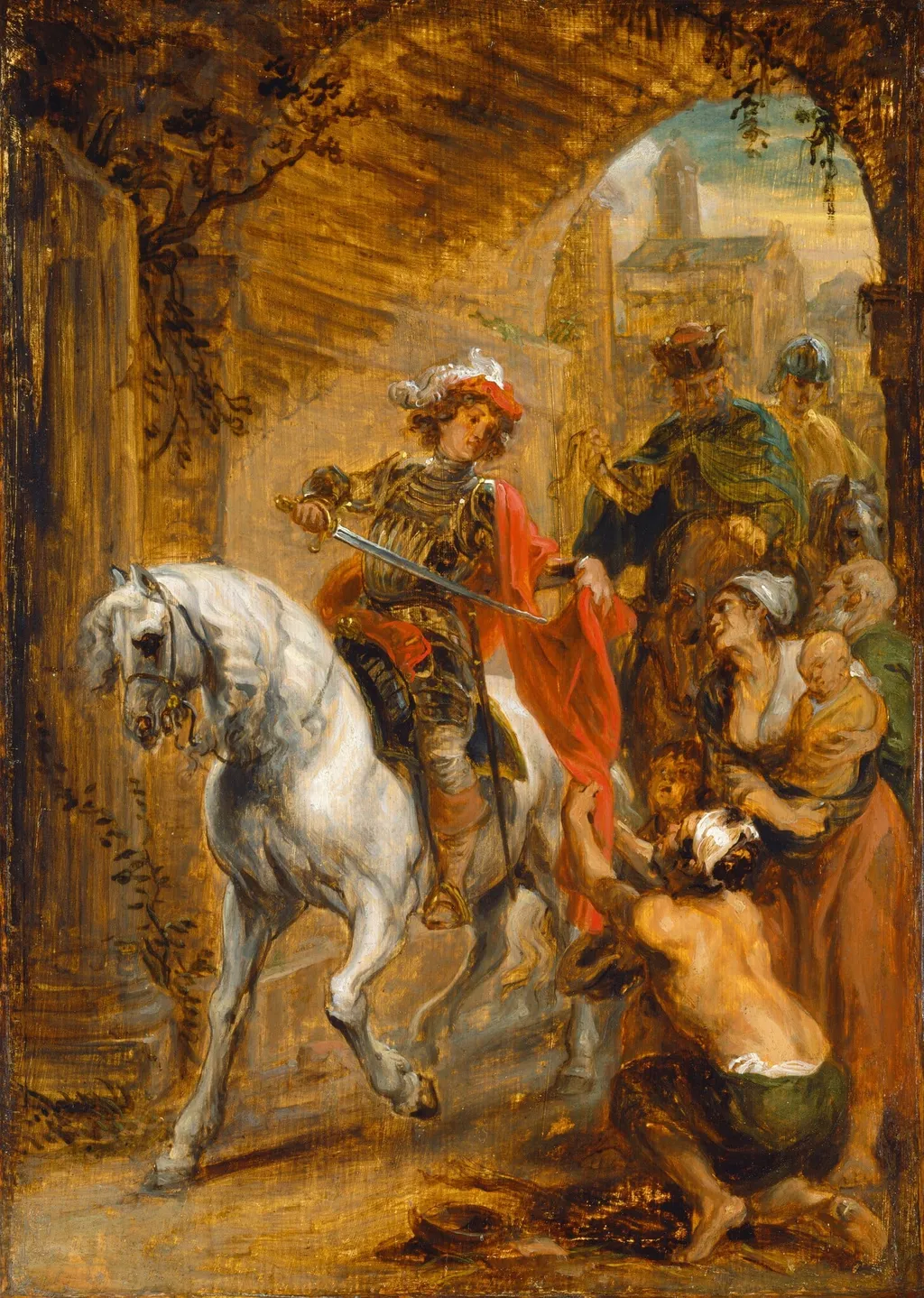
Saint Martin Dividing His Cloak is an oil painting by the Baroque artist Jan Boeckhorst. It dates from 1642 and is held in the collection of the National Gallery of Art.
About this work
Subject & Meaning
As a work of religious art, the composition focuses entirely on this act of charity, which serves as the primary iconographic element defining the narrative.
Jan Boeckhorst's 1640 painting depicts the central hagiographic episode of Martin of Tours, specifically the moment the saint divides his military cloak to share with a beggar. As a work of religious art, the composition focuses entirely on this act of charity, which serves as the primary iconographic element defining the narrative. The subject represents the virtue of compassion and the Christian ideal of selfless giving, illustrating Martin's willingness to sacrifice his own comfort for the needy.
While the specific visual attributes of the beggar or the surrounding environment are not detailed in the available records, the work's meaning is anchored in this singular, transformative gesture of splitting the garment, an event that traditionally precedes Martin's conversion and eventual sainthood.
Technique & Style
The painting is an oil work executed on a wooden panel, measuring roughly 34.5 cm in height and 24.2 cm in width. Its surface consists of oil paint applied to the panel support, a technique typical of mid‑seventeenth‑century Dutch and Flemish religious imagery. The composition illustrates Saint Martin sharing his cloak, a subject drawn from hagiographic tradition, and is classified within the religious genre.
Documentation records a complex provenance but does not elaborate on the current physical condition of the panel or any conservation treatment.
History & Provenance
Jan Boeckhorst's Saint Martin Dividing His Cloak is dated 1640 in the National Gallery of Art records. The earliest documented owner is Baron de Willebroek of Brussels, whose posthumous sale in Brussels on 25 June 1781 included the panel as lot 15. The work may then have passed to a De Castelmore collection in Paris, sold through Paillet and Boileau beginning 20 December 1791 as an attribution to Van Dyck; Paillet acquired it for François-Pascal Haudry of Orléans, who resold it privately in August 1800.
Cardinal Joseph Fesch of Rome later owned the painting; his estate sold it in 1844 to William Buchanan of London, who in 1845 placed it with Robert Stayner Holford at Dorchester House. It descended to Sir George Lindsay Holford and was sold at Christie's on 17–18 May 1928. After passing through M. Knoedler & Co. in New York, Andrew W. Mellon purchased it in 1928; it descended to Ailsa Mellon Bruce and entered the NGA by 1970 bequest.
Jan Boeckhorst's Saint Martin Dividing His Cloak (1640) is held in the collection of the National Gallery of Art in Washington, D.C. The painting entered the museum in 1970 as a bequest from Ailsa Mellon Bruce, having previously belonged to her father, Andrew W. Mellon. Before joining the Mellon collection in 1928 via M. Knoedler & Co., the work appeared at the Christie, Manson & Woods auction in London on May 17–18, 1928. Its earlier exhibition or sale history includes transactions in Brussels (1781), Paris (1791 and 1800), and London (1844–1845) involving owners such as Cardinal Joseph Fesch and Sir George Lindsay Holford.
Legacy
The painting's distinguished provenance, moving from the Baron de Willebroek collection through major European owners to the National Gallery of Art, illustrates its sustained reputation among collectors and scholars [1]. Early attributions to Van Dyck sparked scholarly discussion of Jan Boeckhorst's oeuvre, reinforcing the work's influence on the understanding of 17th‑century religious art [1][2]. Its appearance in prominent sales, including the 1928 Christie's auction, reflects ongoing market recognition, while its documented presence in the National Gallery of Art since 1970 and inclusion in authoritative databases such as Wikidata underscore its lasting legacy in art history [2].
Overview
Jan Boeckhorst, a German-born artist working in the Flemish Baroque tradition, completed Saint Martin Dividing His Cloak around 1642. This oil on panel painting exemplifies a religious narrative, a common theme in his oeuvre. The artwork portrays the 4th-century Saint Martin in the act of charity, sharing his garment with a beggar, a scene rendered with the dramatic flair typical of the period.
Context
Created during Boeckhorst's active period in Antwerp, Saint Martin Dividing His Cloak is representative of the religious art prevalent in the Southern Netherlands during the 17th century. As a German-born painter who assimilated into the vibrant artistic environment of Flanders, Boeckhorst contributed significantly to the region's artistic output. His work, including this panel, demonstrates the enduring appeal of hagiographical subjects within the Baroque tradition.
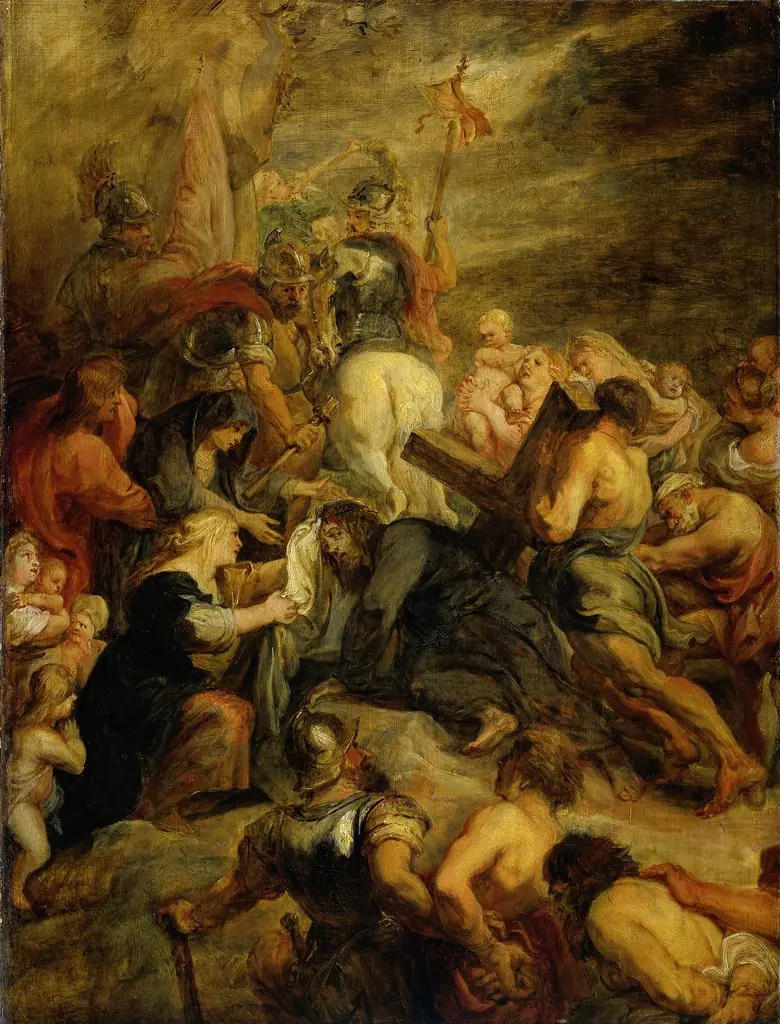
Own this work as a print
Artist & collection

Artist
Jan Boeckhorst or Johann Bockhorst (c. 1604 – 21 April 1668) was a German-born Flemish Baroque painter and draughtsman who worked most of his career in Antwerp. He was a versatile artist who produced history paintings,…

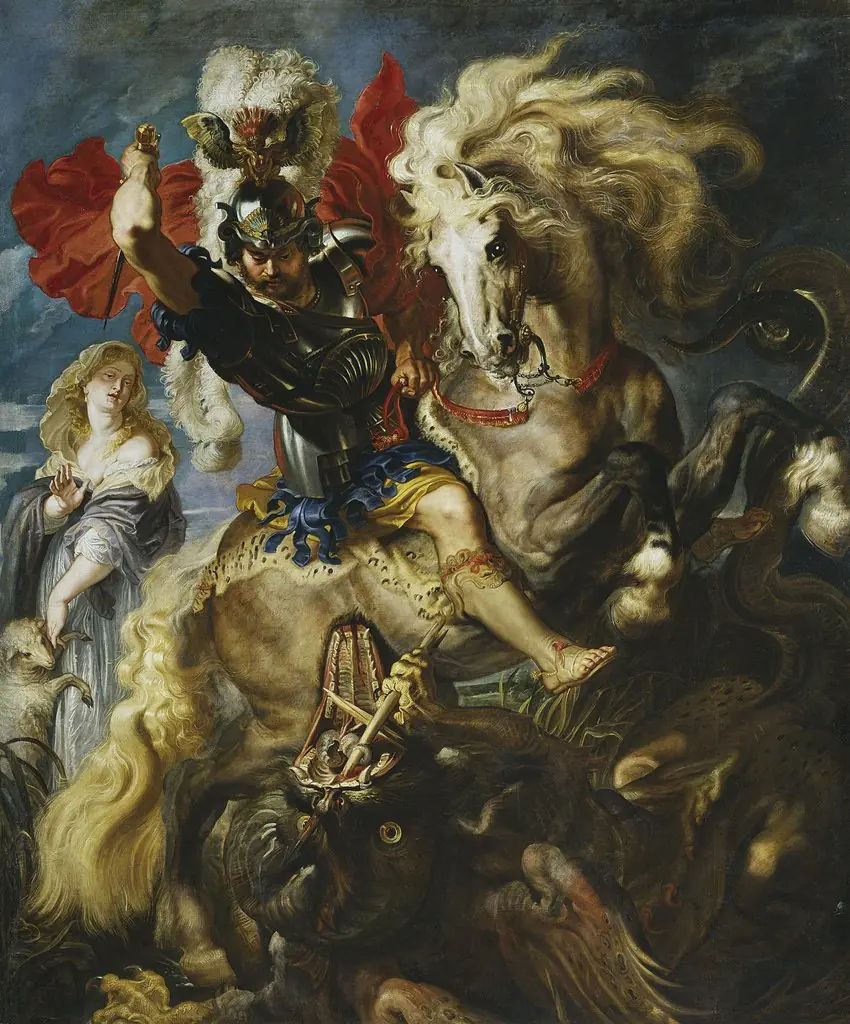 Saint George and the Dragon
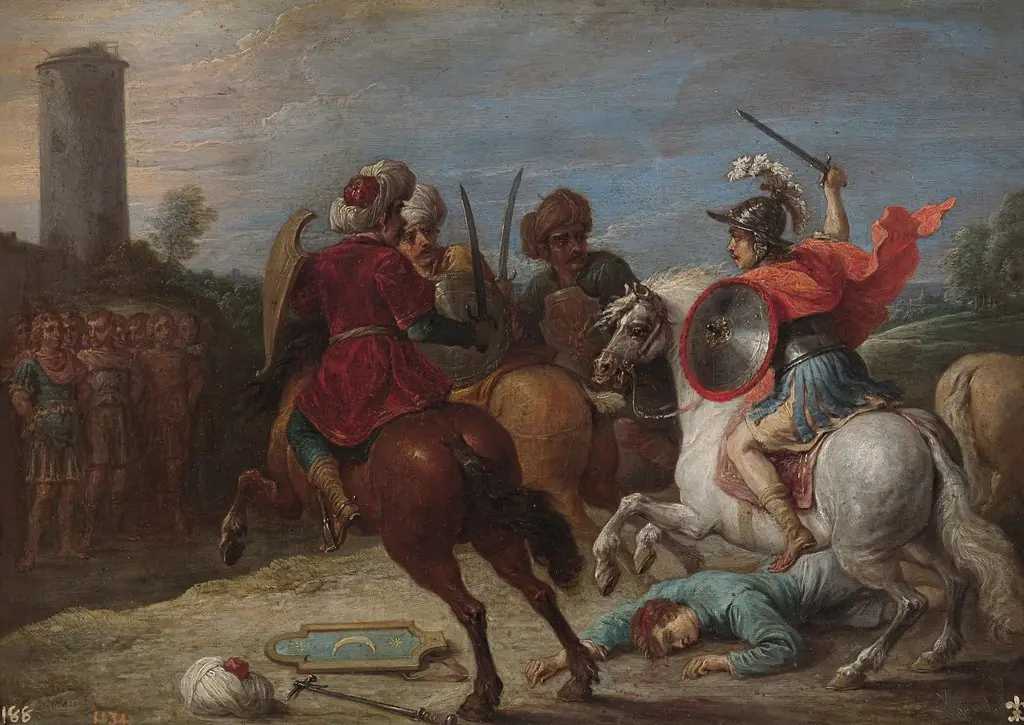 Proezas de Reinaldo frente a los egipcios
 The Meeting of David and Abigail
 Equestrian Portrait of the Duke of Buckingham
 Moroccan Horseman Crossing a Ford
 Capture of King Francis I at the Battle of Pavia
 The Adoration of the Magi
 The taking of a stronghold
 Imperial Coronation
 John the Baptist Preaching in the Forest
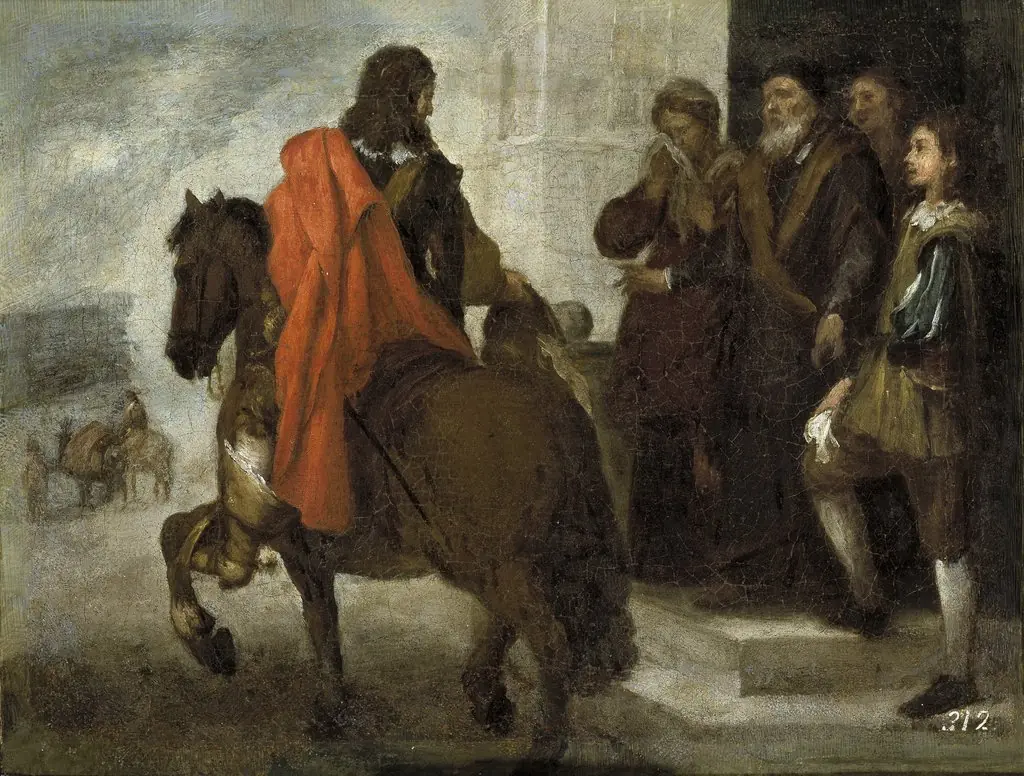 La despedida del hijo pródigo, de Murillo (Museo del Prado)
- The carrying of the cross