Artwork
Saint George and the Dragon
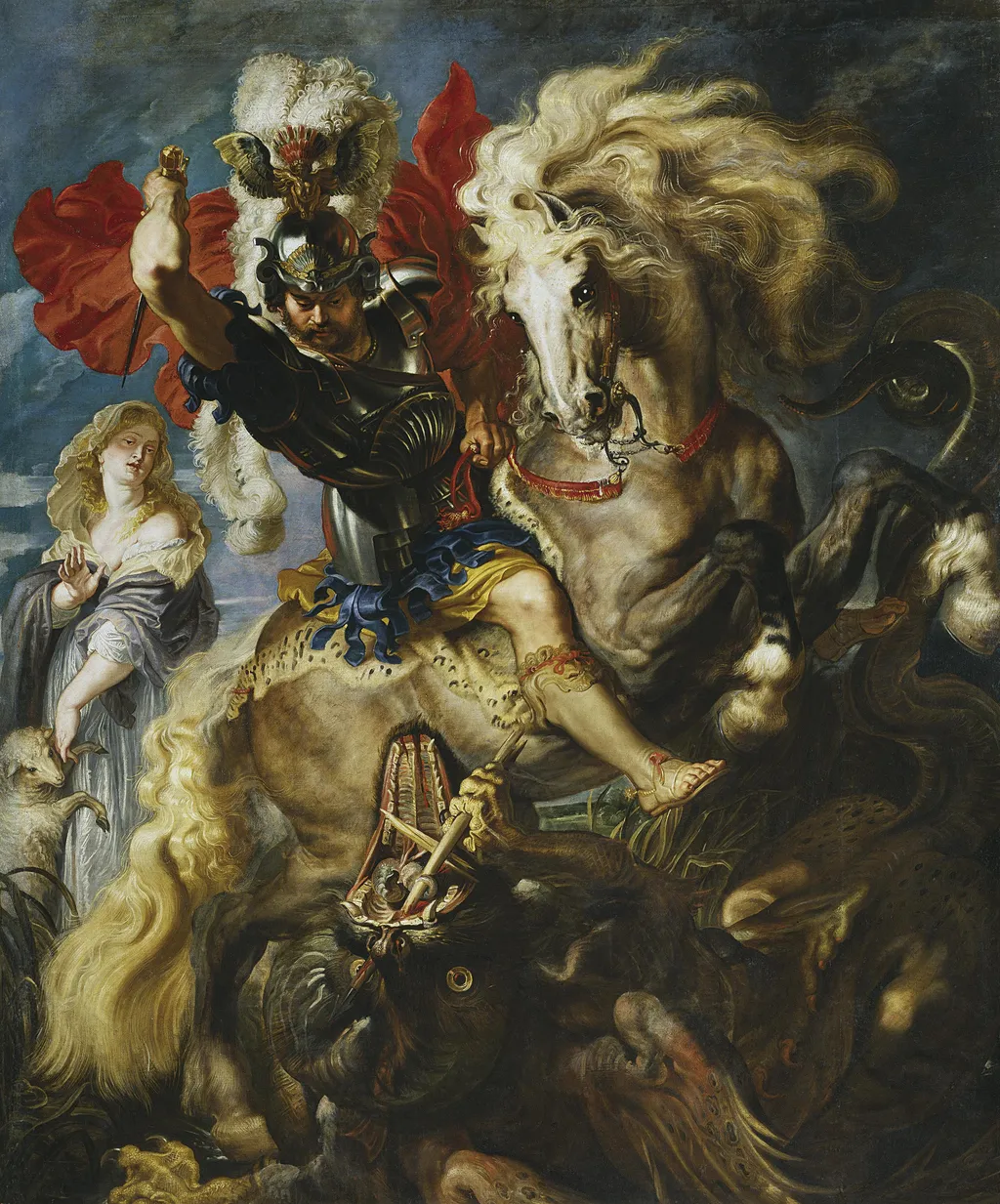
Saint George and the Dragon is an oil painting by the Flemish Baroque painting artist Peter Paul Rubens. It dates from 1606 and is held in the collection of the Museo del Prado.
About this work
Subject & Meaning
Rubens frames the encounter as an allegory of the struggle between Christianity and paganism, with the saint embodying the triumph of good over evil.
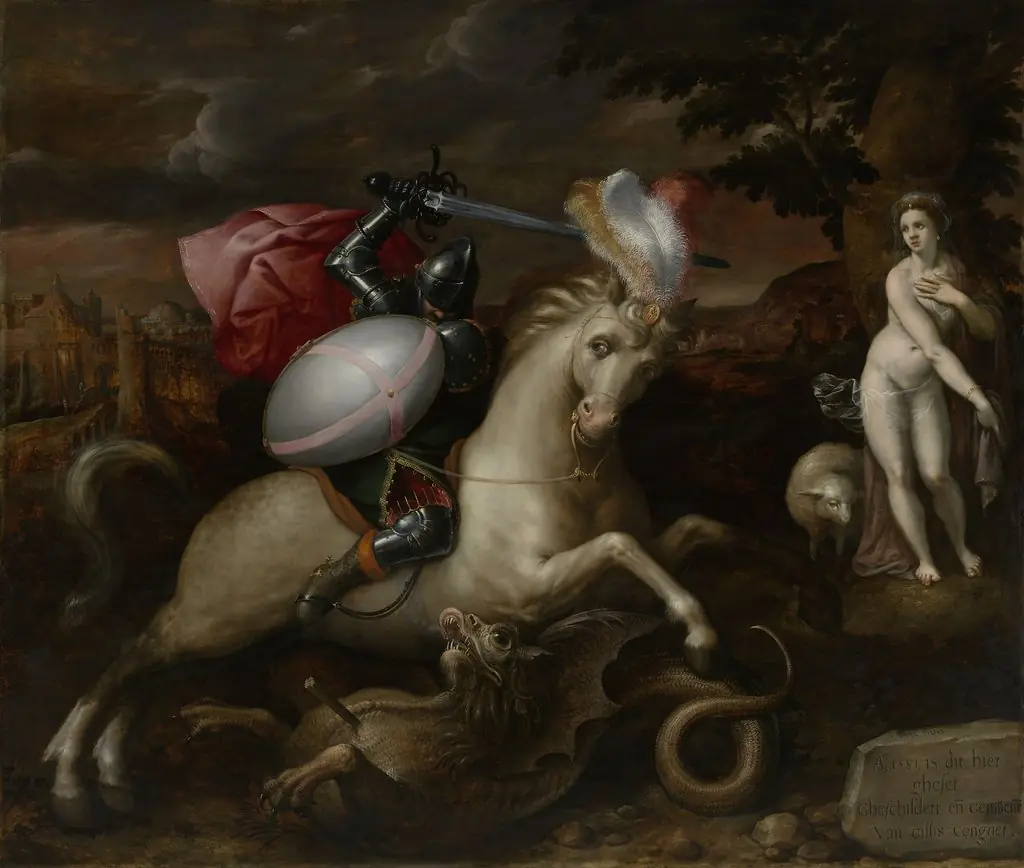
The painting illustrates the medieval legend of Saint George of Lydda, who rescues a princess from a dragon terrorizing the region of Beirut, a story recorded by Jacobus de Voragine in the Golden Legend. Rubens frames the encounter as an allegory of the struggle between Christianity and paganism, with the saint embodying the triumph of good over evil. The princess represents the Church, while the lamb she shelters symbolizes the innocence and purity of Jesus Christ, the "Lamb of God." Saint George's elevated foot, poised above the beast, visually asserts the dominance of light over darkness. The dragon is rendered with a serpentine form rather than a reptilian one, alluding to Satan's guise in the Garden of Eden. Rubens also treats the confrontation in the manner of a hunting scene, emphasizing the visceral contest between man and beast.
The saint's white and red garments, echoed in his plumed helmet and billowing cape, reinforce his role as a Christian warrior. The rearing horse, animated by a powerful diagonal sweep, anchors the dynamic composition and conveys the violence of the moment.
Technique & Style
Peter Paul Rubens’s *Saint George and the Dragon* (1606) is executed in oil on canvas, measuring 309 × 257 cm. The support is a tightly woven linen canvas, prepared with a warm, smooth imprimatura that allows translucent glazes to enrich the shadows. Rubens’s handling is characteristically dynamic: impasto highlights define the horse’s musculature and the saint’s gleaming armor, while fluid, wet-in-wet blending softens the princess’s drapery and the dragon’s scaly hide. Stylistically, the work balances naturalistic detail with dramatic Baroque movement. The horse’s criniere and tail were incised into the wet paint with the wooden end of a brush, creating fine, wiry strands. Anatomical precision, evident in the horse’s raised forelegs and the dragon’s contorted limbs, reflects Rubens’s study of equine and reptilian forms. The composition relies on a sweeping diagonal from the horse’s tail to its mane, reinforcing the sense of violent action. Despite its vigorous execution, the painting remains in good condition, with only minor losses along the edges and slight craquelure in the dark passages.
History & Provenance
Created between 1605 and 1607 during Peter Paul Rubens's Italian sojourn, the painting was executed in Genoa while the artist was completing his training under Otto van Veen. It is widely believed to have been commissioned for the Church of Sant'Ambrogio in Genoa, a site dedicated to Saint George, the city's patron. However, the commissioner never received the work; Rubens retained possession of the masterpiece until his death in 1640. Following the artist's passing, the piece was acquired by King Philip IV of Spain, likely facilitated by the Infante Cardinal Don Fernando. The painting subsequently entered the royal collection and is currently housed in the Museo del Prado in Madrid.
The painting is held in the Museo del Prado, Madrid, where it carries the inventory number P001794.
It was acquired for the Spanish royal collection after Rubens’s death in 1640 by Philip IV through the Infante-Cardinal Ferdinand. The work has remained in Madrid since that acquisition, forming part of the Prado’s holdings of Flemish painting.
Context
Painted between 1605 and 1607 during Peter Paul Rubens's Italian sojourn, *Saint George and the Dragon* reflects the artist's intensive study of Renaissance masters while in Genoa. Scholars attribute the composition's dynamic diagonal structure and anatomical precision to the influence of Leonardo da Vinci and Michelangelo, with the white horse serving as the visual anchor of the scene. The work is also considered a reinterpretation of a Titian composition. Rubens employed a hunting-scene approach to depict the religious struggle, emphasizing the emotional realism of the rearing horse and the serpentine form of the dragon.
The painting's iconography has been analyzed as an allegory of the Church's triumph over paganism, where the princess represents the Church and the lamb symbolizes Christ. This early masterpiece remained in Rubens's possession until his death in 1640, after which it was acquired by Philip IV of Spain. It now resides in the Museo del Prado, where it stands as a significant example of Rubens's integration of classical modeling with Baroque movement.
Legacy
Rubens retained this painting until his death in 1640, after which King Philip IV of Spain acquired it through the Infante Cardinal Don Fernando. The work holds significant importance within the artist's broader oeuvre, serving as a foundational model for later compositions. Rubens reused the specific motif of the rearing horse and rider in subsequent masterpieces, including The Hippopotamus and Crocodile Hunt and The Lion Hunt.
The painting's composition also reflects early artistic influences that shaped Rubens's style, notably the muscular figures reminiscent of Michelangelo and equestrian studies derived from Leonardo da Vinci. A preparatory drawing for the piece, which alters the dragon's posture and omits the princess, is preserved in the Louvre.
Own this work as a print
Artist & collection
Artist
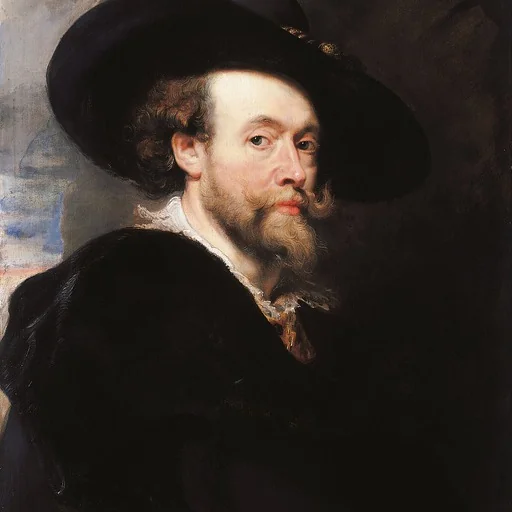
Sir Peter Paul Rubens ( ROO-bənz; Dutch:; 28 June 1577 – 30 May 1640) was a Flemish artist and diplomat.

 Saint George
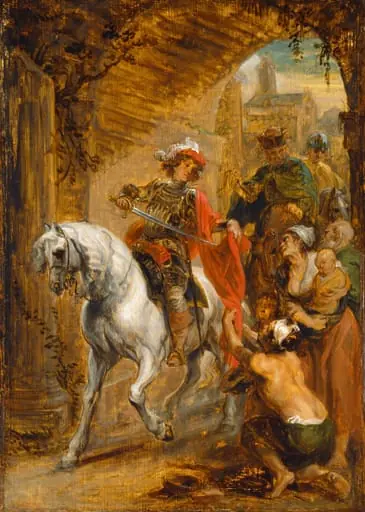 Saint Martin Dividing His Cloak
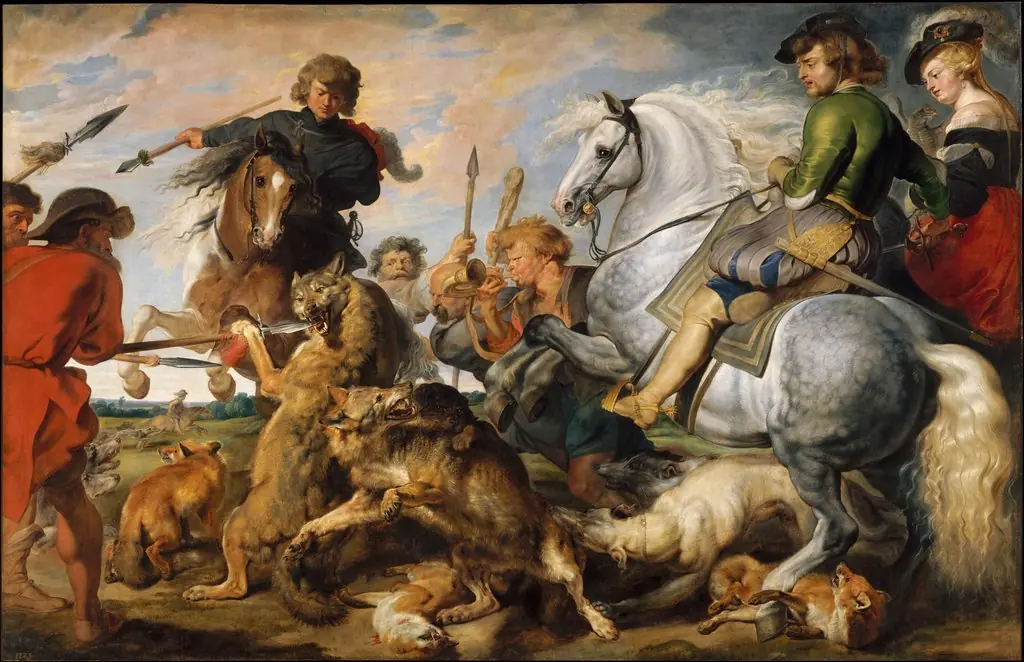 The Wolf and Fox Hunt
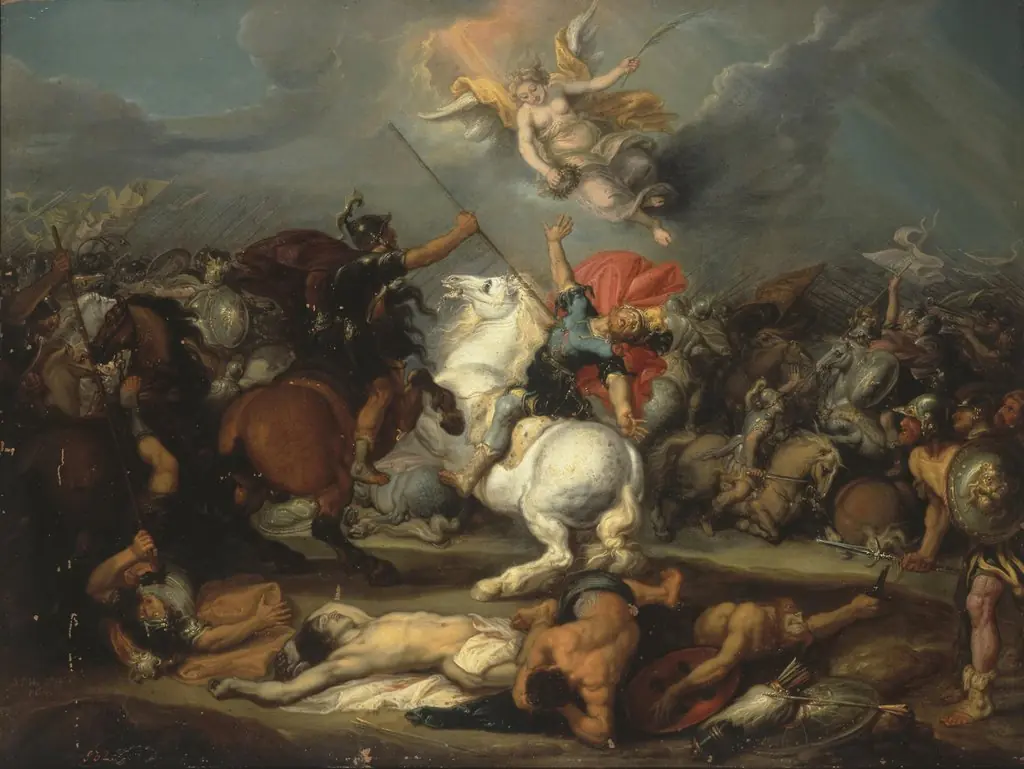 Death of Decius Mus
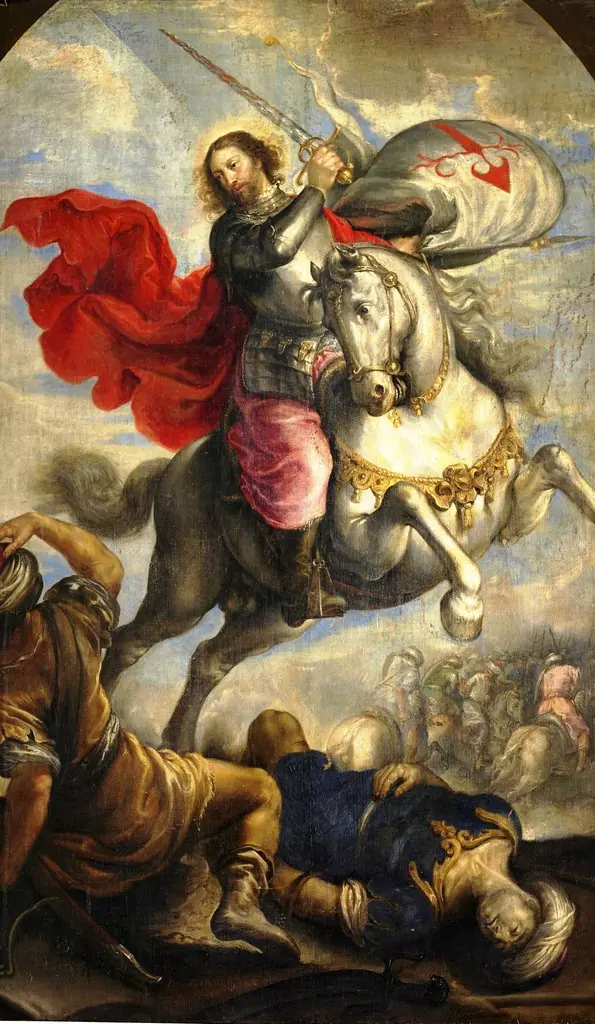 The Apostle Saint James or Saint James the Moor Slayer
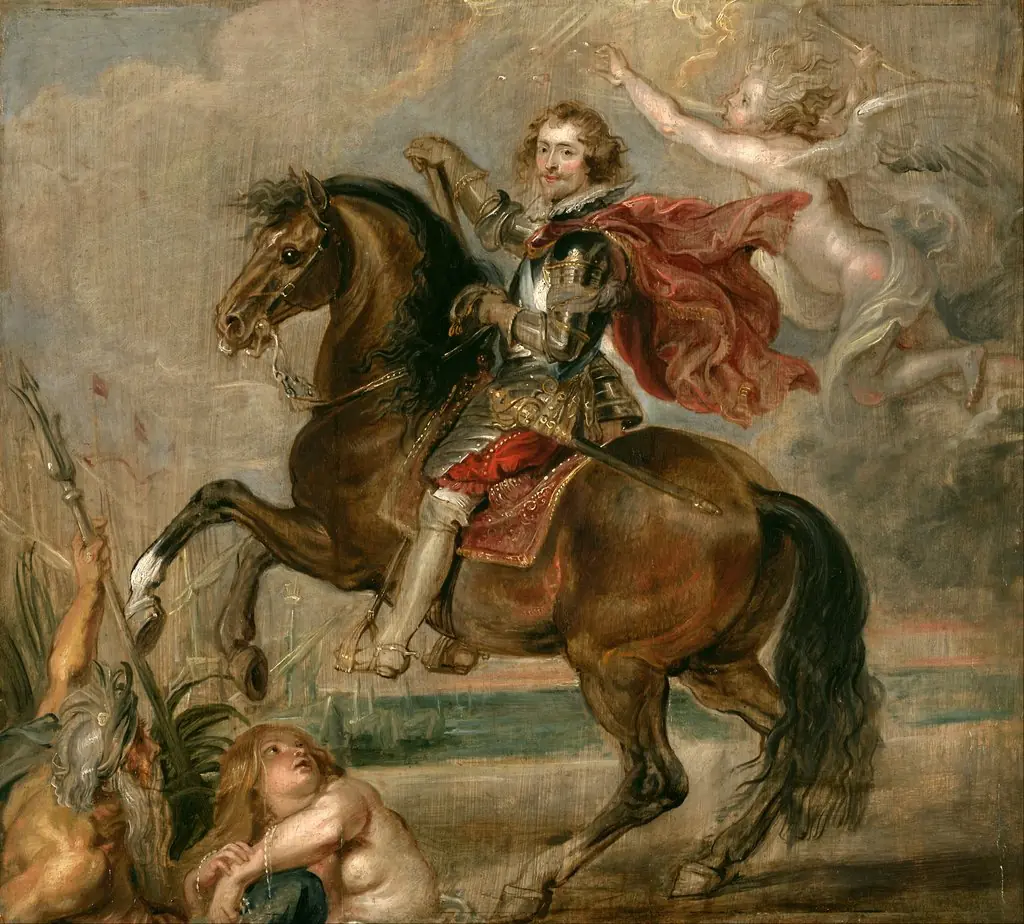 Equestrian Portrait of the Duke of Buckingham
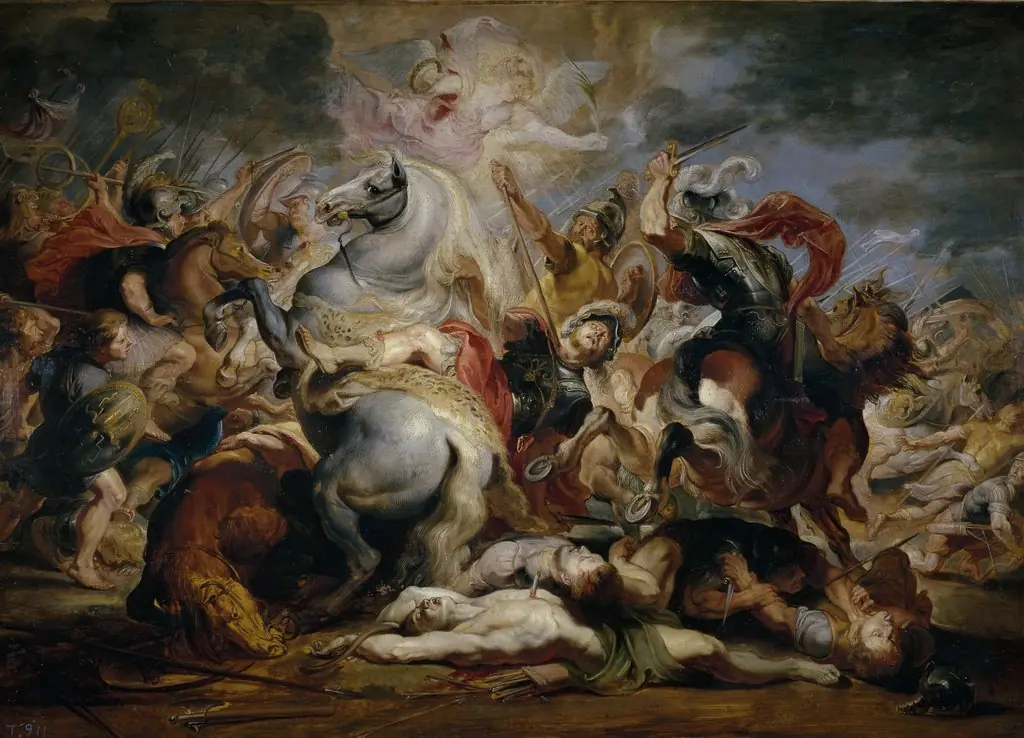 The Death of the Consul Decius
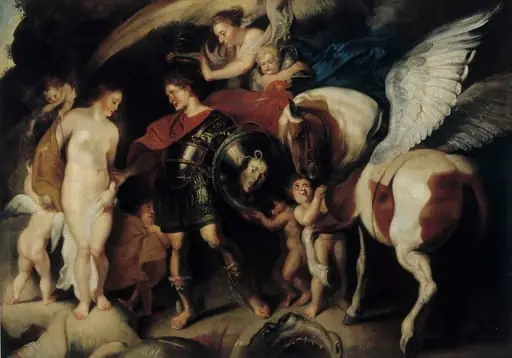 Perseus ja Andromeda, kopio Peter Paul Rubensin mukaan
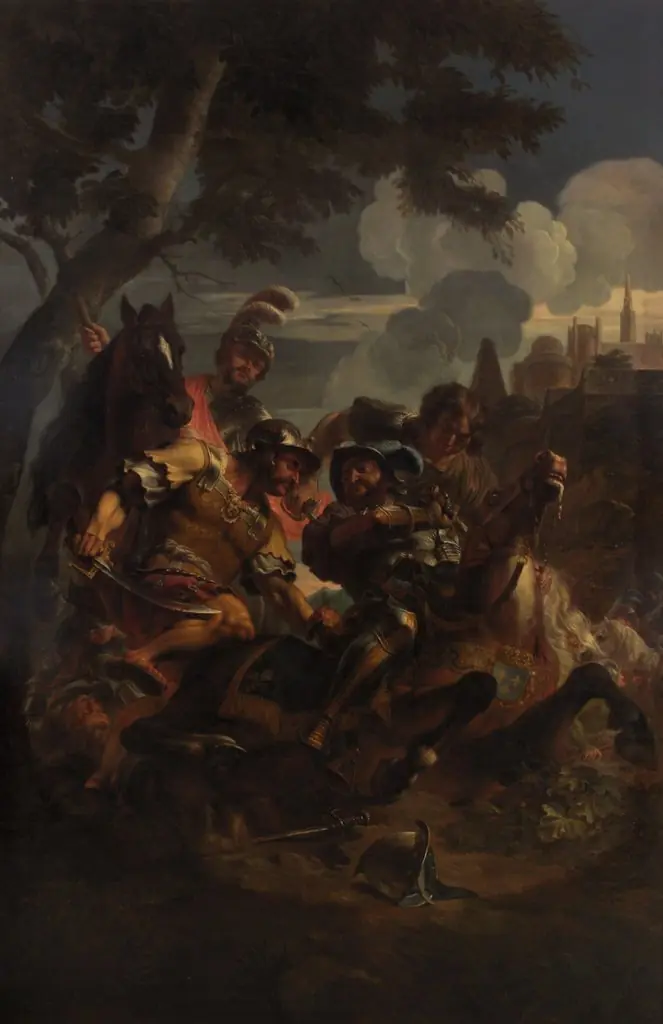 Capture of King Francis I at the Battle of Pavia