Artwork
The Adoration of the Magi
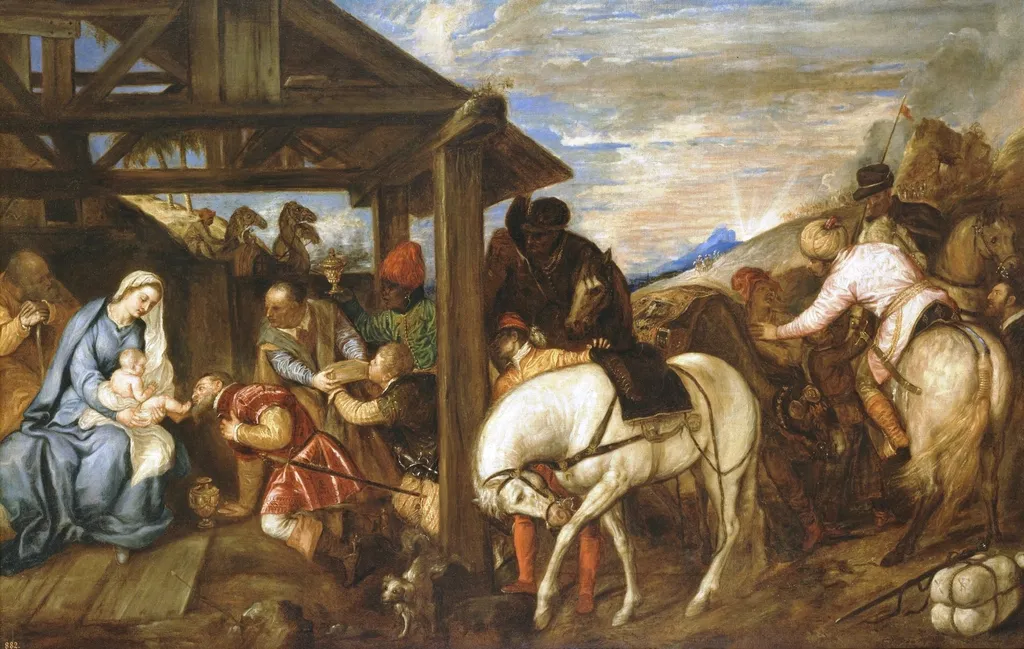
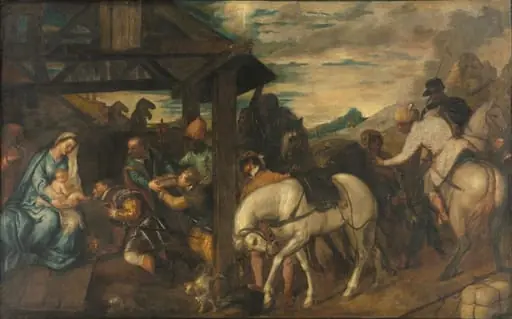
The Adoration of the Magi is an oil painting by the Mannerist artist Titian. It dates from 1531 and is held in the collection of the Museo del Prado.
About this work
Subject & Meaning
The painting depicts the biblical episode of the Adoration of the Magi, showing the infant Jesus with the Virgin Mary, Saint Joseph, and the three Magi presenting gifts. Titian’s composition centers on the Christ Child seated on Mary’s lap, receiving the offerings of gold, frankincense, and myrrh while the Magi kneel in reverence. In the background, a retinue of attendants and horses underscores the scene’s grandeur, aligning with the narrative’s depiction of royal homage to the newborn king.
The work belongs to the religious genre, emphasizing the theological significance of Christ’s birth and the recognition of his divine kingship by the Gentile Magi.
Technique & Style
The palette is dominated by warm earth tones, deep reds, and cool blues, creating a harmonious contrast that enhances the scene’s sacred atmosphere.
Titian’s The Adoration of the Magi (1531) is executed in oil paint on canvas, a hallmark of the Venetian school’s preference for flexible supports that allowed large-scale compositions. Measuring 141 × 219 cm, the work demonstrates the artist’s mastery of layered glazes and luminous color, achieving depth and richness through translucent veils of pigment rather than reliance on preparatory underdrawing.
The handling is fluid and confident, with brushwork ranging from fine, precise details in the Magi’s gifts to broader, more gestural strokes in the drapery and landscape. The composition’s dynamic diagonal arrangement, anchored by the Christ Child and Virgin Mary, reflects Titian’s synthesis of High Renaissance balance with Venetian sensitivity to movement and light. The palette is dominated by warm earth tones, deep reds, and cool blues, creating a harmonious contrast that enhances the scene’s sacred atmosphere.
History & Provenance
The Adoration of the Magi was created by Titian in 1531, executed in oil paint on canvas. The painting was owned by Ferdinand VII of Spain, and it is now part of the collection of the Museo del Prado, with a recorded location at the Royal Palace of Aranjuez.
Titian's 1531 oil painting, The Adoration of the Magi, is held in the collection of the Museo del Prado. The work is currently located at the Royal Palace of Aranjuez, a site associated with the museum's holdings. Historically, the painting was owned by Ferdinand VII of Spain.
The sources do not provide a specific inventory or accession number for the work, nor do they list any exhibition history.
Overview
Titian's The Adoration of the Magi, an oil painting from 1531, depicts the biblical scene of the Three Kings presenting gifts to the infant Christ. This religious work exemplifies the Mannerist tendencies emerging within the Italian Renaissance. Created by the leading figure of Venetian painting, it is now part of the collection at the Museo del Prado in Madrid, representing a significant example of the artist's output.
Context
Active throughout the 16th century, Titian was born in Pieve di Cadore around 1488–1490 and rose to become the leading painter in Venice. His prolific career spanned religious, mythological, and portraiture subjects, establishing him as a master of the High Renaissance whose influence extended into the subsequent Mannerist period. This work reflects his ongoing exploration of narrative and compositional complexity.
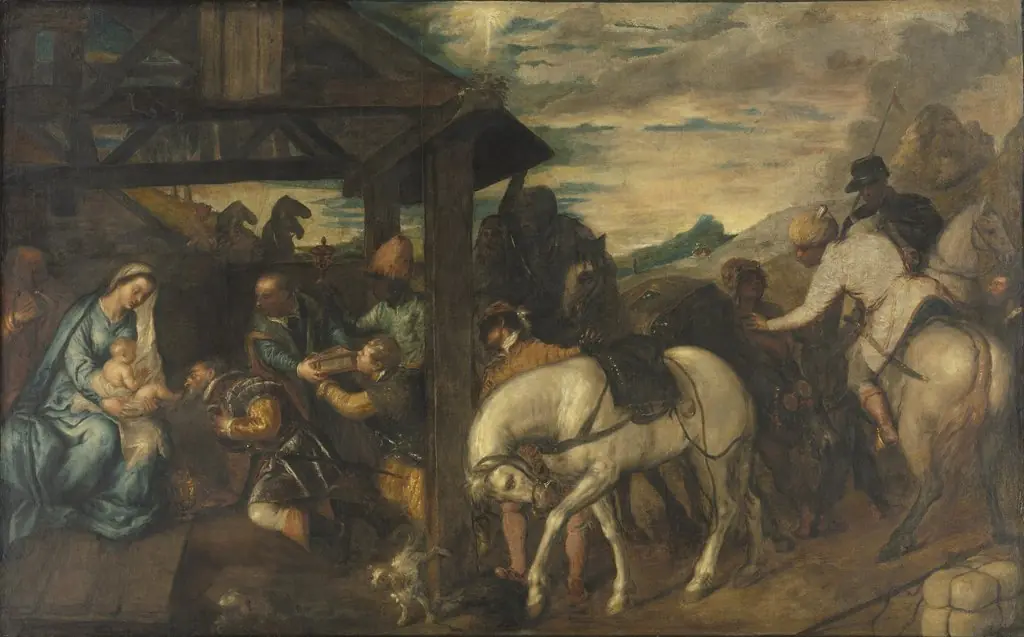
Own this work as a print
Artist & collection
Artist
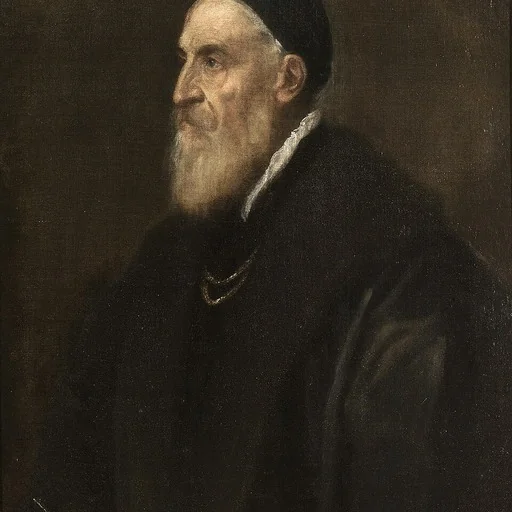
Tiziano Vecellio (Italian:; c. 1488/1490 – 27 August 1576), Latinized as Titianus, hence known in English as Titian ( TISH-ən), was an Italian Renaissance painter. The most important artist of Renaissance Venetian…

 Adoration of the Magi
 The Israelites drinking the miraculous Water
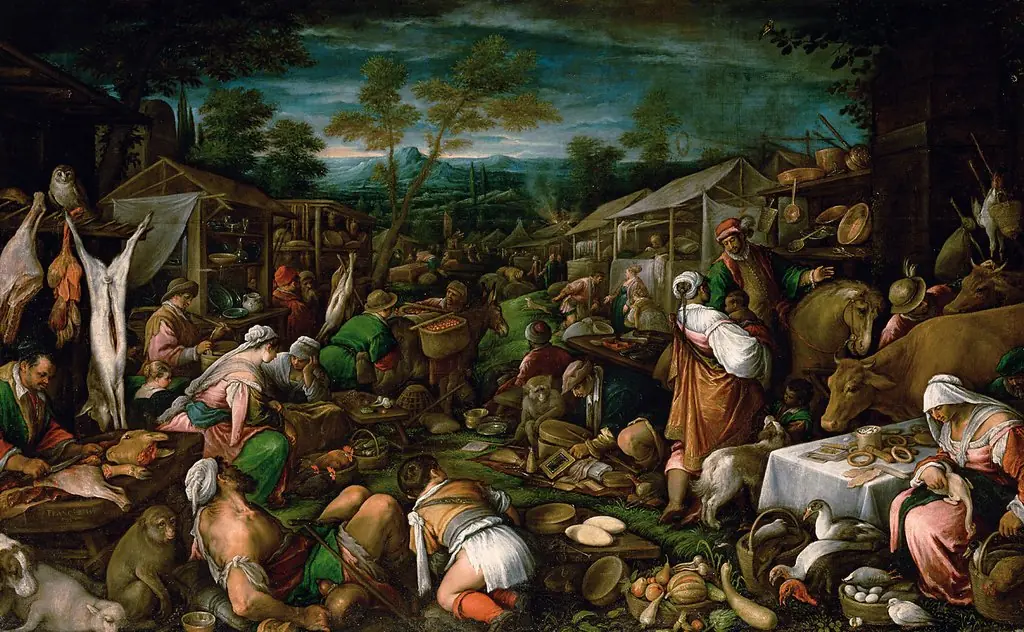 Jahrmarkt
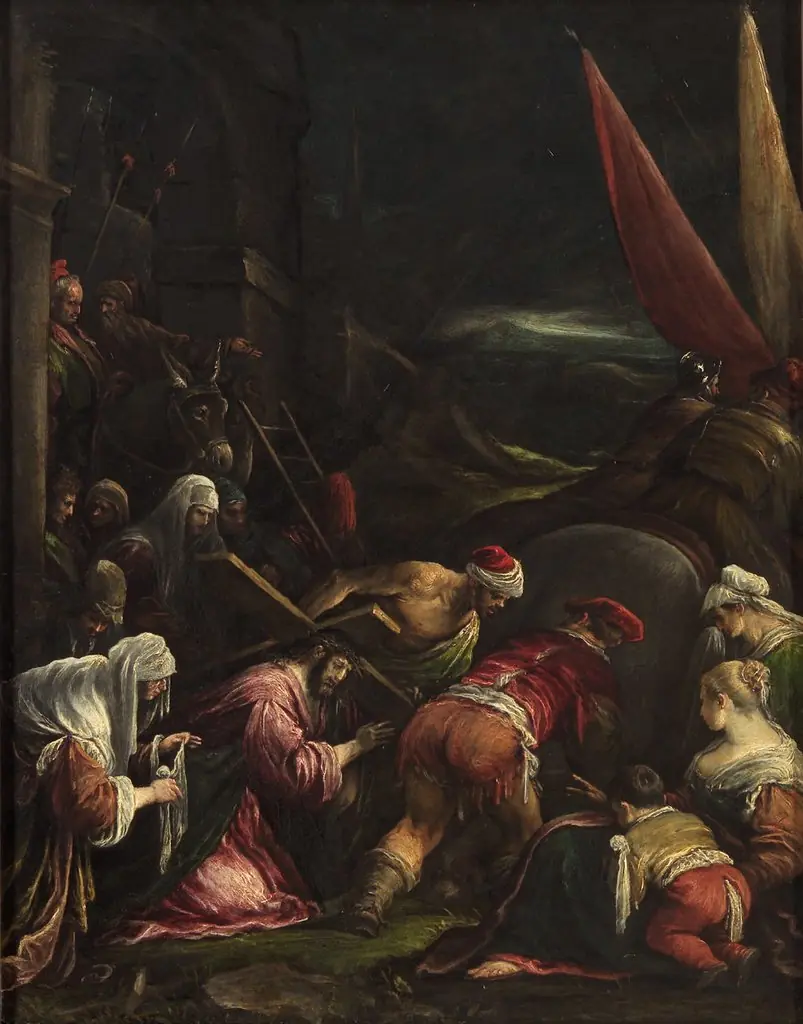 Christ Carrying the Cross meets with Veronica
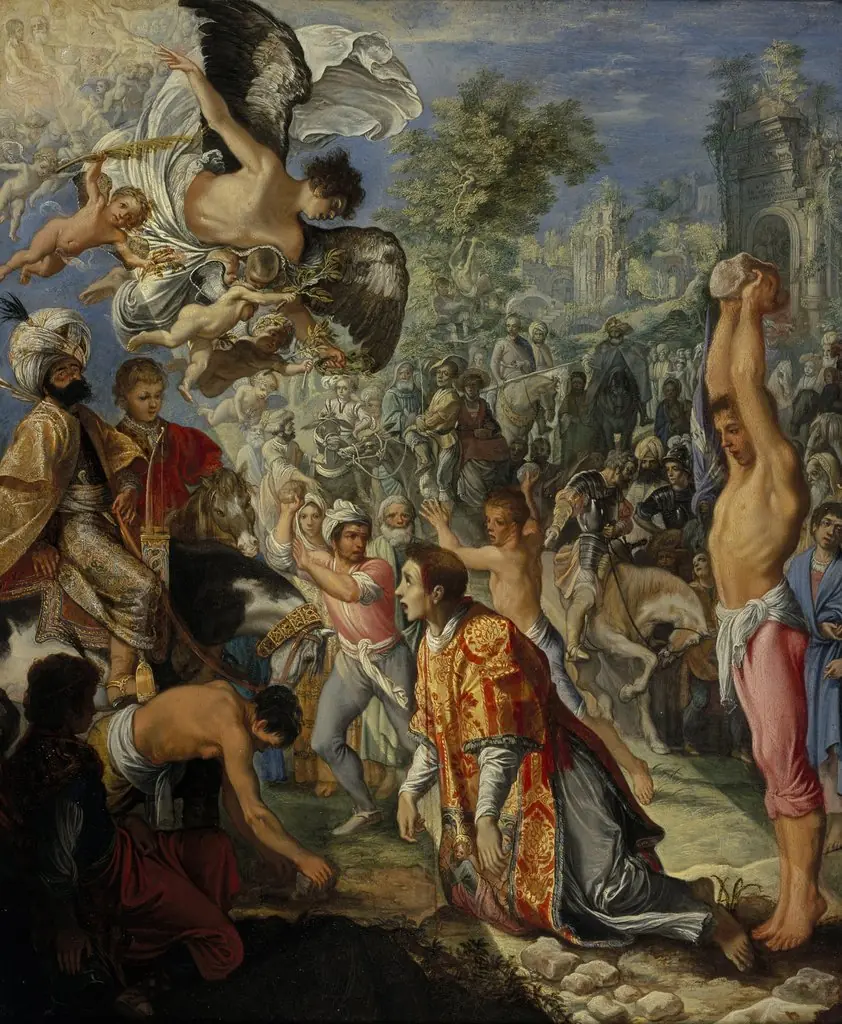 The Stoning of Saint Stephen
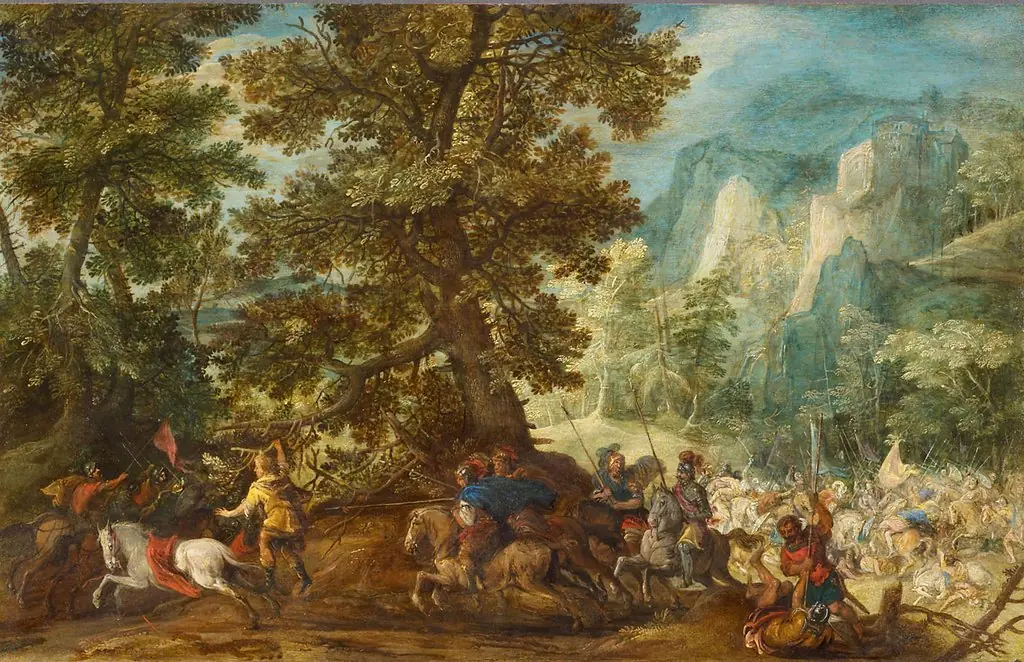 Absaloms death (2 Samuel 18: 9-15)
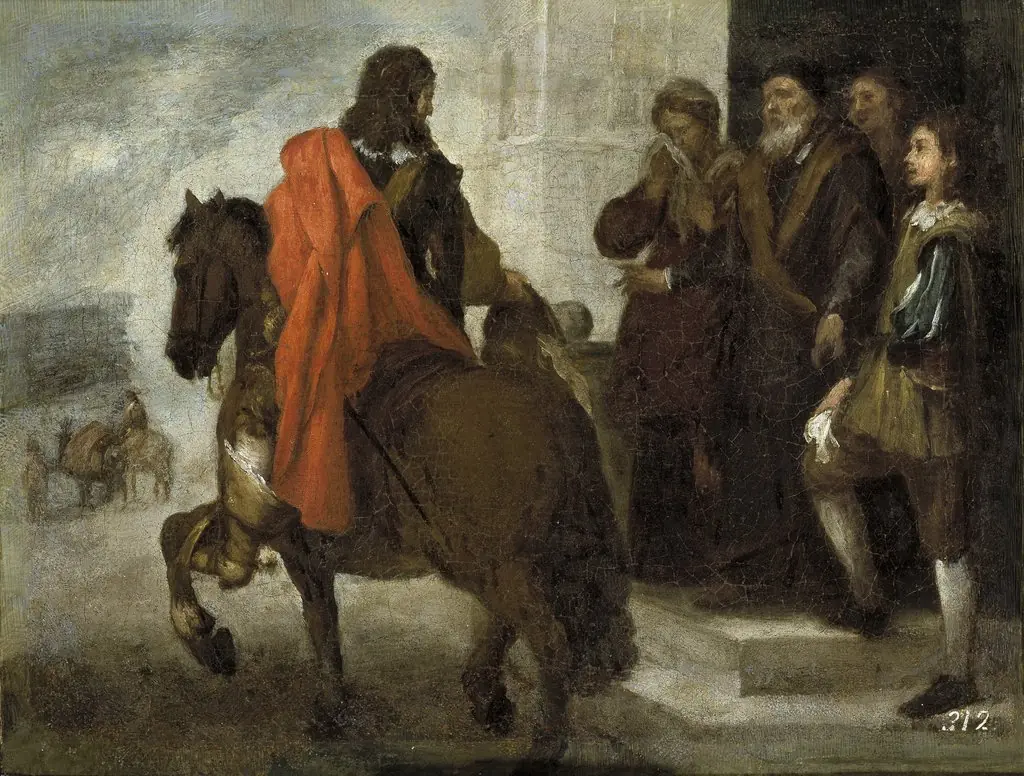 La despedida del hijo pródigo, de Murillo (Museo del Prado)
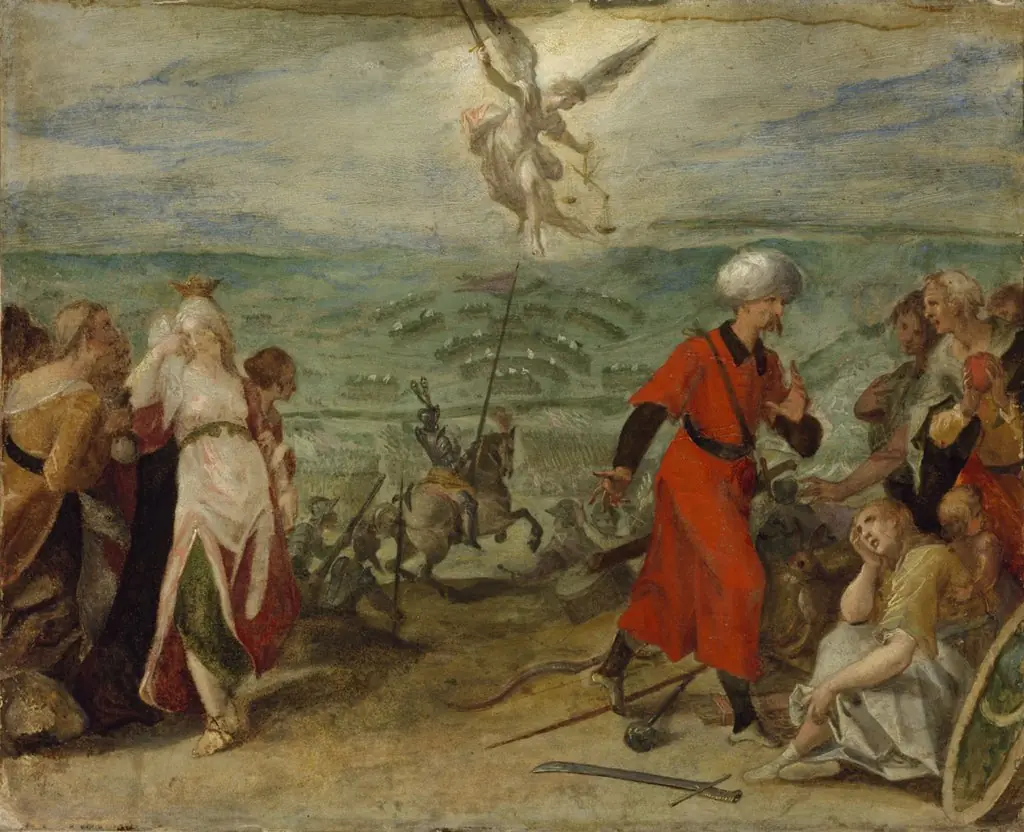 Allegory of the Battle of Mezőkeresztes
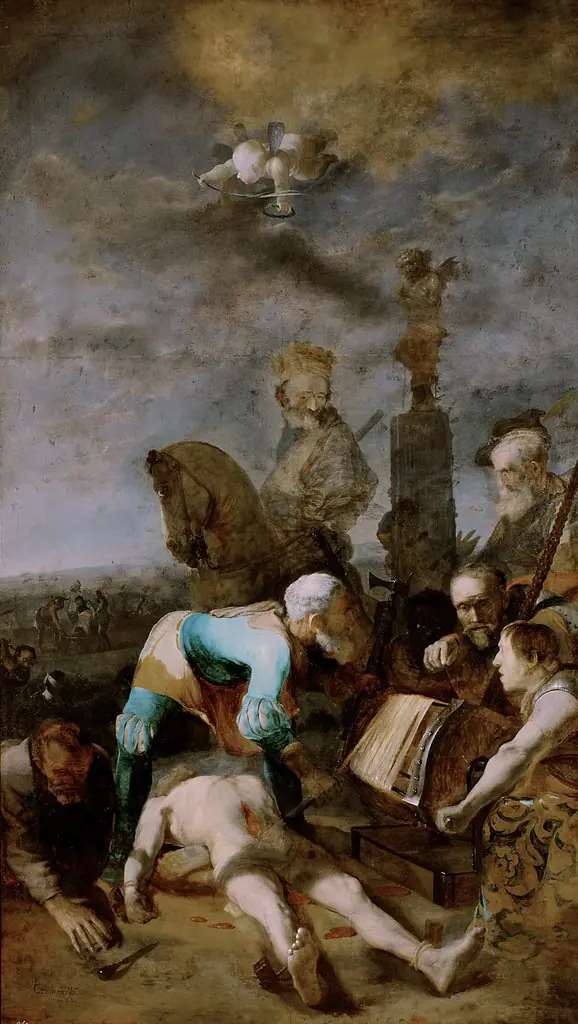 Martyrdom of Saint Thiemo
 Alexander en Diogenes
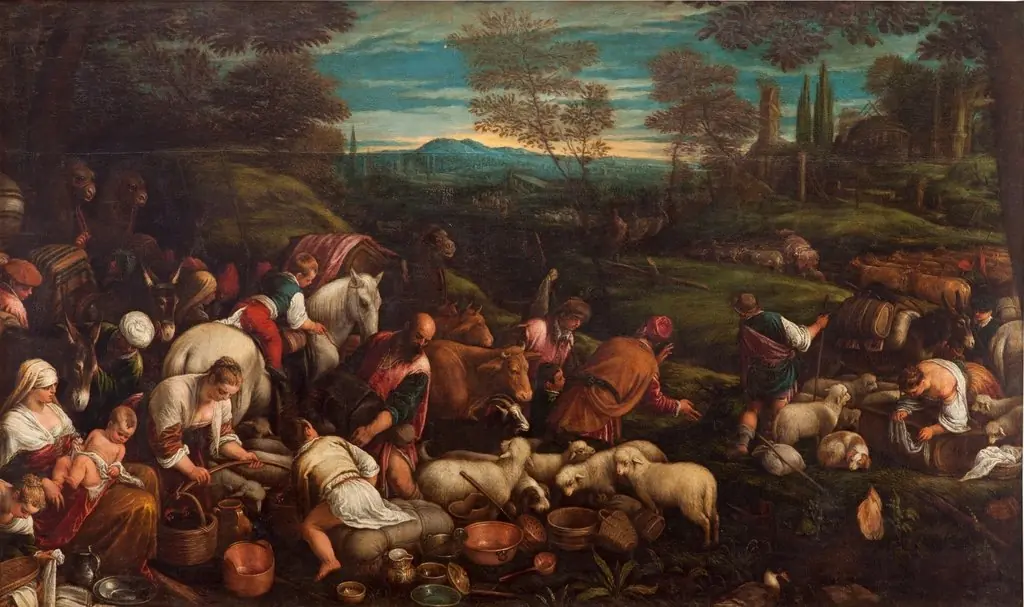 Viaje de Jacob