Artwork
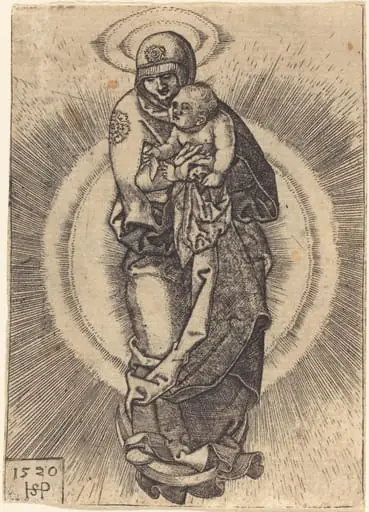
The Virgin and Child on the Crescent
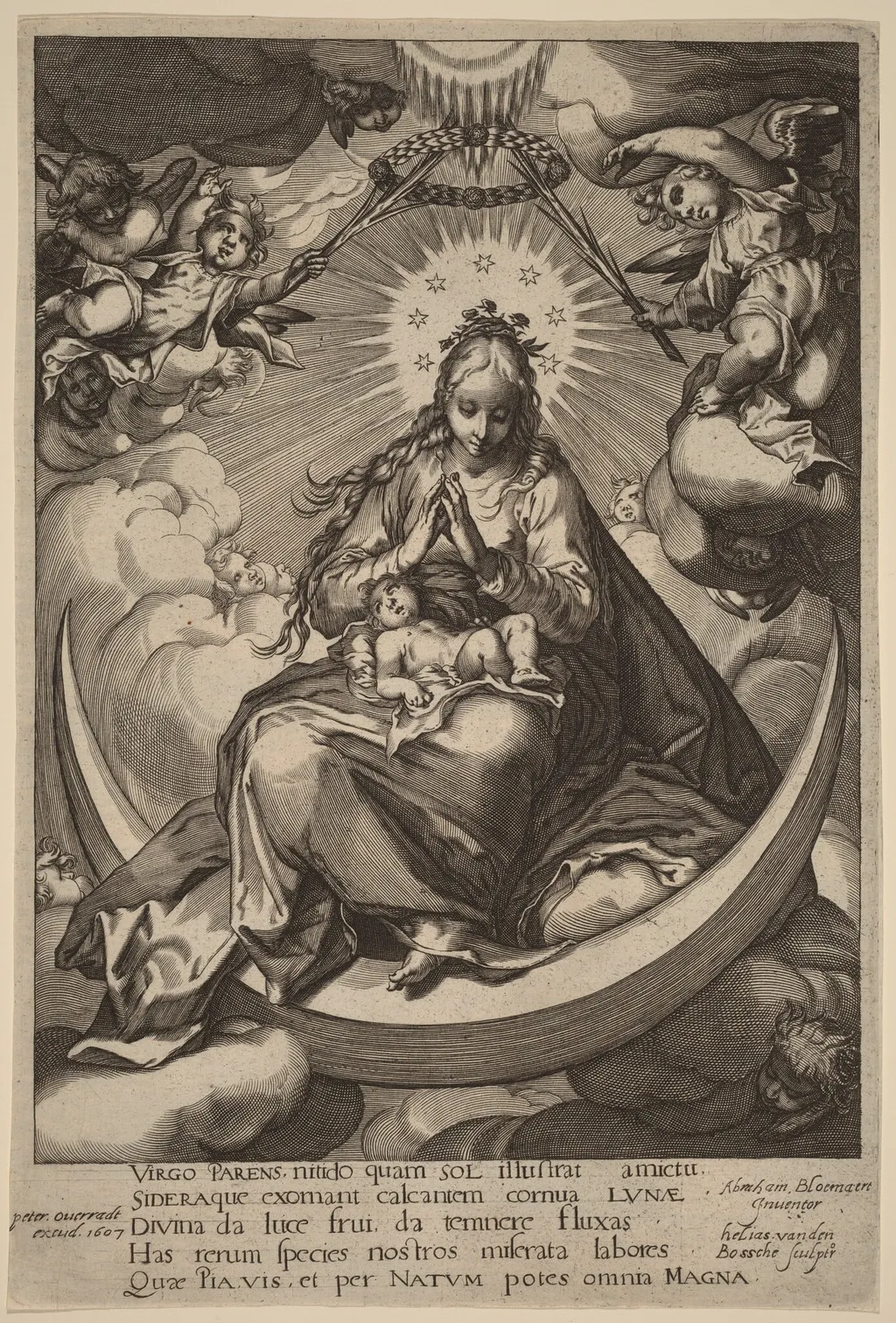
The Virgin and Child on the Crescent is an ink print by the Baroque artist Helias van den Bossche. It dates from 1607 and is held in the collection of the National Gallery of Art.
- Inscription
- Inscribed:lower right in plate: Abraham. Bloemaert / Inventor / helias van den / Bossche Sculptr.; lower left in plate: peter. ouerradt / excud. 1607; lower center in plate: VIRGO PARENS. nitido quam SOL illustrat amictu / SIDERAque exornant cal cantem cornua LUNAE / DIVIna da luce frui. da temnere fluxas / Has rerum species nostros miserata labores / Quae PIAVis. et per NATUM potes omnia MAGNA (Virgin Mother, whom the sun illuminates with a shining veil and whom the stars adorn, you who tread upon the horns of the moon concede us to enjoy the divine light, to disdain those fickle appearances of things and our pitiful endeavors. For your force is pious, and through the Son you can accomplish everything); center verso in graphite: 30/5
About this work
Overview
Helias van den Bossche’s 1607 engraving titled The Virgin and Child on the Crescent presents a devotional scene on laid paper. The composition centers on the Virgin Mary seated on a crescent moon, holding the infant Christ, while a host of angels encircles them beneath a luminous sky.
Subject & Meaning
The image draws on traditional iconography of the Virgin’s Assumption, with the moon symbolising her purity and heavenly ascent. The infant’s reclined posture and the Virgin’s clasped hands convey a moment of prayerful intercession, underscoring themes of divine motherhood and celestial protection.
Technique & Style
Executed in fine cross‑hatching, the engraving achieves subtle gradations of tone that model the figures and clouds. Contrasting light and shadow generate depth and a dramatic atmosphere, hallmarks of the early Baroque aesthetic that emphasized emotional intensity and theatrical illumination.
History & Provenance
Created in 1607, the print reflects van den Bossche’s engagement with religious subjects during the Counter‑Reformation period. While specific ownership records are scarce, the work has been catalogued among early 17th‑century Netherlandish prints and remains a reference point for studies of Baroque printmaking.
Own this work as a print
Artist & collection


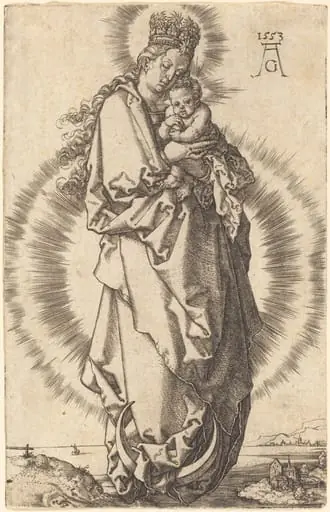
- The Virgin with the Child on the Crescent
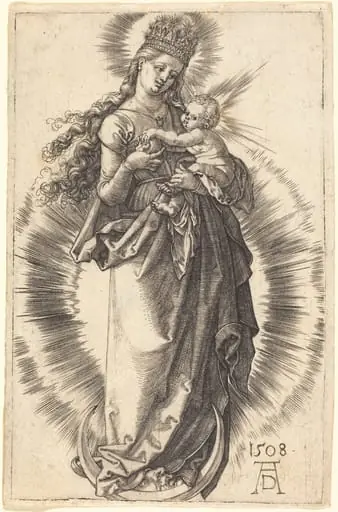 The Virgin and Child on a Crescent with a Starry Crown
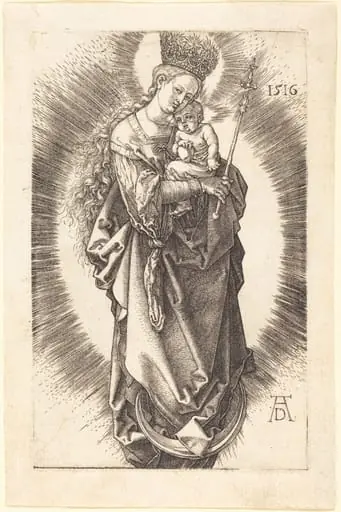 The Virgin and Child on a Crescent with a Sceptre and a Starry Crown
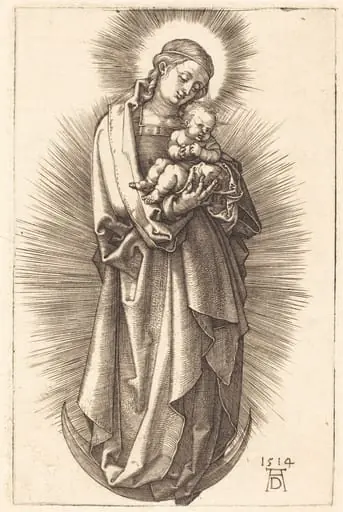 The Virgin and Child on a Crescent with a Diadem
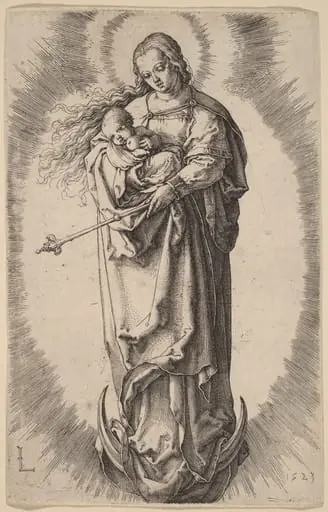 The Virgin and Child on the Crescent
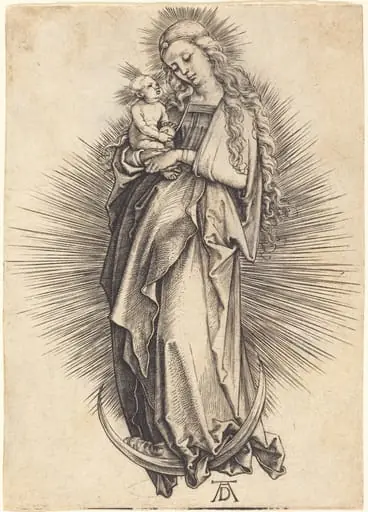 The Virgin on the Crescent
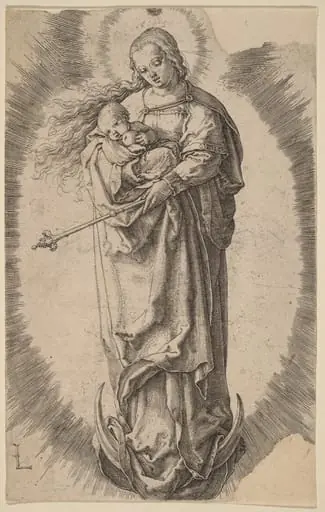 The Virgin and Child on the Crescent
 The Virgin and Child on the Crescent