Artwork
The Virgin on the Crescent
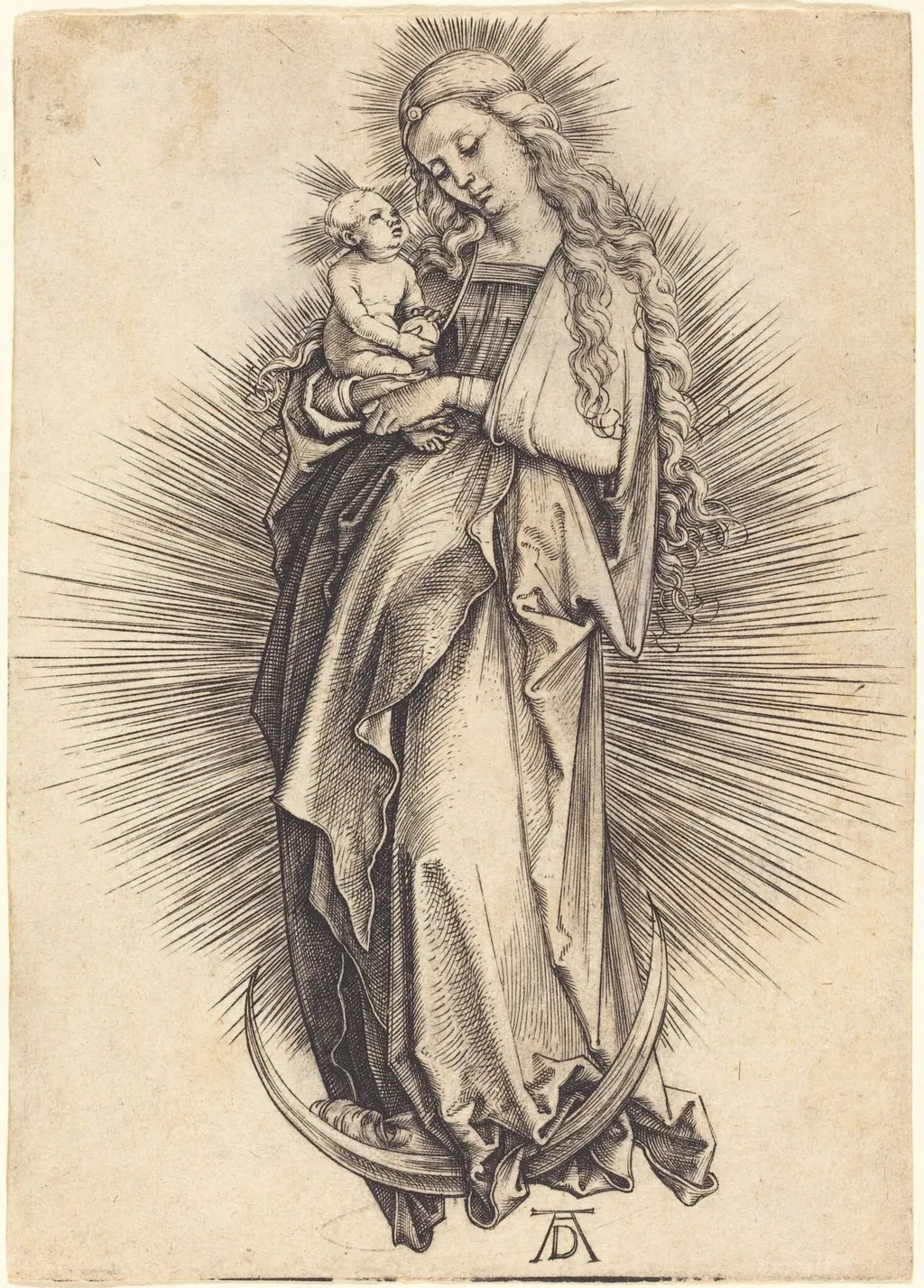
The Virgin on the Crescent is an ink print by the Northern Renaissance artist Albrecht Dürer. It dates from 1498 and is held in the collection of the National Gallery of Art.
- Inscription
- Inscribed:in plate, bottom center: AD [artist's monogram]; verso, top right, in graphite by a later hand: 29 [?]; verso, lower center, in graphite by a later hand: B30; verso, lower left, in graphite by a later hand: 34 [upside down]; verso, lower left, in graphite by a later hand: 381
About this work
Subject & Meaning
In this iconography, Mary stands upon a crescent moon, a traditional symbol derived from Revelation 12:1 that identifies her as the Queen of Heaven.
The engraving depicts the Virgin Mary holding the infant Jesus Christ, representing the biblical figure known as the Woman of the Apocalypse. In this iconography, Mary stands upon a crescent moon, a traditional symbol derived from Revelation 12:1 that identifies her as the Queen of Heaven. The composition reflects the influence of Martin Schongauer's earlier Marian prints, particularly through the depiction of a serpentine figure with long, wavy hair and a flowing mantle.
This specific visual arrangement emphasizes the theological concept of Mary's purity and her role in the divine narrative, distinguishing her from earthly figures through the celestial attribute of the moon beneath her feet.
Technique & Style
The Virgin on the Crescent is an engraving executed on laid paper, utilizing a burin to incise the design into a copper plate. Created by Albrecht Dürer around 1498 or 1499, the print measures 10.8 cm in height and 7.7 cm in width. Stylistically, the work reflects the influence of Martin Schongauer, particularly in the similar burin technique and the depiction of the Virgin Mary.
The figure is characterized by a serpentine pose, featuring unrealistically long thighs and long, wavy hair held back by a band. The drapery of her long mantle is rendered with effects comparable to Schongauer's earlier works, establishing a direct artistic lineage within the German Renaissance tradition.
History & Provenance
The Virgin on the Crescent was created by Albrecht Dürer in 1498 as an engraving on laid paper, classified as a religious print within the German Renaissance movement. It was sold at auction by C.G. Boerner in Leipzig on May 7–9, 1928 (lot 381) and subsequently purchased by Lessing J. Rosenwald, who later gifted it to the National Gallery of Art in Washington, D.C., in 1943. The work is part of the Rosenwald Collection and remains in the National Gallery of Art's Prints collection, where it is cataloged under the National Gallery of Art's Prints in the National Gallery of Art, Rosenwald Collection.
Albrecht Dürer’s engraving The Virgin on the Crescent, created in 1498, is part of the National Gallery of Art’s collection in Washington, D.C. It was acquired by Lessing J. Rosenwald in May 1928 from the Leipzig auction of C.G. Boerner and subsequently gifted to the museum in 1943. The work has been included in exhibitions at the National Gallery of Art, including displays highlighting the Rosenwald Collection and German Renaissance prints.
Context
The Virgin on the Crescent is recognized as an early example of Albrecht Dürer's engagement with Martin Schongauer's Marian imagery during his formative years. Art historical analysis notes that Dürer adapted compositional elements from two known Schongauer prints, the Virgin with the Apple (c. 1475) and the Little Madonna Standing, particularly evident in the serpentine pose of the infant and the flowing drapery rendered in a realistic yet stylized manner. This influence is contextualized within the broader German Renaissance movement, where devotional prints circulated widely through publications like the Breviarium capituli ecclesiae sanctae Mariae Erfordensis and prayer leaflets by Georges Stuchs around 1497.
Dürer revisited the motif in 1508, 1514, and 1516, but scholars observe that none matched the original's impact, as reflected in the extensive copying tradition documented by Vogt (2008) and Strauss (1891). The work's significance is further underscored by its inclusion in the Rosenwald Collection and its current status as part of the National Gallery of Art's permanent holdings in Washington, D.C.
Legacy
The Virgin on the Crescent established a durable compositional model that Dürer revisited in subsequent engravings of 1508, 1514, and 1516, yet none matched the initial print’s reception. Its immediate success is measured by roughly twenty documented copies recorded by Strauss and Vogt, indicating broad dissemination and influence across print culture.
The motif’s lasting resonance is underscored by its inclusion in major surveys of Dürer’s graphic oeuvre, such as the 2022 exhibition and catalogue Albrecht Dürer. Gravure et Renaissance, which contextualized the print within the artist’s engagement with Martin Schongauer’s Marian imagery. The work’s iconic status persists in museum holdings, notably at the National Gallery of Art, Washington, where it remains part of the Rosenwald Collection.
Overview
The Virgin on the Crescent is an engraving on laid paper created by Albrecht Dürer around 1498.
Own this work as a print
Artist & collection
Artist
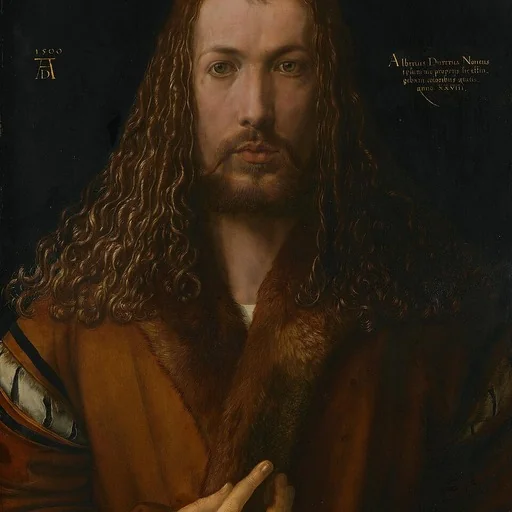
Albrecht Dürer spent his life in Nuremberg, a busy German city where artists traded prints like currency.

![Madonna and Child [obverse], by Albrecht Dürer](https://artifactworldgallery.com/img/albrecht-durer--madonna-and-child-obverse--d7b8ebf05d22ebe5-w320.webp)
![Lot and His Daughters [reverse], by Albrecht Dürer](https://artifactworldgallery.com/img/albrecht-durer--lot-and-his-daughters-reverse--b4ebf9b282faa17a-w320.webp)
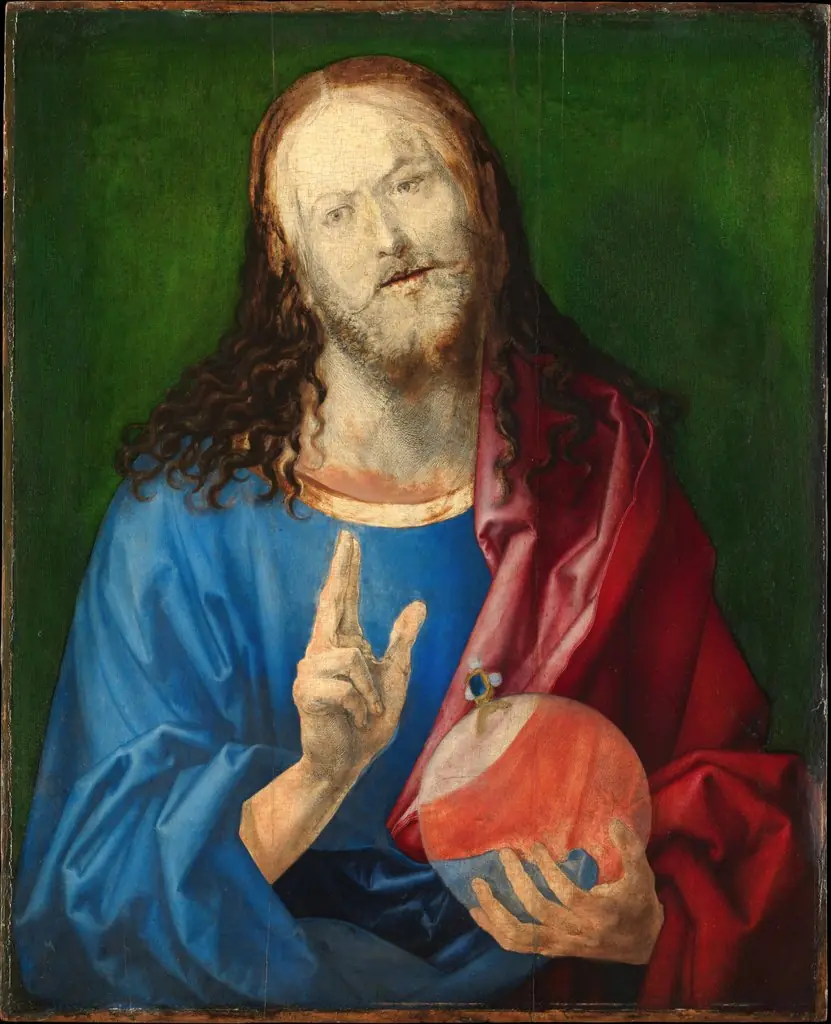
- The Virgin with the Child on the Crescent
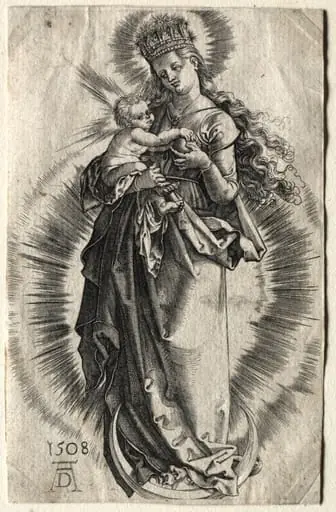 Virgin on a Crescent with a Starry Crown
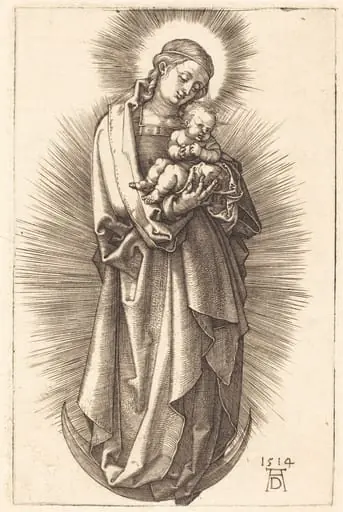 The Virgin and Child on a Crescent with a Diadem
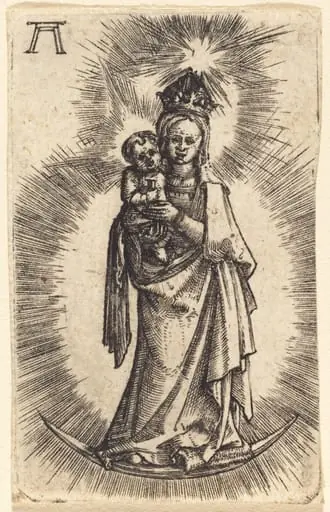 The Virgin on the Crescent
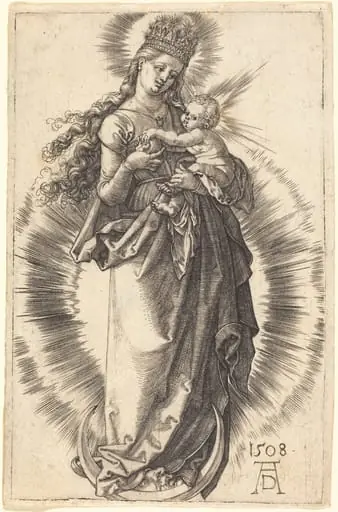 The Virgin and Child on a Crescent with a Starry Crown
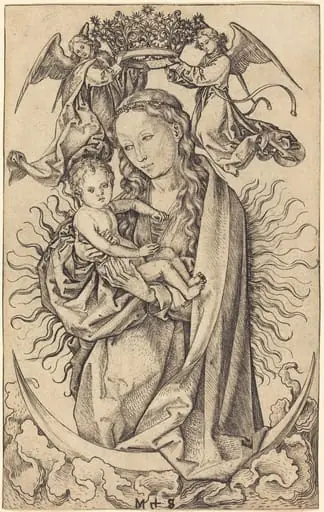 Madonna on the Crescent
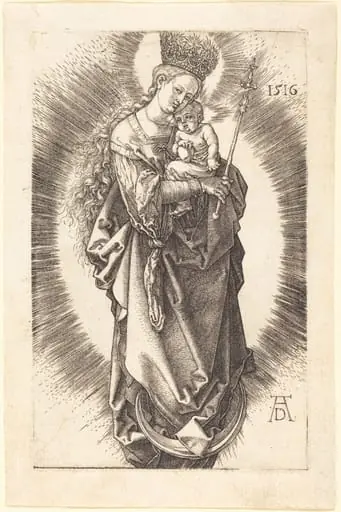 The Virgin and Child on a Crescent with a Sceptre and a Starry Crown
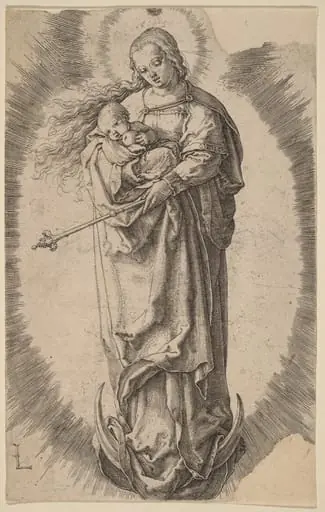 The Virgin and Child on the Crescent
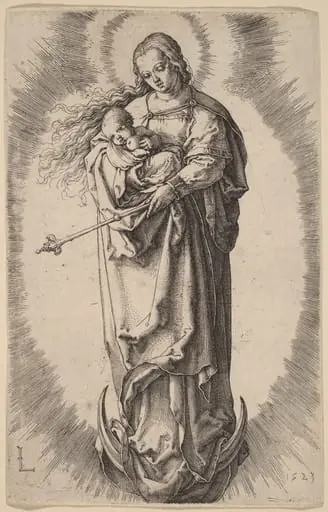 The Virgin and Child on the Crescent
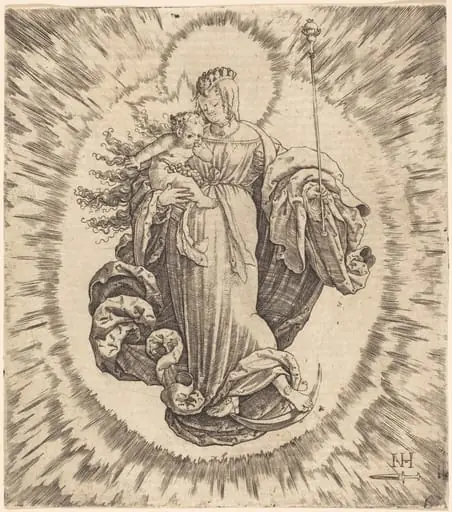 Madonna on a Crescent
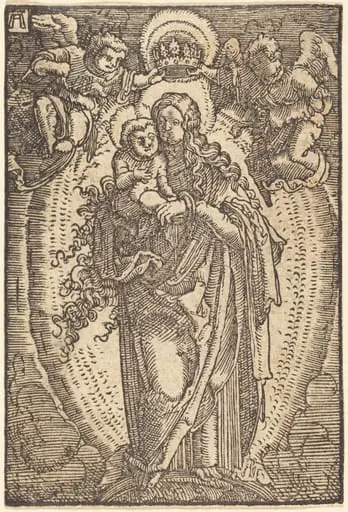 The Virgin and Child on a Crescent
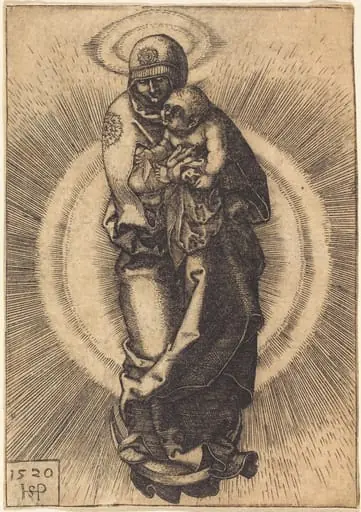 The Virgin and Child on the Crescent