Artwork
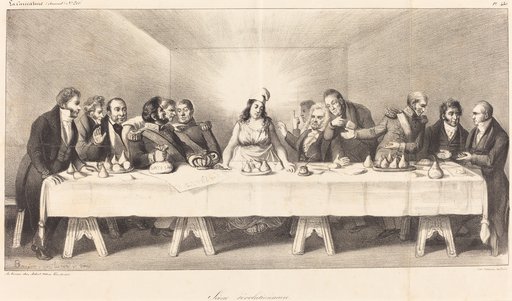
Scène révolutionnaire: Parody on the Last Supper
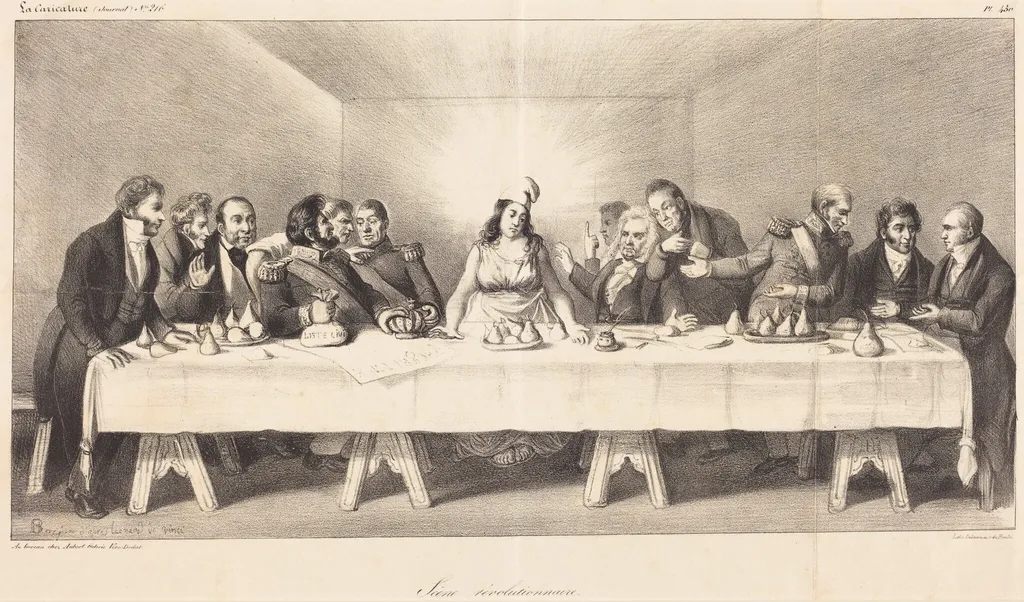
Scène révolutionnaire: Parody on the Last Supper is an ink print by the Romanticist artist Auguste Bouquet. It dates from 1834 and is held in the collection of the National Gallery of Art.
About this work
Overview
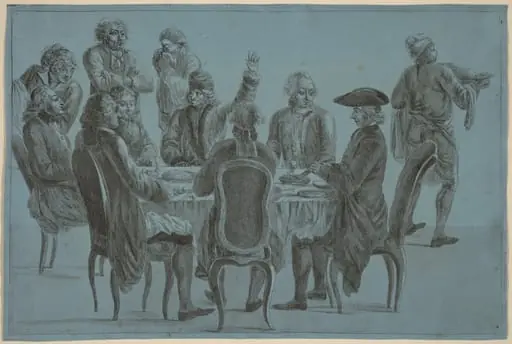
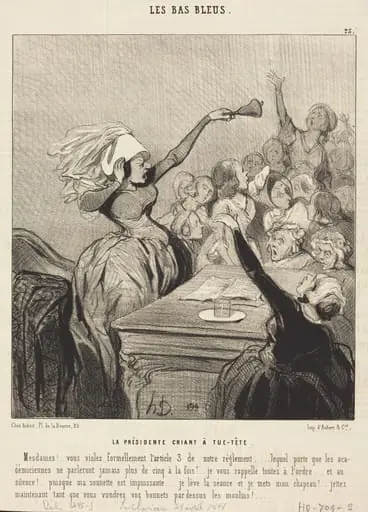
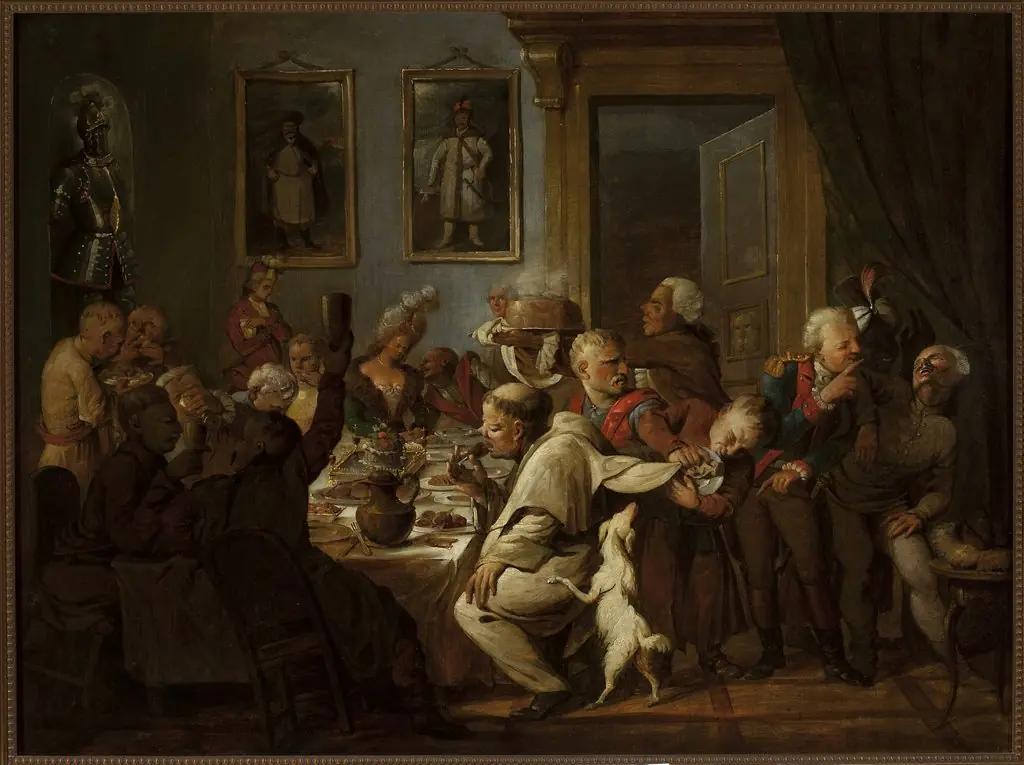
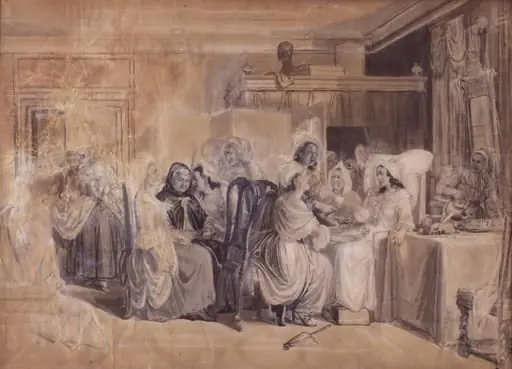
Created in 1834 by Auguste Bouquet, this lithograph reimagines the Last Supper as a chaotic secular gathering. The work belongs to the print medium and uses the lithographic process to produce a satirical image. It replaces sacred figures with a disorderly group of men and one woman, transforming a religious icon into a social commentary on post-revolutionary French society.
Subject & Meaning
The scene substitutes Christ and the apostles with a rowdy assembly of bourgeois men and a central woman holding a food tray. Their gestures suggest argument or excess, while the cluttered table evokes indulgence rather than solemnity. The title's reference to revolution underscores a critique of how revolutionary ideals had devolved into public disorder and moral laxity.
Technique & Style
Executed in lithography, the image relies on the tonal contrasts and fluid lines characteristic of the medium. The composition is tightly packed, with exaggerated expressions and dynamic postures enhancing the sense of chaos. The style is caricatural, using distortion and exaggeration to emphasize social absurdity rather than naturalism.
History & Provenance
Produced in 1834 during the July Monarchy, the print reflects contemporary anxieties about political instability and shifting social norms. While its early ownership is undocumented, its survival in institutional collections suggests it was circulated as political satire. The work likely reached urban audiences through print shops and periodicals.
Context
In the decade after the 1830 July Revolution, French society grappled with the gap between revolutionary ideals and lived reality. Bouquet’s image taps into widespread satire targeting the bourgeoisie, whose behavior was often seen as hypocritical or frivolous. Religious imagery was a common vehicle for such critiques due to its cultural familiarity.
Legacy
The print remains a rare example of early 19th-century French political satire in print form. Though not widely reproduced, it contributes to understanding how visual humor was used to question authority and social change. Its preservation in museum collections underscores its value as a document of cultural dissent.
Own this work as a print
Artist & collection