Artwork
Jacob Meyer-Heine
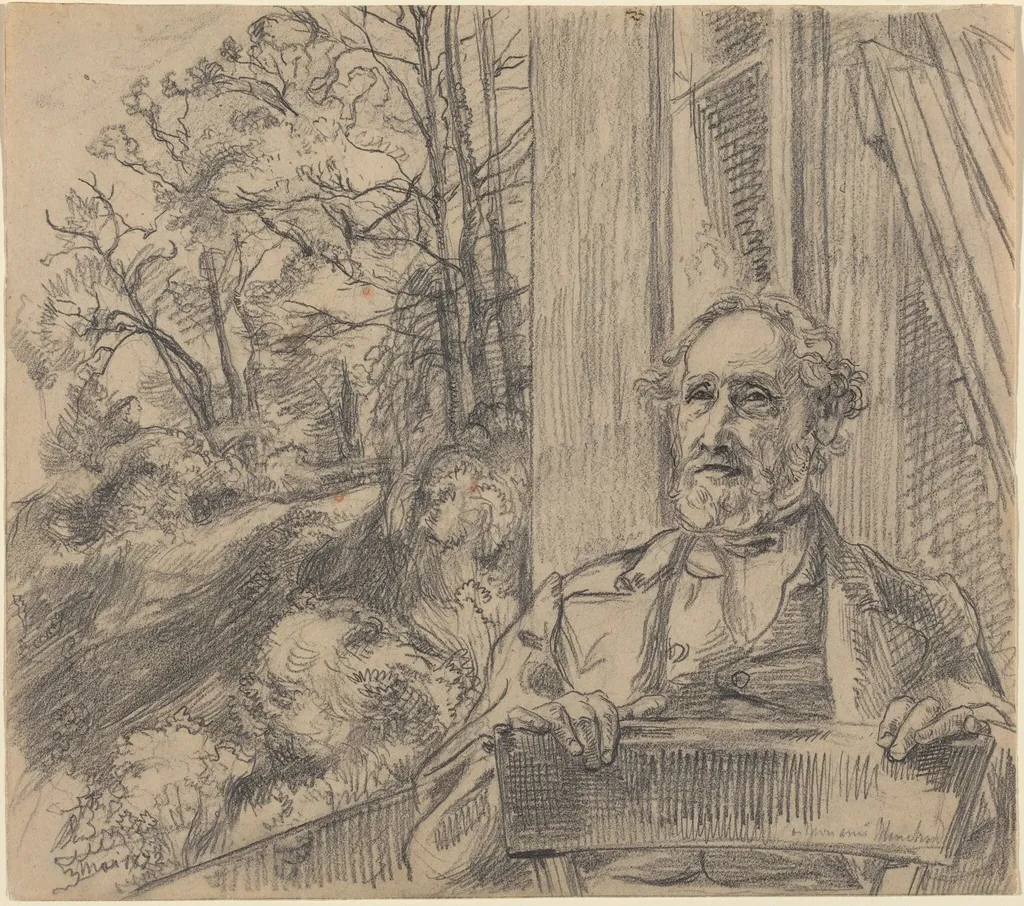
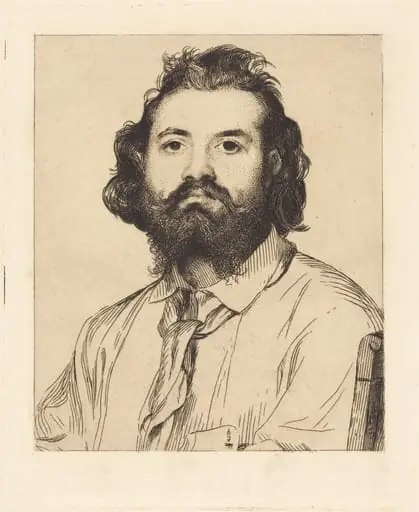
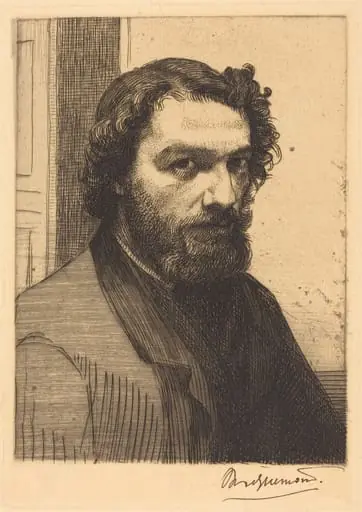
Jacob Meyer-Heine is an ink drawing by the Impressionist artist Félix Bracquemond. It dates from 1872 and is held in the collection of the National Gallery of Art. Created in 1872, this drawing portrays Jacob Meyer‑Heine, a bearded gentleman wearing a hat and looking straight ahead.
- Inscription
- Inscribed:lower left: 3 mai 1872; lower right: a Mon ami Blanchard; across bottom verso: Portrait de Meyer Heine, dessin pour l'eauforte-; lower right verso: 22928
About this work
Overview
Executed in graphite and pen with black ink on toned paper, the work depicts the sitter Jacob Meyer-Heine, a figure associated with the French decorative arts.
Jacob Meyer-Heine is a portrait drawing and preparatory study created by the French artist Félix Bracquemond in 1872. Executed in graphite and pen with black ink on toned paper, the work depicts the sitter Jacob Meyer-Heine, a figure associated with the French decorative arts. The drawing served as the direct preparatory design for Bracquemond's well-known 1872 etching of the same subject, evidenced by the reddened verso intended for transfer. The work is held in the National Gallery of Art in Washington, D.C., measuring 21.8 by 24.5 cm.
Subject & Meaning
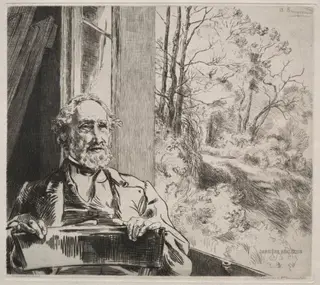
The drawing portrays Jacob Meyer-Heine, a French citizen born in 1805 who died in 1879, identified in contemporary scholarship as the head enameller at the Sèvres porcelain factory. He is shown as an elderly man seated in the right half of the composition, facing slightly left with his hands resting on the back of a wooden chair. He wears a dark coat over a light waistcoat and shirt with a bow tie, and has curly thinning hair with a short beard and mustache. Behind him, heavy draped curtains frame a window with louvered shutters, while a wooded landscape with dense trees, sloped terrain, and textured undergrowth occupies the left half. The etching derived from this drawing was ultimately titled Dernière Réflexion, or Final Thought, suggesting a contemplative, perhaps elegiac meditation on the sitter's old age and mortality.
Technique & Style
Bracquemond executed the drawing using graphite and pen with black ink on beige toned paper. The palette is restricted to black and gray tones against the paper's warm ground. Stylistically, the work combines loose, sketchy hatching with denser cross-hatching to articulate shadows, particularly in the rendering of the sitter's coat, the foliage of the trees, and the folds of the curtain. The overall finish is spontaneous yet descriptive, with visible strokes maintained throughout the composition. The verso of the sheet was reddened to facilitate transfer to the etching plate, confirming its function as a preparatory design. The subsequent print was executed in etching and drypoint, progressing through three states, with the final state featuring rich inking and added lettering.
History & Provenance
Dated May 3, 1872, the drawing includes a dedication on its lower right margin to the artist's friend, reading a Mon ami Blanchard. The verso bears an inscription noting it as the drawing for the etching. The work passed into the collection of the art historian Julius S. Held. It was featured in the 1970 traveling exhibition Selections from the Drawing Collection of Mr. and Mrs. Julius S. Held at the University Art Gallery in Binghamton. The drawing subsequently entered the National Gallery of Art in Washington, D.C., where it holds accession number 1984.3.5. The related etching was published in Paris by the widow of Alfred Cadart in the 1876 journal L'Eau Forte en 1876. Impressions of the print are held by the Metropolitan Museum of Art, the Clark Art Institute, the Museum of Fine Arts, Houston, and the Cleveland Museum of Art.
Context
Félix Bracquemond was a central figure in the French etching revival of the nineteenth century, contributing significantly to printmaking and ceramic design. This drawing and its corresponding print exemplify his practice of working from life, as the print scholar Henri Beraldi noted the etching was engraved from nature. Bracquemond's connection to the Sèvres porcelain factory, where he also worked as a designer, provides a direct professional context for his portrait of Meyer-Heine, the factory's head enameller. The work reflects the intersection of fine art and decorative arts in nineteenth-century France, while the etching's publication by Cadart situates it firmly within the contemporary movement to elevate etching as an independent artistic medium.
Own this work as a print
Artist & collection
Artist
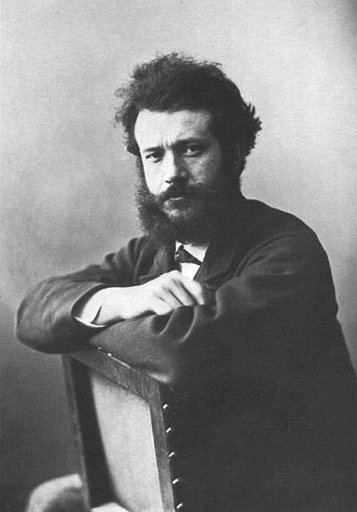
Félix Henri Bracquemond was a French painter, etcher, and printmaker. He played a key role in the revival of printmaking, encouraging artists such as Édouard Manet, Edgar Degas and Camille Pissarro to use this technique.