Artwork
Christ and the Samaritan Woman
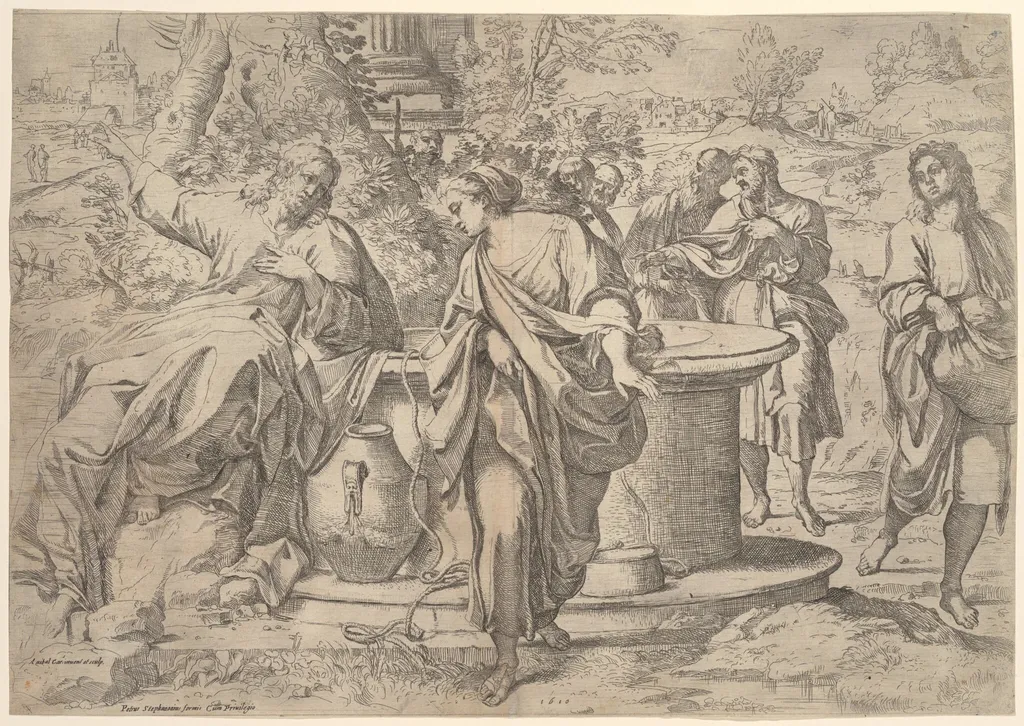
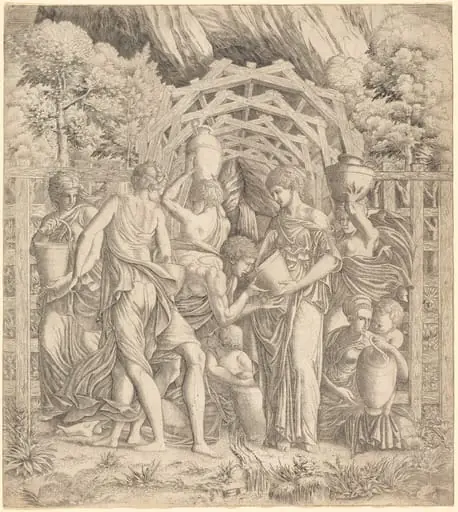
Christ and the Samaritan Woman is an ink print by the Renaissance artist Francesco Brizio. It dates from 1595 and is held in the collection of the National Gallery of Art.
- Inscription
- Inscribed:lower left in image: Anibal Car. invent et sculp. / Petrus Stefanonius formis Cum Privilegio; lower center in image: 1610; by later hand, lower right verso in graphite: 315 / 20291;
About this work
Overview
Francesco Brizio’s 1595 etching portrays the encounter between Jesus and the Samaritan woman at the well, a narrative drawn from the Gospel of John. Executed on laid paper, the print is part of the National Gallery of Art’s collection in Washington, D.C., and exemplifies the artist’s engagement with biblical themes during the late Renaissance.
Subject & Meaning
The composition centers on Christ seated beside a well, engaged in dialogue with a woman clothed in a flowing robe who leans forward to listen. A small crowd gathers behind them, observing the exchange, while a distant pastoral landscape of trees and hills frames the scene, emphasizing the universality of the teaching moment.
Technique & Style
Brizio employs fine, intersecting lines and cross‑hatching to render texture and volume, creating a convincing sense of depth across the figures and background. The careful modulation of light and shadow through etched shading highlights the central figures against the more subdued landscape, reflecting the meticulous draftsmanship characteristic of late‑Renaissance printmaking.
History & Provenance
Created in 1595, the etching has remained in the public domain through museum acquisition, ultimately entering the National Gallery of Art’s holdings. Its documented provenance traces back to early collectors of Italian prints, though specific ownership records prior to its museum accession are limited.
Context
The work belongs to a period when Italian artists frequently illustrated biblical episodes for devotional and instructional purposes. Brizio, active in Bologna, drew upon the visual language of the Counter‑Reformation, using clear narrative focus and detailed rendering to convey theological messages to a broad audience.
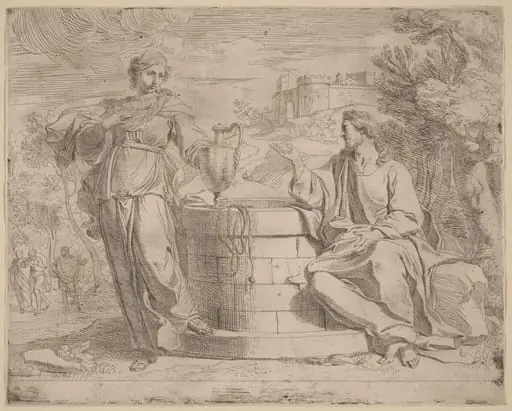
Own this work as a print
Artist & collection


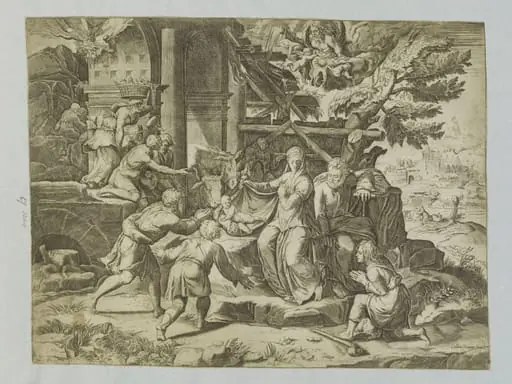 Adoration of the Shepherds
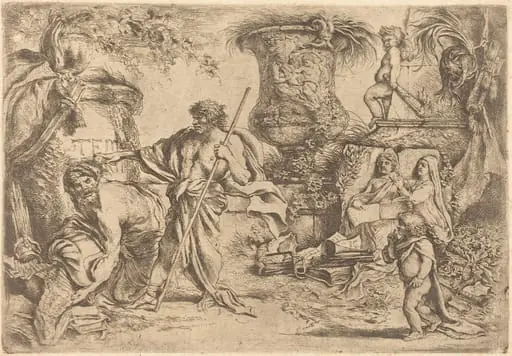 Temporalitas Aeternitas
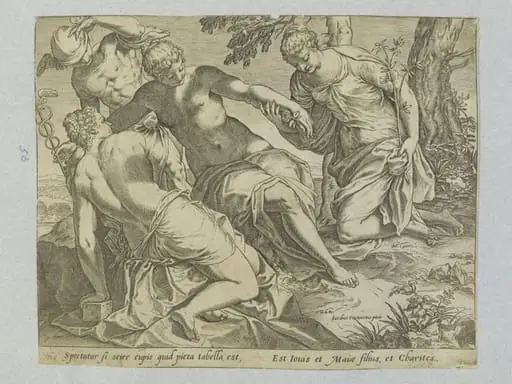 Mercury and the Graces
![Temporalis Aeternitas [Second Version], by Giovanni Benedetto Castiglione](https://artifactworldgallery.com/img/giovanni-benedetto-castiglione--temporalis-aeternitas-second-version--d9ecb26010022a5a-w320.webp) Temporalis Aeternitas [Second Version]
Temporalis Aeternitas [Second Version] Masinissa and Sophonisba
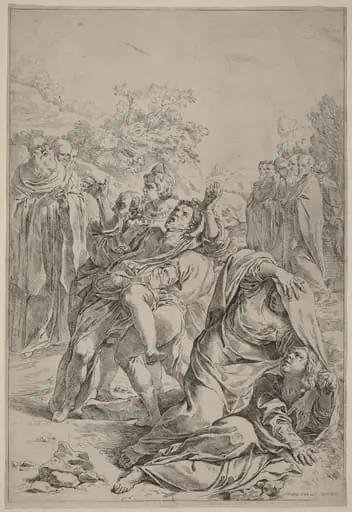 Saint Benedict Healing the Possessed
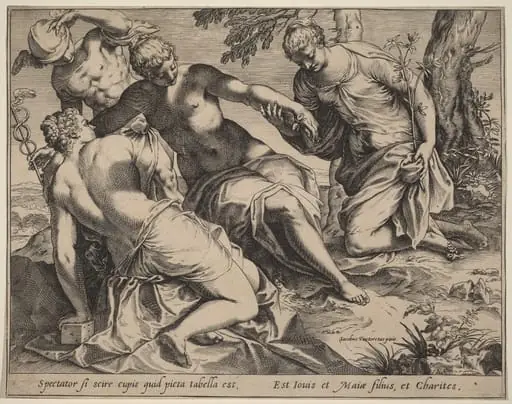 Mercury and the Three Graces
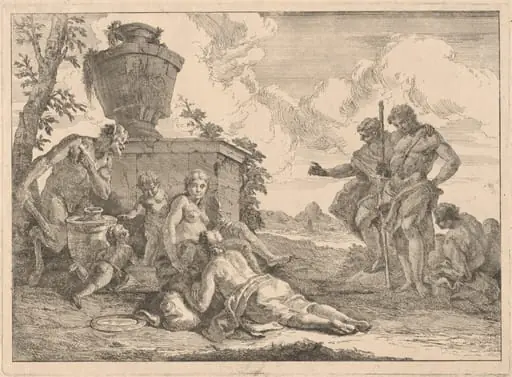 A Satyr with a Staff and Seven Other Figures
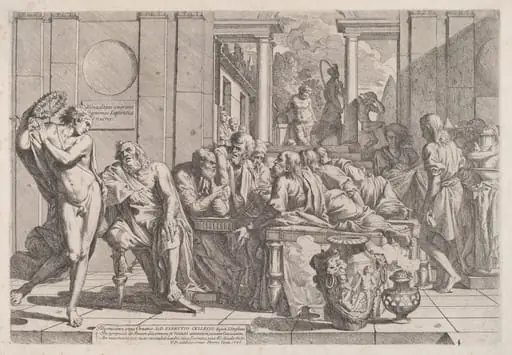 The Symposium
 Young Man Drinking Water (Rebecca and Eliezer?)