Artwork
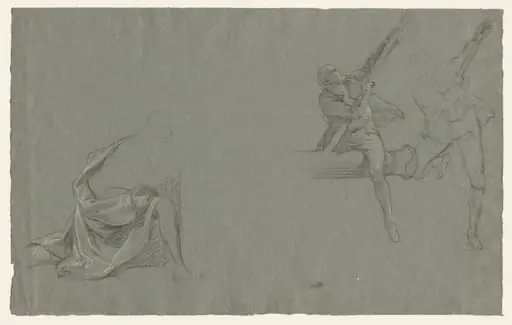
Two Drapery Studies [verso]
![Two Drapery Studies [verso], by Ford Madox Brown, chalk, 1844](https://artifactworldgallery.com/img/ford-madox-brown--two-drapery-studies-verso--ed4e964fa4716ed7-w1024.webp)
Two Drapery Studies [verso] is a chalk drawing by the Pre-Raphaelite artist Ford Madox Brown. It dates from 1844 and is held in the collection of the National Gallery of Art.
- Inscription
- Inscribed:by later hand, center in graphite: Nr 20 / 20 Imp Mat; by later hand, lower right verso in pen and brown ink: by Madox Brown
About this work
Overview
Created circa 1844, this drawing by Ford Madox Brown consists of two studies in black chalk on light beige laid paper. Executed as a preparatory exercise, it examines the behavior of fabric under tension and gravity. The work reflects Brown’s commitment to close observation and technical discipline, hallmarks of his approach to figure and costume in larger compositions.
Subject & Meaning
The two studies depict distinct drapery forms: one suggests a folded head covering or garment, the other a sleeve. Neither represents a specific figure but instead isolates textile behavior to understand how cloth conforms to the body. These studies served as reference material, grounding Brown’s later narrative paintings in observed reality rather than idealized convention.
Technique & Style
Brown employed black chalk with precision, using varied pressure and hatching to convey the weight and texture of fabric.
Brown employed black chalk with precision, using varied pressure and hatching to convey the weight and texture of fabric. The folds are rendered with subtle gradations, avoiding sharp outlines in favor of tonal transitions. The paper’s natural hue enhances the chalk’s richness, emphasizing the materiality of both medium and subject. The approach aligns with academic traditions but anticipates the Pre-Raphaelite emphasis on detail.
History & Provenance
The drawing originates from Brown’s early period, likely produced during his time in Paris or shortly after his return to England. It was probably kept in his personal sketchbook as a working reference. No documented ownership before the 20th century is known, and its current location reflects institutional acquisition following its recognition as a significant study in 19th-century British drawing.
Context
In the 1840s, British artists increasingly turned to direct observation as a counter to academic idealism. Brown, influenced by continental realism and early Romantic concerns with authenticity, used such studies to build credibility in depicting historical and moral scenes. Drapery studies were standard in training but took on new purpose in his work, bridging academic discipline and emerging naturalism.
Legacy
This drawing exemplifies Brown’s methodical preparation for larger works and his role in shifting British art toward empirical observation. Though not a finished piece, it reveals the foundational attention to detail that informed his mature paintings. It remains a representative example of how preparatory studies contributed to the broader realism movement in mid-19th-century Britain.
Own this work as a print
Artist & collection
Artist
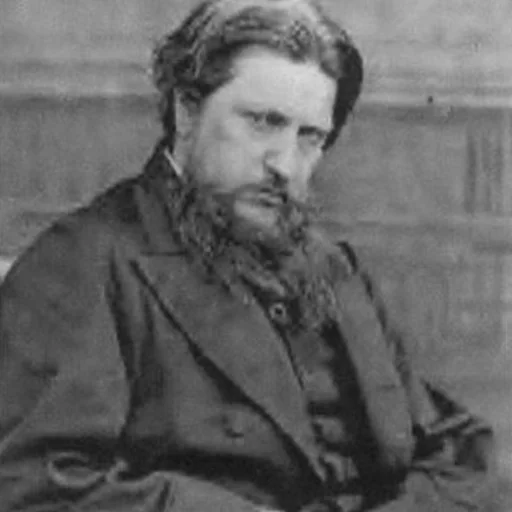
Ford Madox Brown (16 April 1821 – 6 October 1893) was a British painter of moral and historical subjects, notable for his distinctively graphic and often Hogarthian version of the Pre-Raphaelite style.

![The Virgin Swooning [recto], by Ford Madox Brown](https://artifactworldgallery.com/img/ford-madox-brown--the-virgin-swooning-recto--474c0d247da3d304-w320.webp)
![Studies of a Woman and Her Dress [verso], by Perry, Enoch Wood, Jr.](https://artifactworldgallery.com/img/perry-enoch-wood-jr--studies-of-a-woman-and-her-dress-verso--abf8075589814203-w320.webp) Studies of a Woman and Her Dress [verso]
Studies of a Woman and Her Dress [verso]![Father of the Artist [verso], by Paul Cézanne](https://artifactworldgallery.com/img/paul-cezanne--father-of-the-artist-verso--74e24a3aa4f42c1a-w320.webp) Father of the Artist [verso]
Father of the Artist [verso]![Two Cow's Heads [verso], by Paul Gauguin](https://artifactworldgallery.com/img/paul-gauguin--two-cow-s-heads-verso--d880ac31a237a947-w320.webp) Two Cow's Heads [verso]
Two Cow's Heads [verso]![Study of the "Ecorché" [recto], by Paul Cézanne](https://artifactworldgallery.com/img/paul-cezanne--study-of-the-ecorche-recto--1614b86d796e004d-w320.webp) Study of the "Ecorché" [recto]
Study of the "Ecorché" [recto]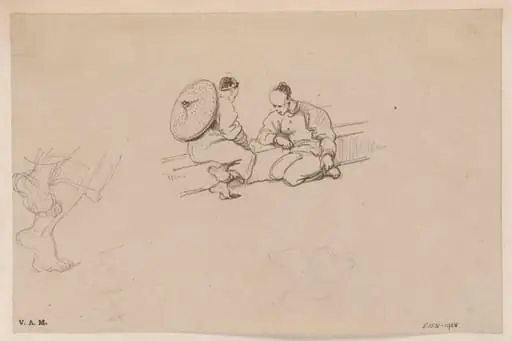 Two Chinese men on a step
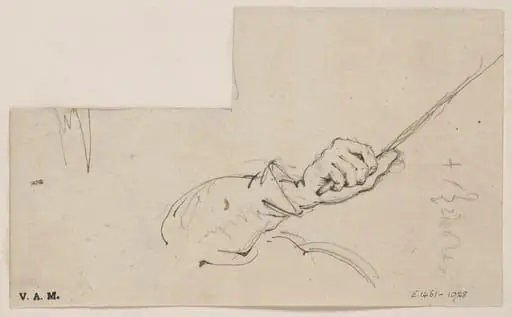 An arm and hand holding a stick
![Two Children Embracing [upper half]; Seated Ecclesiast [lower half], by Stefano Della Bella](https://artifactworldgallery.com/img/stefano-della-bella--two-children-embracing-upper-half-seated-ecclesiast-lower-ha--0b59f496acabe498-w320.webp) Two Children Embracing [upper half]; Seated Ecclesiast [lower half]
Two Children Embracing [upper half]; Seated Ecclesiast [lower half]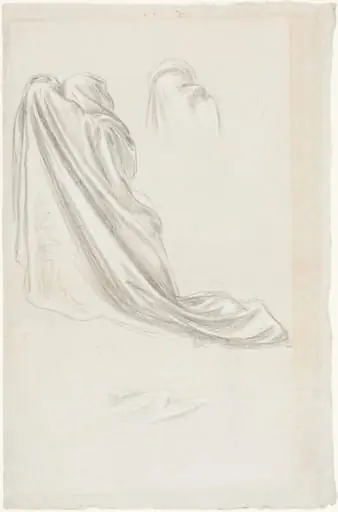 Study for "The Wise and Foolish Virgins"
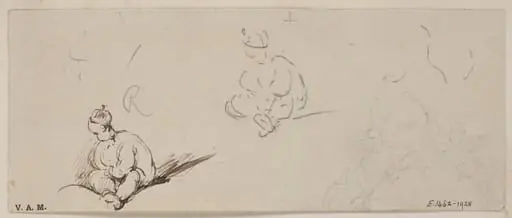 Two sketches of a Chinese child
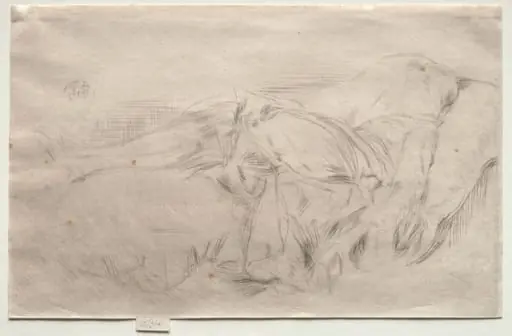 A Child on a Couch, No. 2