Artwork
The Last of England
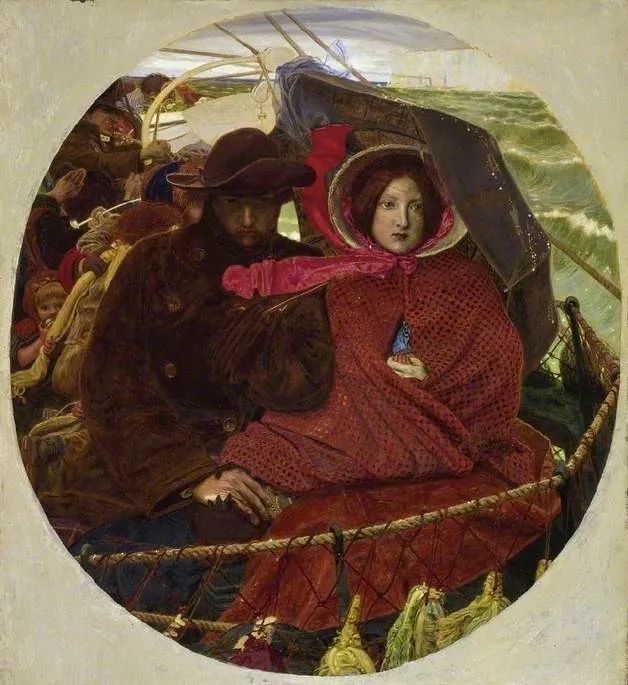
The Last of England is an oil painting by the Pre-Raphaelite artist Ford Madox Brown. It dates from 1860 and is held in the collection of the Fitzwilliam Museum.
About this work
Overview
The work exists in two primary versions: the original, executed between 1852 and 1855 in oil on panel, and a second version painted in 1860 in oil on canvas.
The Last of England is a painting by Ford Madox Brown depicting a middle-class couple emigrating by ship from England. The work exists in two primary versions: the original, executed between 1852 and 1855 in oil on panel, and a second version painted in 1860 in oil on canvas. The original is held by the Birmingham Museum and Art Gallery, while the 1860 version belongs to the Fitzwilliam Museum in Cambridge, acquired in 1917 from the Marlay Fund. Associated with the Pre-Raphaelite movement, the painting is an autobiographical response to the emigration crisis of the 1850s, capturing the anxiety and resolve of those leaving their homeland.
Subject & Meaning
The painting shows a man and woman huddled together on the deck of a ship, their faces based on Brown and his wife, Emma. They turn away from the White Cliffs of Dover visible in the distance, which represent the homeland they will never see again. The woman holds the hand of an infant hidden beneath her shawl, modeled on their child Oliver, while a girl eating an apple behind them represents their daughter Catherine. Brown singled out a middle-class, educated couple, symbolized by a bundle of books, to emphasize the psychological toll of emigration, contrasting their grief with the indifference of lower-class passengers. One drunken man shakes his fist at England, while a greengrocer family makes the best of the journey. The woman emerges as a heroic, Madonna-like figure, squeezing her husband's hand in comfort while imparting warmth to her baby with her bare hand. The lifeboat bears the name El Dorado, an ironic reference to the search for gold that motivated Brown's friend Thomas Woolner to emigrate to Australia.
Technique & Style
The composition employs a nearly circular, vertical oval format, reminiscent of Renaissance tondos, which emphasizes the instability of the voyage and the compressed, foreshortened space of the background passengers. Art historian Nicholas Penny suggests the scene is viewed as though down a telescope, adding poignancy and urgency. The palette centers on deep reds and browns contrasted with greens and pale blues, with the woman's vivid magenta bonnet ribbons providing a striking relief. Light falls strongly on the faces and hands, leaving other areas in shadow. To achieve his naturalistic detail, Brown painted en plein air on cold, dull days, and his wife posed outdoors in winter to capture the true pallor of their flesh and the purple coloration of the man's hands. The brushwork features precise detail in faces and fabrics, with looser handling in the water and background, resulting in a smooth, finished surface with no visible impasto.
History & Provenance
Brown began the painting in 1852, inspired by the departure of his friend Thomas Woolner for Australia. Brown himself considered emigrating to India but remained in Hampstead, working on the painting in his garden and studio above a china shop at 33 High Street. The original 1855 canvas was Brown's first major artistic success, selling immediately for 150 pounds, the largest sum he had earned to date. In March 1859, the painting, then known as The Last Sight of England, was sold by Benjamin Windus to Ernest Gambart for 325 guineas. The 1860 Fitzwilliam version was commissioned as a replica due to the original's success. Its provenance includes Colonel W.J. Gillum and Miss Mary Slater, from whom it was bought in 1917 using the Marlay Fund. A reduced watercolour replica painted between 1864 and 1866, on which Brown's daughter Catherine likely worked, is now in Tate Britain.
Context
Created during the peak of the mid-nineteenth-century emigration crisis, the work reflects the economic hardships of the 1850s when over 350,000 people left England seeking better lives. Although Brown was never a formal member of the Pre-Raphaelite Brotherhood, the painting exhibits the movement's characteristics, including luminous color, minute naturalistic detail, and a purity of style akin to fifteenth-century Italian art. The woman's pale, sad face and centrally parted hair evoke Italian Madonnas, reinforced by the halo-like arc of her bonnet. Brown composed a short verse for the painting, describing the woman looking through rainbow tears toward a sunnier gleam. Despite the personal misery that fueled its creation, the painting received general praise, marking a turning point in Brown's professional reception.
Legacy
The Last of England has endured as a powerful symbol of Victorian emigration and the emotional impact of leaving one's homeland. By the time the original was finished in 1855, Woolner had already returned to England no better off, lending a retrospective irony to the painting's narrative of hope and loss. The work's cultural resonance has persisted into the modern era. It was voted Britain's eighth-favorite picture in a BBC Radio 4 poll and was later selected by the British public for the 2013 Art Everywhere exhibition, ranking 32 out of 57 paintings chosen from national collections. The existence of multiple versions and replicas further attests to the high regard in which the composition was held by Brown's contemporaries and subsequent collectors.
Artist & collection
Artist
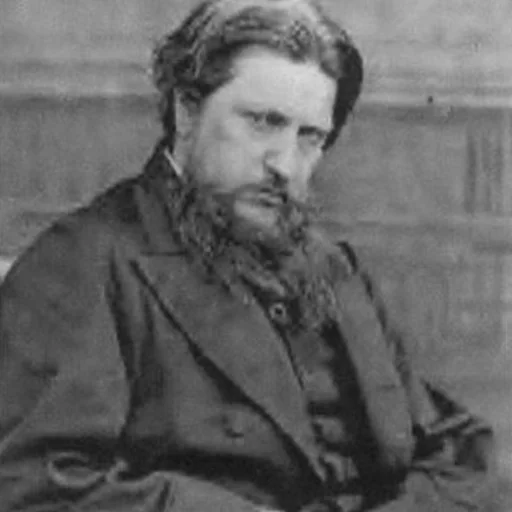
Ford Madox Brown (16 April 1821 – 6 October 1893) was a British painter of moral and historical subjects, notable for his distinctively graphic and often Hogarthian version of the Pre-Raphaelite style.

![The Virgin Swooning [recto], by Ford Madox Brown](https://artifactworldgallery.com/img/ford-madox-brown--the-virgin-swooning-recto--474c0d247da3d304-w320.webp)
![Two Drapery Studies [verso], by Ford Madox Brown](https://artifactworldgallery.com/img/ford-madox-brown--two-drapery-studies-verso--ed4e964fa4716ed7-w320.webp)
 Mary, Queen of Scots: The Farewell to France
 A Venetian Fishing Family
 The Arts of Industry as Applied to War (study for a wall painting in the Victoria and Albert Museum)
 Ordered on foreign Service
 The Sonnet
 A Ferry Boat on the Maas
 Scotch Fishermen
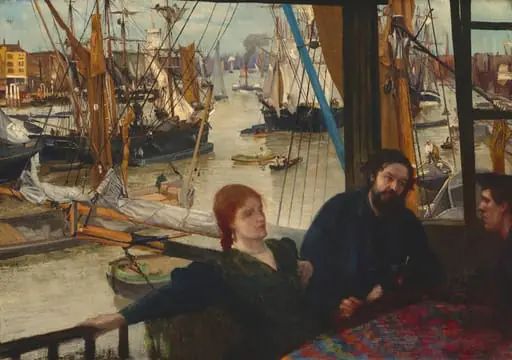 Wapping
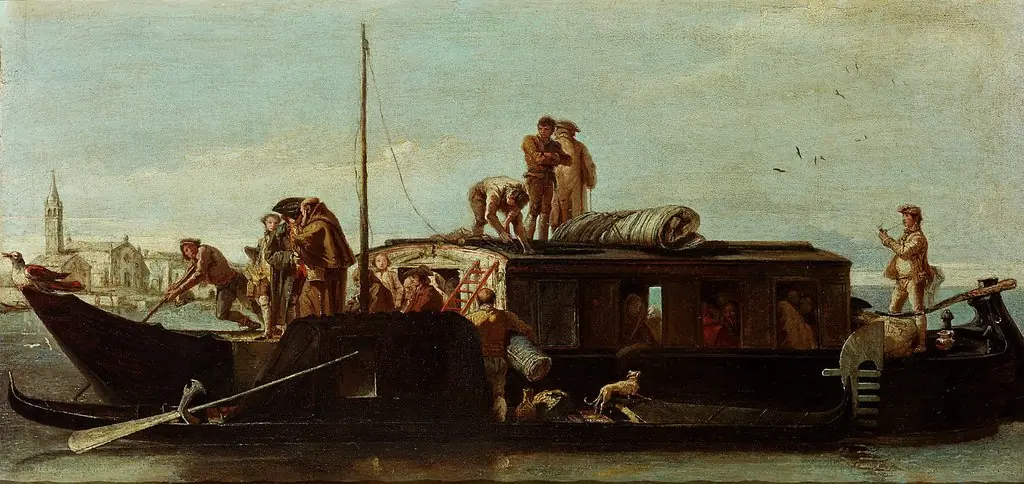 Venetian Post Boat
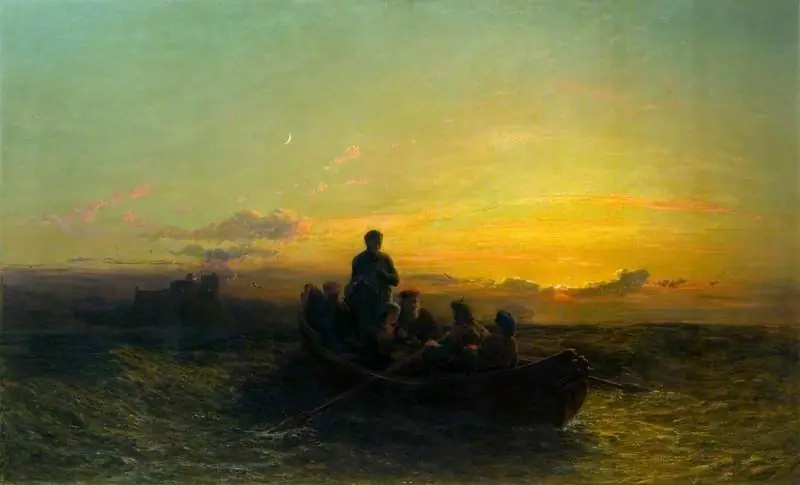 The Escape of Mary, Queen of Scots from Loch Leven Castle, 2 May 1568
 Coast scene with figures
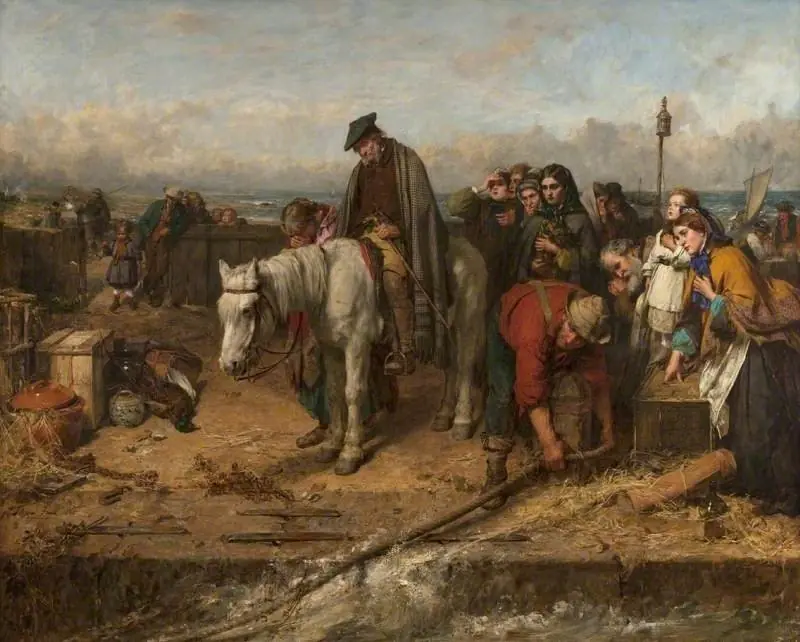
- The Last of the Clan
 Studied in the Pre-Raphaelites course