Artwork
Jan Uytenbogaert
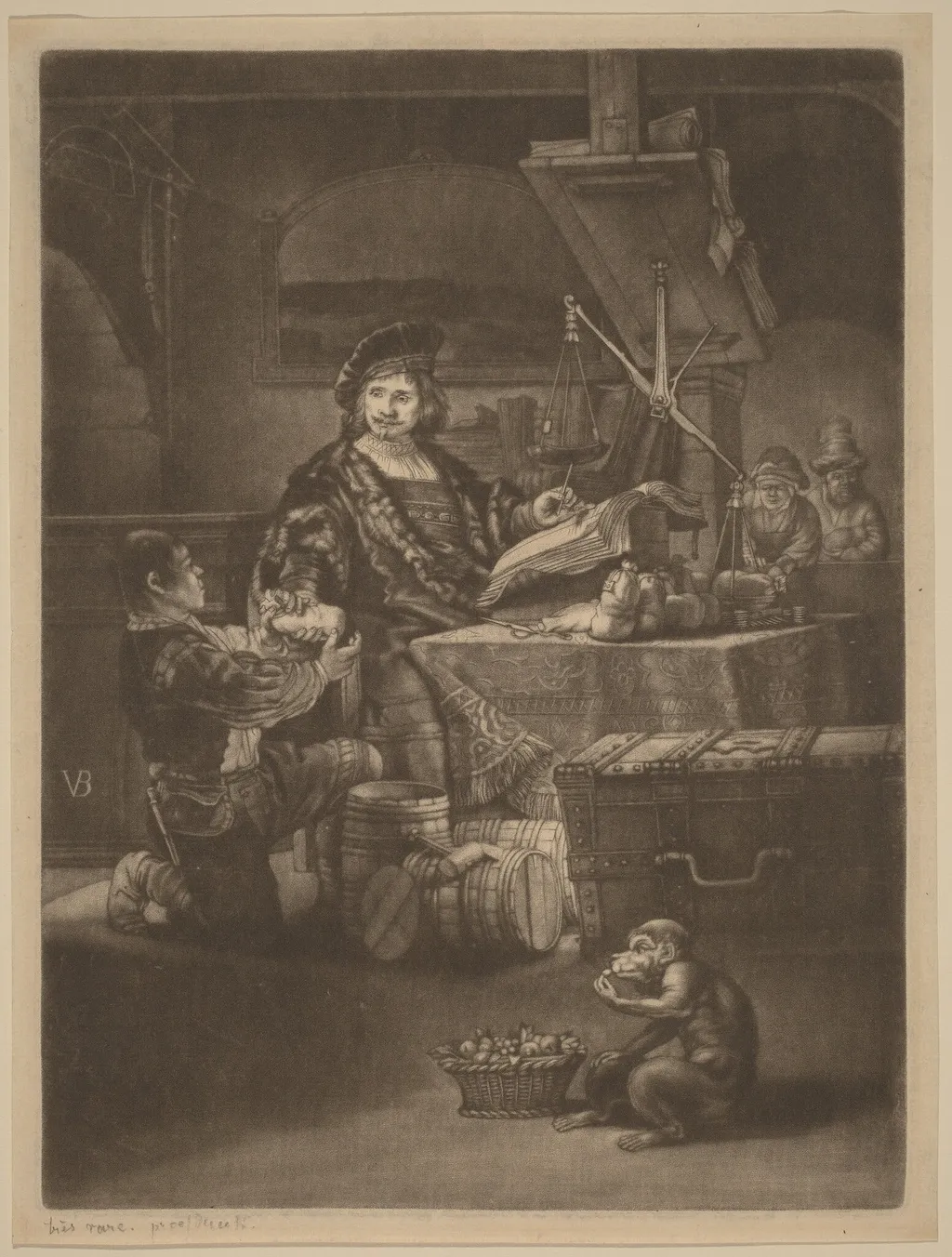
Jan Uytenbogaert is an ink print by the Baroque artist Jan van der Bruggen. It dates from 1689 and is held in the collection of the National Gallery of Art.
- Inscription
- Inscribed:In plate, in image at left: VB; below image, at left: très rare proof [indecipherable]
About this work
Overview
Jan van der Bruggen’s 1689 mezzotint, titled Jan Uytenbogaert, presents a seated figure in elaborate attire at a cluttered workbench. The composition includes a monkey nibbling fruit, a violin, a balance scale, a basket of apples, and a backdrop of tools and books, suggesting a workshop environment. The print’s intricate arrangement invites close inspection of each element.
Subject & Meaning
The central gentleman is surrounded by objects that function symbolically: the monkey, often a baroque emblem of folly or mimicry, juxtaposes human pretensions; the scale may allude to justice or the weighing of values; the violin and fruit hint at the pleasures of art and abundance. Together they transform a portrait into an allegorical study of vice and virtue.
Technique & Style
Executed in mezzotint, the work exploits the medium’s capacity for rich tonal gradations, rendering the textures of silk, wood, and fur with subtle chiaroscuro. Van der Bruggen’s handling of light creates depth across the crowded surface, while the fine incising of details, such as the monkey’s fur and the scale’s pans, demonstrates the printmaker’s technical proficiency.
Context
Created during the late Dutch Baroque, the print reflects contemporary interests in moralizing genre scenes and the didactic use of everyday objects. The inclusion of scholarly paraphernalia and musical instruments aligns with the period’s fascination with the interplay between knowledge, art, and ethical instruction.
History & Provenance
The mezzotint bears the artist’s signature and date, confirming its origin in van der Bruggen’s workshop in 1689. It has circulated among Dutch print collections since the 18th century, appearing in several catalogues of Baroque prints and remaining a reference point for studies of symbolic portraiture in the era.
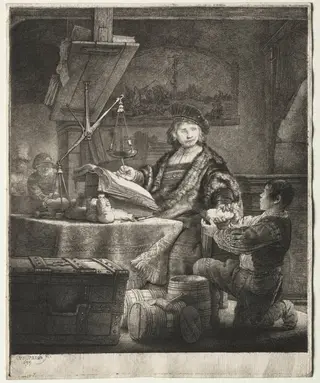
Own this work as a print
Artist & collection

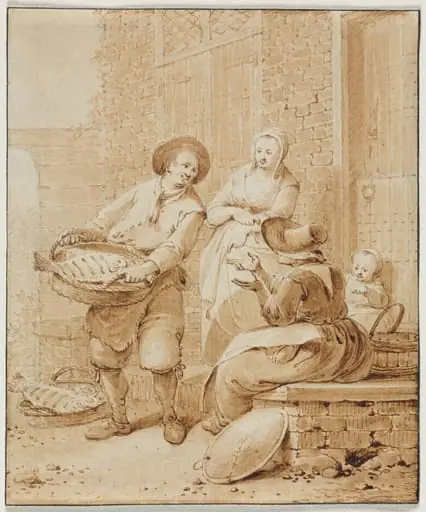 The Fish Monger
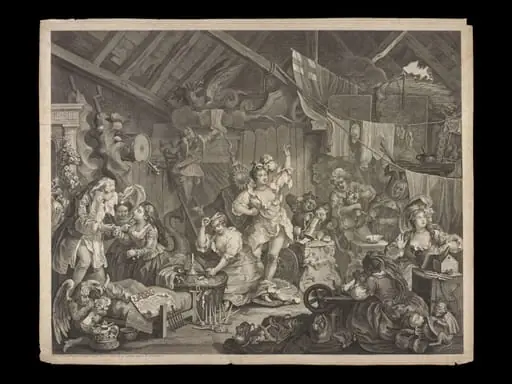 H Beard Print Collection
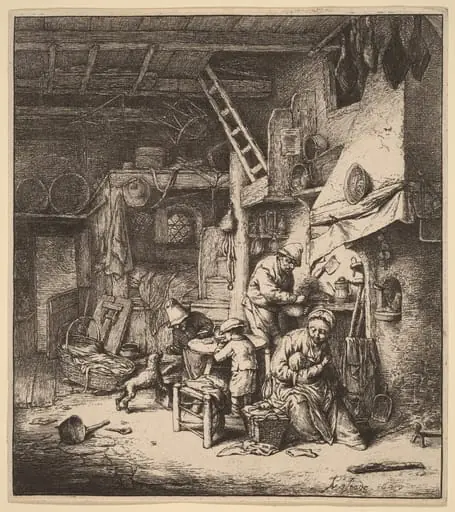 Peasant Family in an Interior with the Mother Feeding a Child
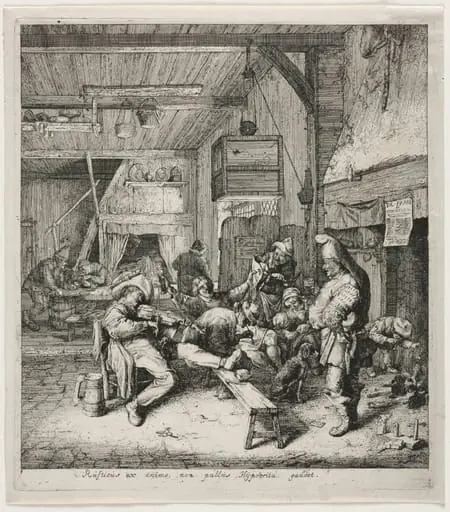 Violin Player Seated in the Inn
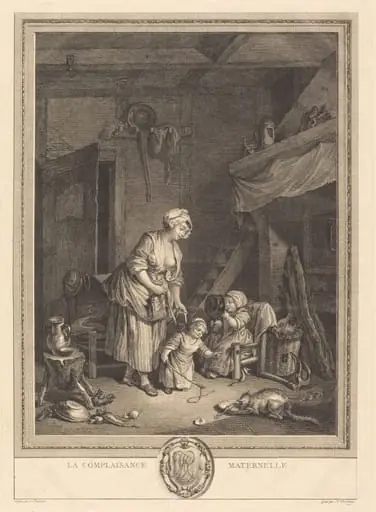 La Complaisance maternelle
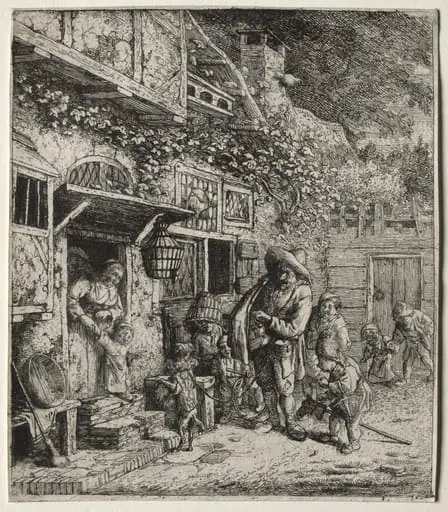 The Dancing Dog
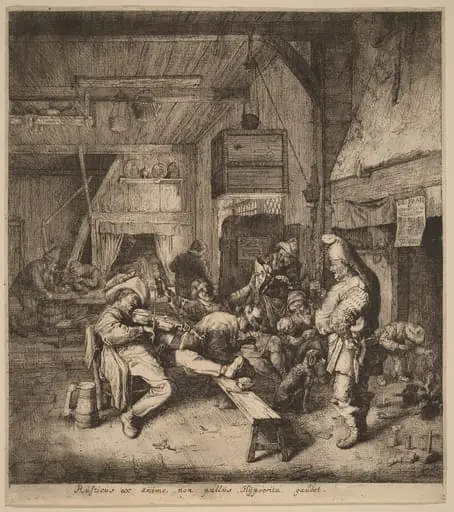 Violin Player Seated in a Tavern
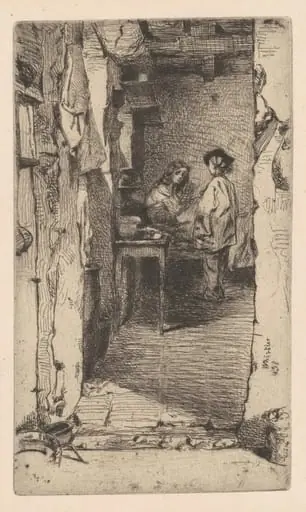 Rag Pickers, Quartier Mouffetard, Paris
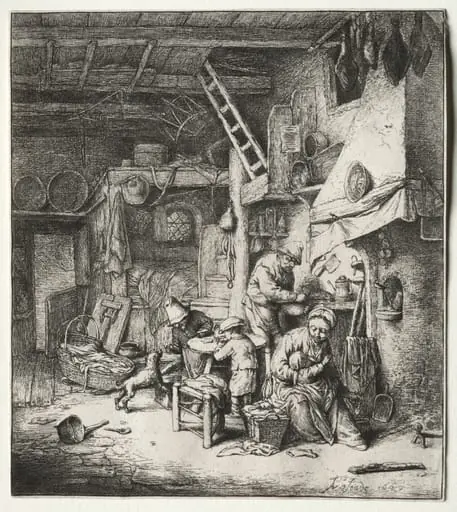 The Family
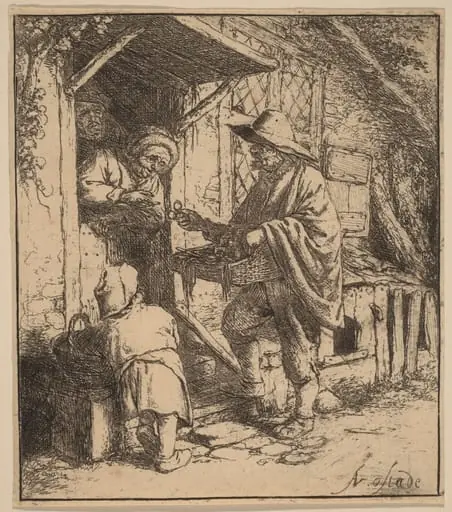 Street Vendor Selling Spectacles at the Door
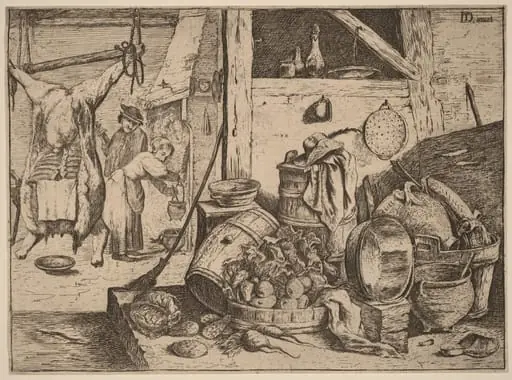 Interior of a Kitchen
- Jan Uytenbogaert