Artwork
L'Entrée de Landemer (Hague)
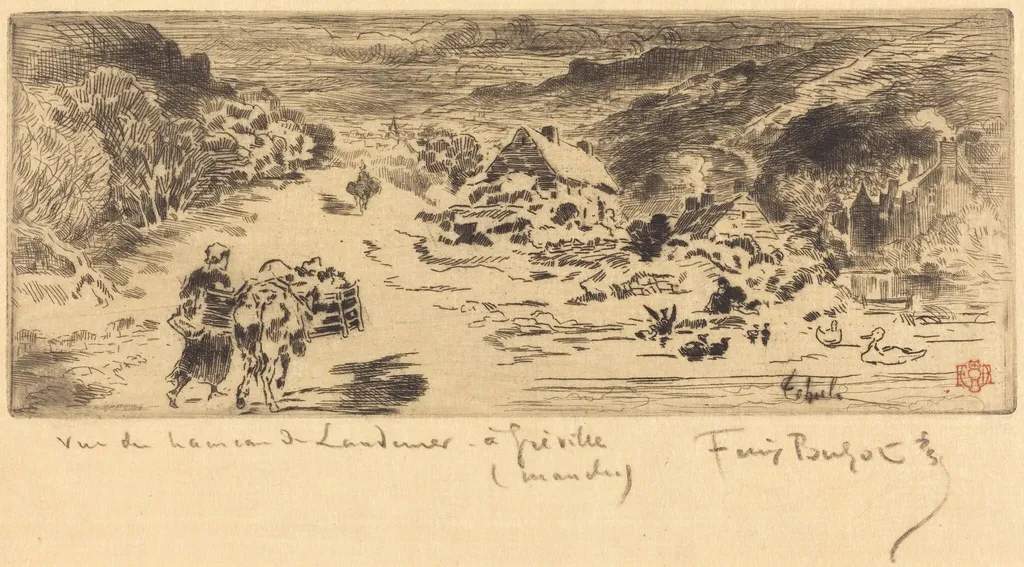
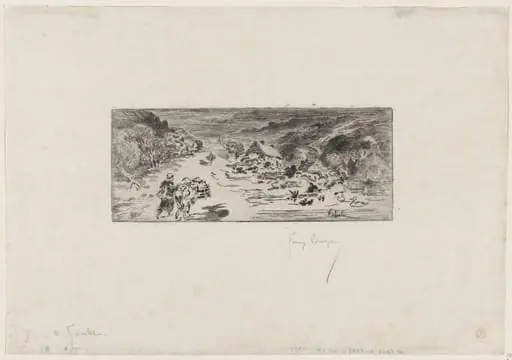
L'Entrée de Landemer (Hague) is an ink print by the Impressionist artist Félix-Hilaire Buhot. It dates from 1873 and is held in the collection of the National Gallery of Art.
- Inscription
- Inscribed:lower right in plate: Tohub; across bottom just below plate mark in graphite: vue de [ ] de Landemer - a []intre / (mand[]) Felix Buhot; across bottom in graphite: fragment d'une planche d'éternite apres quatre épreuves- / l'un des premiers essais du graveur; lower right plate stamped in red: FB (Lugt 978)
About this work
Overview
L'Entrée de Landemer (Hague) is a black-and-white print made around 1873 by Félix-Hilaire Buhot using etching and drypoint techniques on Japanese paper. It captures a tranquil riverside hamlet with subtle detail, reflecting Buhot’s interest in everyday rural life. The work belongs to a broader 19th-century tradition of printmaking that valued intimate, observational scenes over grand narratives.
Subject & Meaning
The scene depicts a quiet path beside a river, where two figures walk, one bearing a load, toward a modest bridge and a distant church spire. Ducks drift near the water’s edge, and trees frame the composition. There is no dramatic event, only the rhythm of daily movement. The quietude suggests an appreciation for unremarkable moments, a hallmark of Buhot’s approach to landscape.
Technique & Style
Buhot employed fine etched lines and drypoint burr to model light and texture, creating depth through delicate contrasts.
Buhot employed fine etched lines and drypoint burr to model light and texture, creating depth through delicate contrasts. The inked lines vary in weight, suggesting foliage, water ripples, and architectural form without heavy shading. The paper’s thinness enhances the print’s delicacy, allowing the ink to settle softly. This method prioritized atmospheric nuance over bold outlines, typical of late 19th-century French printmakers.
History & Provenance
Created during Buhot’s active years in the Netherlands and northern France, the print likely emerged from his travels near The Hague. It was produced in a small edition, typical of artist-printmakers of the period, and circulated among collectors of fine prints. No documented early ownership is recorded, but it aligns with the broader revival of etching as a fine art medium in the 1870s.
Context
In the 1870s, French and Dutch artists increasingly turned to etching to capture local scenes with immediacy. Buhot was part of a generation that rejected academic grandeur in favor of personal, observational work. His prints, often of rural or coastal life, resonated with contemporaries like Rembrandt revivalists and the Barbizon-influenced printmakers who valued mood over spectacle.
Legacy
Though not widely exhibited today, L'Entrée de Landemer exemplifies Buhot’s contribution to the revival of etching as a medium for quiet realism. His technical precision and sensitivity to light influenced later printmakers interested in atmospheric landscape. The work remains a quiet testament to the value placed on ordinary places in late 19th-century art.
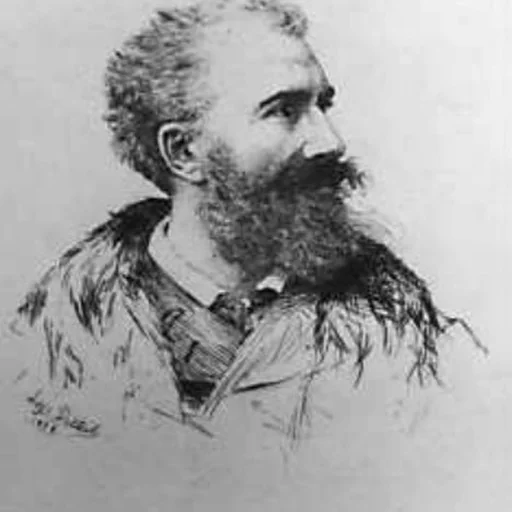
Artist & collection

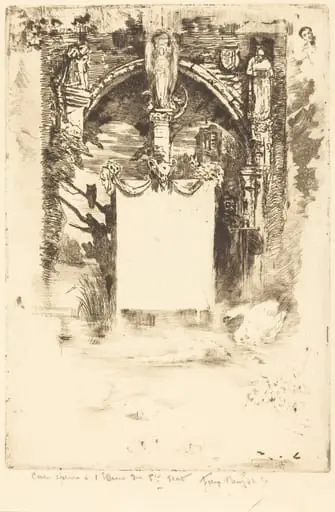 Ex-Libris pour "L'Ensorcelée" (Bookplate for "L'Ensorcelée")
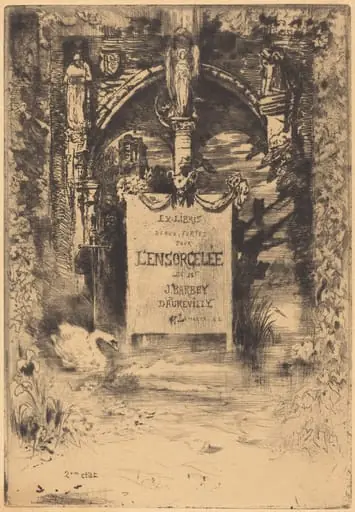 Ex-Libris pour "L'Ensorcelée" (Bookplate for "L'Ensorcelée")
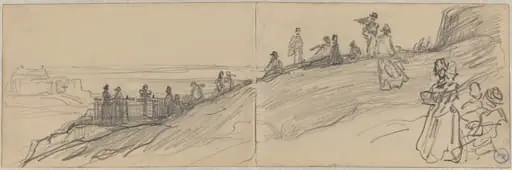 Figures on Top of a Hill, Overlooking the Sea
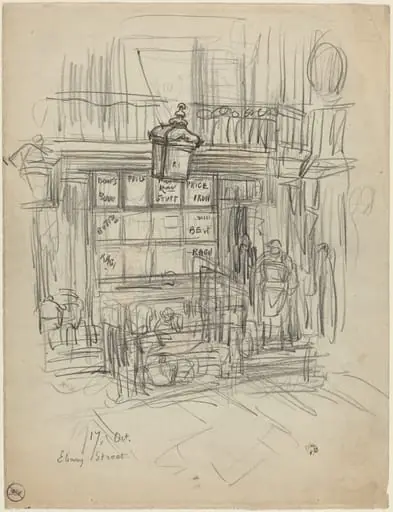 Ebury Street
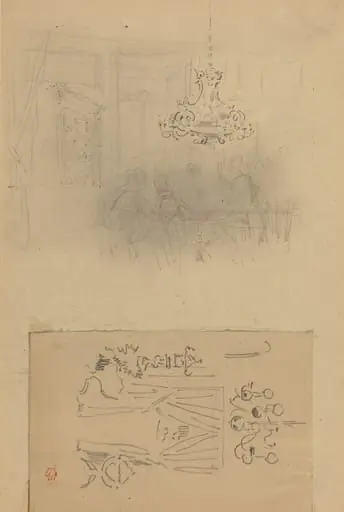 A Gathering in an Interior; A Curtained Doorway
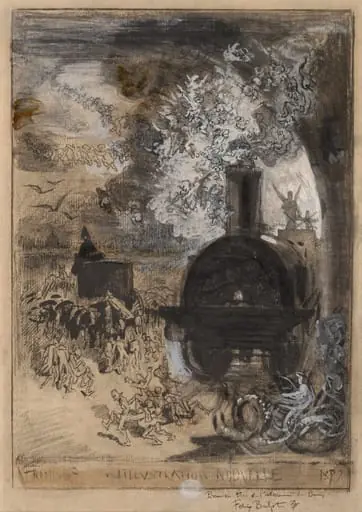 Frontispiece for L'Illustration Nouvelle: The Burial of the Burin
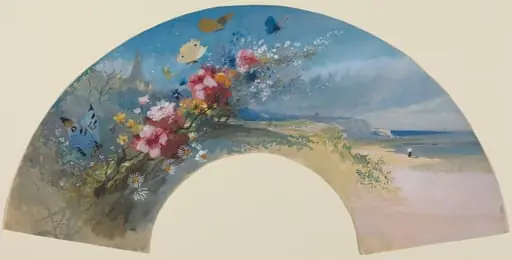 Fan with Wildflowers and Butterflies against the Norman Coast
![Gillingham Pier, London [verso], by Félix-Hilaire Buhot](https://artifactworldgallery.com/img/felix-hilaire-buhot--gillingham-pier-london-verso--641e03dd7de8217b-w320.webp) Gillingham Pier, London [verso]
Gillingham Pier, London [verso]
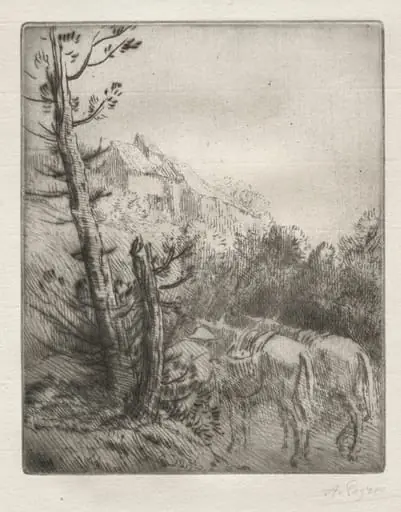 The Farm on the Hill
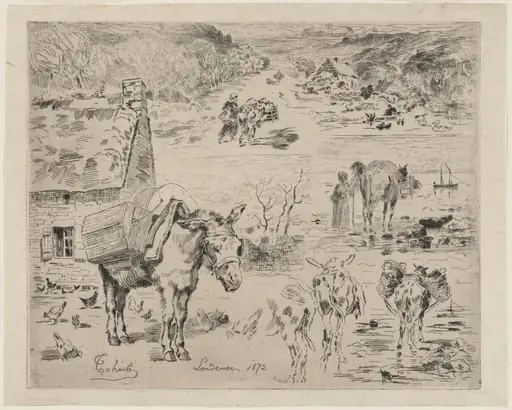 Feuillets d'album (Donkey Sketch)
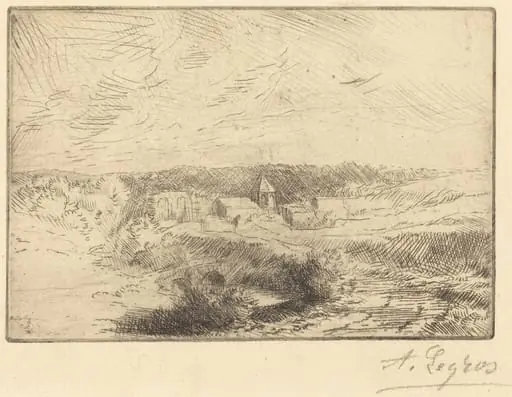 Village of Wimille, near Boulogne (Village de Wimille, pres Boulogne)
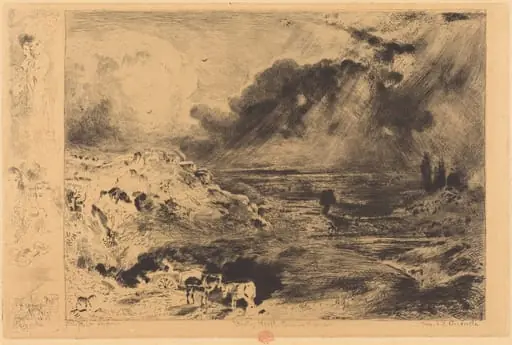 L'Orage (The Storm)
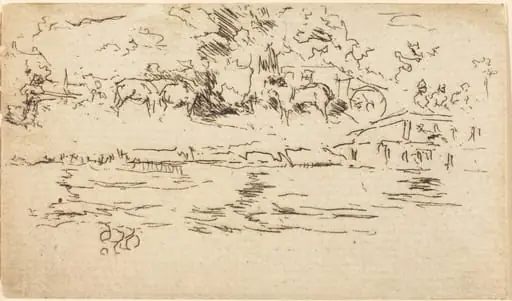 The Towing-Path
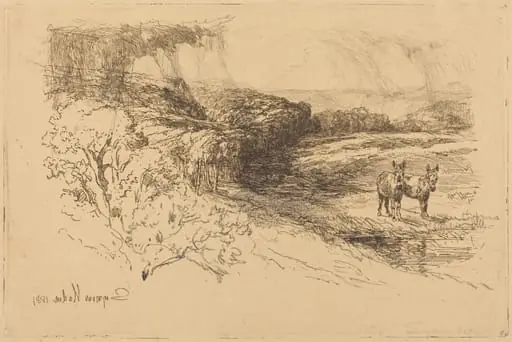 Encombe Woods (No.1)
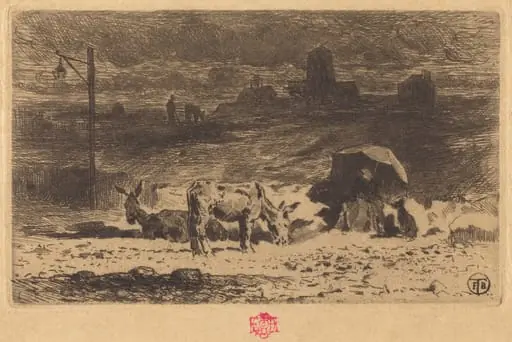 Les Anes de La Butte-aux-Cailles (Donkeys at La Butte-aux-Cailles)
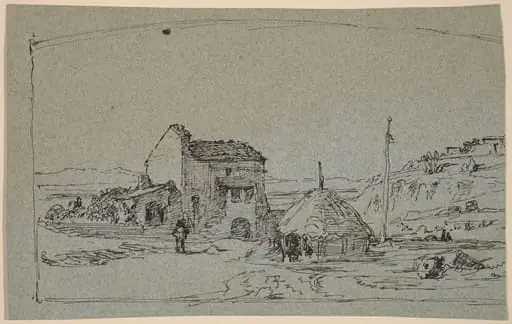 Tuscany
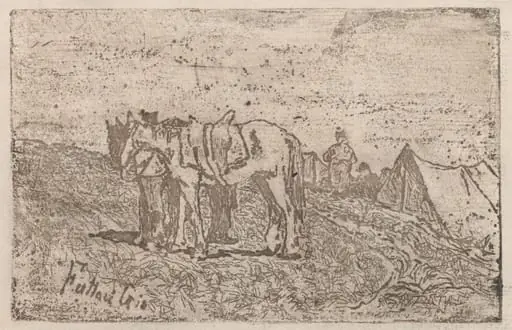 a) On Maneuvers (recto); b) On Maneuvers (verso) (Alle Manovre)
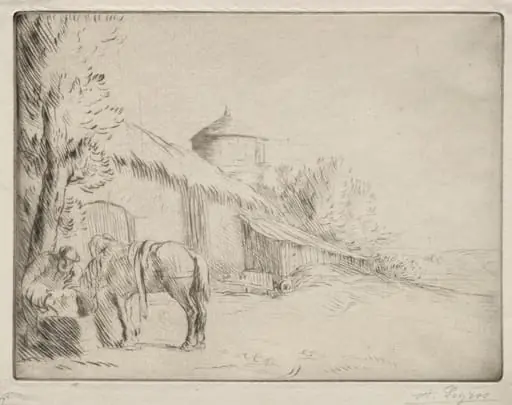 The Watering Place (2nd Plate)
- L'Entrée de Landemere (The Hague)
 A Lancashire River