Artwork
La Fête nationale au Boulevard Clichy (National Holiday on the Boulevard de Clichy)
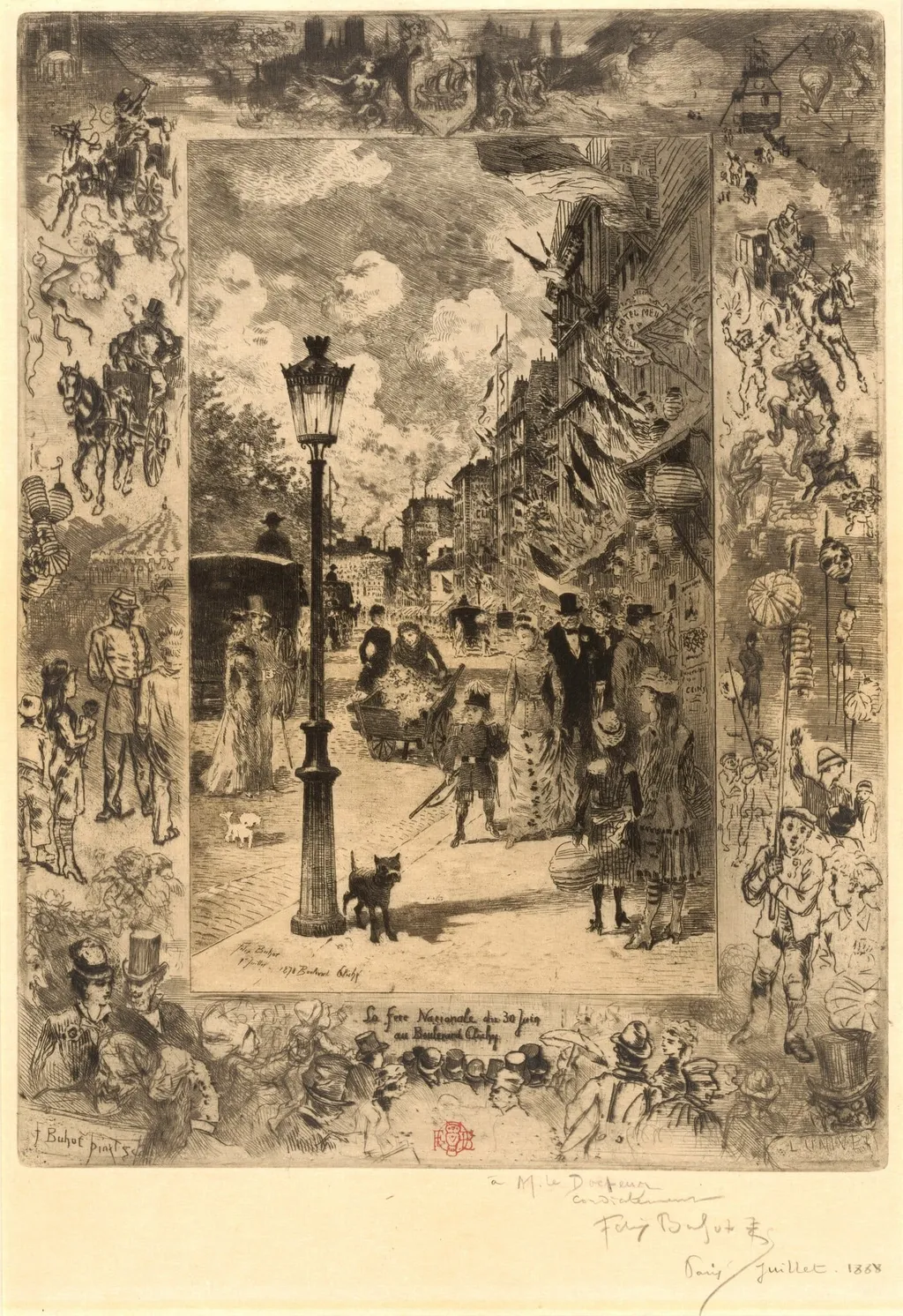
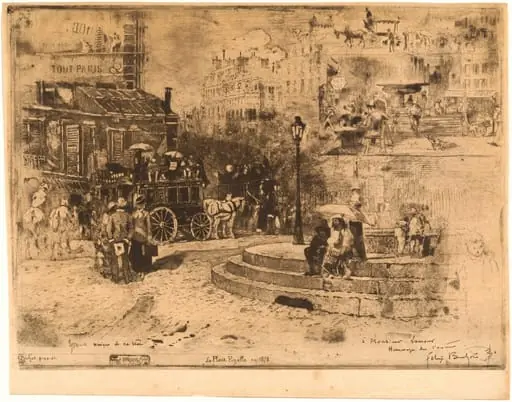
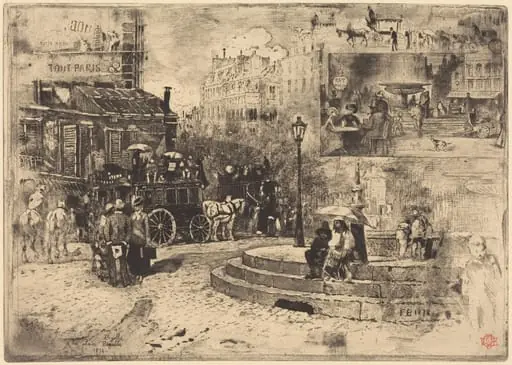
La Fête nationale au Boulevard Clichy (National Holiday on the Boulevard de Clichy) is an ink print by the Impressionist artist Félix-Hilaire Buhot. It dates from 1878 and is held in the collection of the National Gallery of Art. Created in 1878, this black‑ink print by Félix‑Hilaire Buhot captures a bustling Parisian boulevard on a national holiday.
- Inscription
- Inscribed:lower right below plate mark in graphite: à M. le Docteur / cordialement / Felix Buhot / Paris Juillet.1888; lower left in plate (central image): Felix Buhot / 1er Juillet 1878 Boulevard Clichy; lower left in plate (margin): F Buhot pinxt sc.; lower center in plate (margin): La Fête Nationale du 30 Juin / au Boulevard Clichy; lower right in plate (margin): L'UNIVERS; lower center on margin with red stamp: FB (Lugt 978); by later hand, lower left verso in graphite: APG 5673; by later hand, lower center verso in graphite: 81EAL[W?]
About this work
Overview
Executed on wove paper, the composition presents a crowded sidewalk framed by tall façades, a central lamppost, and a sky mottled with clouds.
Created in 1878, this black‑ink print by Félix‑Hilaire Buhot captures a bustling Parisian boulevard on a national holiday. Executed on wove paper, the composition presents a crowded sidewalk framed by tall façades, a central lamppost, and a sky mottled with clouds. Figures mingle, some watching a street performer, others strolling or conversing, conveying the lively atmosphere of a public celebration.
Subject & Meaning
The scene depicts ordinary Parisians gathered for a civic festivity, emphasizing communal participation in national rituals. By focusing on everyday activity rather than grandiose symbols, Buhot highlights the social dimension of public holidays, suggesting a shared civic identity expressed through spontaneous street interactions and collective enjoyment of the urban environment.
Technique & Style
Buhot combined several intaglio methods, etching, drypoint, aquatint, stop‑out, foul‑bite, and soft‑ground, to achieve a nuanced tonal range. The interplay of crisp line work from drypoint and the velvety washes of aquatint creates depth, while the stop‑out and foul‑bite processes allow selective masking, producing rich textures that model the architecture and crowd with subtle gradations of black on paper.
History & Provenance
First issued in the late nineteenth century, the print reflects Buhot’s interest in urban life during the Third Republic. Though specific ownership records are scarce, the work has appeared in several exhibitions of French printmaking and is held in public collections that document the development of modern etching techniques in the 1800s.
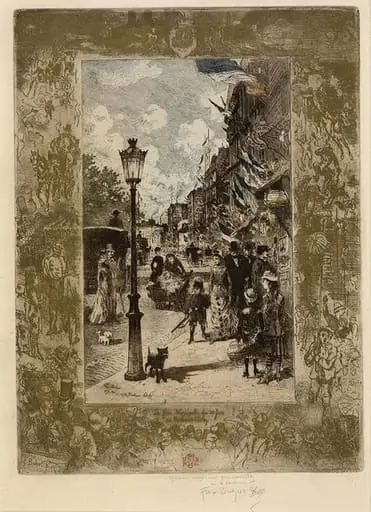
Own this work as a print
Artist & collection

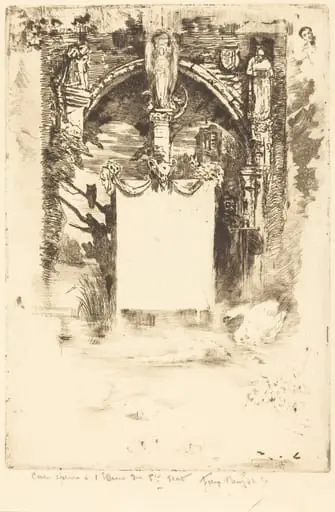 Ex-Libris pour "L'Ensorcelée" (Bookplate for "L'Ensorcelée")
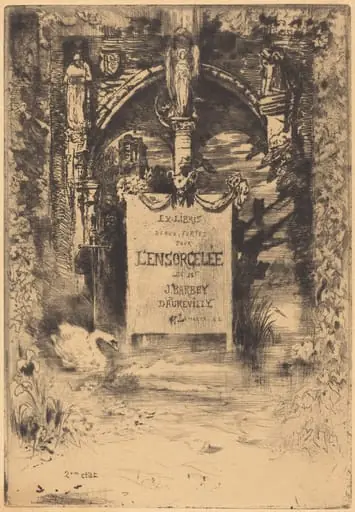 Ex-Libris pour "L'Ensorcelée" (Bookplate for "L'Ensorcelée")
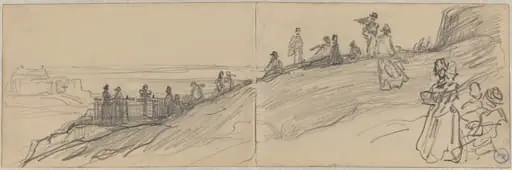 Figures on Top of a Hill, Overlooking the Sea
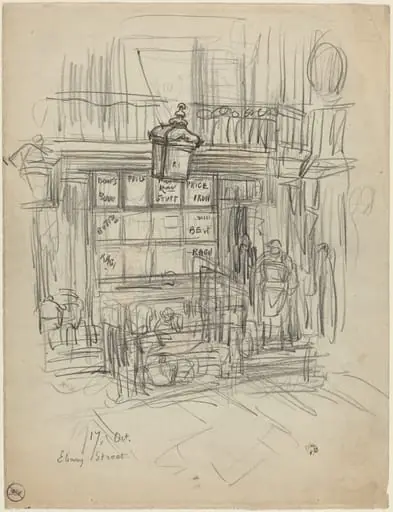 Ebury Street
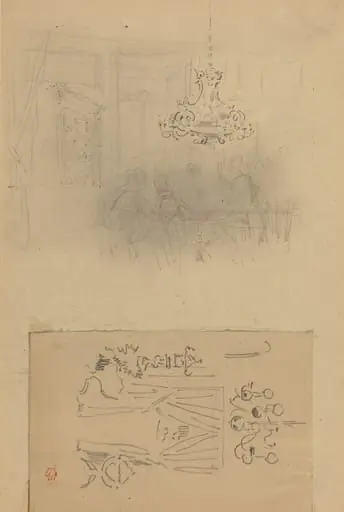 A Gathering in an Interior; A Curtained Doorway
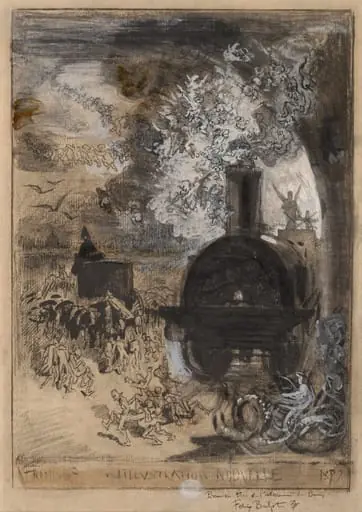 Frontispiece for L'Illustration Nouvelle: The Burial of the Burin
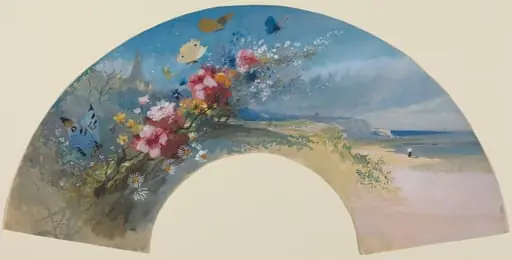 Fan with Wildflowers and Butterflies against the Norman Coast
![Gillingham Pier, London [verso], by Félix-Hilaire Buhot](https://artifactworldgallery.com/img/felix-hilaire-buhot--gillingham-pier-london-verso--641e03dd7de8217b-w320.webp) Gillingham Pier, London [verso]
Gillingham Pier, London [verso]