Artwork
Sketch of Trees with a Statue on a Pedestal
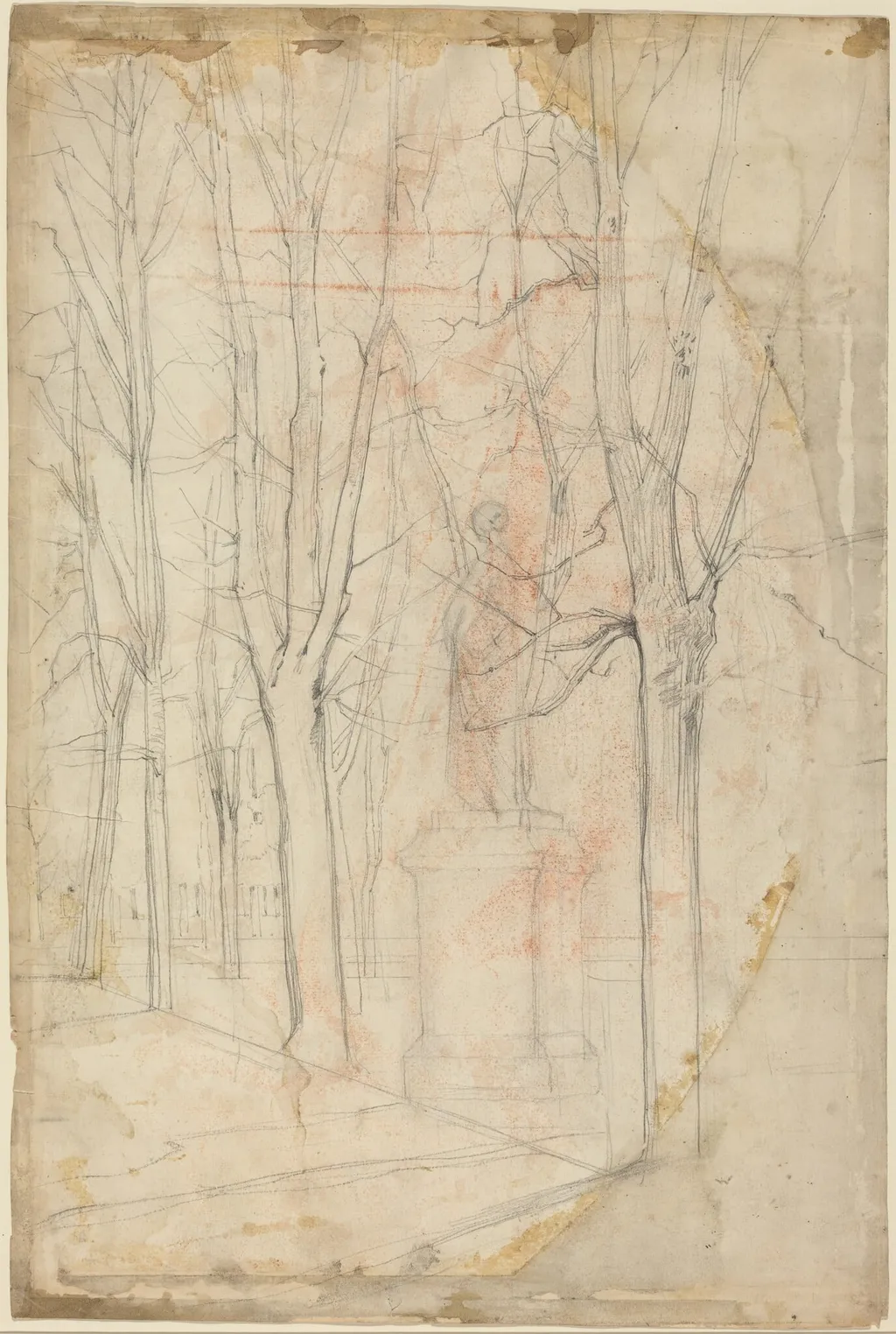
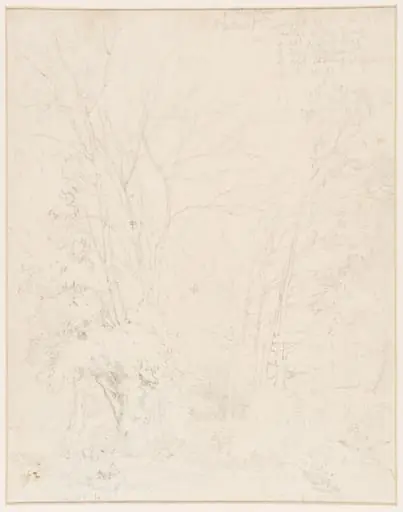
Sketch of Trees with a Statue on a Pedestal is a graphite drawing by the Romanticist artist Félix-Hilaire Buhot. It dates from 1872 and is held in the collection of the National Gallery of Art.
About this work
Overview
Buhot’s loose handling and restrained palette reflect a spontaneous, observational approach typical of his sketchbook practice.
Created in 1872 by Félix-Hilaire Buhot, this drawing is executed in graphite and red chalk on wove paper. The surface shows signs of age, frayed edges and subtle wear, suggesting it was handled or stored over time. The composition captures a natural scene with minimal detail, emphasizing atmosphere over precision. Buhot’s loose handling and restrained palette reflect a spontaneous, observational approach typical of his sketchbook practice.
Subject & Meaning
The drawing depicts a cluster of slender, interwoven trees surrounding a raised, indistinct form on a pedestal, possibly a weathered statue. The statue’s ambiguity invites interpretation: it may symbolize forgotten monuments, the passage of time, or the encroachment of nature on human artifacts. The lack of clear definition suggests a momentary impression rather than a formal study, aligning with the artist’s interest in transient scenes.
Technique & Style
Buhot employed light, fluid graphite lines to suggest the movement of branches caught in wind, using rapid, overlapping strokes to convey texture and motion. Subtle red chalk accents, faintly visible beneath and alongside the graphite, introduce a muted warmth without dominating the composition. The technique prioritizes immediacy and tonal suggestion over finish, characteristic of plein air sketching in the late 19th century.
History & Provenance
The work originates from Buhot’s personal sketchbook, likely made during a walk or study session in the French countryside. Its worn condition and partial tearing indicate it was carried and used repeatedly, not preserved as a finished piece. No documented ownership history exists beyond its attribution to the artist, suggesting it remained in private hands or within his studio circle.
Context
Produced during a period when French artists increasingly turned to direct observation, Buhot’s sketch aligns with broader trends in landscape drawing that valued spontaneity over idealization. While not overtly Romantic, its focus on nature’s quiet dominance over human relics echoes themes found in contemporary works that questioned permanence and memory in a rapidly changing world.
Legacy
This drawing exemplifies Buhot’s contribution to the tradition of intimate, observational drawing in 19th-century France. Though not widely exhibited during his lifetime, such works influenced later generations of artists who valued the expressive potential of sketching as a direct engagement with the environment. Its modest scale and unfinished quality continue to resonate in studies of everyday artistic practice.
Own this work as a print
Artist & collection

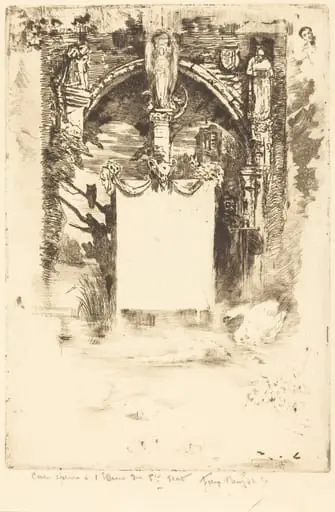 Ex-Libris pour "L'Ensorcelée" (Bookplate for "L'Ensorcelée")
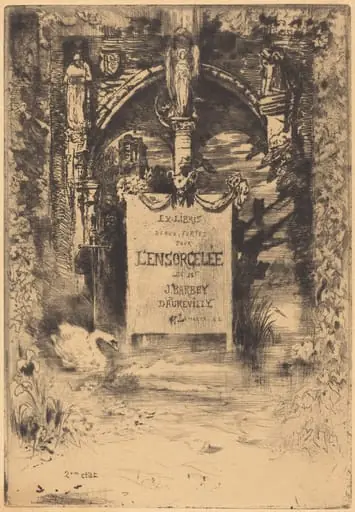 Ex-Libris pour "L'Ensorcelée" (Bookplate for "L'Ensorcelée")
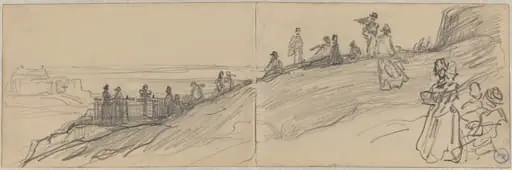 Figures on Top of a Hill, Overlooking the Sea
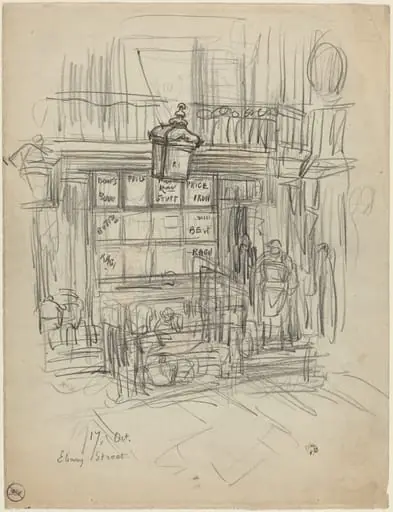 Ebury Street
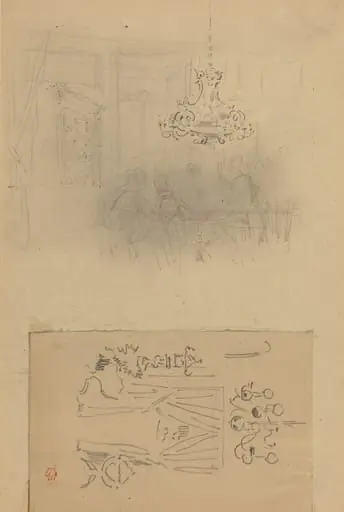 A Gathering in an Interior; A Curtained Doorway
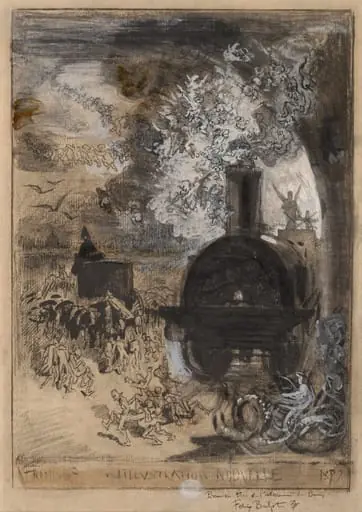 Frontispiece for L'Illustration Nouvelle: The Burial of the Burin
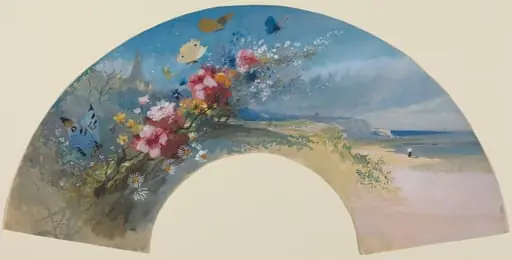 Fan with Wildflowers and Butterflies against the Norman Coast
![Gillingham Pier, London [verso], by Félix-Hilaire Buhot](https://artifactworldgallery.com/img/felix-hilaire-buhot--gillingham-pier-london-verso--641e03dd7de8217b-w320.webp) Gillingham Pier, London [verso]
Gillingham Pier, London [verso]
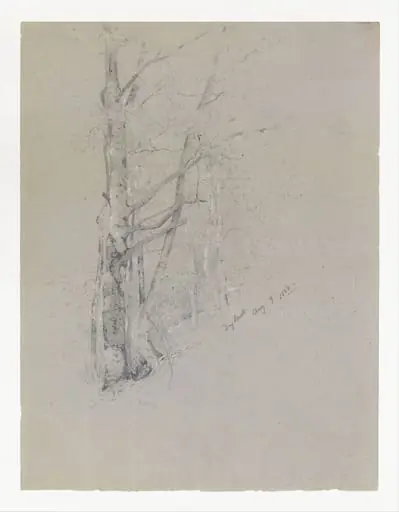
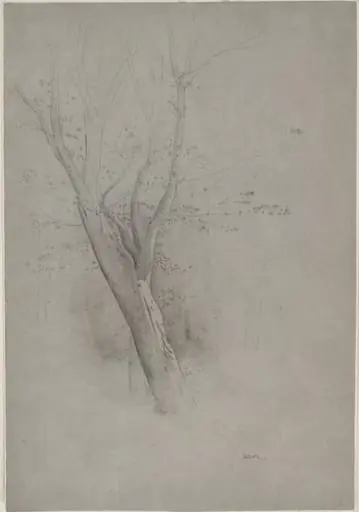
![View through the Trees at Tivoli [recto], by Jasper Francis Cropsey](https://artifactworldgallery.com/img/jasper-francis-cropsey--view-through-the-trees-at-tivoli-recto--982b0e365e4ea403-w320.webp)
![Chatsworth [recto], by David Cox](https://artifactworldgallery.com/img/david-cox--chatsworth-recto--3f4d97adb21a8333-w320.webp)