Artwork
Greed
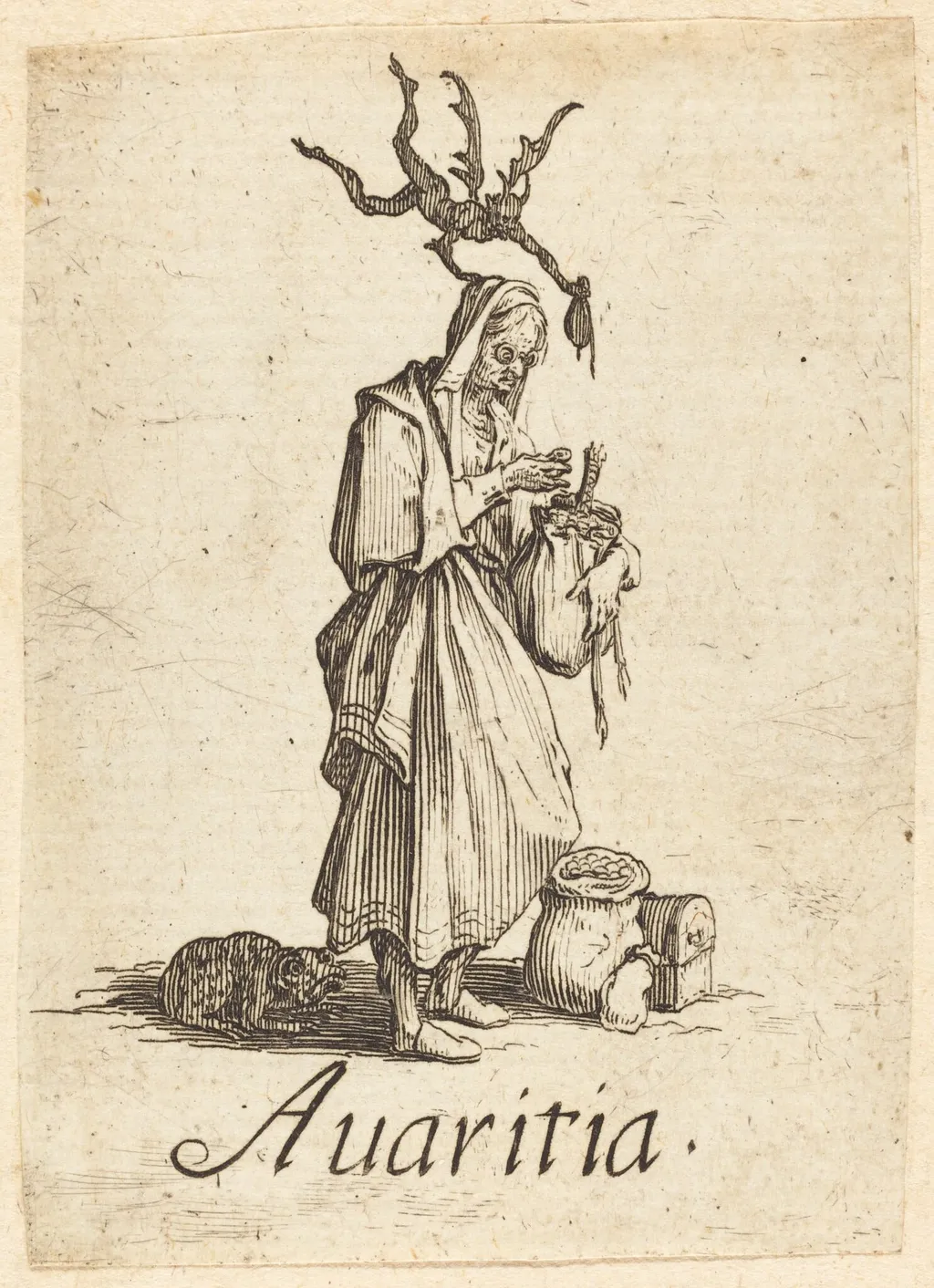
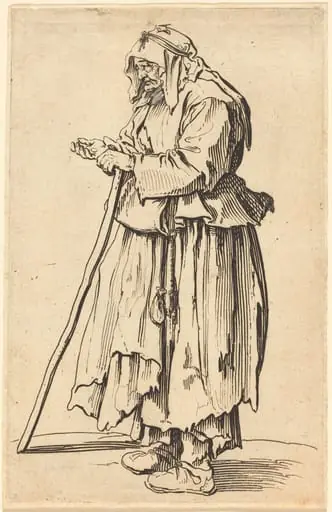
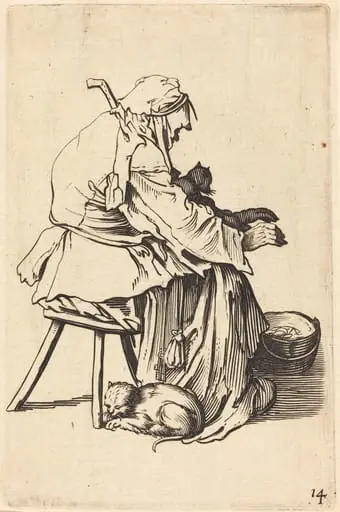
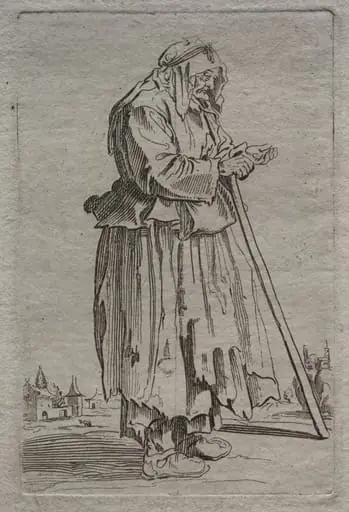
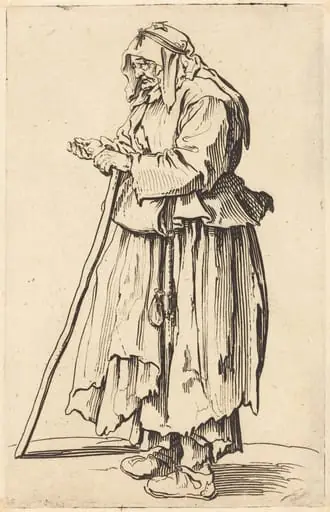
Greed is an ink print by the Baroque artist Jacques Callot. It dates from 1621 and is held in the collection of the National Gallery of Art.
About this work
Overview
Greed is a print created by Jacques Callot around 1621 using etching and engraving on laid paper. It is one of over 1,400 etchings produced by the artist, a prolific French printmaker from the Duchy of Lorraine.
Subject & Meaning
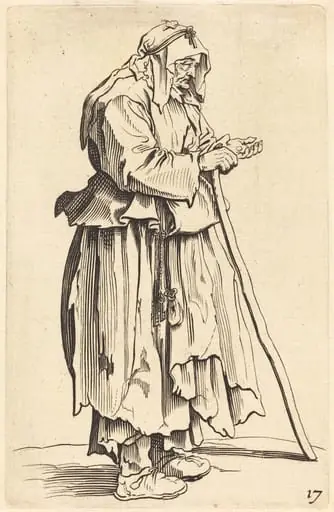
The print depicts a hunched figure with a hood, clutching a bag of coins, and adorned with a deer's antlers, accompanied by a sleeping dog. The image is labeled 'Avaritia,' Latin for 'greed,' serving as a cautionary representation of the dangers associated with wealth.
Technique & Style
Callot employed sharp lines achieved through etching and engraving to convey a sense of unease and distortion in the figure, highlighting his technical skill in printmaking.
Own this work as a print
Artist & collection
Artist
Jacques Callot (French: ; c. 1592 – 1635) was a baroque printmaker and draftsman from the Duchy of Lorraine. He is an important person in the development of the old master print. He made more than 1,400 etchings that…

 Holy Family at supper
 Restoration of the Aqueduct at Pisa
 Restoration of the Aqueduct at Pisa
 Square in Paris with Many Figures
 Square in Paris with Many Figures
 Horsemen Attacked by Robbers
 HOW WILL A COVERED PART BE CORRECTED?HOW WIKA A COVERED HEART DEED CORRECTED?
![Christ Walking on the Water [second plate], by Jacques Callot](https://artifactworldgallery.com/img/jacques-callot--christ-walking-on-the-water-second-plate--2069f3bfe4cb2126-w320.webp) Christ Walking on the Water [second plate]
Christ Walking on the Water [second plate]