Artwork
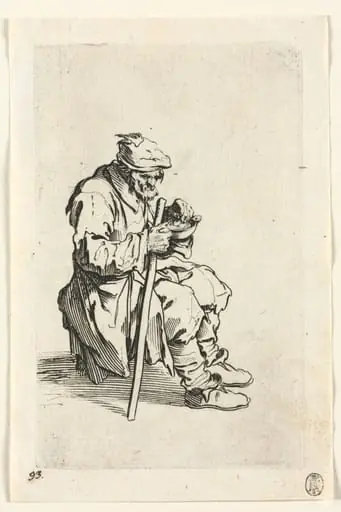
Beggar Eating
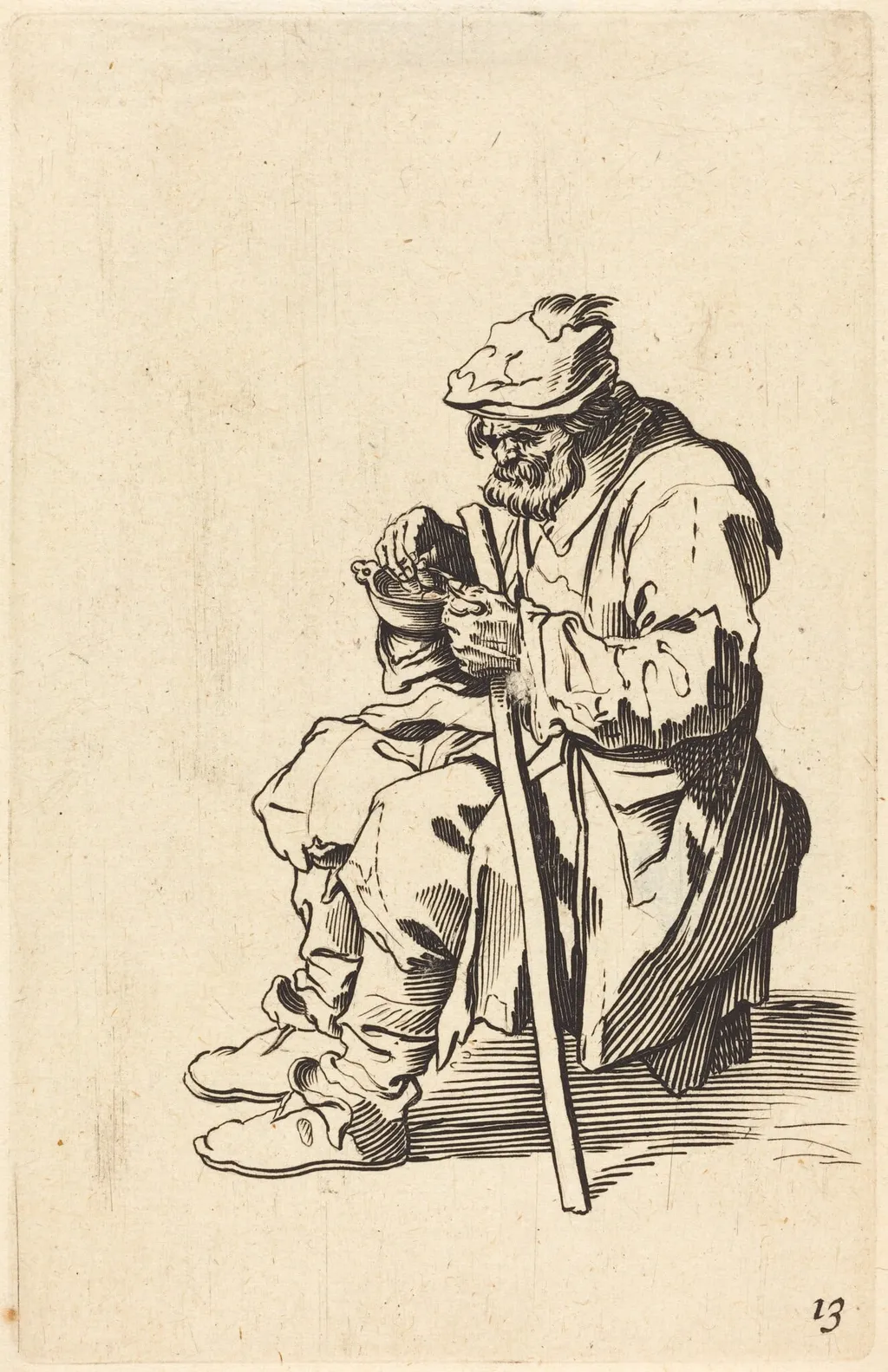
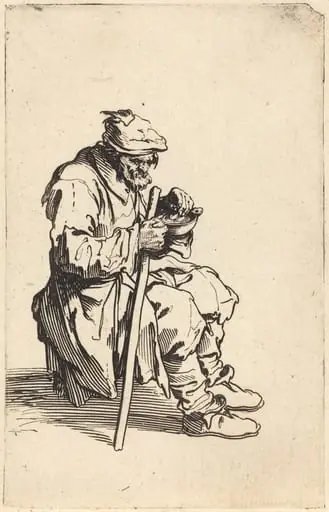
Beggar Eating is an ink print by the Baroque artist French 17th Century. It dates from 1622 and is held in the collection of the National Gallery of Art. The work is an etching on laid paper, presenting a solitary figure of an older man seated on the ground.
About this work
Overview
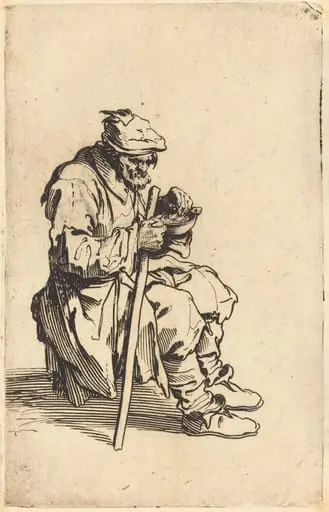
The work is an etching on laid paper, presenting a solitary figure of an older man seated on the ground. He leans on a wooden staff, wears a wide‑brimmed hat, a loose coat and baggy trousers, and holds a bowl in his left hand while his right hand reaches toward a bag at his side. The composition is sparse, with minimal background, directing attention to the figure’s posture and gestures.
Subject & Meaning
The image portrays a beggar in a moment of quiet activity, suggesting the daily struggle for sustenance. The man's tired expression, worn clothing, and the act of eating or searching for food convey a realistic, empathetic glimpse into poverty, inviting viewers to consider the human condition beyond decorative representation.
Technique & Style
Executed with swift, rough lines, the etching emphasizes texture and the creases of the figure’s skin and garments. The artist’s hand‑cut incisions in the metal plate produce a stark contrast between the detailed figure and the largely empty space, a common approach in printmaking that heightens the immediacy of the subject.
Context
Etching, a printmaking process that involves incising a design onto a metal plate and transferring it onto paper, allows for fine line work and tonal variation. This piece exemplifies the medium’s capacity to capture fleeting, observational scenes with a direct, unembellished quality, aligning with traditions of social realism in graphic art.
Artist & collection

Artist
Seventeenth-century French printmakers worked in burin and acid. See the Beggar Woman with Rosary (1622), etched on laid paper with her hands folded in prayer, or The Siege of La Rochelle (1628/1631), one sheet from a…