Artwork
Lust
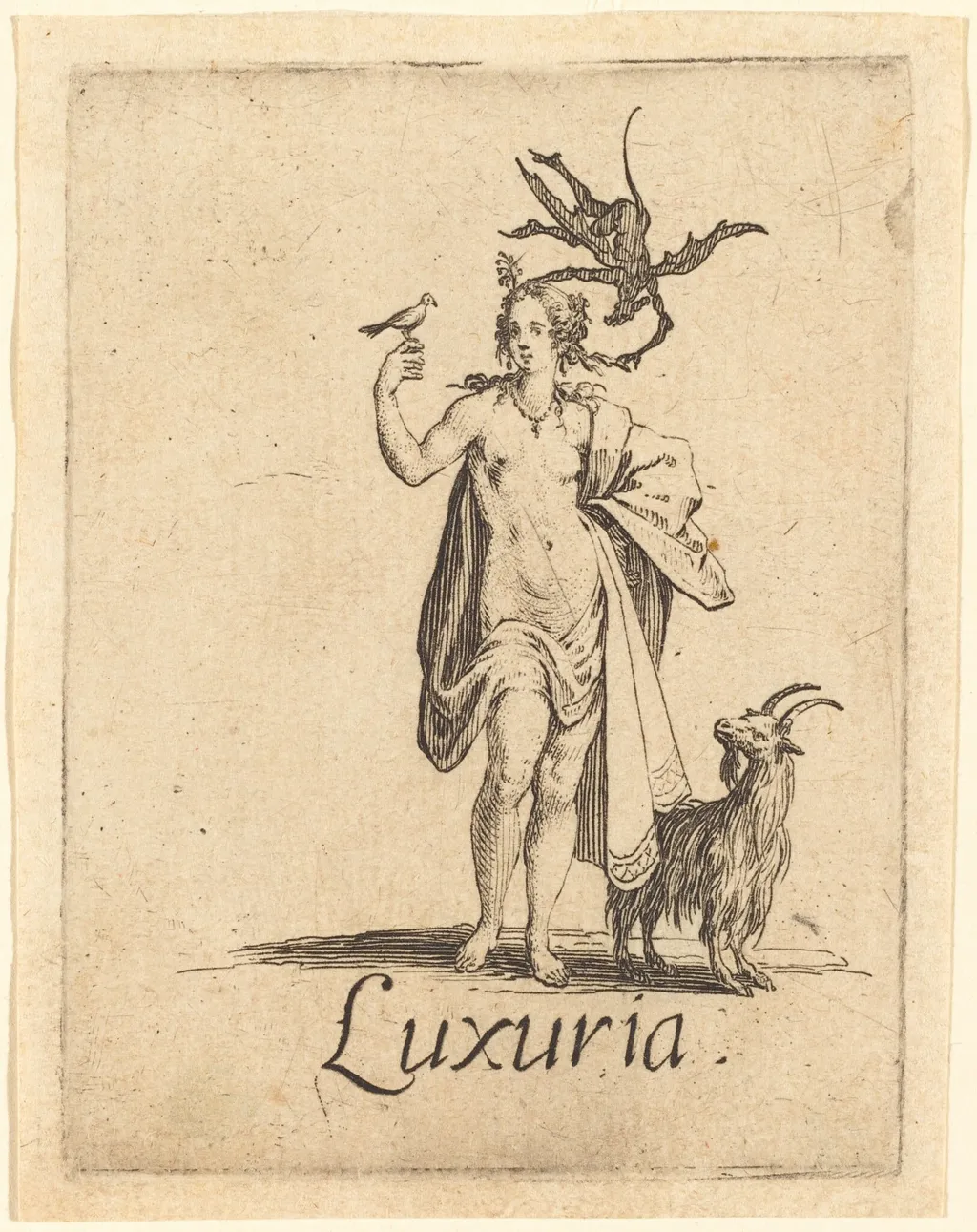
Lust is an ink print by the Baroque artist Jacques Callot. It dates from 1621 and is held in the collection of the National Gallery of Art.
About this work
Overview
Created around 1621, Lust is an etching and engraving executed on laid paper by Jacques Callot, a prolific Baroque printmaker from the Duchy of Lorraine.
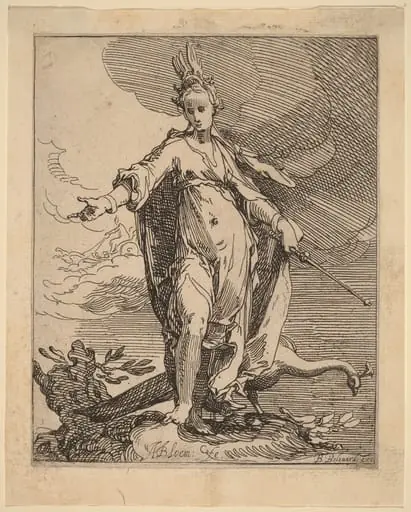
Created around 1621, Lust is an etching and engraving executed on laid paper by Jacques Callot, a prolific Baroque printmaker from the Duchy of Lorraine. The image presents a solitary, barefoot figure clutching a bird in one hand and a scroll in the other, accompanied by a goat with spiraled horns. A garland of vines crowns the figure’s head, and the Latin term "Luxuria" appears beneath the scene.
Subject & Meaning
The central figure functions as an allegorical personification of excess, a common motif in early‑modern visual culture. The bird, often a symbol of fleeting desire, and the goat, traditionally linked to unbridled appetites, reinforce the theme of uncontrolled longing. The scroll may allude to written law or moral instruction, contrasting with the figure’s indulgent posture.
Technique & Style
Callot combined etching with engraving, allowing him to render fine lines alongside deeper, more decisive strokes. The laid paper surface contributes a subtle texture that enhances the delicate hatching of the draped cloth and the intricate vine crown. His precise handling of line and tonal variation reflects the meticulous approach that characterizes his extensive oeuvre of over a thousand prints.
History & Provenance
The work belongs to Callot’s early period, when he was producing series that documented the social spectrum of his time, from soldiers to beggars. While the exact ownership trail of this particular print is not fully recorded, it is typical of his prints that circulated widely among collectors and connoisseurs throughout 17th‑century Europe.
Context
Lust fits within the broader Baroque fascination with moralizing allegories and the depiction of human vices. In the early 1620s, Lorraine was a crossroads of cultural exchange, and Callot’s prints served both as artistic statements and as visual commentaries on contemporary behavior, blending observation with symbolic narrative.
Own this work as a print
Artist & collection
Artist
Jacques Callot (French: ; c. 1592 – 1635) was a baroque printmaker and draftsman from the Duchy of Lorraine. He is an important person in the development of the old master print. He made more than 1,400 etchings that…

 Holy Family at supper
 Restoration of the Aqueduct at Pisa
 Restoration of the Aqueduct at Pisa
 Square in Paris with Many Figures
 Square in Paris with Many Figures
 Horsemen Attacked by Robbers
 HOW WILL A COVERED PART BE CORRECTED?HOW WIKA A COVERED HEART DEED CORRECTED?
![Christ Walking on the Water [second plate], by Jacques Callot](https://artifactworldgallery.com/img/jacques-callot--christ-walking-on-the-water-second-plate--2069f3bfe4cb2126-w320.webp) Christ Walking on the Water [second plate]
Christ Walking on the Water [second plate]