Artwork
Plan of the Holy Sepulchre and Mount Calvary
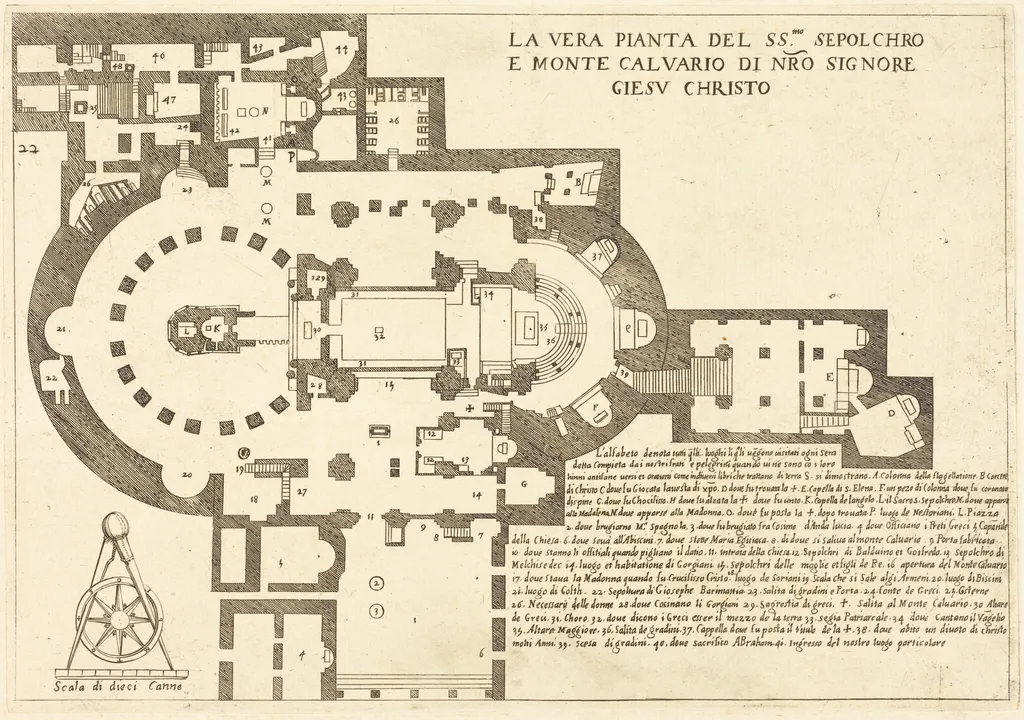
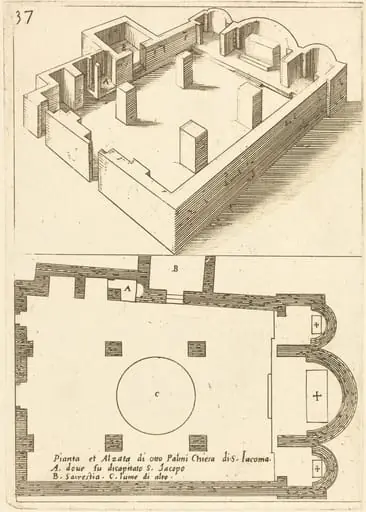
Plan of the Holy Sepulchre and Mount Calvary is an ink print by the Baroque artist Jacques Callot. It dates from 1619 and is held in the collection of the National Gallery of Art.
About this work
Overview
Jacques Callot, a French printmaker active in the early seventeenth century, produced a detailed plan of the Holy Sepulchre and Mount Calvary in 1619. Executed as a combined etching and engraving on laid paper, the work presents a precise, bird’s‑eye view of the sacred complex, marked with architectural divisions, numbered rooms, and a compass rose.
Subject & Meaning
The image functions as a topographical diagram of the Christian holy sites in Jerusalem, illustrating the layout of the tomb, surrounding chambers, and the hill traditionally identified as Calvary. By rendering the sacred architecture in a measured, almost technical manner, Callot offers a visual guide that reflects contemporary devotional interest in pilgrimage and the spatial organization of holy places.
Technique & Style
Callot employed fine, intersecting lines typical of Baroque printmaking to delineate walls, stairways, and doorways, integrating both etching’s fluidity and engraving’s crispness. The use of laid paper provides a subtle texture that enhances the contrast of the black‑and‑white drawing, while the inclusion of a compass rose and numeric labels underscores the work’s cartographic intent.
History & Provenance
The plan belongs to Callot’s prolific output of more than 1,400 prints, a corpus that recorded everyday life, religious subjects, and landscapes. This particular sheet is a restrike, indicating that the plate was reused after the initial impression, a common practice that extended the circulation of his detailed designs.
Context
Created during the Baroque period, the print reflects the era’s fascination with detailed, scientific representation of space. Such plans were valuable to pilgrims, scholars, and collectors who sought accurate visual information about sacred sites, aligning with broader European interests in travel literature and antiquarian studies.
Own this work as a print
Artist & collection
Artist
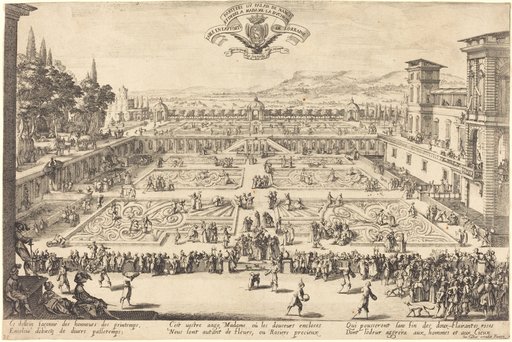
Jacques Callot (French: ; c. 1592 – 1635) was a baroque printmaker and draftsman from the Duchy of Lorraine. He is an important person in the development of the old master print. He made more than 1,400 etchings that…

 Holy Family at supper
 Restoration of the Aqueduct at Pisa
 Restoration of the Aqueduct at Pisa
 Square in Paris with Many Figures
 Square in Paris with Many Figures
 Horsemen Attacked by Robbers
 HOW WILL A COVERED PART BE CORRECTED?HOW WIKA A COVERED HEART DEED CORRECTED?
![Christ Walking on the Water [second plate], by Jacques Callot](https://artifactworldgallery.com/img/jacques-callot--christ-walking-on-the-water-second-plate--2069f3bfe4cb2126-w320.webp) Christ Walking on the Water [second plate]
Christ Walking on the Water [second plate]
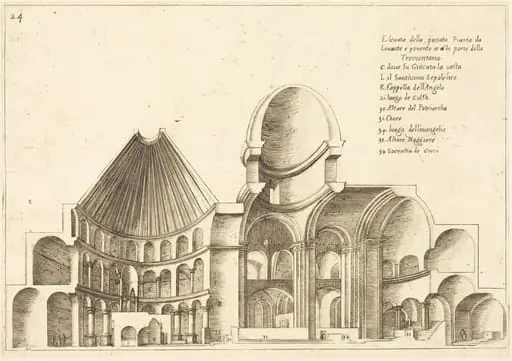 Cross-Section of the Church of the Holy Sepulchre
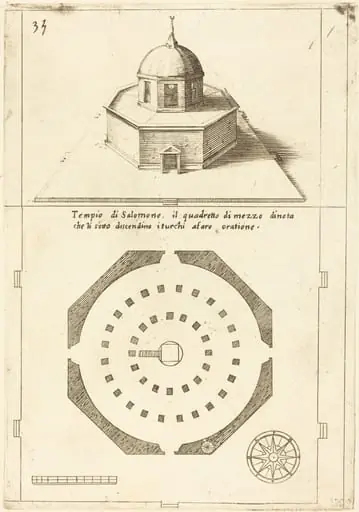 Plan and Rendering of the Temple of Solomon
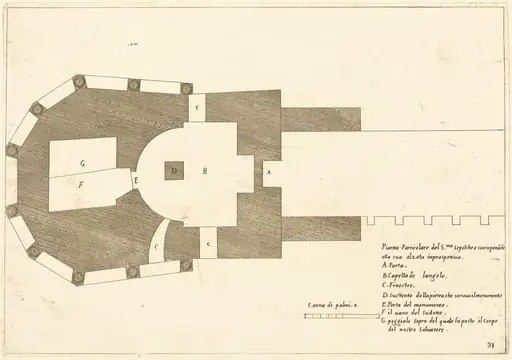 Plan of the Church of the Holy Sepulchre
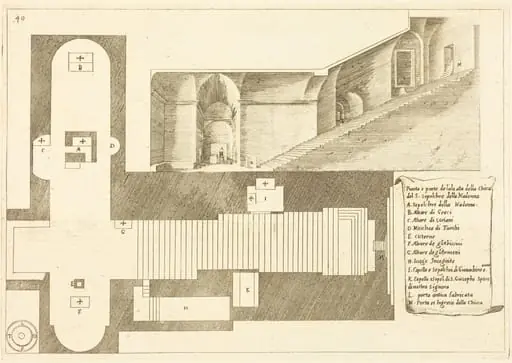 Plan and Part of the Elevation of the Church of the Holy Sepulchre of the Madonna
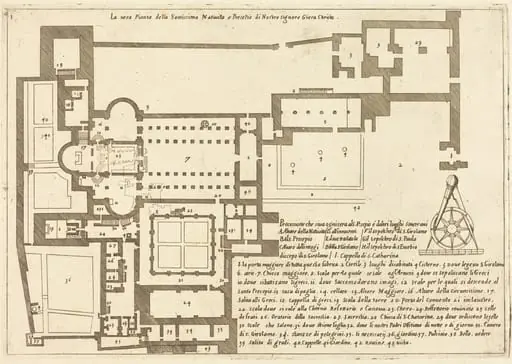 Plan of the Church of the Holy Nativity
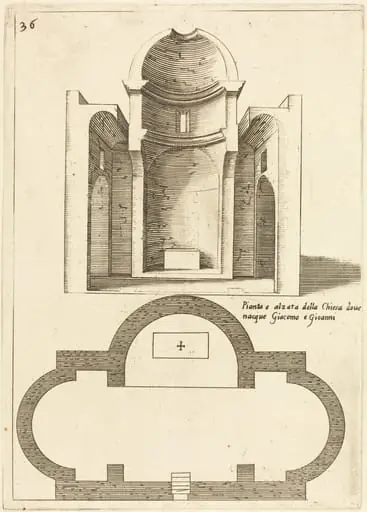 Plan and Elevation of the Church of Saints James and John
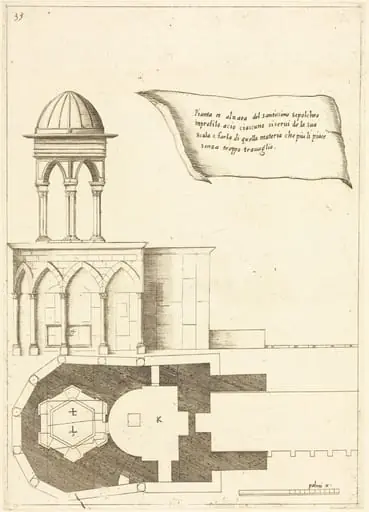 Plan and Elevation of the Church of the Holy Sepulchre
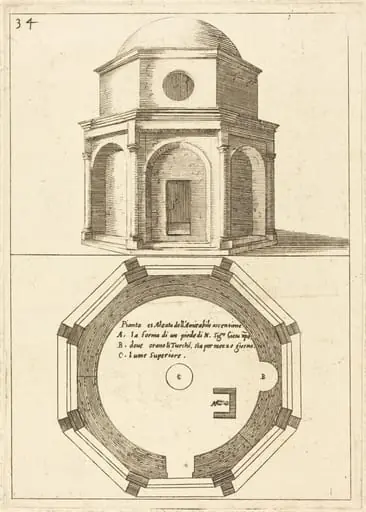 Plan and Elevation of the Church of the Ascension
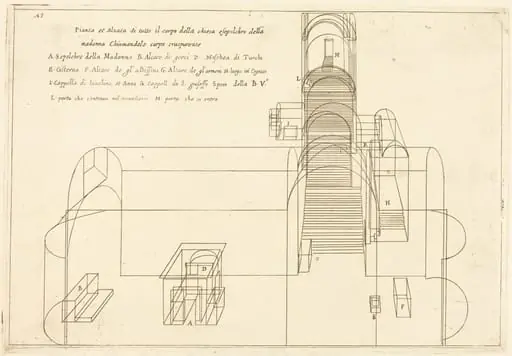 Plan and Elevation of the Church of the Madonna's Sepulchre
 Plan and Elevation of the Church of S. Iacoma