Artwork
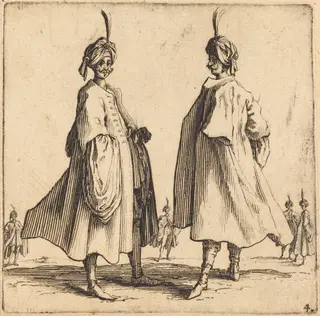
Two Turks
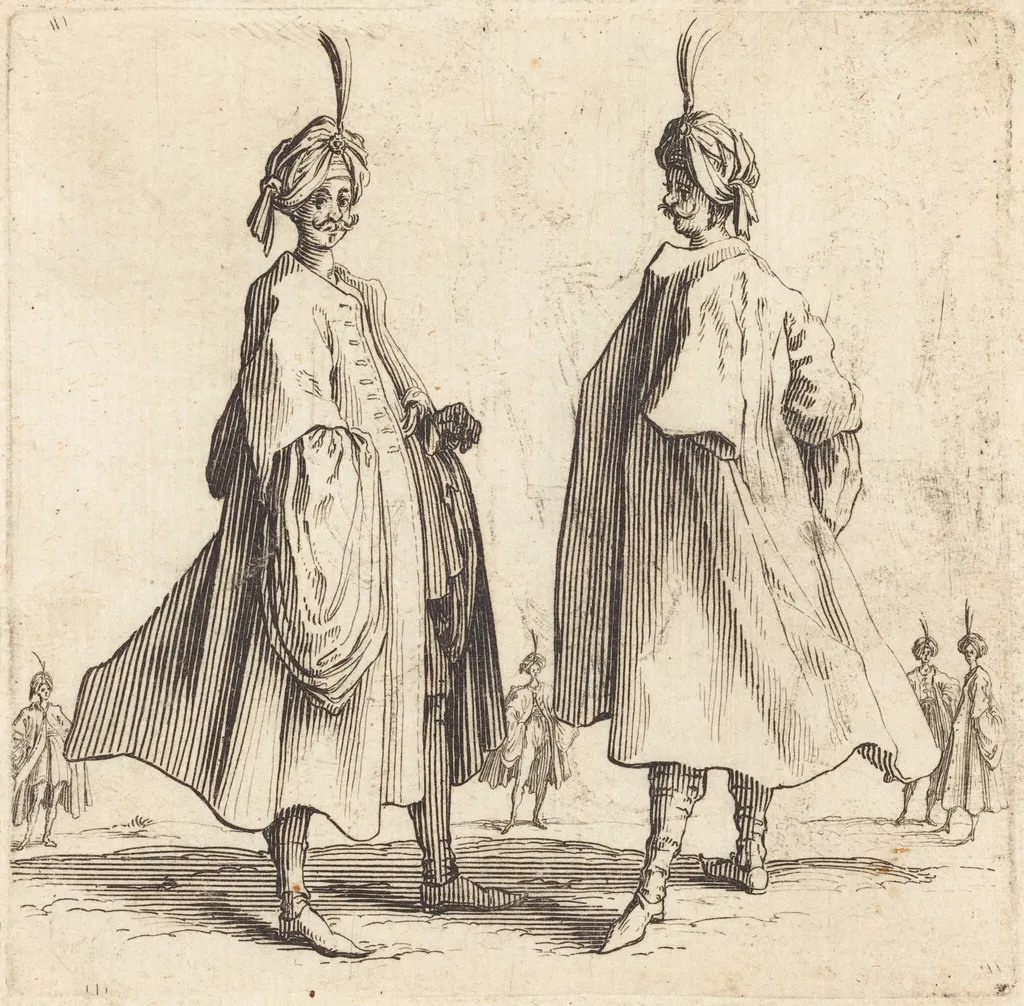
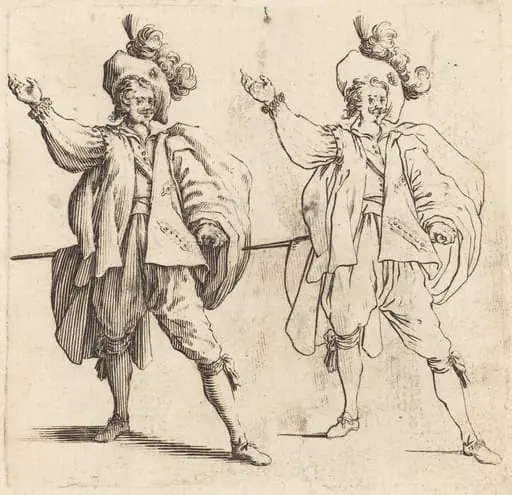
Two Turks is an ink print by the Baroque artist Jacques Callot. It dates from 1622 and is held in the collection of the National Gallery of Art.
About this work
Overview
Part of a vast oeuvre exceeding 1,400 prints, this work exemplifies his focus on capturing figures from everyday and exotic life.
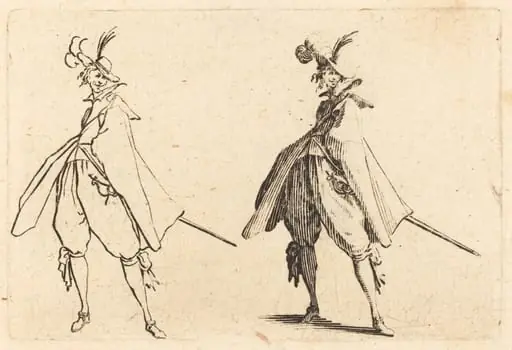
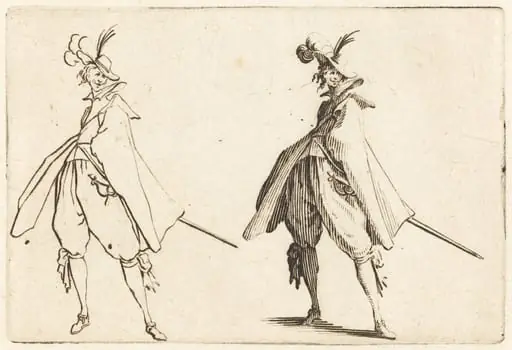
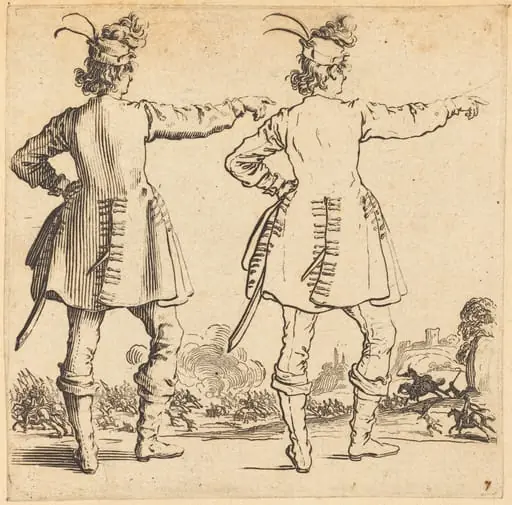
Jacques Callot, a French printmaker from the Duchy of Lorraine, produced Two Turks in 1622 as an etching on laid paper. Part of a vast oeuvre exceeding 1,400 prints, this work exemplifies his focus on capturing figures from everyday and exotic life. The image presents two men in distinctive attire, rendered with precision through the etching technique, which allowed for fine line work and nuanced texture without background distractions.
Subject & Meaning
The two figures are dressed in long robes and turbans, their clothing evoking associations with Ottoman or North African dress of the period. One holds a sword, introducing a subtle tension to the composition. Callot did not depict them in action but as static, observant presences, suggesting an interest in cultural otherness rather than narrative drama.
Their posture and attire reflect contemporary European fascination with the East, framed through ethnographic curiosity rather than overt hostility.
Technique & Style
Callot employed etching to achieve intricate detail, using acid to bite fine lines into a metal plate, then inking and pressing the image onto paper. The lack of background emphasizes the figures’ forms and garments, allowing the viewer to focus on the texture of fabric, the folds of turbans, and the contours of the sword. His controlled line work reveals a mastery of tonal variation and spatial economy, characteristic of his mature style in the early 1620s.
History & Provenance
Created during Callot’s time in Florence, where he worked for the Medici court, Two Turks belongs to a series of prints documenting foreign figures and military types. While the exact provenance of this specific impression is undocumented, it aligns with his broader practice of collecting visual material from travelers and merchants. The print circulated among collectors and artists, contributing to the dissemination of Orientalist imagery in early modern Europe.
Context
In early 17th-century Europe, images of Turks and other Eastern figures were common in prints, often tied to political tensions with the Ottoman Empire and growing trade networks. Callot’s approach diverged from caricature or propaganda; instead, he rendered these subjects with a quiet attentiveness, reflecting both the curiosity and the limited firsthand knowledge of his audience. His prints served as visual records for audiences unfamiliar with the regions they depicted.
Legacy
Callot’s technical innovations in etching influenced generations of printmakers, including Rembrandt. Two Turks exemplifies his role in elevating printmaking from reproductive craft to a medium for nuanced observation. Though not widely exhibited today, the work remains a reference point for scholars studying early modern representations of cultural difference and the evolution of printmaking as an art form.
Own this work as a print
Artist & collection
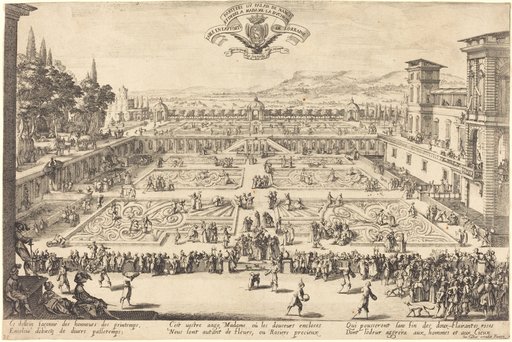
Artist
Jacques Callot (French: ; c. 1592 – 1635) was a baroque printmaker and draftsman from the Duchy of Lorraine. He is an important person in the development of the old master print. He made more than 1,400 etchings that…

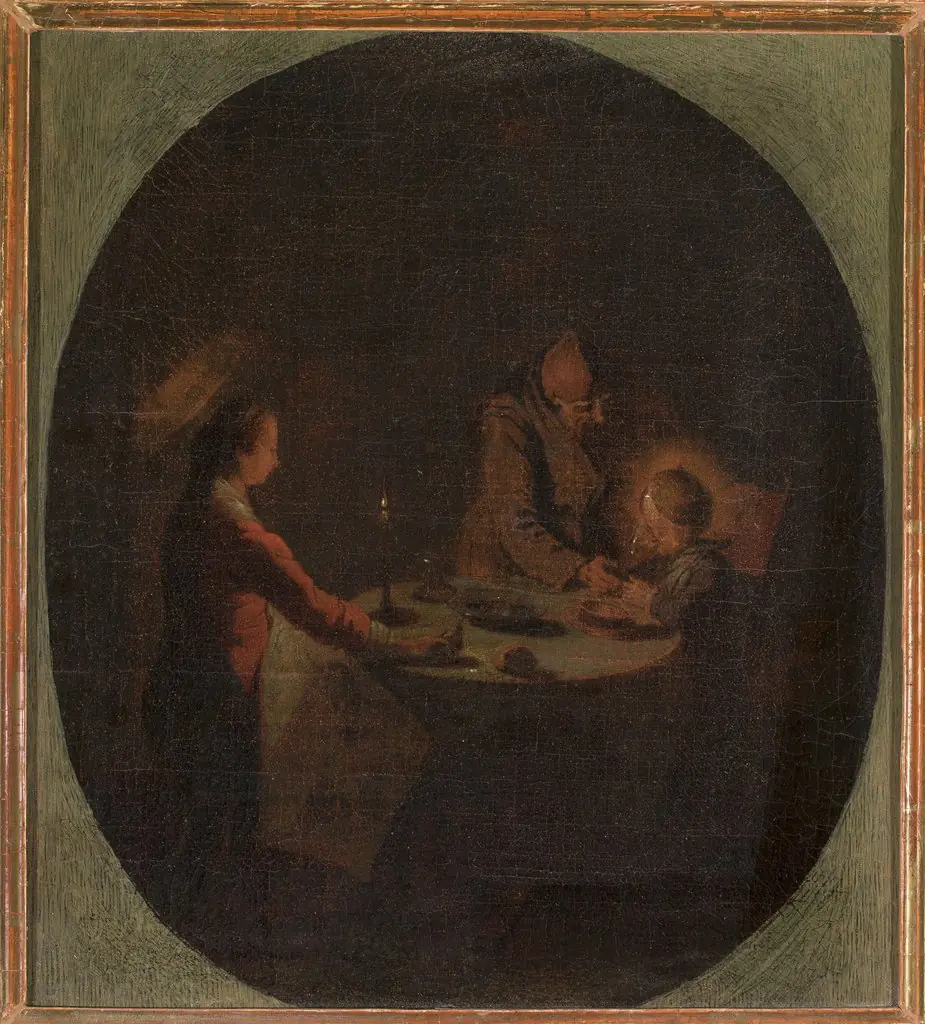 Holy Family at supper
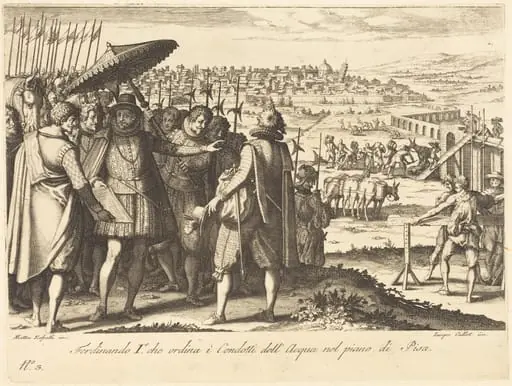 Restoration of the Aqueduct at Pisa
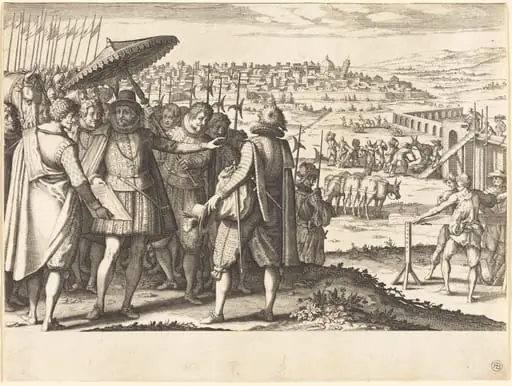 Restoration of the Aqueduct at Pisa
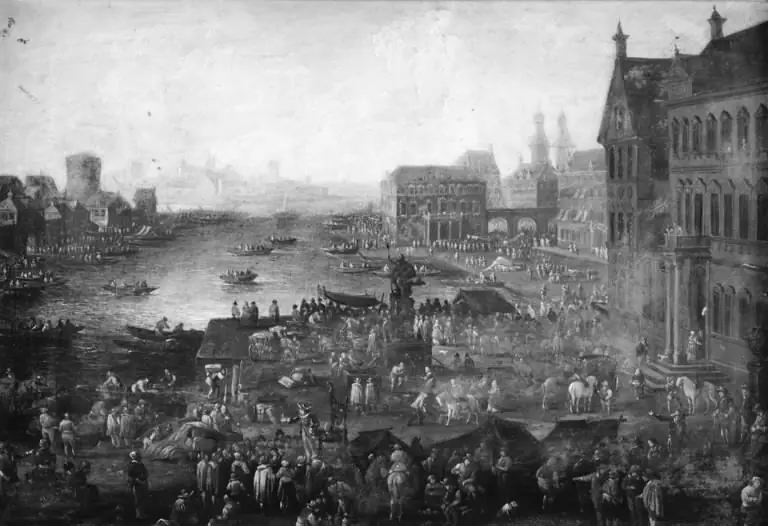 Square in Paris with Many Figures
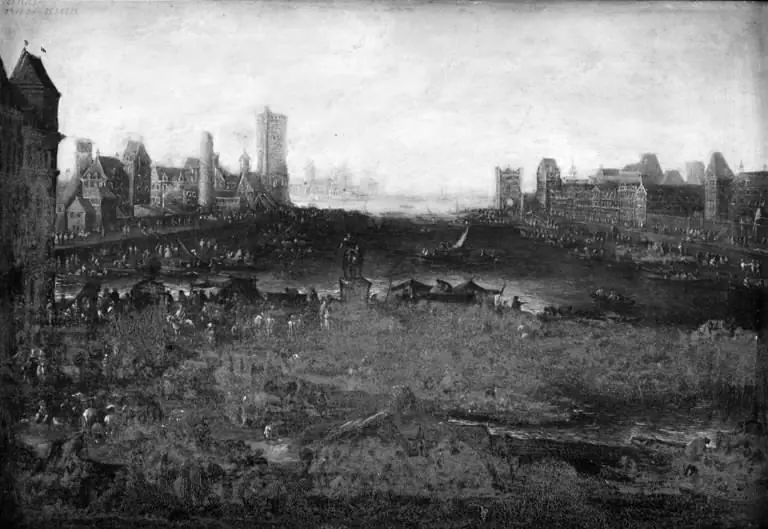 Square in Paris with Many Figures
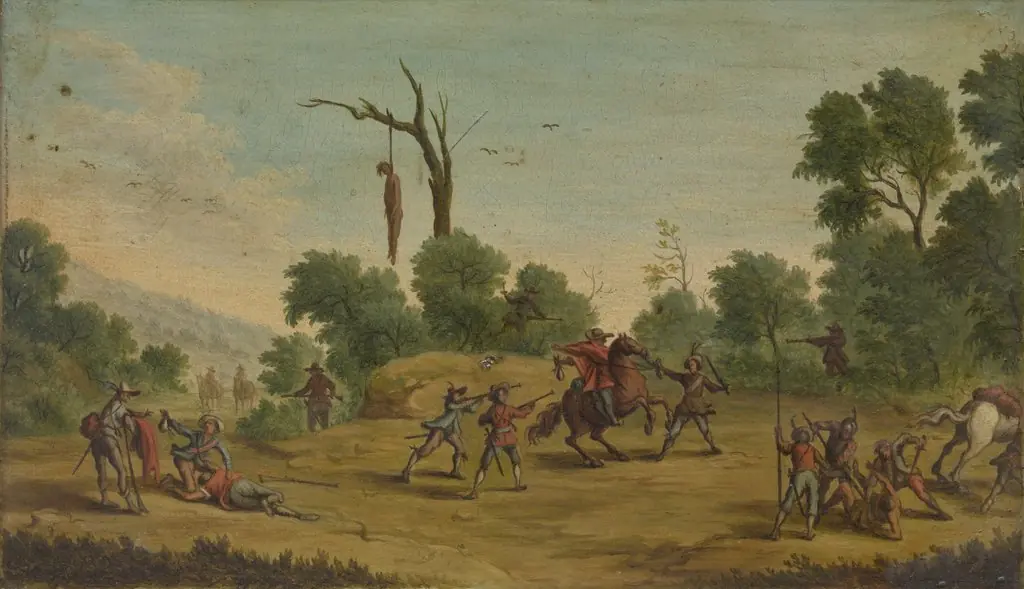 Horsemen Attacked by Robbers
 HOW WILL A COVERED PART BE CORRECTED?HOW WIKA A COVERED HEART DEED CORRECTED?
![Christ Walking on the Water [second plate], by Jacques Callot](https://artifactworldgallery.com/img/jacques-callot--christ-walking-on-the-water-second-plate--2069f3bfe4cb2126-w320.webp) Christ Walking on the Water [second plate]
Christ Walking on the Water [second plate]