Artwork
Partridges (recto); L.D. Campbell's Tomb (verso)
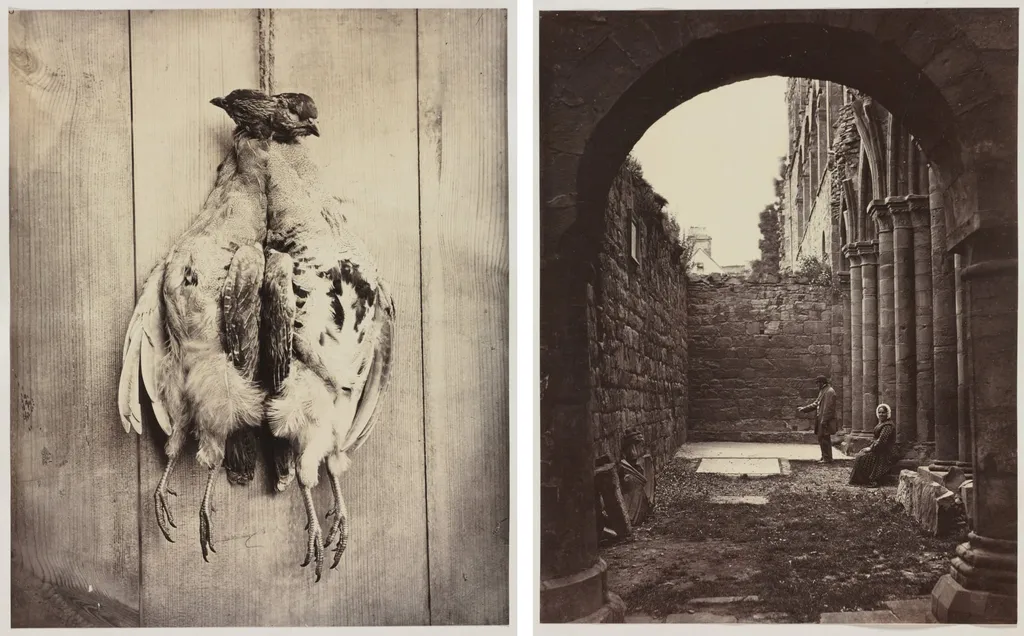
Partridges (recto); L.D. Campbell's Tomb (verso) is a photography by the Impressionist artist Captain N. Baily. It dates from 1861 and is held in the collection of the Cleveland Museum of Art. This photograph, attributed to N.
- Accession no.
- 1987.21
- Credit line
- Andrew R. and Martha Holden Jennings Fund
About this work
Overview
Baily, features two partridges suspended by a slender cord against a plain wooden surface.
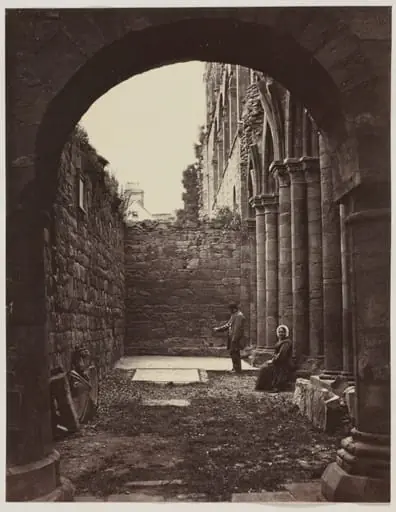
This photograph, attributed to N. Baily, features two partridges suspended by a slender cord against a plain wooden surface. Created in the mid-19th century, it reflects the period’s fascination with still-life subjects as a means to demonstrate the camera’s capacity for precise visual documentation. The image is paired on its reverse with a depiction of L.D. Campbell’s tomb, suggesting a personal albumic context rather than a public exhibition.
Subject & Meaning
The partridges, likely hunted game, serve as quiet symbols of rural leisure and masculine pastimes common among British amateurs of the era. Their arrangement, lifeless yet formally composed, evokes the tradition of still-life painting, reinterpreted through photography’s new realism. The absence of human presence or narrative context emphasizes the objects themselves, inviting contemplation of form and mortality.
Technique & Style
Baily employed controlled lighting to accentuate the textures of feathers, skin, and wood grain, using chiaroscuro to model volume and depth. The plain backdrop isolates the subjects, focusing attention on their physical details. The composition is restrained, avoiding theatricality; its strength lies in quiet observation, characteristic of amateur photographers seeking to prove photography’s artistic legitimacy through technical precision.
History & Provenance
N. Baily was an amateur photographer affiliated with the Amateur Photographic Association, a group largely composed of former military officers. He participated in album exchanges, circulating prints among peers. This dual-sided photograph likely originated in such a private collection, where personal interests in hunting and memorialization intersected. Little else is documented about his life or broader body of work.
Context
In the 1850s and 60s, still lifes featuring game, fish, and fowl were prevalent among British amateur photographers, reflecting both technical experimentation and cultural habits. Hunting was a socially accepted pastime for the upper-middle class, and photographing its spoils aligned with ideals of naturalism and self-reliance. These images were less about artistry and more about demonstrating the camera’s fidelity to the physical world.
Legacy
Baily’s photograph contributes to a broader archive of 19th-century amateur photography that prioritized observation over expression. While not widely known, such works helped establish photography’s role in documenting everyday and natural subjects with scientific rigor. Their quiet persistence offers insight into how early photographers negotiated art, science, and personal ritual within the medium’s formative decades.
Artist & collection

 L.D. Campbell's Tomb (verso)
 Behind the Troglodyte Farm
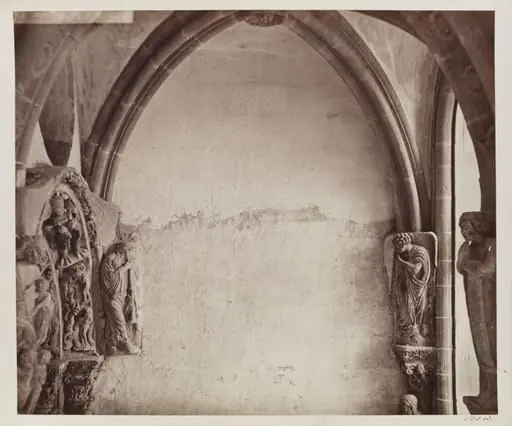 Cathedral, Santiago, Spain, Portico de la Gloria, Sculpture on the South wall
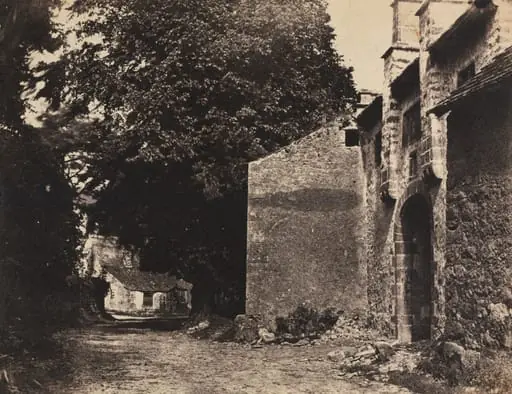 Gateway to Borwick Hall, Lancashire
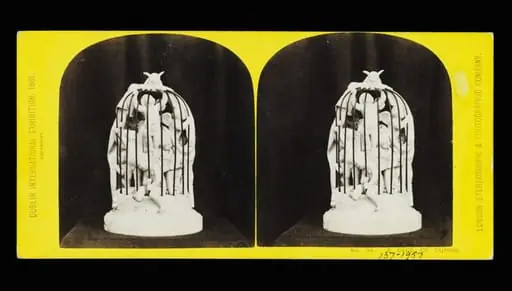 'A Cage of Cupids' at the Dublin International Exhibition 1865
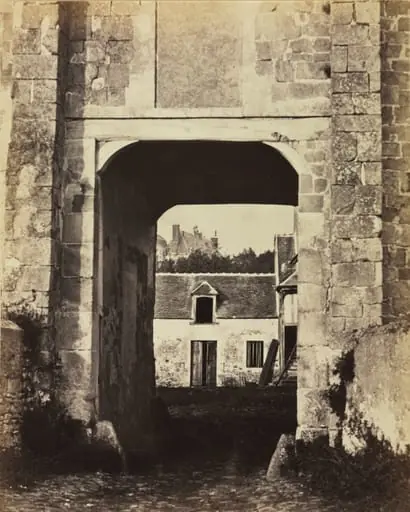 Rural Estate Seen Through Archway
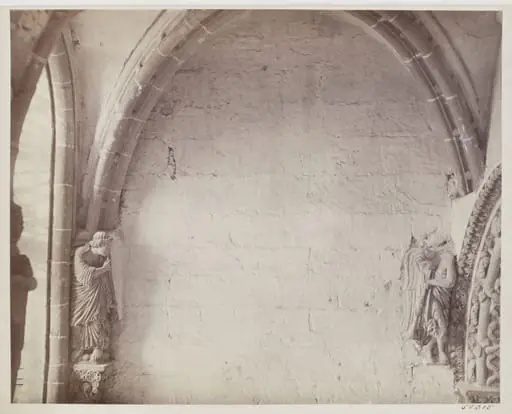 Cathedral, Santiago, Spain, Portico de la Gloria, Sculpture on North wall
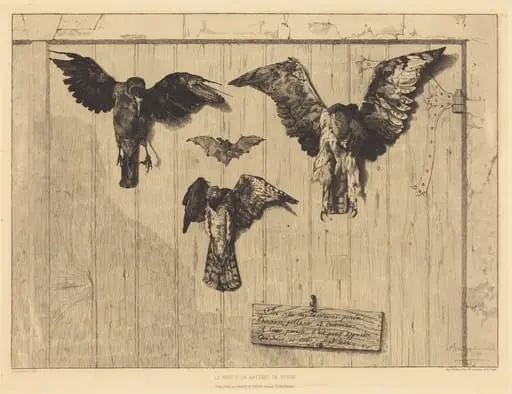 Le Haut d'un battant de porte (Birds Nailed to a Barn Door)
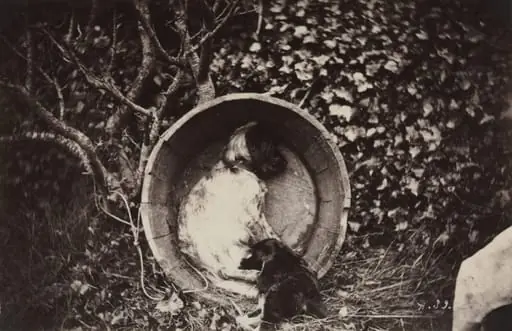 Dog and Puppy in Barrel
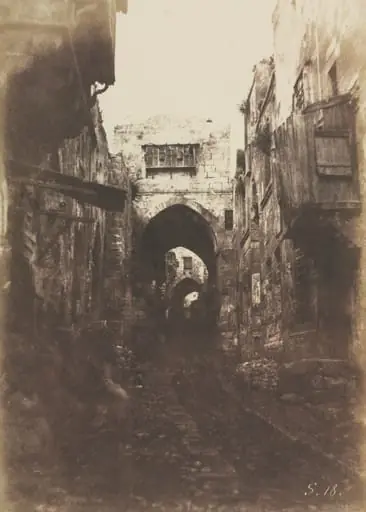 Street in the Arab Quarter, Jerusalem
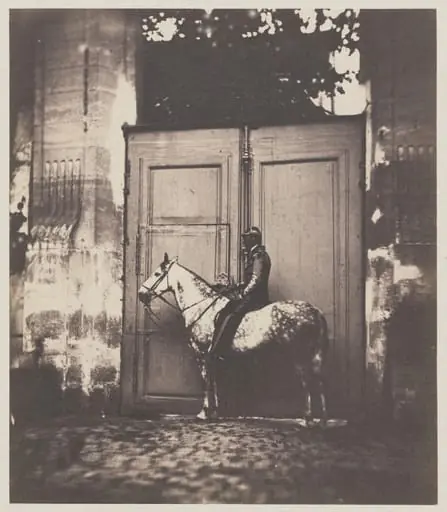 Black Horseman in Front of a Doorway
- Partridges (recto)