Artwork
Study from Nature
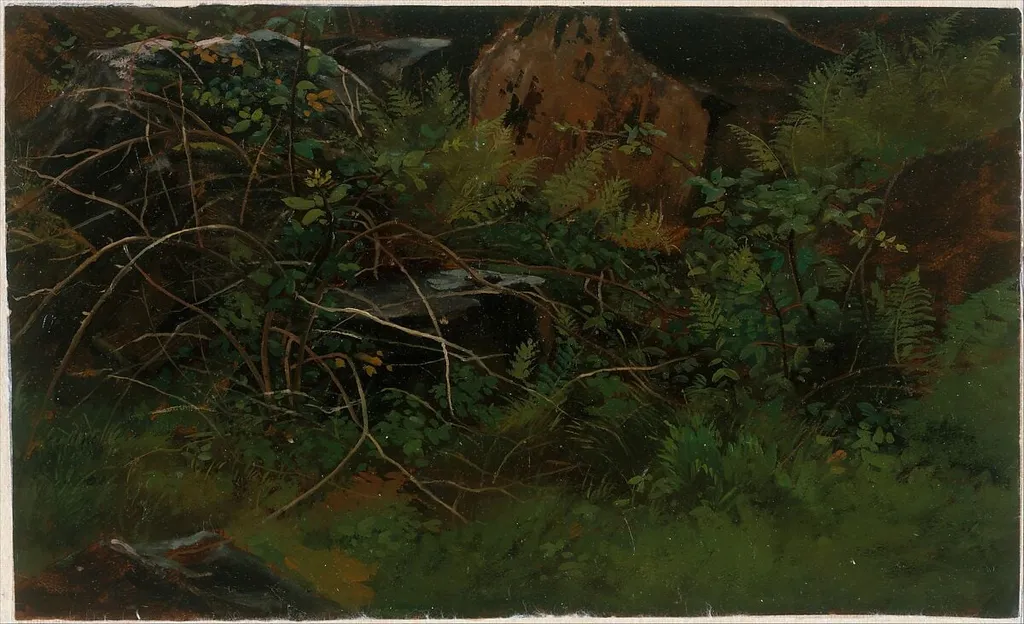
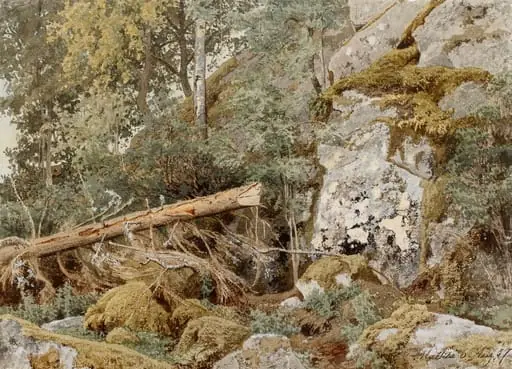
Study from Nature is an oil painting by the Hudson River School artist William Stanley Haseltine. It dates from 1867 and is held in the collection of the Metropolitan Museum of Art.
About this work
Subject & Meaning
Consistent with its title, the composition focuses on botanical subjects situated within a natural setting, emphasizing direct observation of the environment.
William Stanley Haseltine's 1867 work, titled Study from Nature, functions as a landscape painting that specifically depicts plant life. Consistent with its title, the composition focuses on botanical subjects situated within a natural setting, emphasizing direct observation of the environment. The iconography is rooted in the genre of landscape art, where the primary representational goal is the realistic portrayal of flora rather than the inclusion of complex allegorical figures or narratives.
History & Provenance
Created in 1867, William Stanley Haseltine's Study from Nature is an oil painting on paper that captures a landscape scene. The work, measuring 22.9 by 37.5 centimeters, was executed by the American artist as a study depicting plants within a natural setting. While specific details regarding the original commission or the initial owner are not recorded in the available documentation, the painting's creation date is firmly established as 1867.
Currently, the artwork is held in the collection of the Metropolitan Museum of Art, where it resides within The American Wing.
Overview
Study from Nature (1867) by William Stanley Haseltine is an oil on paper landscape that captures a specific, sunlit section of a rocky cliff adorned with wildflowers and grass. Executed directly outdoors, the work exemplifies Haseltine's commitment to plein air observation, a practice central to his role within the Hudson River School and American landscape tradition. The composition focuses on a small, intimate patch of terrain rather than a sweeping panoramic vista, emphasizing the immediate effects of natural light.
Haseltine employs quick, loose brushstrokes to convey the fleeting quality of sunlight and the texture of the vegetation, prioritizing atmospheric immediacy over polished finish. This approach reflects the artist's shift during the 1860s toward more direct, sketch-like studies that served as both independent works and preparatory material for larger studio paintings. Created in 1867, the piece demonstrates Haseltine's technical ability to translate the transient conditions of the natural world onto paper, bridging the gap between rigorous geological observation and the expressive capture of light.
Technique & Style
Haseltine executed this work outdoors, directly observing the scene in a plein air approach. The application of oil paint is characterized by quick, loose brushstrokes, imparting a spontaneous and immediate quality to the piece. This method allowed the artist to rapidly capture the transient effects of natural light and atmosphere before they changed, resulting in a fresh and direct portrayal of the landscape.
Artist & collection
Artist
William Stanley Haseltine was born on June 11, 1835, in Philadelphia to John Haseltine, a successful businessman, and Elizabeth Shinn Haseltine, an amateur landscape painter.

- Forest Scene in the Catskills
 Landscape study
 Path in the Forest
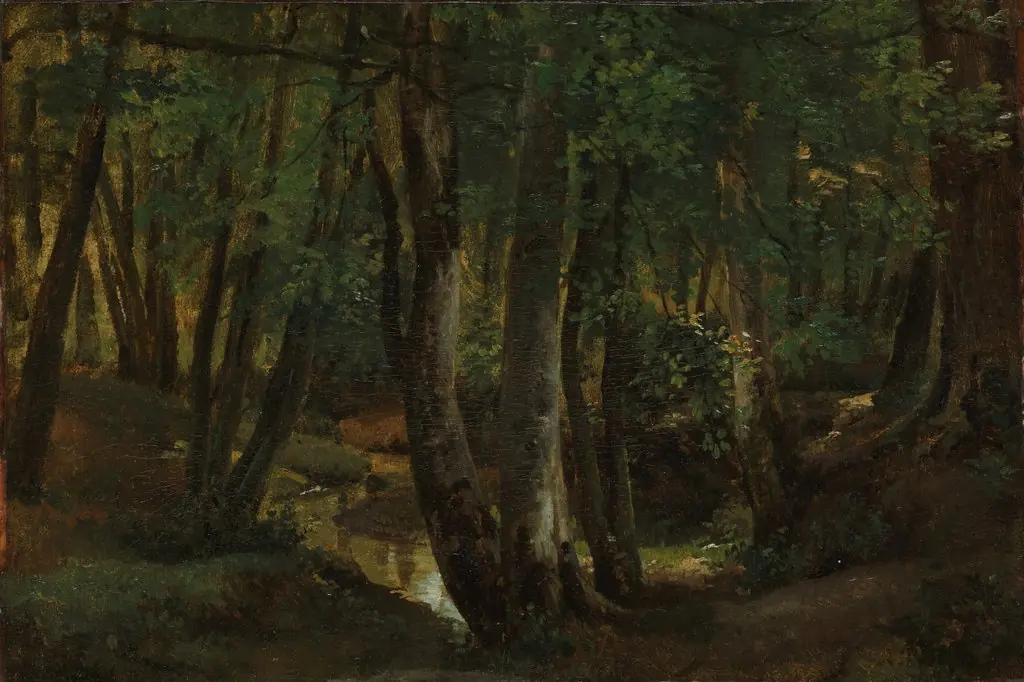 Interior of a Wood at Pierrefitte
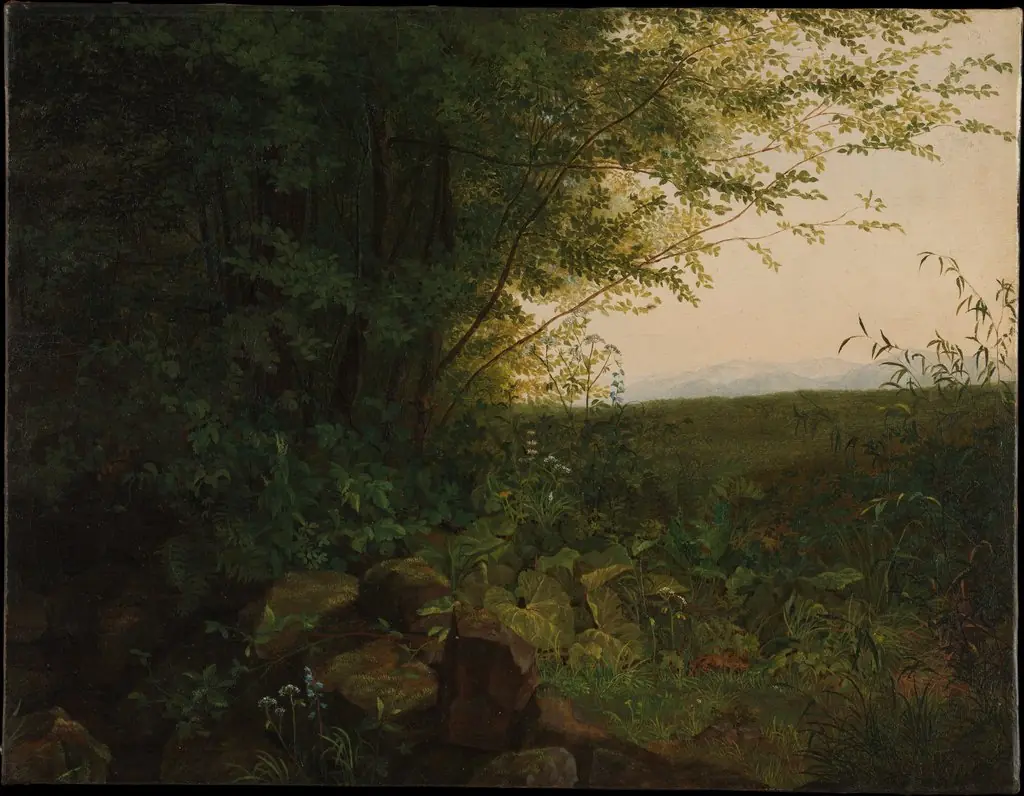 At the Edge of the Forest
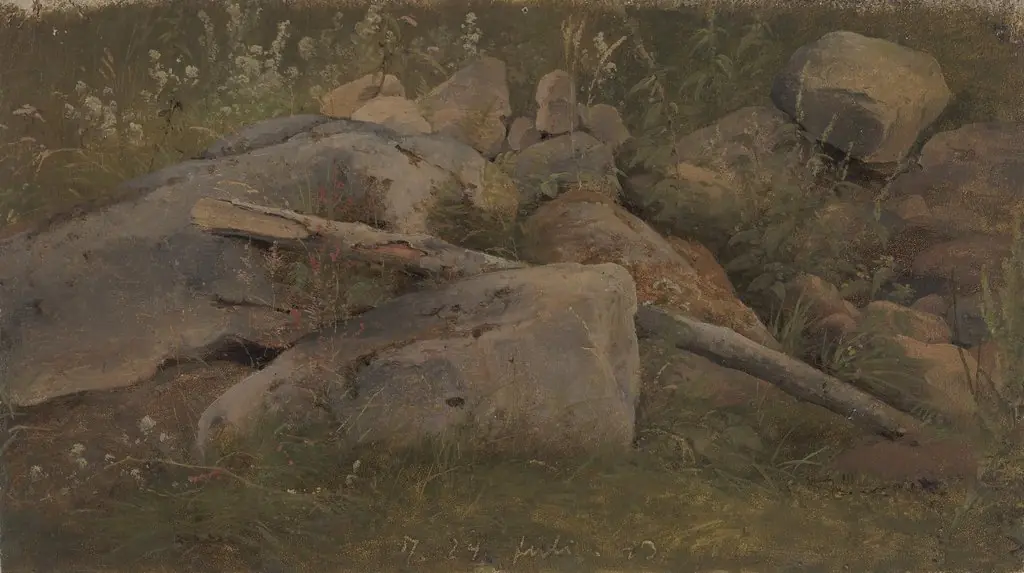 Study of a Stone Heap
 Study of a Stone Heap
 Mountain landscape, sketch
 Forest Interior with a Waterfall, Papigno
 Trees in the Bois de Boulogne, Paris
 Rocher couvert de mousses et troncs d'arbres abattus
 Sammaleinen kallio metsässä