Artwork
The Aqueducts at Caserta
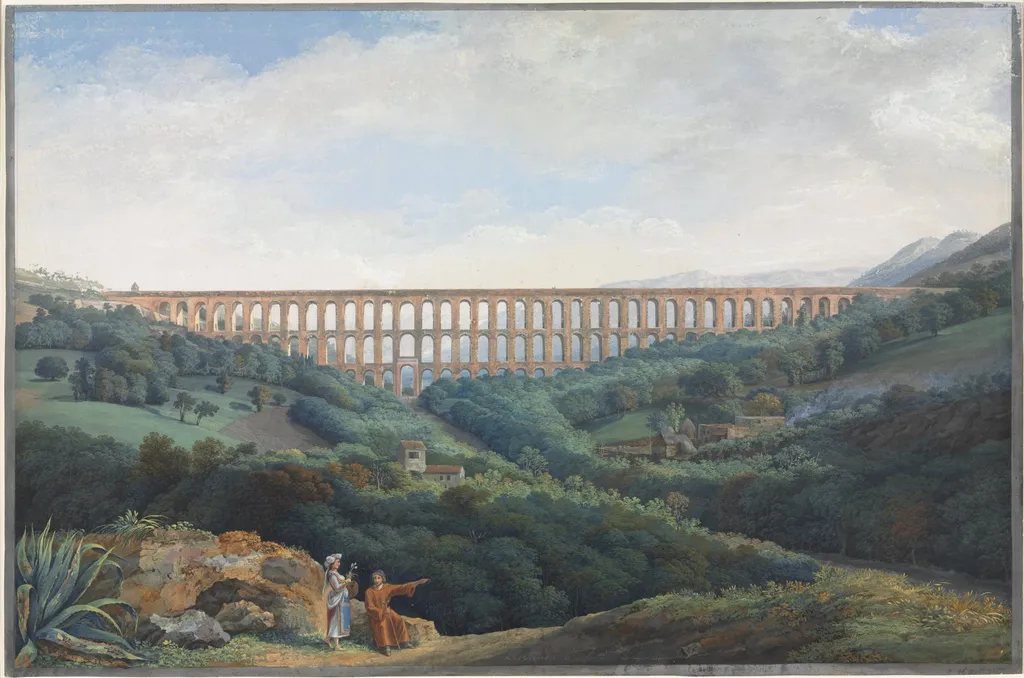
The Aqueducts at Caserta is a drawing by the Romanticist artist Carl Ludwig Hackert. It dates from 1789 and is held in the collection of the Cleveland Museum of Art.
- Accession no.
- 2011.116
- Credit line
- Norman O. Stone and Ella A. Stone Memorial Fund, acquired in honor of Alfred M. Rankin Jr. in recognition of his service as President of the Board of Trustees of the Cleveland Museum of Art (2006-2011)
About this work
Overview
The Aqueducts at Caserta is a highly finished drawing by Hackert, notable for its rarity among the artist's oeuvre. Executed en plein air in southern Italy, it depicts a grand 18th-century stone aqueduct set against a hilly landscape under a cloudy sky, rendered in ink and watercolor with meticulous precision.
Subject & Meaning
The drawing accurately represents a mid-18th-century aqueduct in southern Italy, focusing on the architectural feat within its natural surroundings. The subject reflects the artist's interest in capturing contemporary engineering marvels in their environmental context.
Technique & Style
Characterized by precise ink lines and soft watercolor shading, the drawing showcases Hackert's mastery of outdoor drawing techniques. The meticulous detail of vegetation, rocks, and subtle light treatment demonstrate a high level of finish uncommon for en plein air works of the time.
History & Provenance
Created during Hackert's time in Rome, this drawing exemplifies the innovative plein air practice adopted by the Hackert brothers among early Romantic artists. Unlike most contemporaries who worked indoors from sketches, Hackert completed this piece outdoors.
Context
The work's creation reflects the Hackert brothers' pioneering approach to outdoor art production in Rome, surprising locals with their direct-from-nature method. It stands out due to the rarity of such finished drawings by Hackert that have survived.
Legacy
While direct legacy specifics of 'The Aqueducts at Caserta' are not detailed, the piece contributes to the broader recognition of the Hackert brothers' influence on Romantic-era outdoor art practices. For similar works, the oeuvre of Hackert's brother, Jakob Philipp Hackert, offers comparable insights into the family's artistic contributions.
Own this work as a print
Artist & collection

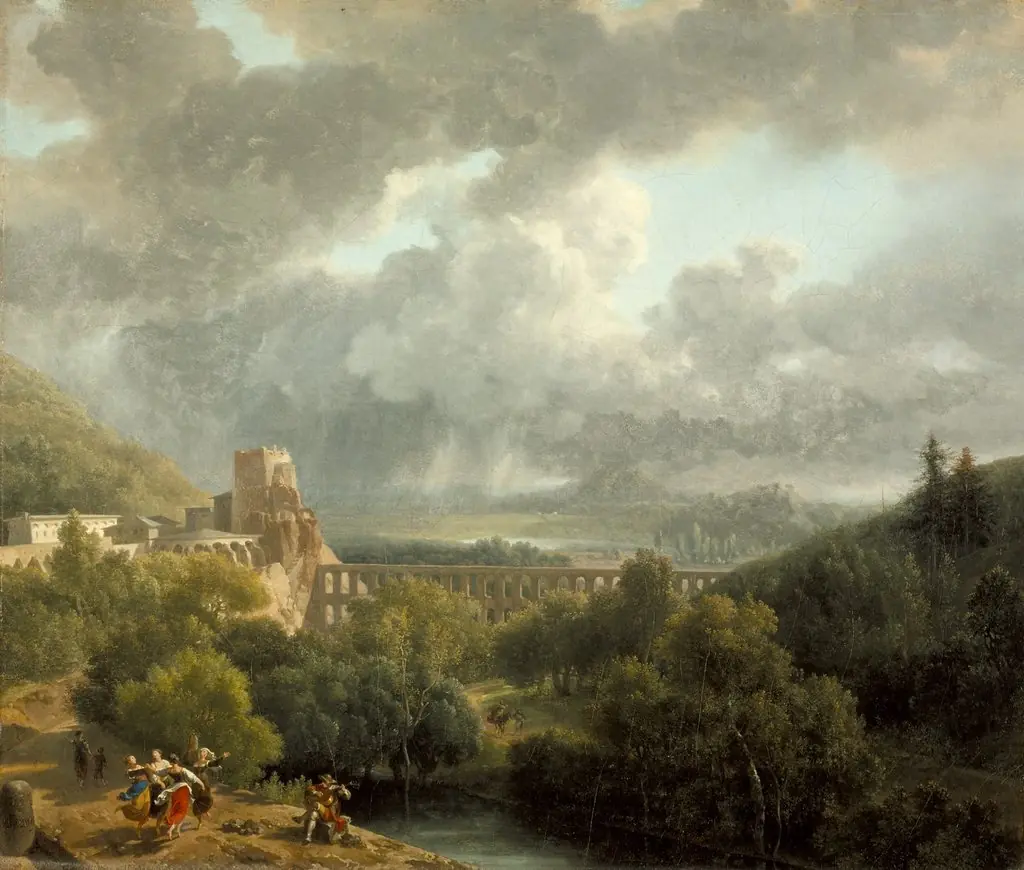 Landscape with an Aqueduct
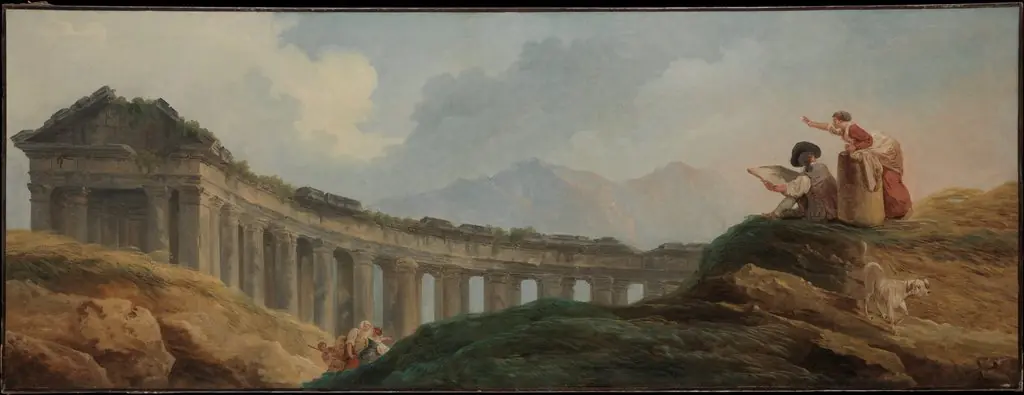 A Colonnade in Ruins
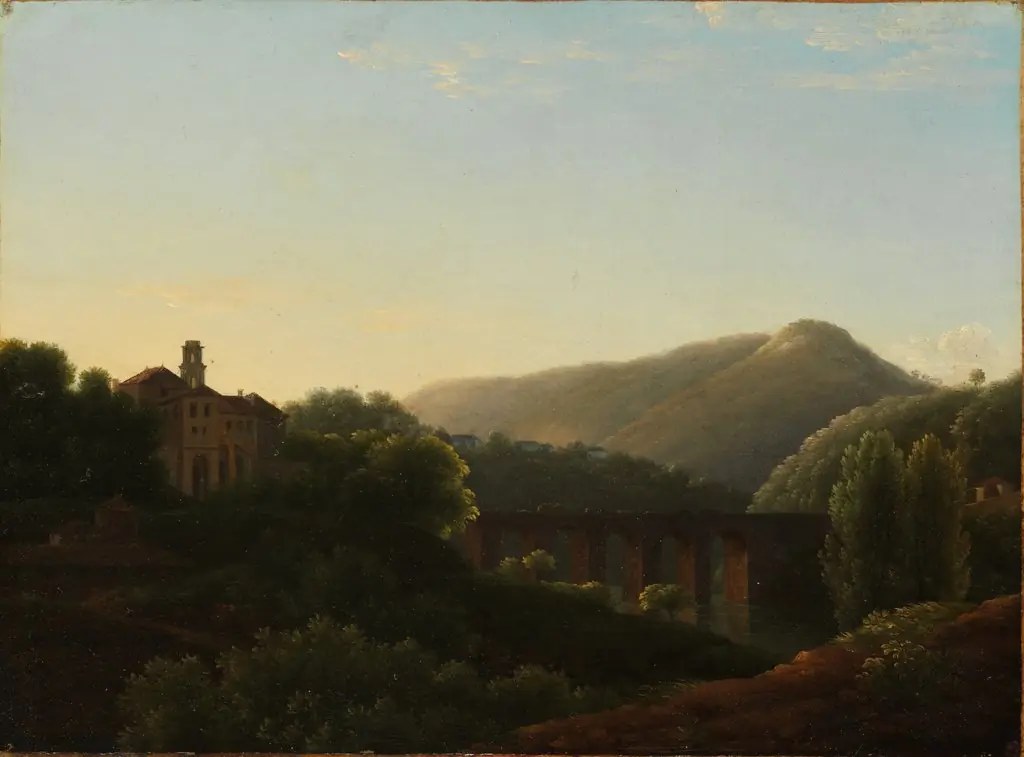 The Bridge at La Cava, Kingdom of Naples
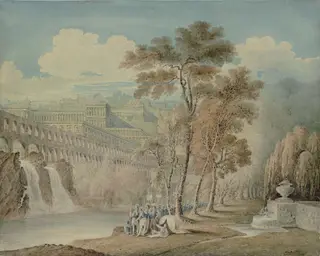 Alexander and Diogenes
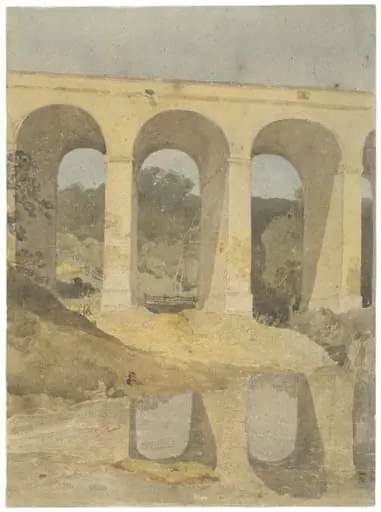 Crambe Beck Bridge, near Kirkham, Yorkshire. Formerly called 'Chirk Aqueduct'.
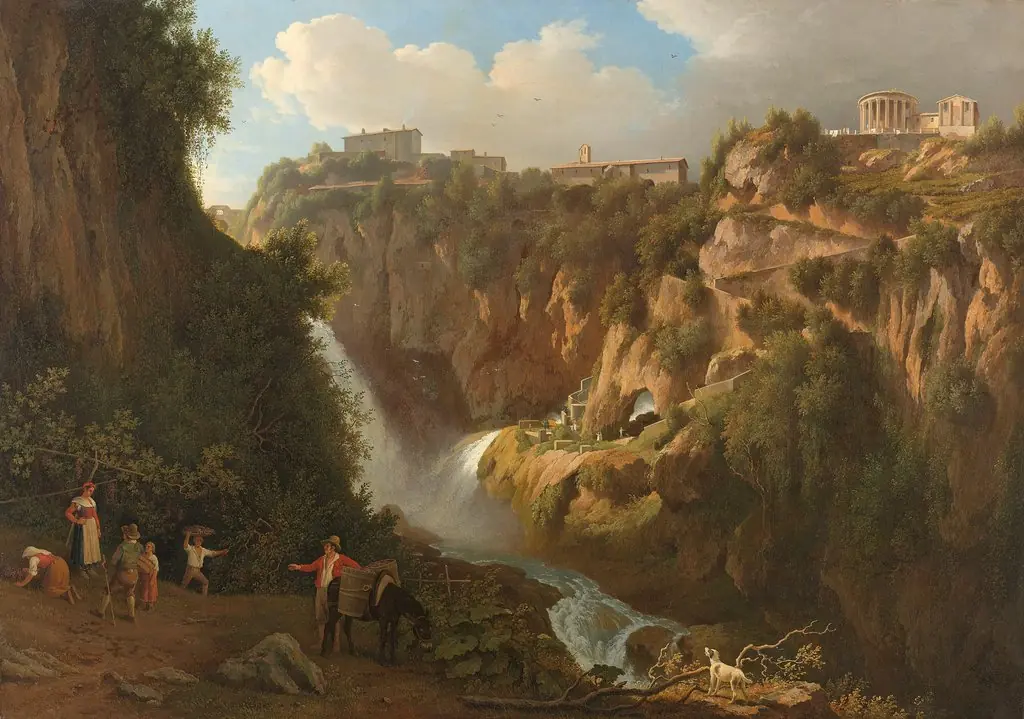 The Waterfall at Tivoli
 The Temple of Hercules in Cori near Velletri
 Bridge in Czerna
 Landscape
 The Monastery of S. Cosimato