Artwork
Saddled Arabian Horse in Courtyard
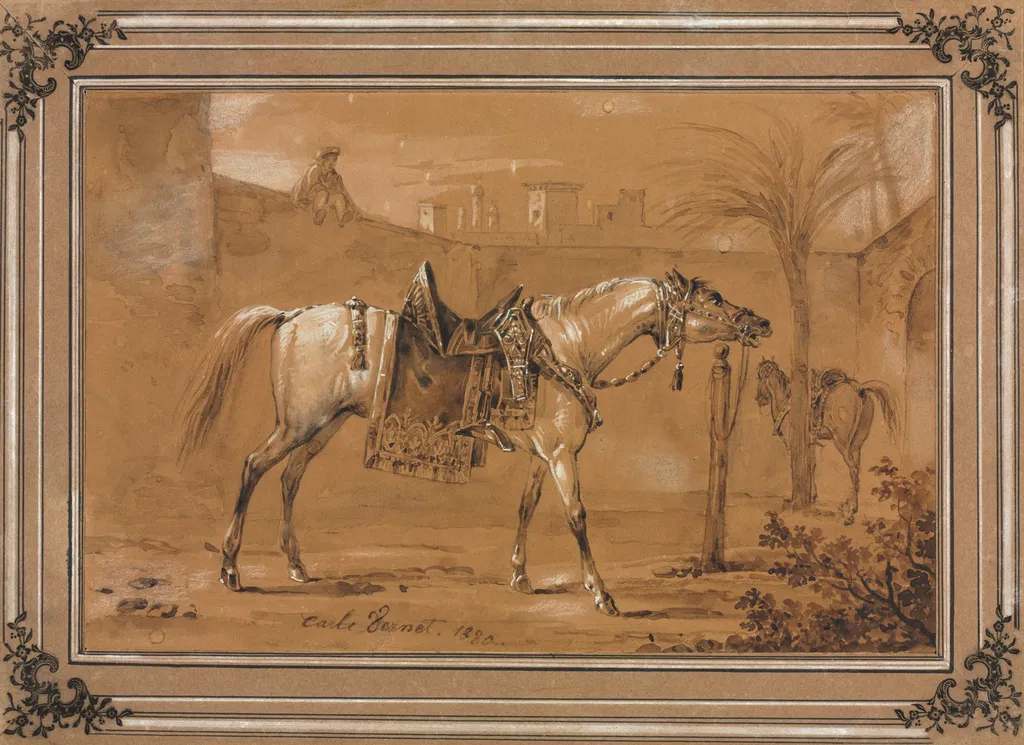
Saddled Arabian Horse in Courtyard is a drawing by the Romanticist artist Carle Vernet. It dates from 1820 and is held in the collection of the Cleveland Museum of Art.
- Accession no.
- 2008.398
- Credit line
- Bequest of Muriel Butkin
About this work
Overview
Carle Vernet’s drawing depicts an Arabian horse standing in a courtyard, equipped with a distinctive saddle and poised for movement. The composition includes a backdrop of exotic architecture and a cluster of palm trees, suggesting a setting beyond ordinary French environs.
Subject & Meaning
The work focuses on the horse, rendered with meticulous attention to breed characteristics and tack, reflecting Vernet’s intimate knowledge of equine anatomy and riding practice. The inclusion of regional elements hints at the animal’s native desert origins, offering viewers a glimpse of its cultural context.
Technique & Style
Executed in fine line work, the drawing combines precise anatomical rendering with decorative details in the saddle and surrounding architecture. Vernet’s skill as a rider informs the accuracy of the horse’s posture and equipment, while his use of perspective situates the animal within a spacious courtyard.
History & Provenance
Although Vernet never traveled beyond Italy, he accessed exotic horses and costumes through Parisian military units and horse‑racing circles. This access allowed him to study Arabian breeds closely, informing the authenticity evident in the drawing.
Context
Carle Vernet, part of a family of notable painters, his father Joseph known for marine scenes and his son Horace for Romantic landscapes, carved his niche in depicting battles and animals. This piece exemplifies his specialization in equine subjects, a recurring theme in his oeuvre.
Own this work as a print
Artist & collection

Artist
Antoine Charles Horace Vernet, better known as Carle Vernet, was a French painter, the youngest child of painter Claude-Joseph Vernet and the father of painter Horace Vernet.

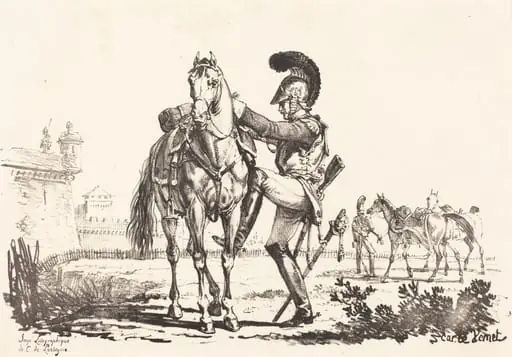
- Leaving the castle
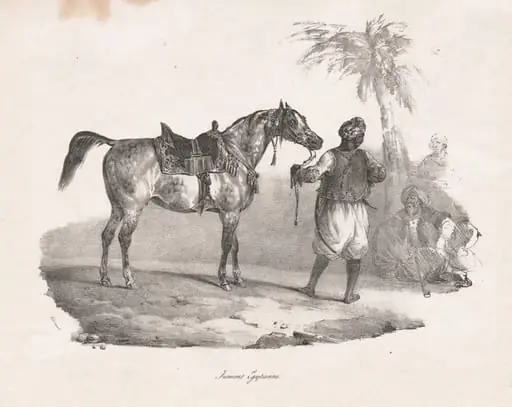 Egyptian Mare
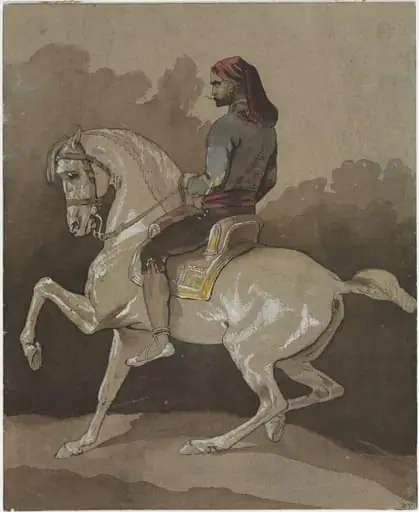 Arab on Horseback
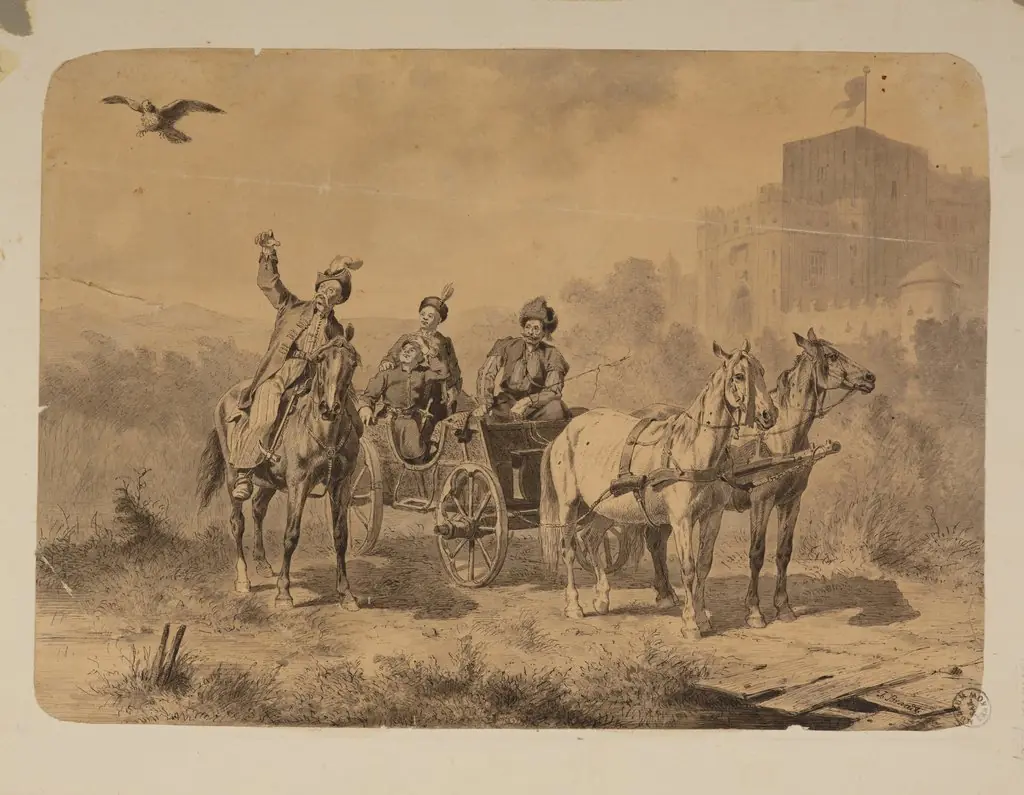 Hunt with a falcon
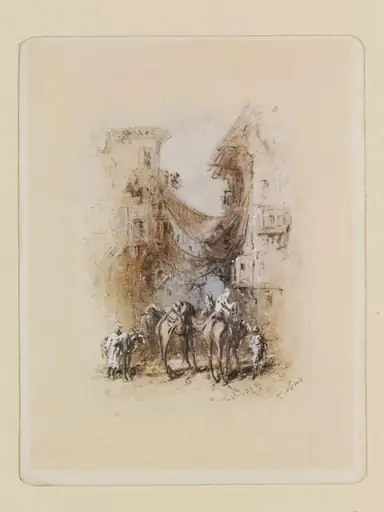 A Cairo Street Scene With Camels
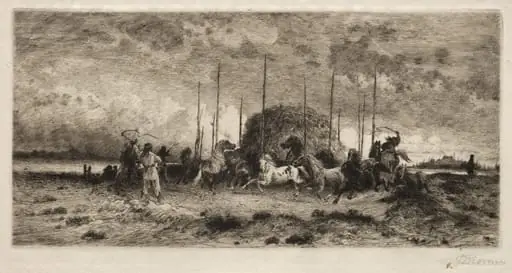 Harvest at San Juan, New Mexico
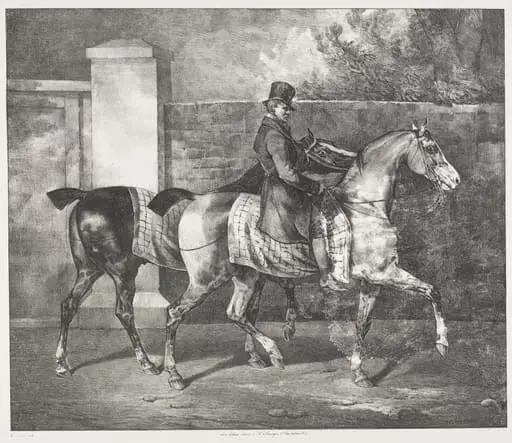 Two Horses Exercised by a Jockey
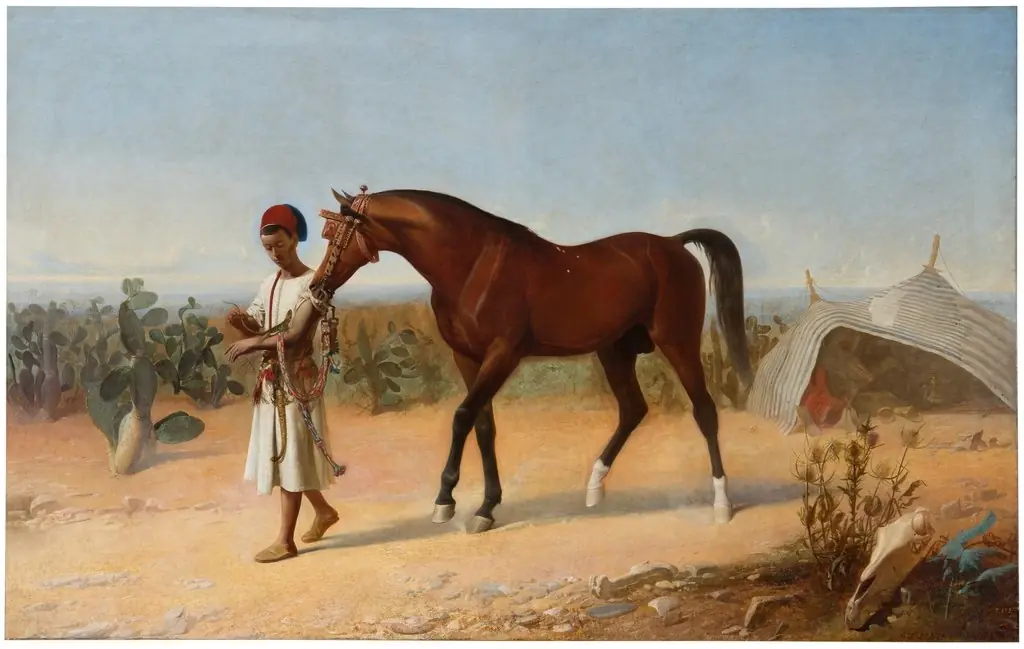 Joven marroquí llevando del diestro a un caballo
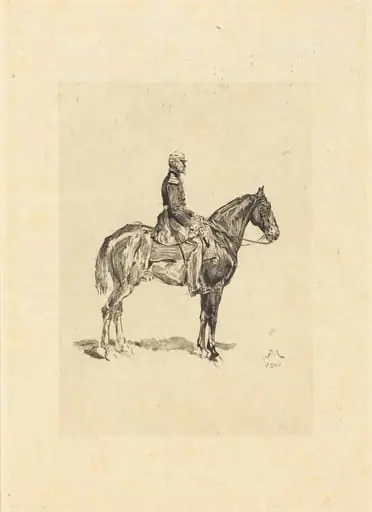 Horseman
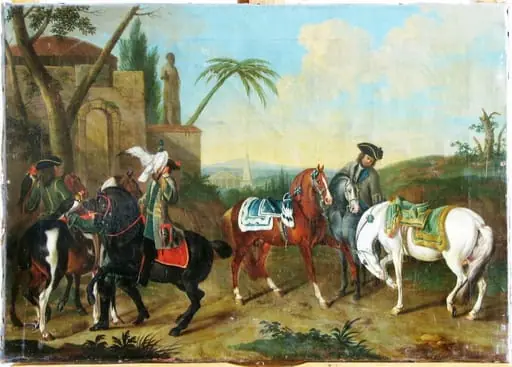 Plecare la vânătoare cu șoimi; pandant: Plecare la vânătoare cu câini
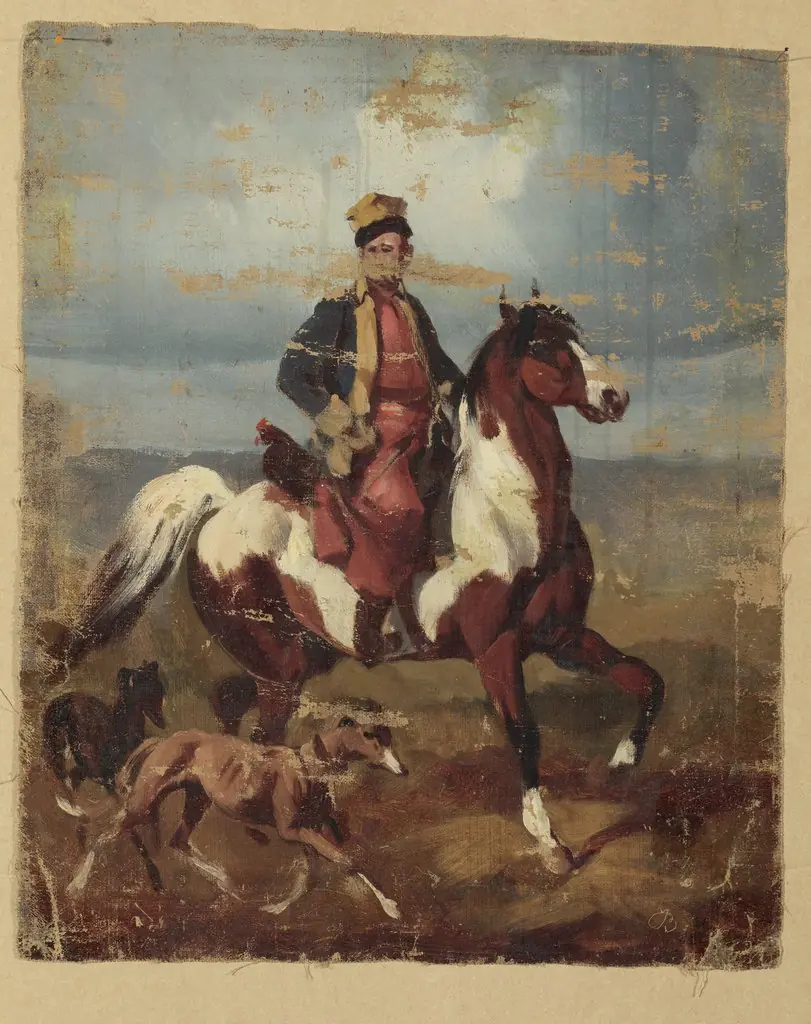 Mohort on horseback with greyhounds
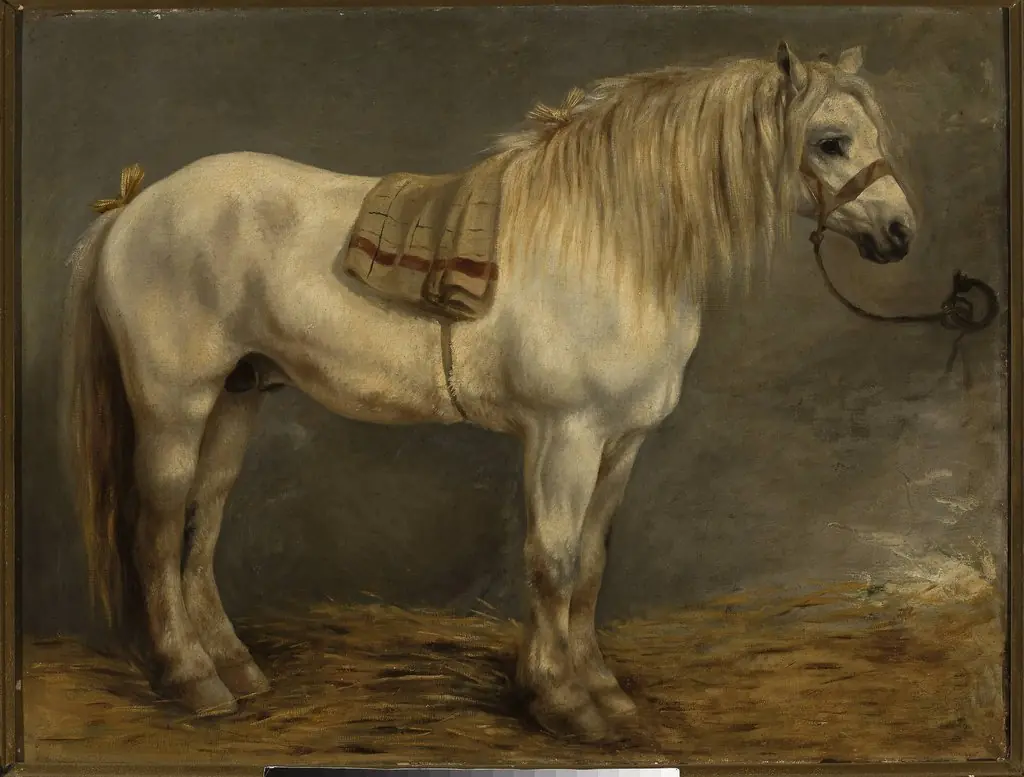 Horse in the stables