Artwork
A Man Seen from Behind
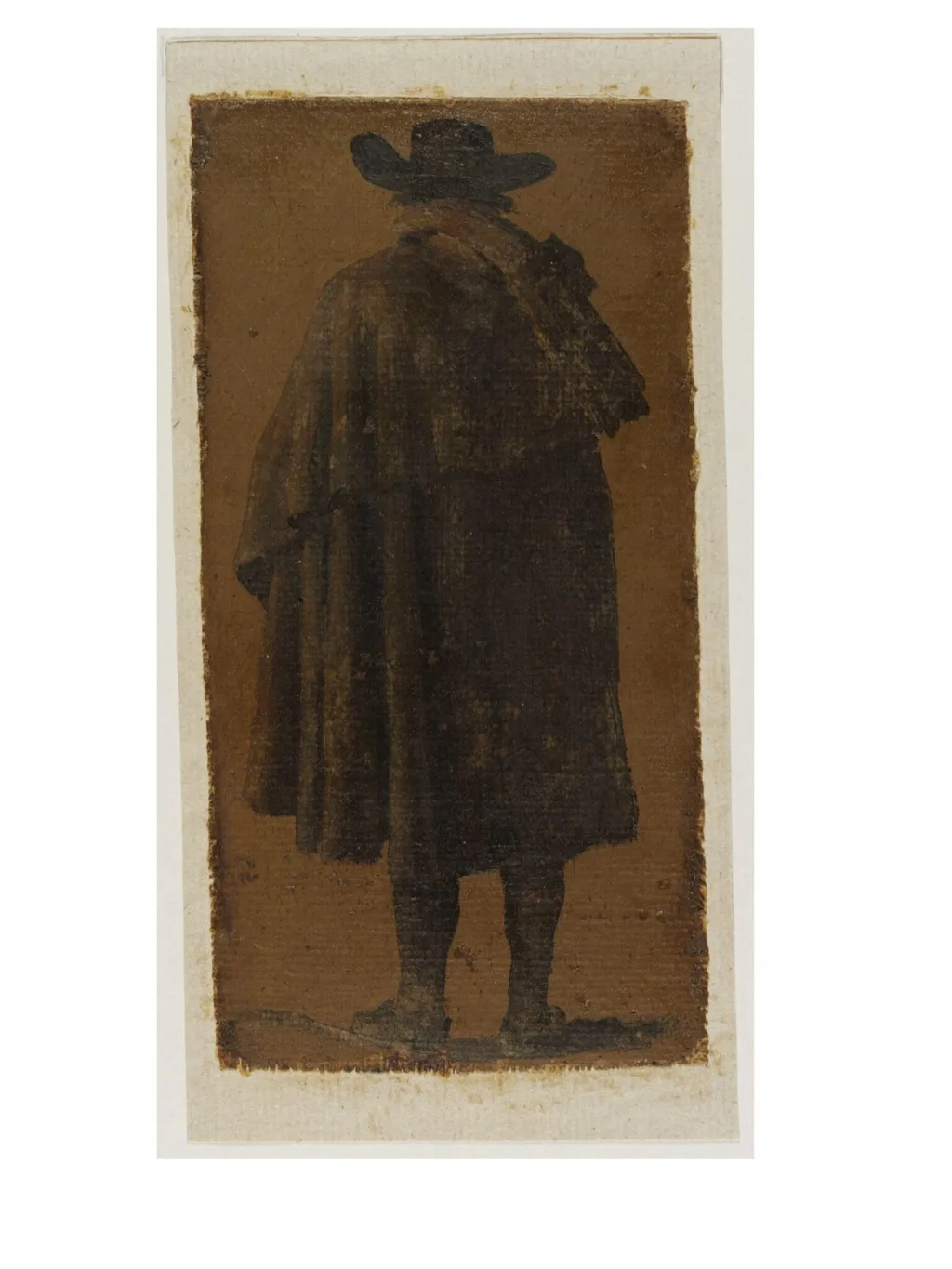
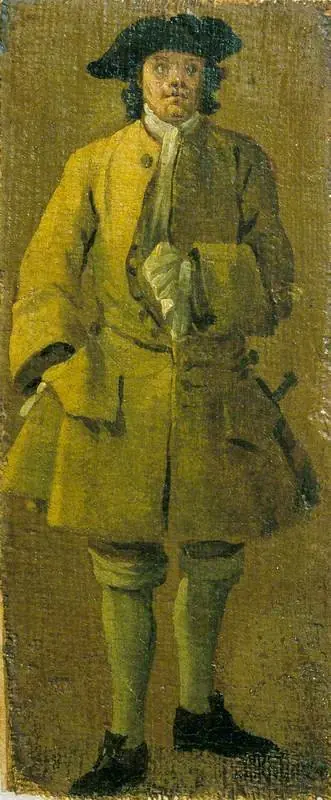
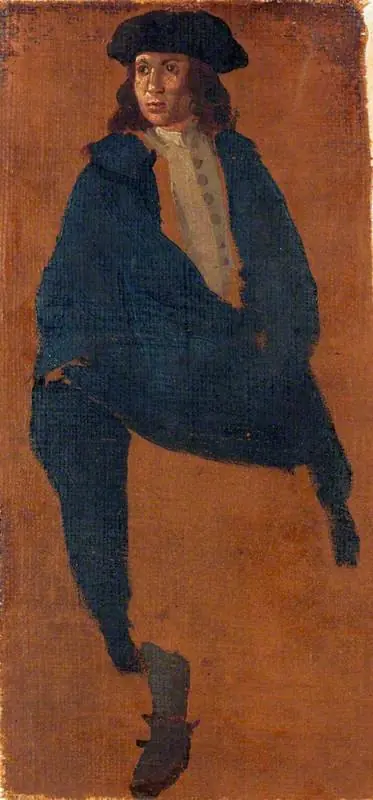
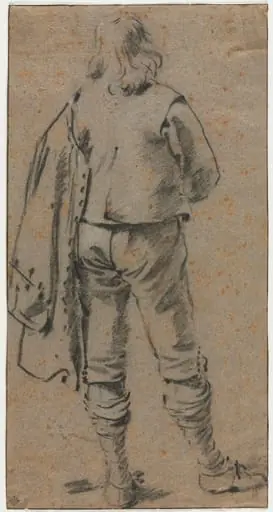
A Man Seen from Behind is an oil painting by the Baroque artist Luca Carlevarijs. It dates from 1700 and is held in the collection of the Victoria and Albert Museum. This oil painting depicts a solitary male figure viewed from behind, dressed in a brown cloak and a wide-brimmed black hat.
About this work
Overview
Unlike finished works, these pieces were likely executed outdoors, capturing fleeting postures and atmospheric effects to inform later studio paintings.
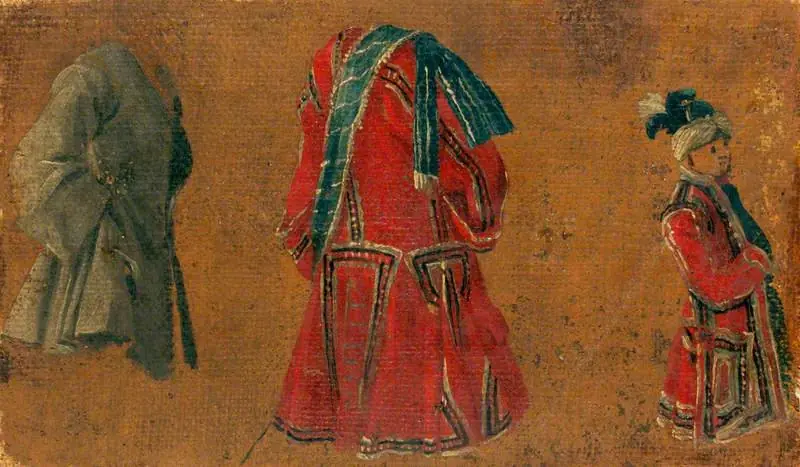
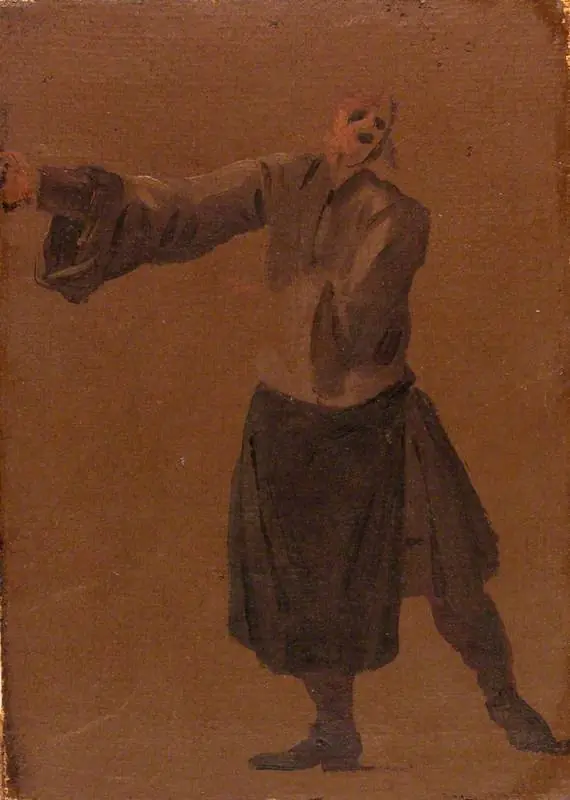
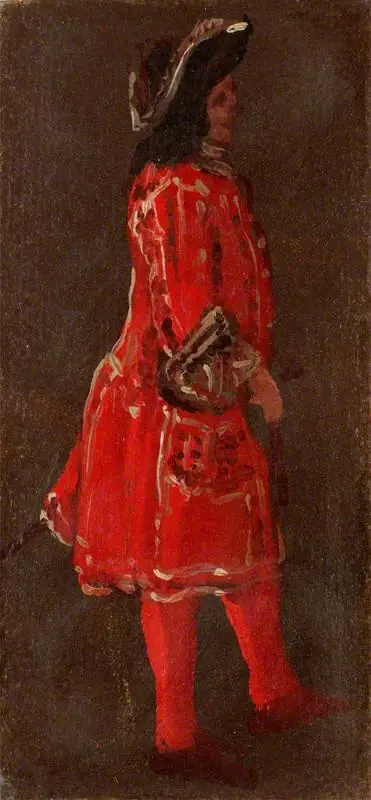
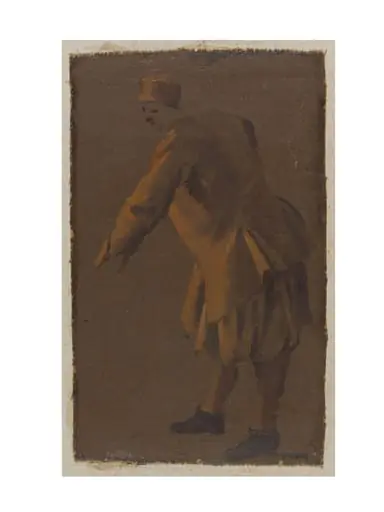
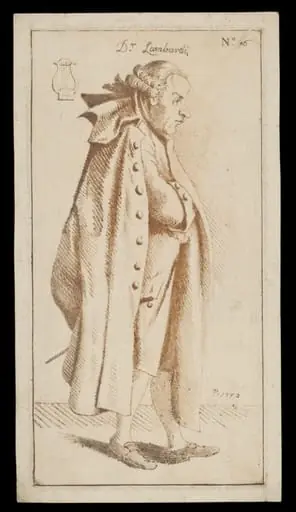
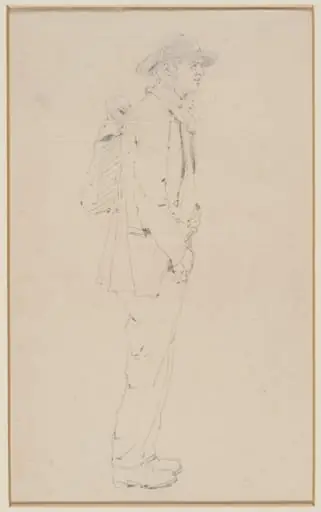
This oil painting depicts a solitary male figure viewed from behind, dressed in a brown cloak and a wide-brimmed black hat. It is one of fifty-three studies compiled in an album by Luca Carlevarijs, created as preparatory sketches for larger compositions. Unlike finished works, these pieces were likely executed outdoors, capturing fleeting postures and atmospheric effects to inform later studio paintings.
Subject & Meaning
The figure is anonymous, its identity unimportant; its value lies in its form and placement. The posture and attire suggest a common urban dweller, perhaps a passerby or local resident. The painting’s focus on the back of the head and shoulders emphasizes silhouette and movement over expression, serving as a visual reference for how such figures might anchor a broader scene.
Technique & Style
Carlevarijs employed loose, observational brushwork suited to plein-air sketching. The modeling of the cloak and hat suggests an understanding of light and shadow, though not fully developed into chiaroscuro. The palette is restrained, dominated by earth tones, with attention to the way fabric folds and the hat casts a shadow over the neck, details meant to inform future, more polished works.
History & Provenance
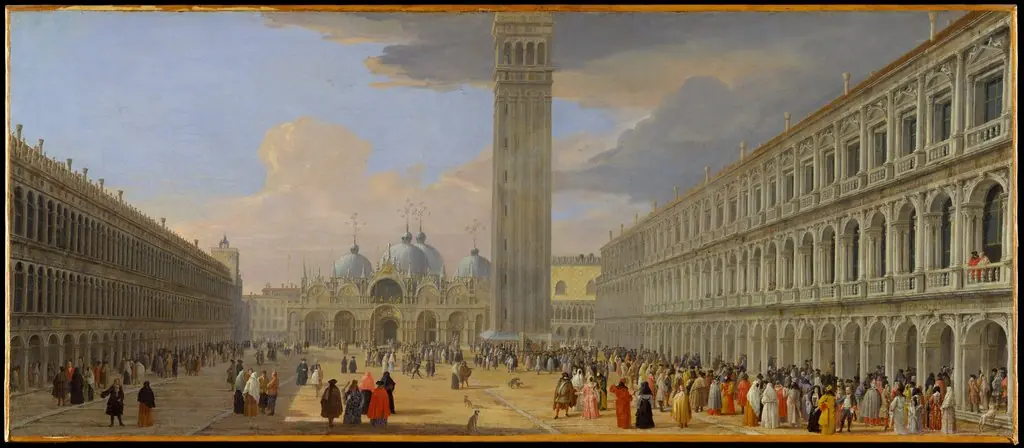
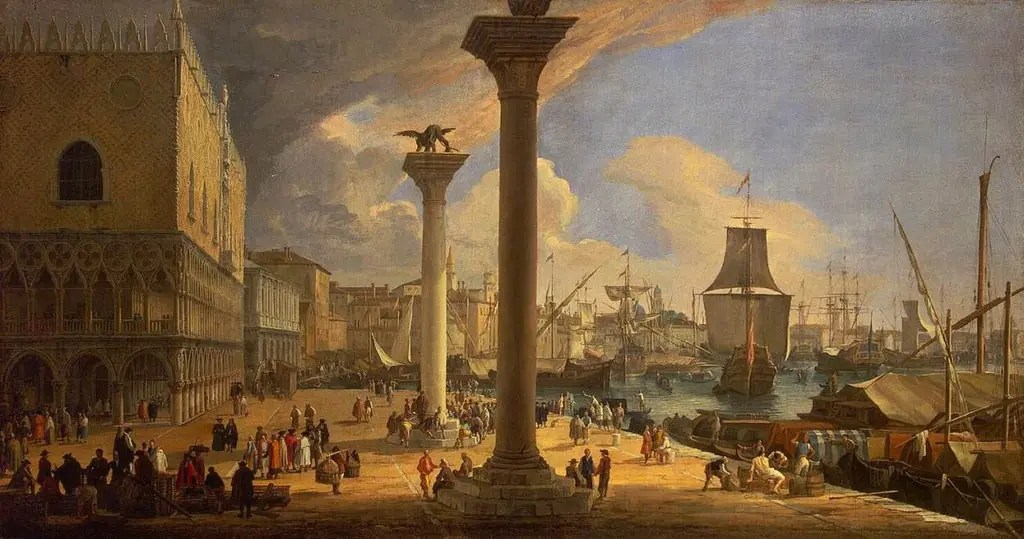
The painting belongs to a known album of fifty-three studies by Carlevarijs, preserved as a working archive. The figure appears again in his finished composition The Piazetta from the Waterfront, housed at the Timken Museum of Art. This reuse confirms the album’s function as a visual repository, allowing the artist to recycle successful poses across multiple scenes without repeating exact details.
Context
In early 18th-century Venice, artists often prepared for large-scale vedute by sketching figures and architectural elements outdoors. Carlevarijs, a pioneer of Venetian topographical painting, relied on these studies to populate his cityscapes with believable, varied characters. This practice bridged the gap between direct observation and formal composition, reflecting a shift toward naturalism in Venetian art.
Legacy
Carlevarijs’s album of studies influenced later vedutisti like Canaletto and Guardi, who adopted similar preparatory methods. Though these sketches were never intended as standalone works, their survival offers insight into the artist’s process and the evolving role of observation in Venetian painting. They remain valuable records of how artists translated lived experience into structured urban scenes.
Own this work as a print
Artist & collection
Artist
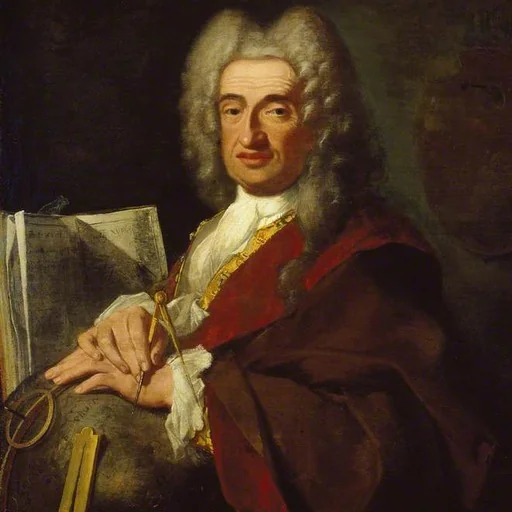
Luca Carlevarijs or Carlevaris (20 January 1663 – 12 February 1730) was an Italian painter and engraver working mainly in Venice.