Artwork
The Mancorbo Canal in the Picos de Europa
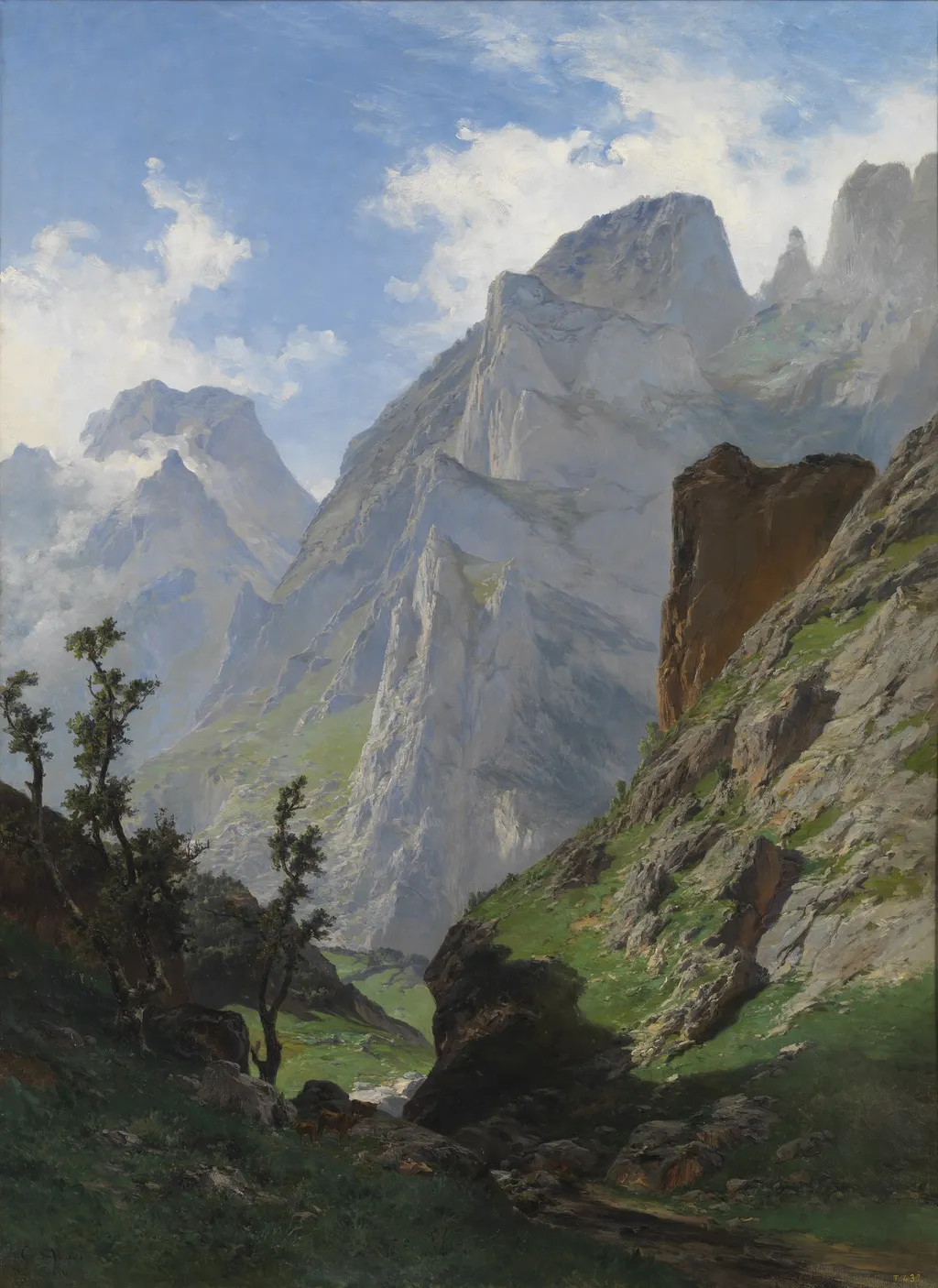
The Mancorbo Canal in the Picos de Europa is an oil painting by the Impressionist artist Carlos de Haes. It dates from 1888 and is held in the collection of the Museo del Prado.
About this work
Subject & Meaning
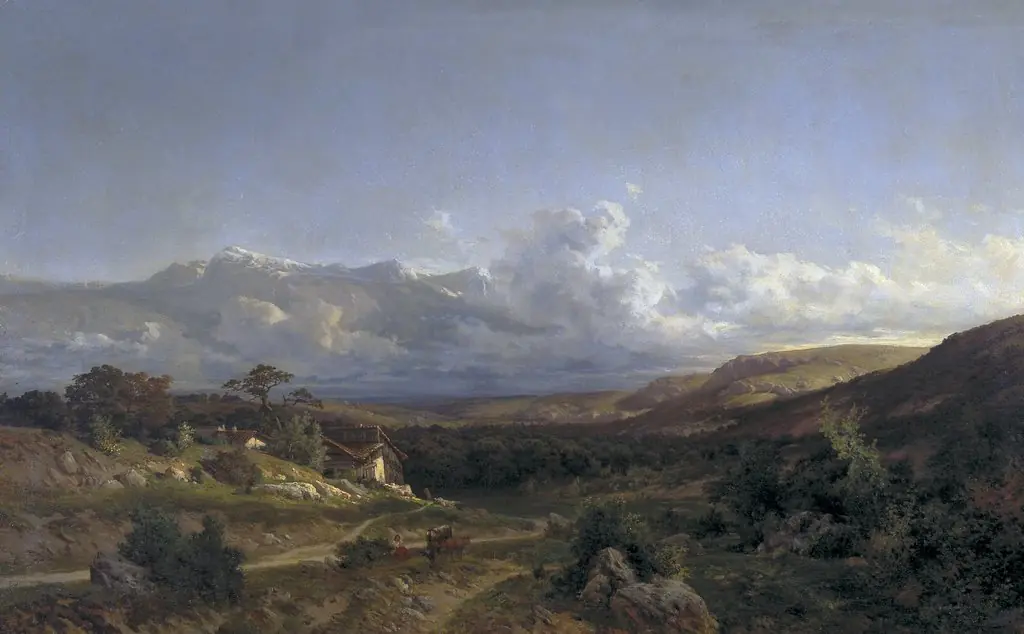
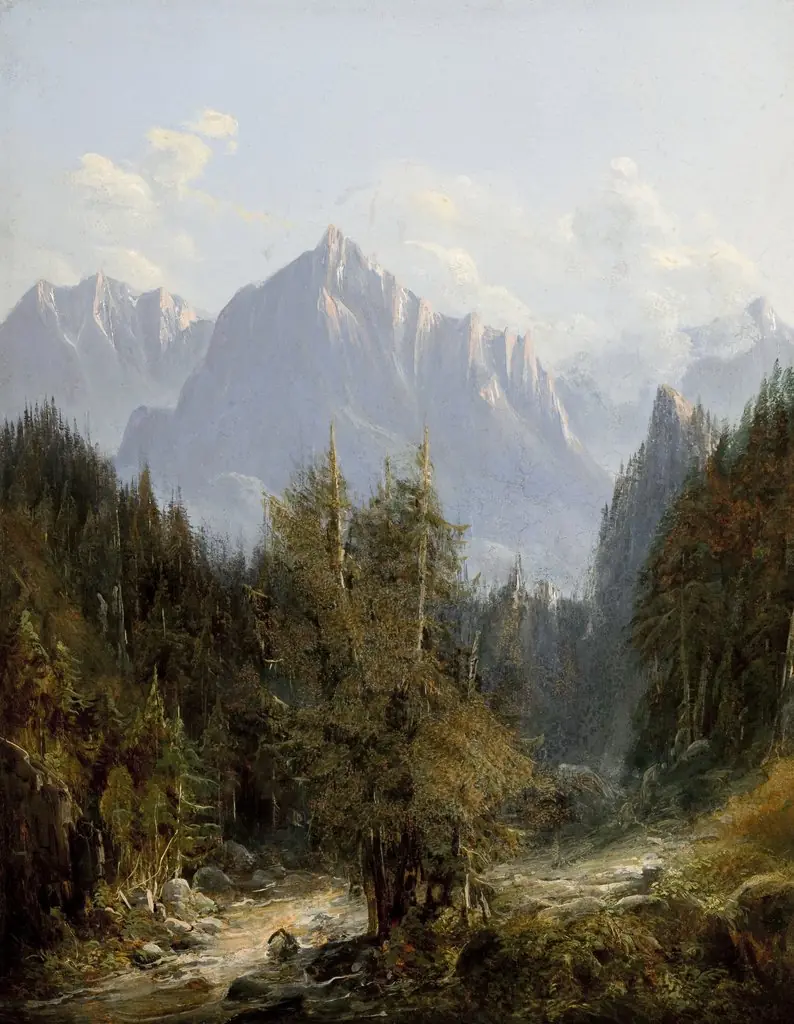
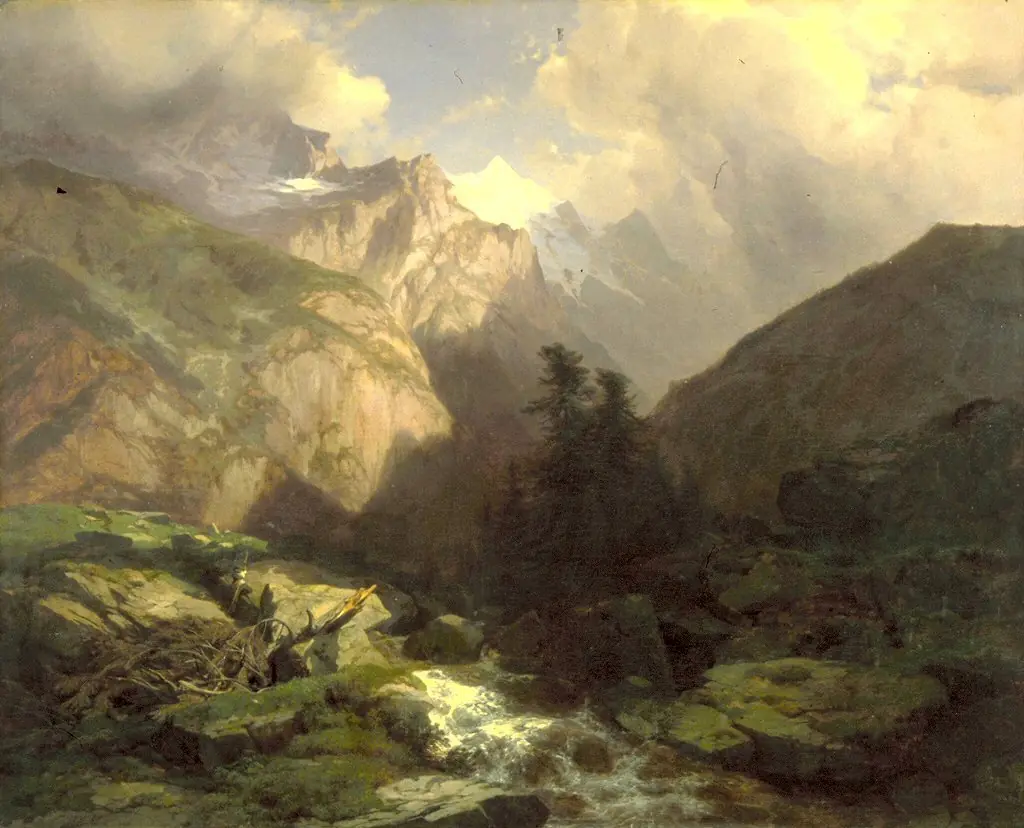
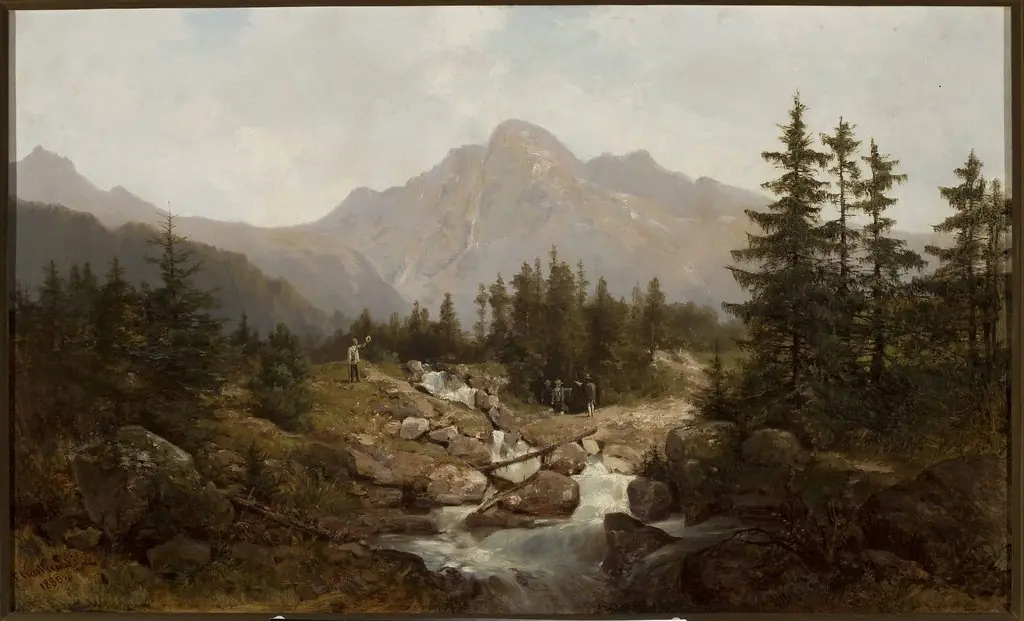
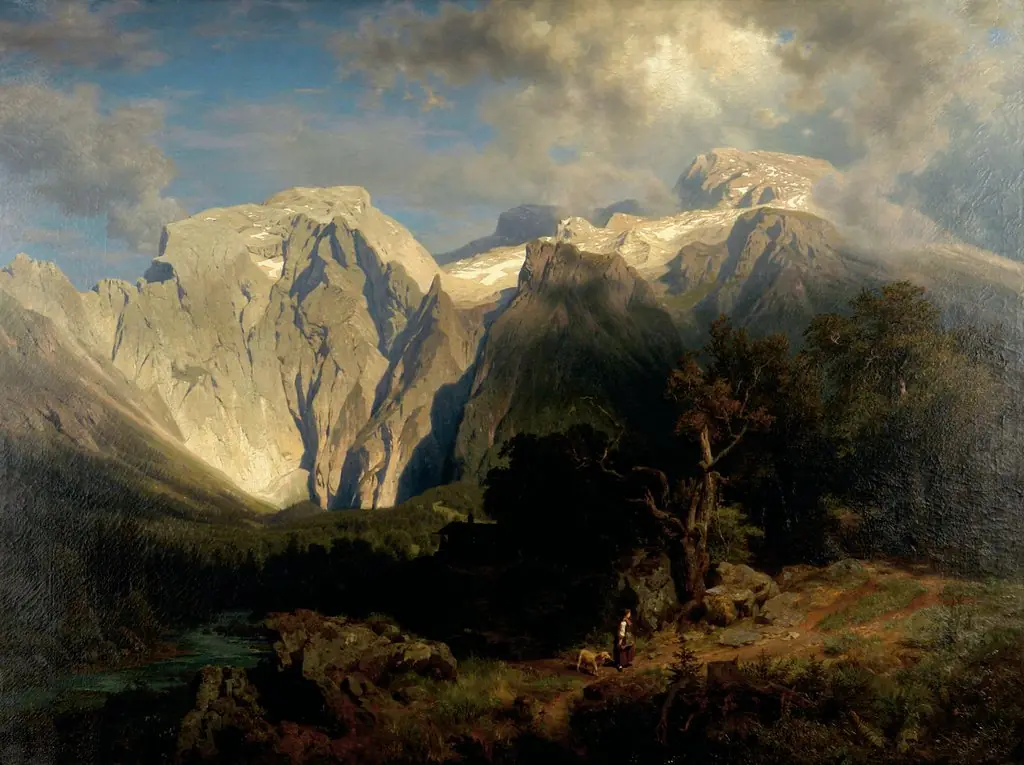
The composition features a central mountain peak flanked by foreground slopes, rendered with diagonal lines and layered brushwork to convey depth.
The painting depicts the Mancorbo Canal in the Picos de Europa mountain range, a landscape that Carlos de Haes rendered with a focus on naturalistic observation rather than idealized scenery. According to the sources, Haes sought to portray nature with fidelity and poetic resonance, moving away from romantic conventions while maintaining a spiritual interpretation of the environment. The work was created during his mature period and reflects his innovative approach to landscape painting in Spain, emphasizing direct study of light, atmosphere, and geological detail.
It was first exhibited at the 1876 National Exhibition of Fine Arts and later acquired by the Spanish state for the Museo del Prado.
The composition features a central mountain peak flanked by foreground slopes, rendered with diagonal lines and layered brushwork to convey depth. Haes employed fine, distinct strokes to model rock surfaces with highlights, using subtle gradations of light and shadow to guide the viewer’s eye toward the distant peak. This technique exemplifies his mastery of naturalistic representation and his role in advancing realist landscape painting in 19th-century Spain.
Technique & Style
The technique and style of The Mancorbo Canal in the Picos de Europa reflect a mature application of oil paint on canvas, characteristic of 19th‑century Spanish realism. The work is executed in oil paint on a canvas support, employing a plein‑air approach that was refined into a studio‑finished composition. Brushwork features impasto strokes that individualize rocky forms and create pronounced chiaroscuro, while a limited palette of blues and grays enhances atmospheric depth.
Compositional depth is achieved through diagonal lines and subtle gradations of light that guide the viewer’s eye toward a central mountain peak, a method inherited from Flemish precursors. The painting’s handling of light and perspective demonstrates Haes’s mastery of tonal modulation and spatial recession, marking a departure from earlier brown tonalities toward brighter, more luminous effects.
History & Provenance
Carlos de Haes painted The Mancorbo Canal in the Picos de Europa in 1876 during his mature period. The artwork was exhibited at the National Exhibition of Fine Arts that same year. Subsequently, the Spanish State purchased the painting to place it in the Museo Nacional de Pintura y Escultura, now known as the Museo del Prado, in Madrid.
In 1899, the canvas was transferred to the newly established Museo de Arte Moderno, where it remained until 1971. It then returned definitively to the Museo del Prado, where it is currently held.
The painting is held in the Museo del Prado in Madrid. It entered the museum's collection in 1899 after being purchased by the State, having previously been displayed at the Exposición Nacional de Bellas Artes de 1876 and later moved to the Museo de Arte Moderno in 1971 before returning to the Prado. Its inventory number is P00968.
The work was exhibited at the Exposición Nacional de Bellas Artes of 1876, where it was acquired by the Spanish government and subsequently installed in the Museo del Prado. It remained in the museum until 1899, when it was transferred to the Museo de Arte Moderno, and was later returned to the Prado in 1971.
The painting is catalogued in the Museo del Prado's collection as accession number P00968 and was part of the State's purchase following its 1876 exhibition.
Context
Scholarship regards The Mancorbo Canal in the Picos de Europa as the culmination of realist landscape painting in Spain, representing the peak of Carlos de Haes's mature period when he had fully mastered pictorial technique. The work is credited with transforming the genre by introducing a more faithful manner of representing nature, moving away from the idealized scenes of Romanticism while retaining poetic qualities.
The painting holds significant art-historical importance as a catalyst for change in 19th-century Spanish art. When Haes exhibited a landscape at the National Exhibition of Fine Arts in 1858, he helped initiate the realist landscape tradition in a country where history, religious, and genre painting dominated, and landscape had been relegated to decorative status. His pedagogical approach at the Academy from 1860 onward, emphasizing plein air drawing and capturing light effects, influenced countless subsequent painters.
The work also reflects broader European influences, particularly Flemish and Dutch empirical approaches to landscape, as well as precedents established by artists such as Joseph Vernet and Pierre-Henri de Valenciennes.
Legacy
The Mancorbo Canal in the Picos de Europa is widely regarded as the pinnacle of Spanish realist landscape painting and the most significant work in Carlos de Haes's career. It established a new, faithful method of representing nature that moved away from romantic idealization while retaining poetic elements. As a pedagogical model, the painting influenced countless artists who followed Haes's lead, particularly after he began teaching at the Academy in 1860.
His students adopted his system of outdoor sketching and his approach to interpreting the spiritual depth behind natural scenery. The work also marked a shift toward a more scientific and modern artistic sensibility in Spain during the second half of the 19th century. Its enduring reputation is underscored by its long tenure in major national institutions, having been acquired by the State shortly after its 1876 exhibition and eventually returning permanently to the Museo del Prado in 1971.
Overview
The Mancorbo Canal in the Picos de Europa is an 1888 oil painting by Carlos de Haes, depicting a rugged mountain landscape with a canal, characterized by detailed realism.
Own this work as a print
Artist & collection
Artist
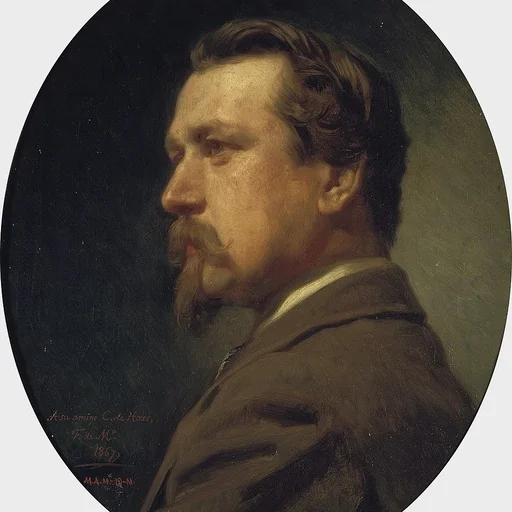
Carlos Sebastián Pedro Hubert de Haes (January 25, 1829 – June 17, 1898) was a Spanish painter from Belgium.