Artwork
The Yellow-breasted Chat
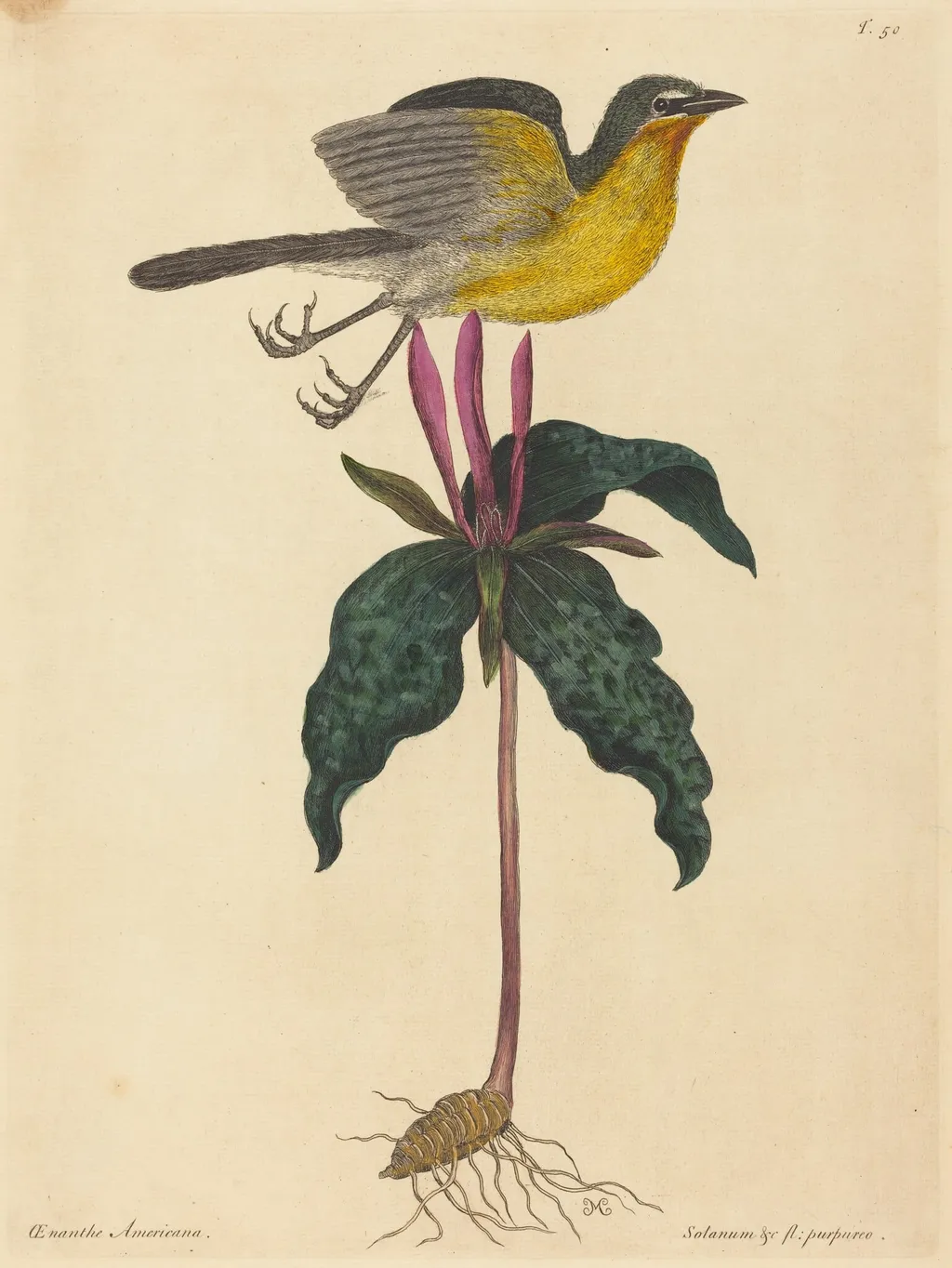
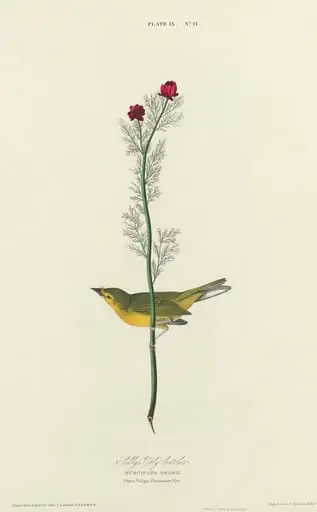
The Yellow-breasted Chat is an ink print by the Romanticist artist Mark Catesby. It is held in the collection of the National Gallery of Art. This print depicts a yellow-breasted chat, a North American songbird, perched on a flowering plant.
- Inscription
- Inscribed:lower center in plate: MC; lower left in plate: OEnanthe Americana.; lower right in plate: Solanum &c fl: purpureo; upper right in plate: T. 50; by later hand, lower left in graphite: Yellow breasted chat; by later hand, lower right in graphite: Marc Catesby - London 1754
About this work
Overview
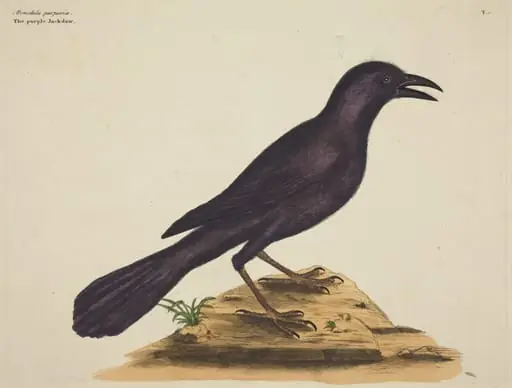
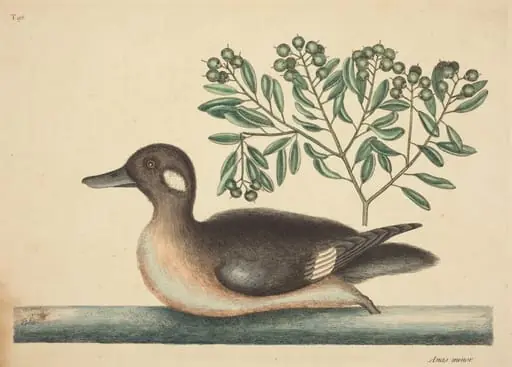
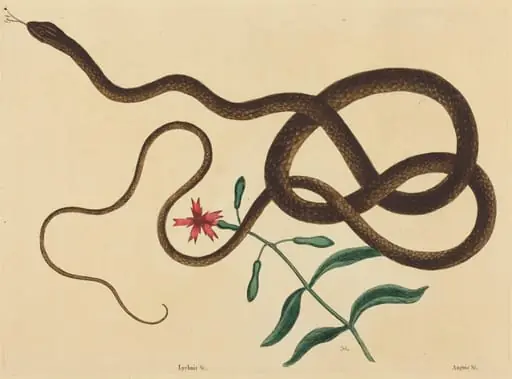
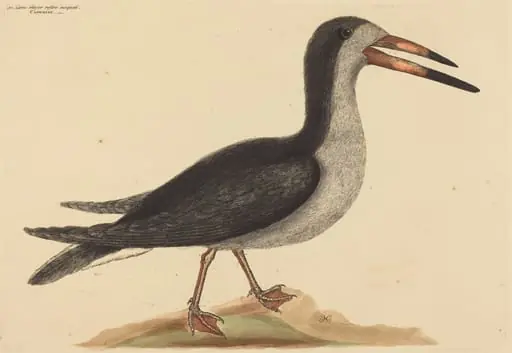
This print depicts a yellow-breasted chat, a North American songbird, perched on a flowering plant. Created in 1754, it combines etching and engraving with hand-applied color on laid paper. The work belongs to a larger project documenting the flora and fauna of colonial-era Carolina, Florida, and the Bahamas, representing an early effort to systematically record the continent’s biodiversity.
Subject & Meaning
The image centers on the yellow-breasted chat, distinguished by its vivid plumage and black facial markings. The bird is shown in profile, wings slightly extended, alongside a plant with broad leaves and exposed roots. Rather than symbolic or allegorical intent, the composition serves as a scientific record, prioritizing accuracy in morphology and habitat to aid identification and study.
Technique & Style
Catesby employed etching and engraving to produce the plate, later enhancing it with watercolor. The linear precision of the engraving defines the bird’s feathers and plant structures, while hand coloring adds lifelike hues. The style reflects Enlightenment-era natural history illustration, balancing empirical observation with aesthetic clarity to convey anatomical detail.
History & Provenance
Originally published in The Natural History of Carolina, Florida and the Bahama Islands (1729–1747), this print emerged from Catesby’s field observations during his travels in the American colonies. The work contributed to the first comprehensive visual survey of the region’s wildlife, later influencing both scientific and artistic representations of New World species.
Context
Produced during a period of expanding European knowledge of the Americas, the print reflects colonial-era efforts to catalog unfamiliar ecosystems. Catesby’s work preceded formal Linnaean taxonomy but aligned with broader Enlightenment projects to document and classify nature. His illustrations bridged scientific inquiry and artistic representation, shaping early natural history publications.
Legacy
The print exemplifies the intersection of art and science in the 18th century, influencing subsequent naturalists and illustrators. Catesby’s approach set a precedent for later ornithological studies, including Audubon’s work. Today, his plates remain valuable references for historical biodiversity and the development of scientific illustration in the Americas.
Own this work as a print
Artist & collection

Artist
Mark Catesby (24 March 1683 – 23 December 1749) was an English naturalist who studied the flora and fauna of the New World.