Artwork
The Raising of Lazarus
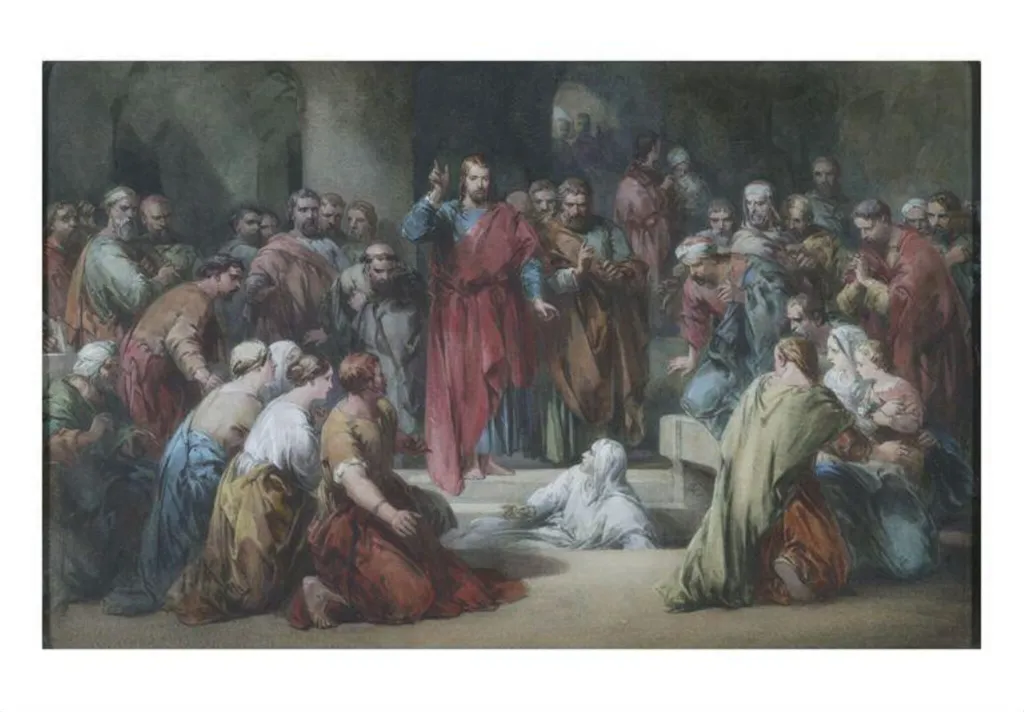
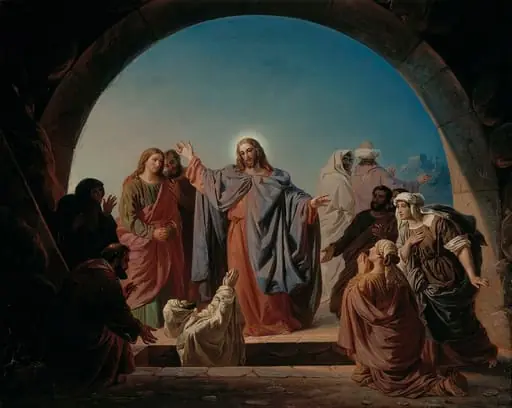
The Raising of Lazarus is a watercolor work on paper by the British Romanticist artist George Cattermole. It dates from 1825 and is held in the collection of the Victoria and Albert Museum.
About this work
Overview
George Cattermole’s watercolour titled The Raising of Lazarus depicts the biblical miracle of Lazarus’s return to life.
George Cattermole’s watercolour titled The Raising of Lazarus depicts the biblical miracle of Lazarus’s return to life. Central to the composition is a figure in a vivid red garment, surrounded by a dense assembly of onlookers whose gestures range from supplication to astonishment. The palette is restrained, dominated by earth tones and muted blues, with strategic highlights that draw attention to the central figure and the emerging form of Lazarus.
Subject & Meaning
The work captures the precise instant when Lazarus, clothed in pale white robes, emerges from his tomb, while the surrounding crowd reacts with a mixture of reverence, grief, and wonder. The varied postures, kneeling, reaching, shielding faces, convey a collective emotional response to the miraculous event, emphasizing themes of faith, mortality, and divine intervention.
Technique & Style
Executed in watercolor, Cattermole employs delicate washes to render soft skin tones and atmospheric light. The limited chromatic range, punctuated by the striking red robe and a white cloth on the ground, creates visual focus and depth. The handling of light suggests a subtle, almost ethereal illumination that aligns with Romantic sensibilities toward drama and emotional intensity.
History & Provenance
The painting formed part of a larger assemblage of one hundred British watercolours collected by Richard Ellison. Following Ellison’s death, his widow contributed the entire collection to the nascent National Collection of Water Colour Paintings, thereby securing the work’s place within a public institutional context.
Context
Created during a period when Romantic artists emphasized feeling and narrative, the piece reflects contemporary interest in biblical subjects rendered with heightened emotional resonance. Its inclusion in a foundational national watercolour collection underscores the medium’s growing recognition as a serious artistic vehicle in 19th‑century Britain.
Own this work as a print
Artist & collection

Artist
George Cattermole (10 August 1800 – 24 July 1868) was a British painter and illustrator, chiefly in watercolours.

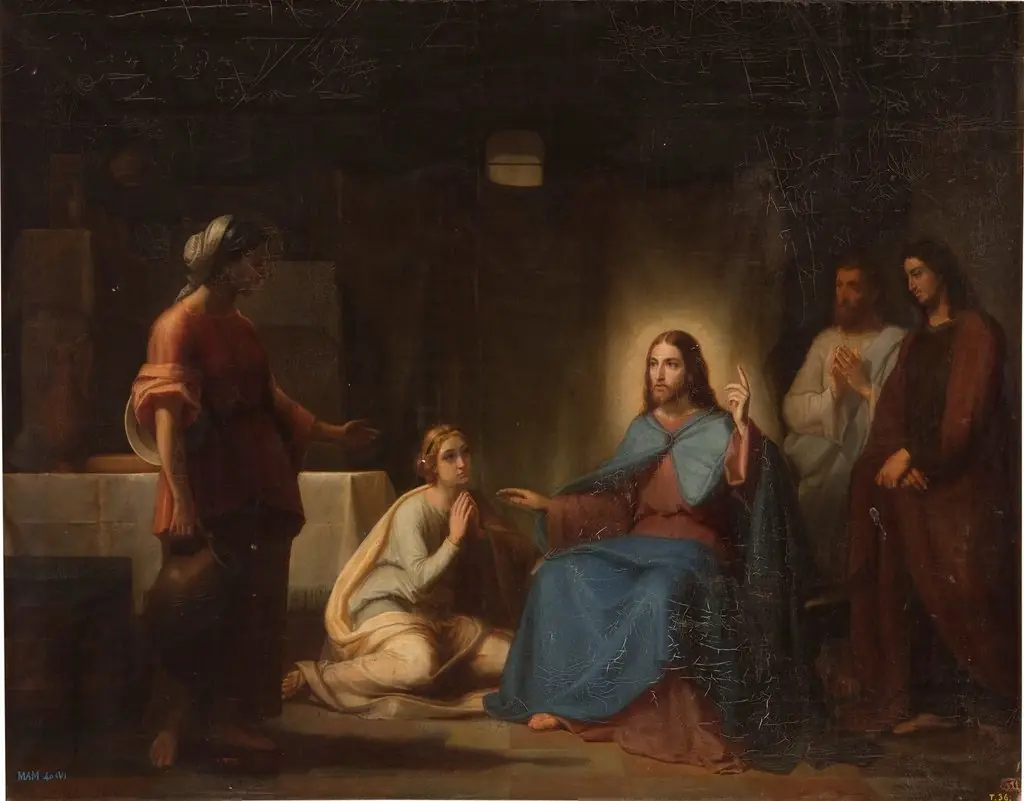 Jesús en casa de Marta y María
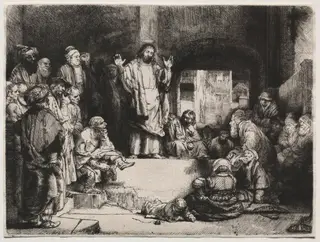 Christ Preaching ('La Petite Tombe')
 Iisus în templu
 Cristo y la mujer adúltera
 Christus and the woman in adultery
 Raising of Jairus's Daughter
 Christ Preaching (The Hundred Guilder Print)
 Christ healing the sick: 'The hundred guilder print'
 La resurrección de Lázaro
 The Hundred Guilder Print
 Jeesus herättää Lasaruksen, repliikki Turun Tuomiokirkon freskomaalauksesta
- The Raising of Lazarus