Artwork
Landscape with a Herd
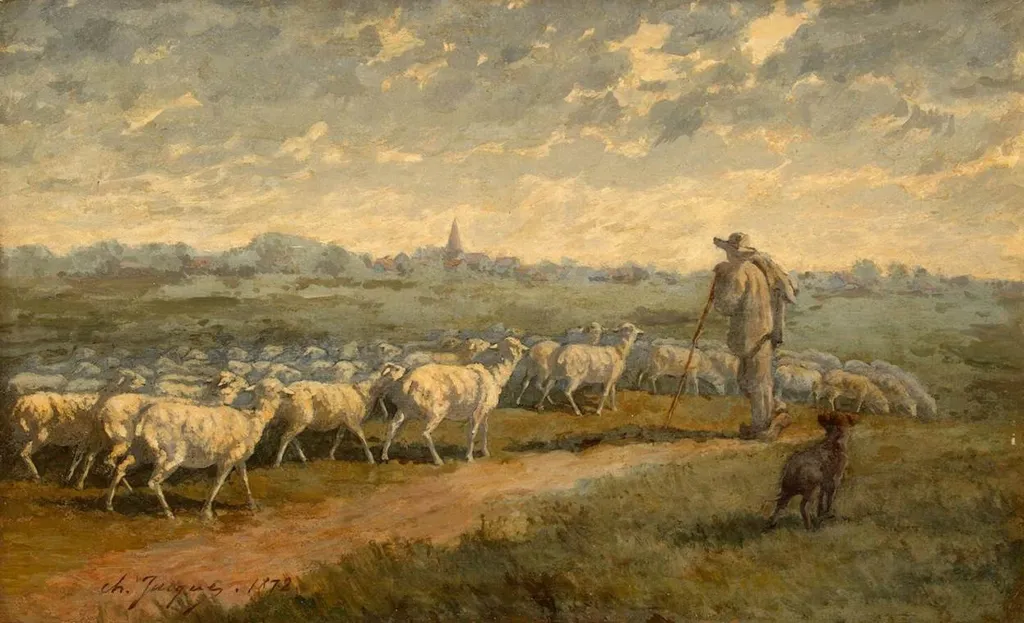
Landscape with a Herd is an oil painting by the Barbizon school artist Charles-Émile Jacque. It dates from 1872 and is held in the collection of the Hermitage Museum.
About this work
Subject & Meaning
The painting's iconography reflects genre‑art traditions that celebrate agrarian simplicity and the orderly presence of pastoral activity.
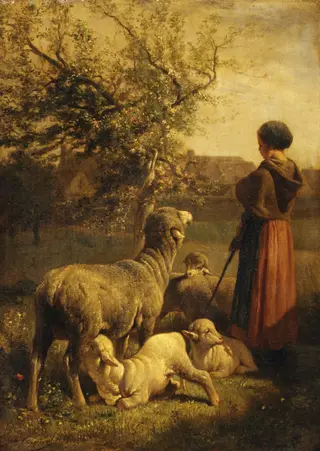
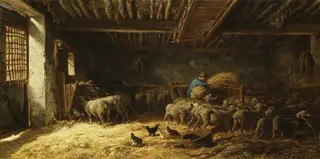
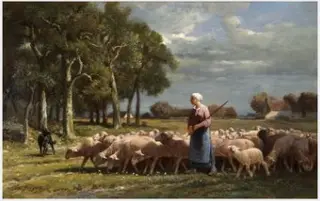
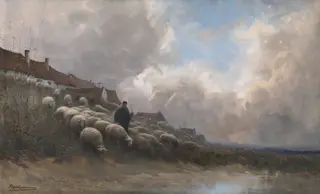
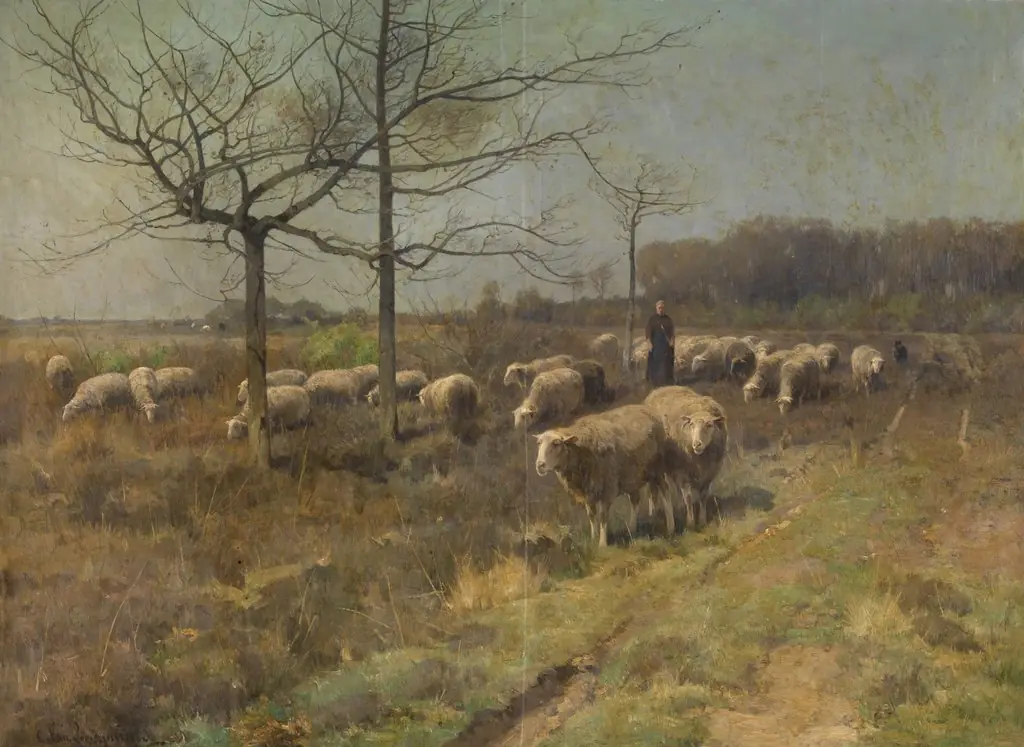
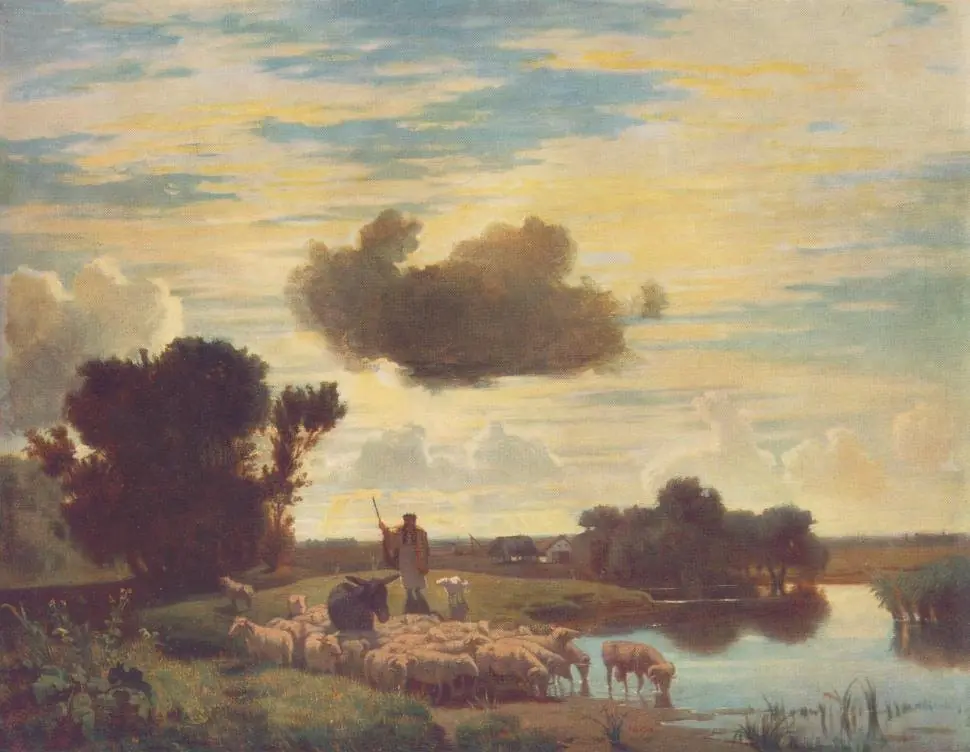
Landscape with a Herd portrays a rural scene centered on a flock of sheep (Ovis) tended by a shepherd and a herding dog. The composition also includes a modest church, a cluster of village buildings, and a winding road, all rendered in oil on cardboard. These elements together construct an idealized view of 19th‑century French countryside life, emphasizing the harmony between people, livestock, and the built environment. The painting's iconography reflects genre‑art traditions that celebrate agrarian simplicity and the orderly presence of pastoral activity.
Technique & Style
Created in 1872 by Charles Jacque, this work is an oil painting executed on a cardboard support. The piece measures 32.5 cm in height and 53.5 cm in width. Stylistically, the composition integrates animal art with landscape painting, depicting a herd of sheep accompanied by a shepherd and a herding dog.
These figures are situated within a rural setting that includes a road, a village, and a church building, reflecting the artist's focus on genre scenes set in the French countryside.
History & Provenance
Landscape with a Herd was created in 1872 by Charles Jacque in France, executed in oil paint on cardboard. The painting's early ownership and any possible commission are not documented in the available sources. After its completion, the work entered the collection of the Hermitage Museum in Saint Petersburg, where it remains today.
Thus, the known provenance traces the painting from its 1872 creation to its present location in the Hermitage.
Overview
Charles Jacque, a French artist associated with the Barbizon School, completed Landscape with a Herd in 1872. This oil painting exemplifies his focus on pastoral subjects, depicting a tranquil rural scene. It features a group of sheep attended by a shepherd, set against a backdrop that includes a distant village and its church. The work is currently part of the collection at the State Hermitage Museum.
Context
Charles Jacque was a prominent figure within the Barbizon School, a group of French painters active in the mid-19th century who sought to depict landscapes and rural life with direct observation and naturalism. Working alongside artists like Jean-François Millet, Jacque contributed to this movement's departure from academic conventions, choosing to portray the unadorned beauty of the countryside and its inhabitants.
Artist & collection

Artist
Charles-Émile Jacque (23 May 1813 – 7 May 1894) was a French painter of Pastoralism and engraver who was, with Jean-François Millet, part of the Barbizon School. He first learned to engrave maps when he spent seven years in the French Army.