Artwork
Springtime
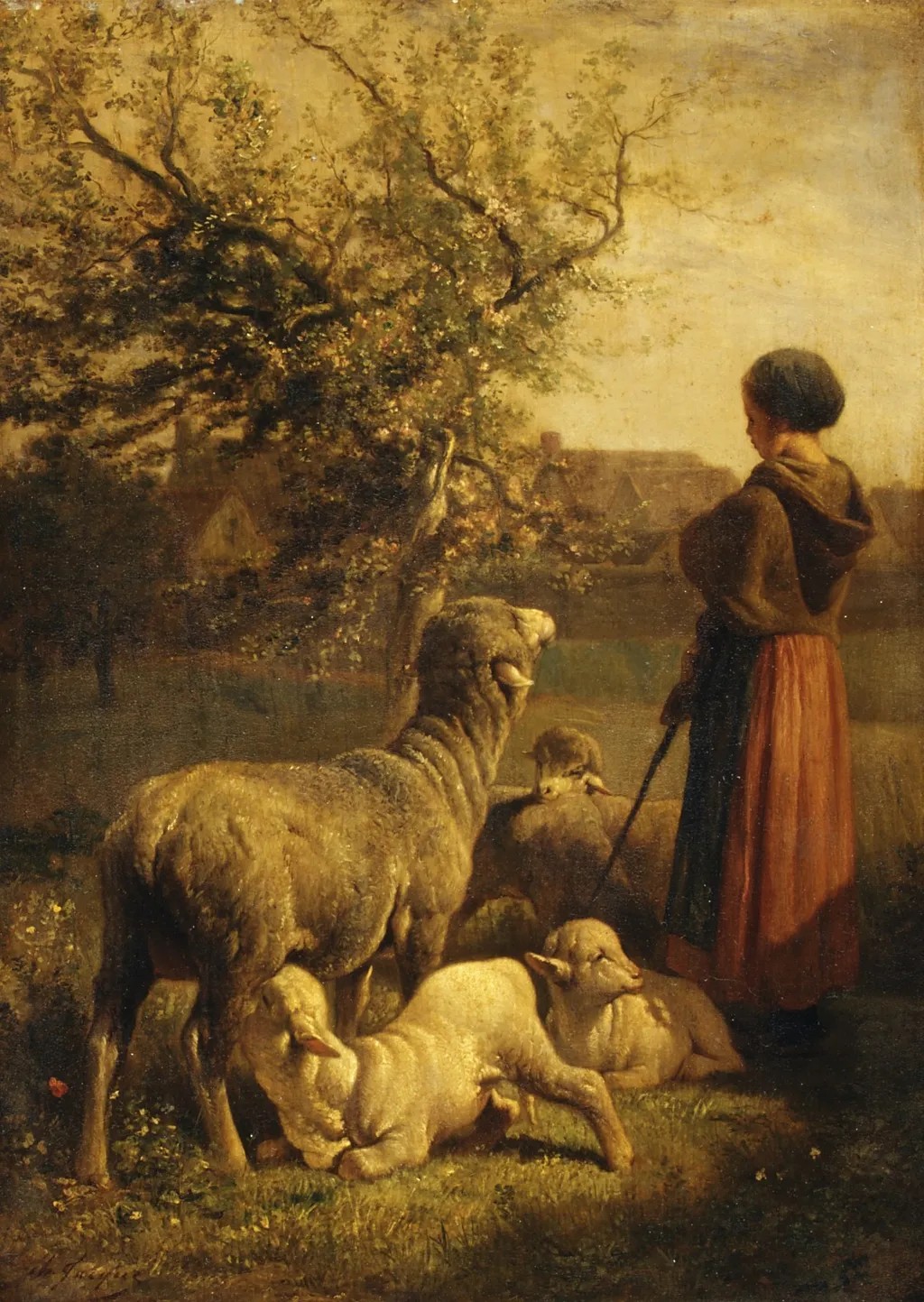
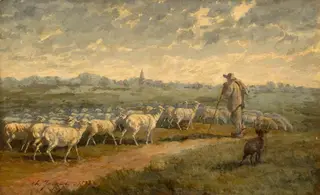
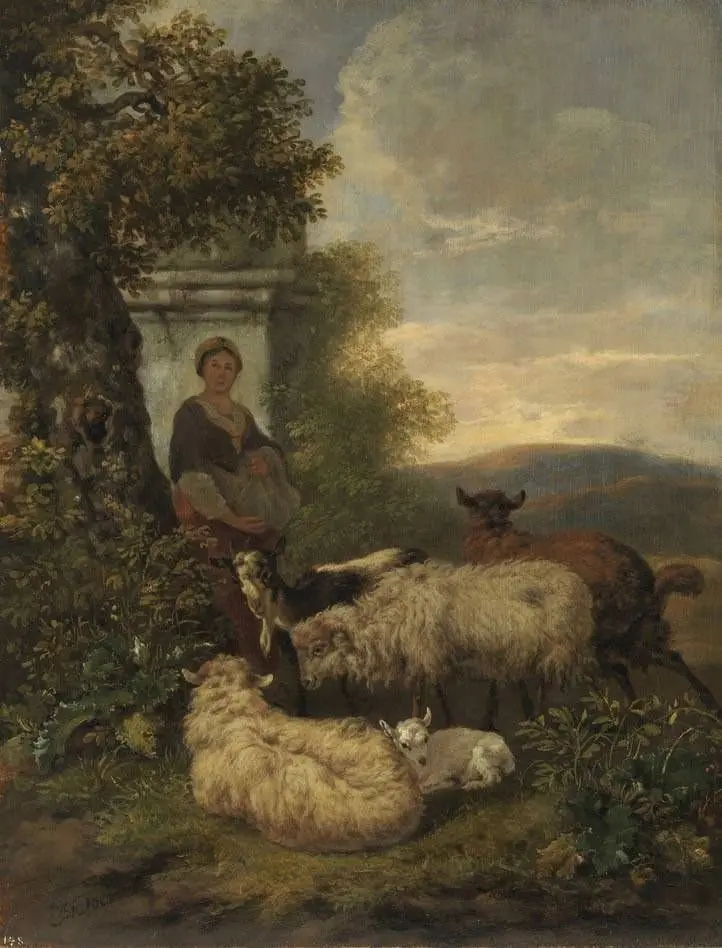
Springtime is an oil painting by the Barbizon school artist Charles-Émile Jacque. It dates from 1863 and is held in the collection of the Metropolitan Museum of Art.
About this work
Subject & Meaning
The abundant vegetation, blooming flora and the presence of livestock embody the season's themes of renewal, fertility and rural abundance.
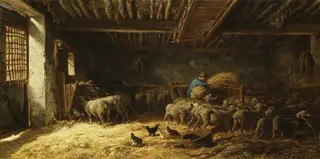
The painting Springtime (1863) by Charles Jacque portrays a sunlit pastoral scene in which a young girl stands beside a shepherd tending a flock of sheep beneath a flourishing tree. The abundant vegetation, blooming flora and the presence of livestock embody the season's themes of renewal, fertility and rural abundance. By situating the figures within a gently rolling landscape, Jacque emphasizes the harmonious relationship between humanity and the natural world, a common motif in 19th‑century French genre painting. The work's iconography, tree, girl, sheep, shepherd, celebrates the simple, idyllic life associated with springtime.
Technique & Style
Charles Jacque's Springtime (1863) is an oil painting executed on a wooden panel support, measuring 40.6 cm in height and 29.2 cm in width. Stylistically, the composition depicts a pastoral scene featuring a girl, a shepherd, sheep, and a tree, reflecting the artist's engagement with rural subjects during the spring season. The medium of oil paint allows for the detailed rendering of these figures and the natural setting within the compact format of the panel.
History & Provenance
Charles Jacque executed the oil painting Springtime in 1863 on a wooden panel measuring 40.6 by 29.2 centimetres. While specific details regarding the original commission or intermediate ownership are not recorded, the painting is currently held in the collection of the Metropolitan Museum of Art, New York, under accession number 64.183. It was accessioned in 1964 and remains attributed to Jacque as a painting within the museum's holdings.
Context
The 1863 oil painting Springtime by Charles Jacque, housed in the Metropolitan Museum of Art, portrays a pastoral scene featuring a girl, sheep, tree, and spring motifs. As part of Jacque's broader oeuvre of rural genre subjects, the work exemplifies his focus on agrarian life and animal imagery, aligning with Barbizon school naturalism. Scholarship situates it within 19th‑century French pastoral art, emphasizing its role in documenting idealized countryside scenes and the painter's enduring engagement with the rural world around the Forest of Fontainebleau.
Overview
Charles Jacque's Springtime, an oil painting from 1863, captures a pastoral scene characteristic of the Barbizon School. It portrays a young woman tending a flock of sheep within a tranquil, natural landscape. This work exemplifies the artist's focus on rural life and his association with a movement that prioritized direct observation of nature. The painting is part of The Metropolitan Museum of Art's collection.
Own this work as a print
Artist & collection

Artist
Charles-Émile Jacque (23 May 1813 – 7 May 1894) was a French painter of Pastoralism and engraver who was, with Jean-François Millet, part of the Barbizon School. He first learned to engrave maps when he spent seven years in the French Army.